

- Download our Moving to Hong Kong Guide (PDF)
When it comes to banking, money and taxes in Hong Kong, expats are unlikely to have trouble managing their finances in the wealth-driven Pearl of the Orient, one of the world’s most prominent financial centres.
The region’s financial systems are safe and straightforward, so managing your finances is easy. Hong Kong is also highly popular owing to its low taxes, and expats can save more of the dollars they work so hard for.
Money in Hong Kong
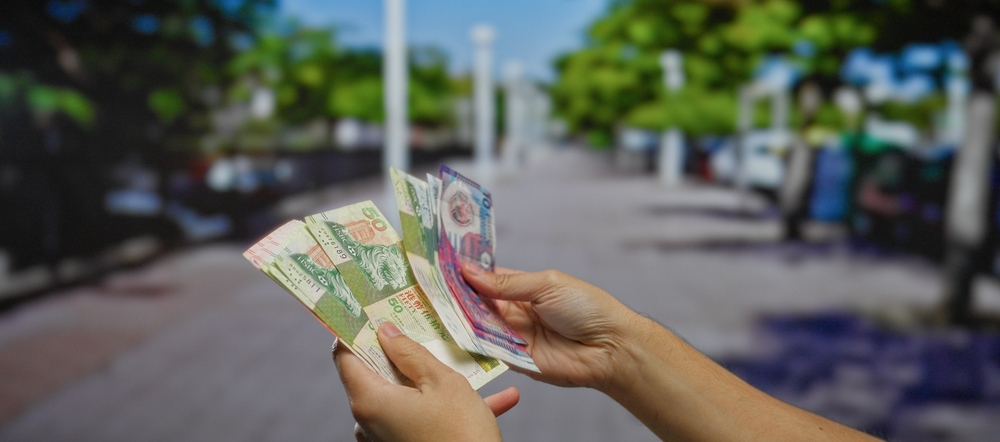
The currency in Hong Kong is the Hong Kong dollar, which is subdivided into 100 cents and abbreviated as HKD or HK$. It is pegged to the US dollar.
Newcomers will also notice three different designs for each note, because the HKD 20 to HKD 1,000 notes are printed by the three note-issuing banks (HSBC, Bank of China, and Standard Chartered). The government issues the coins and the HKD 10 note.
The Hong Kong dollar is available in the following denominations:
- Notes: HKD 10, HKD 20, HKD 50, HKD 100, HKD 500, and HKD 1,000
- Coins: 10 cents, 20 cents, 50 cents, HKD 1, HKD 2, HKD 5, and HKD 10
Banking in Hong Kong
For banking in Hong Kong, expats can choose from many major international banks as well as local heavyweights such as HSBC, Hang Seng, Bank of China, and Standard Chartered. Whether an international or a local bank suits you better depends largely on your circumstances, since both options have their pros and cons.
Nearly all banks have internet banking facilities and issue credit cards, and several licensed virtual banks now provide fully digital, branch-free banking. English is a working language of the sector, so most branch staff can serve you in English, especially in expat-heavy neighbourhoods.
Opening a bank account
Opening a bank account in Hong Kong is straightforward if you have a Hong Kong ID and a local proof of address, although newcomers who don’t have these documents may have extra hurdles to overcome. Each bank sets its own minimum balance for each account type, and some accounts have a low-balance fee, so compare your options before you commit.
If you already bank with an international name like Citibank or HSBC, the most convenient option may be to open the local version of your account once you arrive, because transferring money then becomes cheaper and less of a hassle. Local options are also worth considering if your home country bank isn’t represented in Hong Kong.
Requirements differ from one bank to the next, so check with the institution of your choice before you visit. Most banks ask for proof of address and proof of identification, either a passport or a Hong Kong ID, and you can smooth the process by bringing a recent utility bill and a letter from your employer.
ATMs and credit cards
When it comes to ATMs and credit cards in Hong Kong, you can find machines throughout the territory, and most accept international cards. Many local banks add no access fee of their own, although your card issuer at home may charge for overseas withdrawals.
Credit cards are widely accepted throughout Hong Kong, although cash is still common for smaller purchases at wet markets, street stalls, small local eateries, and older taxis.
For everyday payments in Hong Kong, residents rely on the Octopus card, a stored-value smart card that was introduced for public transport and is now accepted at convenience stores, cafés, wet markets, and taxis. Newcomers can buy one at any MTR station, or load it onto a phone as a mobile wallet. You can also send money between banks instantly through the Faster Payment System (FPS), using only a phone number or a QR code, and most residents now use it to split bills and pay small traders.
Useful links
Taxes in Hong Kong

Taxes in Hong Kong are extremely low by the standards of most developed economies, and the territory has completely done away with sales tax, capital gains tax, VAT, and inheritance tax. Expats in Hong Kong will have to deal with a different tax system from those in most other countries, because citizenship or residency doesn’t affect the amount of tax to be paid.
An added advantage is that salary taxes apply only to income derived from business within Hong Kong, whereas income and assets from overseas are not subject to tax. One caveat is that citizens of countries that tax worldwide income, especially the United States, must still declare their earnings to their home authorities.
Salaries tax is charged at progressive rates from 2 percent to 17 percent, or at a standard rate of 15 percent or 16 percent, and families with children can claim special allowances on top. Even wealthy single foreigners won’t pay more than 17 percent in taxes, which is an important point to factor in when evaluating your salary package.
The tax year is from 1 April to 31 March, and bills are often paid in arrears, so newcomers should set money aside from their first salary rather than spend it all. You will also notice a monthly deduction for the Mandatory Provident Fund (MPF), a compulsory retirement savings scheme that you and your employer each fund with 5 percent of your salary, up to a capped income level. Expats who leave Hong Kong permanently can withdraw their MPF savings as a lump sum.
The Hong Kong government has signed double taxation agreements with dozens of jurisdictions, so expats should investigate whether their home country is among them. If so, their income is taxable only in Hong Kong or in their home country, but not in both.
If at all uncertain, it’s best to confirm these details with an authorised tax adviser, preferably one who knows the ins and outs of expat tax issues.