
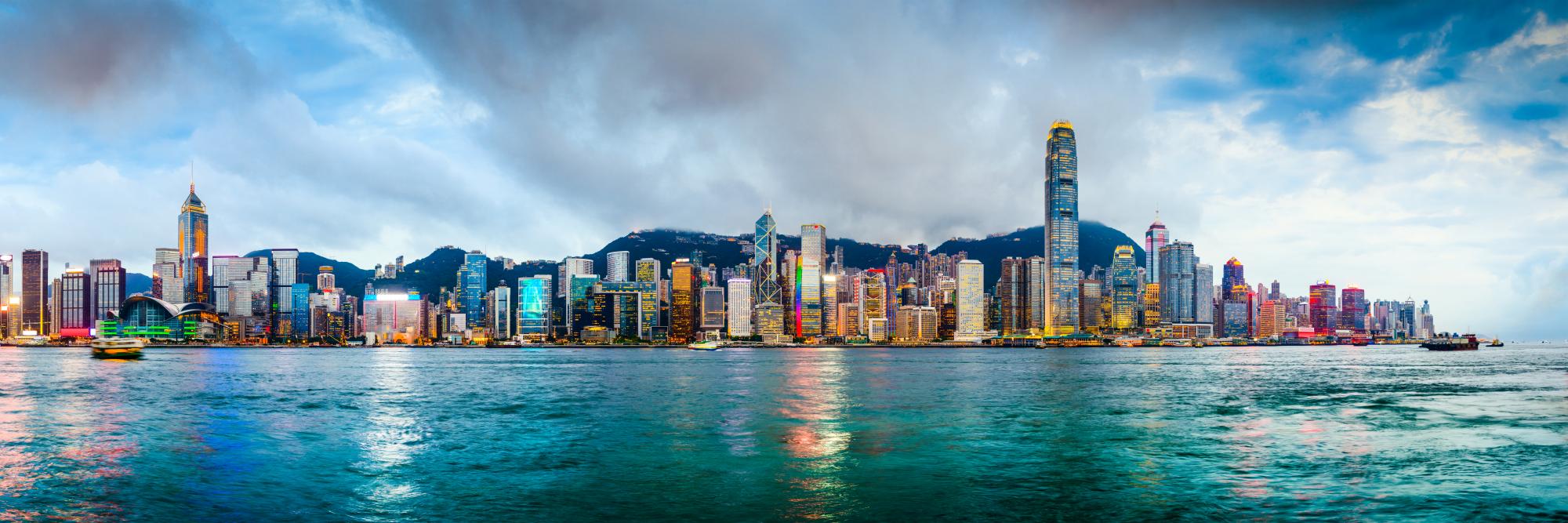
- Download our Moving to Hong Kong Guide (PDF)
Newcomers’ experience of local culture in Hong Kong may prove gentler than they expect, especially if they come from an English-speaking country. As a former British colony, the territory still does much of its business, courts, and government in English, so you’ll find the language widely used, even if everyday fluency varies from one resident to the next.
Hong Kong is cosmopolitan and religiously diverse too, and most newcomers settle in without much friction. With a population of roughly 7.5 million packed into one of the world’s densest urban areas, Hong Kong can feel overwhelming at first, especially if you’ve arrived from a smaller town.
The bigger adjustment tends to be sensory. A vertical wall of high-rises, the neon glow, the crowds, and the relentless pace of the streets can unsettle even seasoned travellers, who still need time to find their feet.
Language barrier in Hong Kong
Most Hong Kongers speak both Cantonese and English, and their command of Mandarin has grown as ties with the mainland have deepened. That easy bilingualism can make Cantonese harder to learn than you’d think, since locals tend to switch straight to English the moment they spot a foreigner attempting a few words, whether out of politeness or to practise their own. Cantonese is a tonal language, so a small change in pitch can turn one word into something else entirely, which trips up many beginners.
English is common in offices, on public transport and in most shops, although it thins out among older residents and in traditional wet markets or family-run corner shops. Even then, you’re rarely stuck for long, since a little pointing and the figures on a calculator screen usually settle a purchase.
You’ll also pick up some distinctly local English. Hong Kongers pepper their speech with ‘add oil!’ ( ‘keep going’), a direct rendering of the Cantonese gaa yau, and the phrase became so common that the Oxford English Dictionary adopted it in 2018.
Written Chinese here uses traditional characters, so the script looks different from the simplified version found across the border.
Cultural differences in Hong Kong
You’ll encounter countless unspoken rules in Hong Kong, and most of them sink in simply by living here.
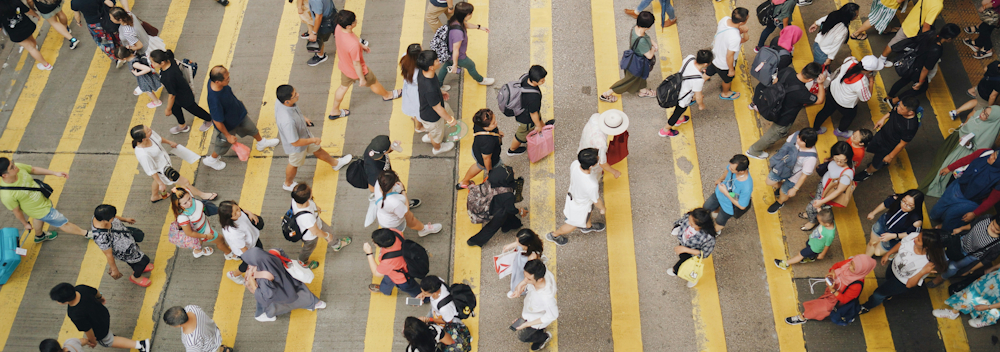
Personal space is the first thing to recalibrate. In one of the most crowded corners of the world, the Western idea of a personal bubble barely exists in public, and you can expect to stand shoulder to shoulder with strangers on the MTR, in lifts and along the pavement. Nobody will apologise for the odd bump, since stopping to say sorry for each one would bring the crowds to a standstill. None of this signals an invitation to get familiar, though, as locals are fairly reserved with strangers and rarely strike up conversation on the train.
Queuing, by contrast, is treated with real seriousness. Orderly lines form for buses, bakeries, and cash machines alike, and cutting in – or pushing onto a train before passengers have stepped off – will earn you a sharp word or two in public.
Meeting and greeting in Hong Kong
First encounters in Hong Kong tend to be understated. Hong Kongers will generally greet you with a light handshake and a small nod when first introduced, and you may notice that locals have a more measured approach to physical contact and eye contact than many Westerners.
In business settings, colleagues usually address one another by title and surname until invited to do otherwise. Younger and more international crowds move to first names quickly.
Business cards matter more here than you might assume. When someone offers theirs, accept it with both hands and take a moment to read it before putting it away, since treating the card carelessly reads as a slight to its owner.
Socialising in Hong Kong
You’ll get much further socially in Hong Kong once you understand ‘face’ as a concept. Face amounts to a person’s dignity and public standing in the eyes of others, and it can be given, saved, or lost. Criticising someone in public or losing your temper in front of others will make them lose face, and such a slip can sour a relationship for good.
You give face in the other direction through sincere compliments and visible respect. That instinct connects to guanxi, the web of relationships and favours behind much of daily life and business here. Grabbing the dinner bill is a classic way to build it, and rather than splitting the tab, hosts often compete to pay the whole thing. As the guest, make a genuine show of trying to pay, even when you’re destined to lose the tussle.
Tea is central to social life here, from a quick catch-up to the leisurely weekend ritual of yum cha, which loosely means ‘drink tea’. Keep an eye on the cups around you, because an empty one gets refilled almost at once, and when you top up your own, you fill your companions’ first. When someone pours for you, tap two fingers on the table to say a silent thank you – a gesture said to date back to a Qing dynasty emperor whose servants couldn’t bow without giving away his disguise.
Eating in Hong Kong
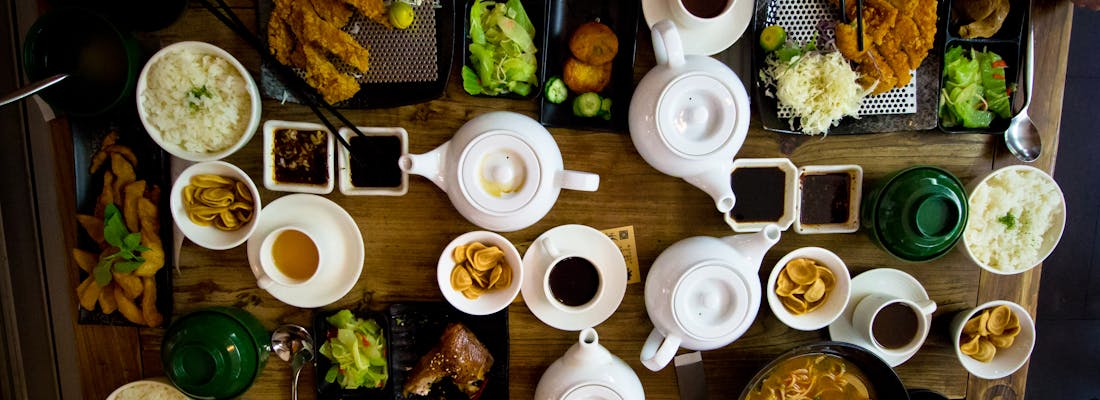
Meals in Hong Kong are usually communal spreads of shared dishes in the middle of the table. Hong Kong meals come with a few rituals, although you’ll mostly encounter them at formal occasions.
Let the host or the eldest person start first, and leave a little food on the serving plates. Avoid taking the very last morsel, since it hints that the host underfed the table.
Nearly every restaurant beyond the smallest will bring you a knife and fork on request, but it’s still worth learning to handle chopsticks properly while you’re living here. A few basic courtesies go a long way:
- Try not to fiddle with your chopsticks while you talk.
- When you pause between bites, rest them neatly on the chopstick holder.
- Never stand them upright in a bowl of rice, as the pose echoes the incense burned for the dead and reads as inviting death to the table.
- Avoid pointing or gesturing at anyone with them.
- With a whole fish, resist flipping it over to reach the underside, which local lore likens to a boat capsizing; slide the top fillet aside and lift the bone away instead.
Fresh food shopping can be its own culture shock. Traditional wet markets trade in live seafood and just-butchered meat from open stalls, and regulars build a rapport with a favourite fishmonger or butcher who then sets aside the best cuts for them.
Superstitions in Hong Kong
A few old superstitions still surface in everyday surroundings. In Cantonese, the word for ‘four’ sounds almost like the word for ‘death’, so many residential and office towers skip every floor numbered 4, and you’ll sometimes step into a lift where the buttons jump from 3 straight to 5, or from 12 to 15. The number eight sounds like the word for wealth, and locals will often pay a premium for phone numbers and addresses with it.
During the seventh month of the lunar calendar, usually falling across August and September, locals observe the Hungry Ghost Festival, and you’ll come across offerings of fruit and burning joss paper left on pavements and outside buildings at dusk. Don’t be surprised if friends postpone a house move or an evening swim until the month has passed.
Time in Hong Kong
Time management is important in Hong Kong, especially in the workplace. It’s disrespectful to turn up late to a meeting, so give yourself some margin, especially when the MTR is packed. The working culture is fast paced, and Hong Kongers often stay well past the role’s official hours, which can surprise arrivals who are used to a firmer line between work and home.
Timekeeping is far more relaxed outside of work, though, and it won’t raise eyebrows if you’re running 10 or 15 minutes late for a casual dinner with friends.
Bureaucracy in Hong Kong
Dealing with bureaucracy in Hong Kong is refreshingly straightforward by regional standards. Government departments are efficient, corruption is rare, and most forms and services are available in English as well as Chinese, often online. Soon after you arrive, you’ll register for a Hong Kong Identity Card. It quickly becomes the document you reach for when opening a bank account or signing a lease.
Weather in Hong Kong
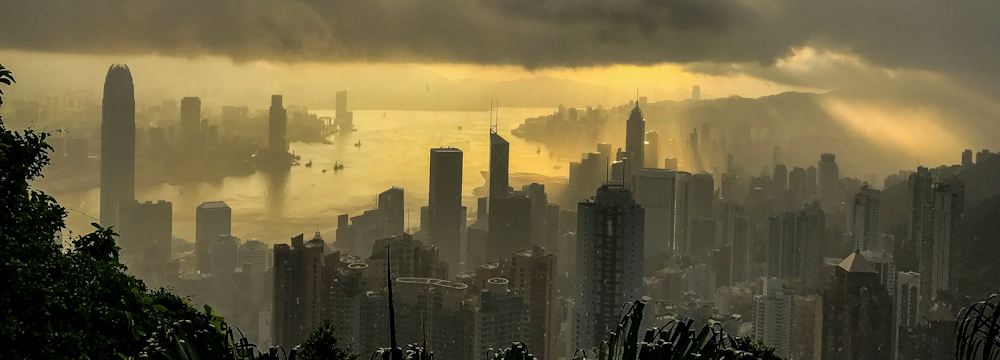
There are few things in Hong Kong that will test new arrivals as harshly as the humidity. Come spring, a phenomenon that locals call Hui Nan Tian, or ‘returning south’ weather, blows in the warm, wet sea air. Humidity can climb above 90 percent, and it condenses on cool indoor surfaces and leaves your walls, floors, and windows dripping.
Hong Kong’s typhoon season lasts roughly from May to November. When the Hong Kong Observatory raises Signal No. 8, the territory effectively pauses – schools shut, most offices send staff home, shops pull down their shutters, and public transport winds down. Your first ‘T8’ at home, when a busy metropolis suddenly falls quiet, becomes something of a rite of passage, so it’s worth knowing your employer’s bad weather policy before the season starts.
One piece of local wisdom is worth adopting early: invest in a good dehumidifier. It becomes essential through the damp spring months, since it keeps mould off your clothes, shoes, leather goods, and electronics.
LGBTQ+ in Hong Kong
Hong Kong ranks among the more open places in the region for LGBTQ+ residents, with an established community and long-running annual events. Homosexuality is legal, and daily life in the city’s more international districts is generally relaxed. Same-sex marriage and civil partnerships are not legally recognised, though, and anti-discrimination protection is still limited, so acceptance still varies and tends to be more reserved among older and more traditional residents.
LGBTQ+, Diversity and Inclusion in Hong Kong
Women in Hong Kong
Women moving to Hong Kong generally find it a comfortable and safe base, with low levels of violent crime and easy freedom of movement around the clock. Plenty of women hold senior roles across business, law and public service, even as a pay gap and thinner representation at the very top persist. Everyday harassment is relatively uncommon by regional standards, although the packed rush-hour MTR calls for the usual big-city awareness.