
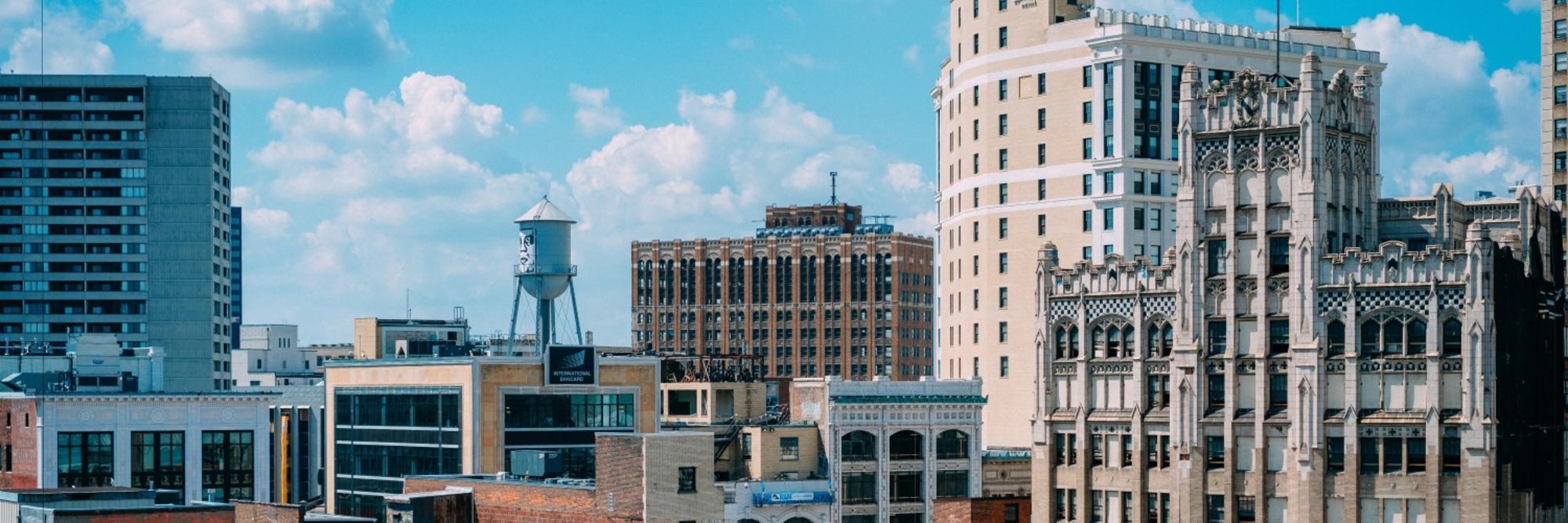
The cost of living in Detroit will depend on your lifestyle and preferences, but overall, it’s a relatively affordable city. Compared to many other major metropolitan areas in the US, Detroit offers lower housing costs and everyday expenses, so it’s an appealing option for those looking for a more budget-friendly urban lifestyle.
Cost of accommodation in Detroit
The cost of accommodation in Detroit varies. Owing to the city’s constant redevelopment, there are many opportunities to buy properties cheaply, but this will often entail extensive maintenance and renovations. If you’re looking to avoid these extra costs, renting accommodation that is slightly pricier but requires less renovation is better.
Overall, housing remains relatively cheap, and rent is usually affordable, even within the upmarket suburbs near the city centre. Utilities are typically not included in the advertised monthly rental price and must be paid for separately, so this is something else you must account for in your monthly budget.
Finding Accommodation in Detroit
Best Neighbourhoods in Detroit
Cost of transport in Detroit
Car insurance in Michigan is among the most expensive in the United States, thanks to the state’s unique no-fault insurance laws, and most Detroit residents own a car regardless. If you’re planning to buy a car, you should also budget for petrol, as Detroit is a sprawling city and you’re likely to drive long distances.
Public transport in Detroit isn’t as extensive as in New York or Boston, but the city’s bus networks – DDOT within the city and SMART in the suburbs – offer reasonably priced services. The QLine streetcar runs along Woodward Avenue, connecting key neighbourhoods between downtown and New Center, and the People Mover provides an elevated loop around the downtown core.
Cost of groceries in Detroit
Grocery prices in Detroit are roughly in line with the national average, although they have risen steadily in recent years. There is a wide array of grocery shops and markets dotting the city, including but not limited to Meijer, Lafayette Foods, Honey Bee Market and Prince Valley Market, and a handful of larger supermarkets scattered across the metro area. Parts of Detroit are classified as food deserts, so where you live will significantly affect how easily you can access a well-stocked shop.
Beyond traditional grocery shops, Detroit’s commitment to fresh, locally sourced food is evident in its vibrant farmers market scene and one of the country’s most active urban farming movements. Seasonal markets across the city serve as community hubs where residents can purchase fresh produce, homemade goods, and handcrafted items.
Cost of entertainment and eating out in Detroit
From fast, casual eateries and street food that provide quick, affordable meals to upscale dining options where a three-course meal signifies a more refined experience, Detroit accommodates every palate and wallet. The cost of entertainment and eating out in Detroit is reasonable by US standards. The city prides itself on its diverse culinary offerings, which include a high concentration of international and ethnic restaurants. Notably, Greektown is celebrated for its authentic Greek dining establishments and Mexicantown for its array of Mexican cuisine.
Detroit’s nightlife and entertainment offerings are just as lively and varied. From iconic jazz clubs offering live music and delicious soul food to river cruises on the Detroit River providing unique tours and events, there’s no shortage of recreational activities.
The city’s nightlife thrives in downtown Detroit, Royal Oak, Ferndale, and Midtown, each bustling with bars, clubs, and live music venues to cater to every preference. For those searching for free entertainment, Detroit boasts several parks and islands, such as Campus Martius Park and Belle Isle Park, offering peaceful retreats and cultural experiences like jazz festivals.
Nightlife and Entertainment in Detroit
Cost of education in Detroit
Public schools in Detroit are tuition-free, so parents will only need to cover the cost of stationery, school lunches, and extracurricular fees. The city’s public school district has been investing in new programmes and facilities, and graduation rates have been climbing in recent years.
Detroit does not have traditional international schools in the way that many expat-heavy cities do. Families seeking a globally oriented curriculum typically turn to private schools in the wider metro area, which can be pricey. Their standards, though, tend to be excellent.
Education and Schools in Detroit
International Schools in Detroit
Cost of healthcare in Detroit
Numerous factors influence the cost of healthcare and health insurance in Detroit, including medical costs and insurance premiums. Healthcare costs in the Detroit metro area tend to run slightly above the national average, particularly for specialist services and dental care.
Health insurance premiums in Michigan have been rising in recent years, and Detroit residents should shop carefully for competitive rates. The state’s marketplace has several plan tiers, and premiums depend heavily on your coverage level, age, and chosen provider.
To manage your health insurance costs, compare plans from multiple insurers each year and consider whether your employer offers group coverage, which is typically more affordable than individual marketplace plans.
Cost of living in Detroit chart
Prices are listed in US dollars (USD) and may vary depending on the product and service provider. The list below shows average prices for Detroit in March 2026.
| Accommodation (monthly rent) | |
| One-bedroom apartment in the city centre | USD 1,400 |
| One-bedroom apartment outside the city centre | USD 900 |
| Three-bedroom apartment in the city centre | USD 2,800 |
| Three-bedroom apartment outside the city centre | USD 1,700 |
| Shopping | |
| Eggs (dozen) | USD 3.50 |
| Milk (1 litre) | USD 1 |
| Rice (1kg) | USD 5.50 |
| Loaf of white bread | USD 3 |
| Chicken breasts (1kg) | USD 13.50 |
| Cheese (500g) | USD 7 |
| Eating out | |
| Three-course meal for two at a mid-range restaurant | USD 75 |
| Big Mac Meal | USD 13 |
| Coca-Cola (330ml) | USD 1.80 |
| Cappuccino | USD 5.50 |
| Local draft beer (500ml) | USD 6 |
| Utilities | |
| Mobile phone monthly plan with calls and data | USD 60 |
| Internet (broadband – average per month) | USD 70 |
| Basic utilities (average per month for a standard household) | USD 220 |
| Transport | |
| Taxi rate (per kilometre) | USD 2 |
| Bus/train fare in the city centre | USD 2 |
| Gasoline/petrol (per litre) | USD 0.90 |