
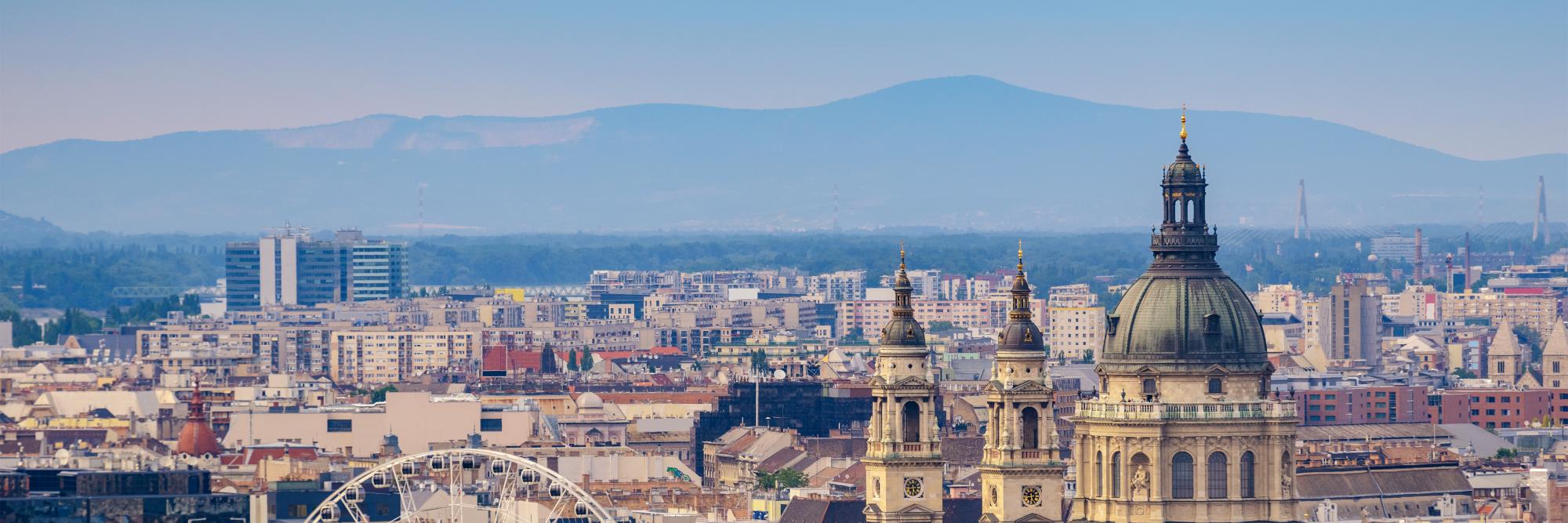
The cost of living in Hungary is much lower than in other European countries. Budapest, the country’s capital, is far cheaper than London, UK, and Paris, France (although pricier than Bucharest, Romania, and Belgrade, Serbia).
Another plus for expats is that they tend to earn higher salaries than their Hungarian counterparts, affording them a better quality of life. However, as in any place, certain aspects of life can be expensive, and expats should adjust their budgets accordingly.
Cost of accommodation in Hungary
Accommodation is the highest expense expats in Hungary face. Rental costs can be particularly high in urban areas such as Budapest.
Naturally, the cost of accommodation in Hungary will largely depend on the property’s location, size, and condition. That said, it is not unheard of for Budapest residents to spend more than half their monthly salary on the combined cost of rent, mandatory household maintenance fees, and utilities.
Rental prices vary widely between the city centre and outer districts, and you can find something that matches your needs and budget with enough searching.
Finding Expat Accommodation in Hungary
Best Neighbourhoods in Budapest
Cost of transport in Hungary
Hungary’s well-developed public transport system is convenient and highly affordable. A reasonable monthly ticket provides unlimited trips on trams, buses, boats, and, in Budapest, the metro.
A variety of tickets cater to diverse commuter needs, from single journeys to long-term passes. Additionally, taxis and ride-share services are readily available at competitive rates. For those considering owning a car, expenses such as fuel, insurance, and maintenance are generally more affordable than in other European countries.
Transport and Driving in Hungary
Cost of groceries in Hungary
After accommodation, the next most considerable expense for most people in Hungary is food, which accounts for approximately a quarter of the average Hungarian’s monthly salary. Then again, compared to more expensive European countries, Hungary’s grocery prices are a breath of fresh air.
There is a delightful array of grocery shopping options for all budgets. If you’re longing for a taste of home, you may find something to satiate your cravings at a Hungarian supermarket, but imported goods can be expensive.
From bustling local markets brimming with fresh produce to well-stocked supermarkets, you can expect a gastronomic adventure. Hungarian cuisine is characterised by abundant seasonal fruits, vegetables, dairy products, and locally sourced meats. To stretch your Hungarian forint further, you should consider sticking to homegrown brands and locally sourced ingredients.
Cost of eating out and entertainment in Hungary
Savouring Hungarian culinary delights is typically an experience that’s easy on the pocket. Whether you are craving a piping hot bowl of goulash at a cosy neighbourhood eatery or indulging in fine dining at an elegant restaurant, Hungary has a smorgasbord of options to suit every taste and budget. Remember that tipping is expected in Hungary and should be factored into your budget for eating out.
Imported wine and beer are pricey, but expats fond of a drink or two will be pleased to know that Hungarian wine and beer are of excellent quality and are much friendlier on the wallet.
For those who relish cultural experiences, Hungary is home to a vibrant arts scene with theatres, concerts, and galleries offering a captivating mix of traditional and contemporary works. Although ticket prices vary, there are typically affordable options for every form of entertainment.
Cost of education in Hungary
For expats with children, the Hungarian public school system offers free education and the opportunity for youngsters to immerse themselves in the local language and culture. Although small additional expenses, such as school supplies or extracurricular activities, might be incurred, these costs are usually manageable.
On the other hand, expat parents seeking an international education for their children should brace themselves for heftier fees for a world-class education. Various international schools might offer scholarships or financial aid options to help ease the burden.
Education and Schools in Hungary
Cost of healthcare in Hungary
Healthcare should not be too expensive for expats in Hungary, as anyone employed in the country can use its free or highly subsidised healthcare services. The quality of care rivals that of Western European countries, and Hungary’s medical tourism industry is a testament to its high standard. To access these services, expats must be employed within the country and meet specific eligibility requirements.
For those seeking private healthcare, it’s reassuring to know that the costs remain relatively low compared to Western counterparts. This makes it an attractive option for those seeking top-notch care without the hefty price tag.
Healthcare and Health Insurance in Hungary
Cost of living in Hungary chart
Prices are in Hungarian forint (HUF) and may vary depending on the product and service provider. The list below shows the average prices in Budapest for April 2026.
| Accommodation (monthly rent) | |
| Three-bedroom apartment in the city centre | HUF 500,000 |
| Three-bedroom apartment outside the city centre | HUF 380,000 |
| One-bedroom apartment in the city centre | HUF 280,000 |
| One-bedroom apartment outside the city centre | HUF 200,000 |
| Food and drink | |
| Eggs (dozen) | HUF 1,200 |
| Milk (1 litre) | HUF 400 |
| Rice (1kg) | HUF 800 |
| Loaf of white bread | HUF 600 |
| Chicken breasts (1kg) | HUF 2,400 |
| Cheese (500g) | HUF 1,800 |
| Eating out | |
| Three-course meal for two at a mid-range restaurant | HUF 22,000 |
| Big Mac Meal | HUF 3,200 |
| Coca-Cola (330ml) | HUF 600 |
| Cappuccino | HUF 1,100 |
| Local draft beer (500ml) | HUF 1,100 |
| Utilities/household | |
| Mobile phone monthly plan (with calls and data) | HUF 8,500 |
| Internet (uncapped ADSL or cable – average per month) | HUF 7,500 |
| Basic utilities (average per month for a standard household) | HUF 50,000 |
| Transportation | |
| Taxi rate (per kilometre) | HUF 450 |
| City-centre public transport fare | HUF 500 |
| Gasoline/petrol (per litre) | HUF 600 |