
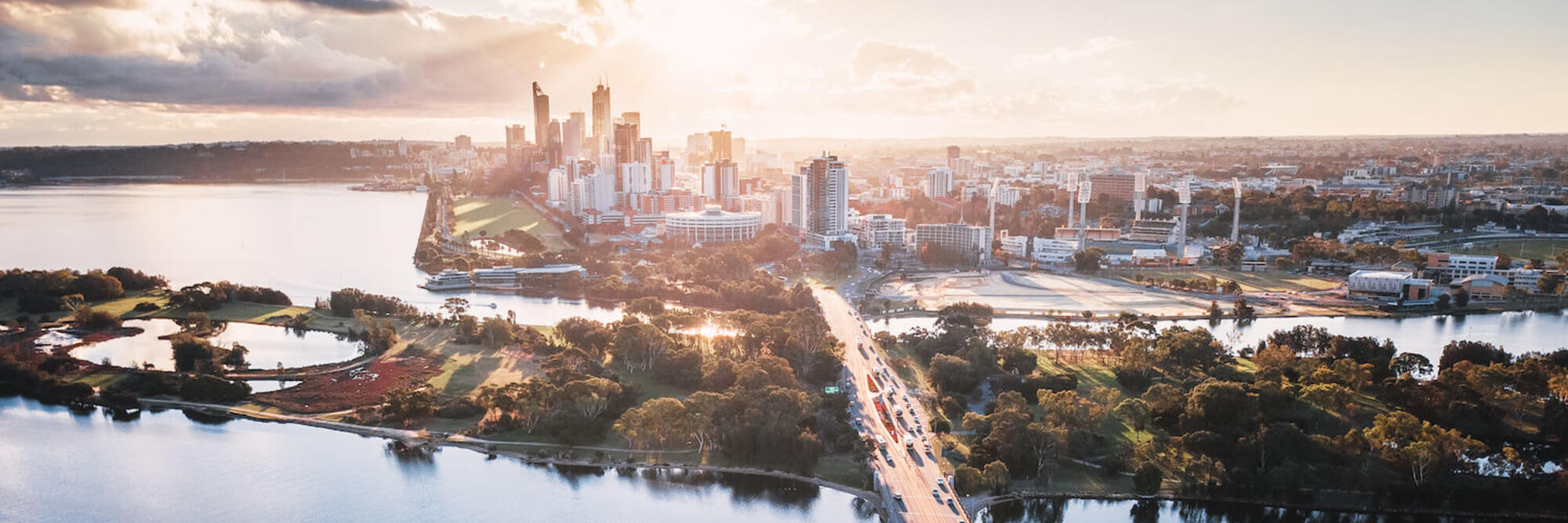
The cost of living in Perth has long been one of the lowest among Australia’s big cities, and it is still lower than in Sydney and Melbourne. That gap has narrowed sharply, though. Property prices have risen quickly in recent years, so Perth is now much closer to the eastern seaboard cities, and Brisbane is roughly level on many measures. This is still a major economic hub, so expect to pay a premium on some things and rent most of all. Wages tend to be higher too, especially in mining and resources, so many residents can absorb the difference.
Cost of accommodation in Perth
The cost of accommodation in Perth is the biggest expense for most expats. Rents are steepest near the city centre and along the coast; the outer suburbs are cheaper. Renting is generally more affordable than in Sydney or Melbourne, especially once you look beyond the central business district.
One thing to plan for is how tight the rental market has become. Vacancy rates have been near record lows, so renters move fast on anything decent, and you may be one of many people applying for the same place. Come prepared with your paperwork and references before you start your search, and you will have a real edge.
Renting Expat Accommodation in Perth
Best and Worst Areas and Suburbs in Perth
Cost of transport in Perth
The cost of transport in Perth is manageable for most people, thanks to a well-integrated public transport network of buses, trains, and ferries run by Transperth. In January 2026, Transperth scrapped its old zone system. You now pay one flat fare to travel anywhere on the network for up to three hours, and you pay even less with a SmartRider set to auto top up. Sunday travel is free. It works out cheaper to leave the car at home once you add up fuel, parking, insurance, and maintenance.
If you live in an area where public transport is less accessible, you may need to rely more on your own car. Cycling in Perth is also popular and cost-effective, especially in inner-city areas.
Cost of groceries in Perth
The cost of groceries in Perth is close to what you would pay elsewhere in Australia, although a couple of quirks are worth knowing. Because the city is so far from the eastern states, some dairy and packaged goods are a little pricier here. Local seafood and WA lamb are often cheaper, and seasonal fruit and vegetables are cheap at the right time of year. Weekend markets are a good bet for fresh produce, and the major supermarkets, including ALDI, stock everything else.
Cost of entertainment and eating out in Perth
The cost of entertainment and eating out in Perth can be as high or as low as you like. You can splash out at a waterfront restaurant or eat well for next to nothing at a food hall or suburban café.
Beyond restaurants, there is a full calendar of cultural festivals, live music, gallery shows, and sports throughout the year, and prices are in line with other big Australian cities. Better still, much of what makes Perth worth living in is free. Kings Park, the city’s beaches, the galleries at the Perth Cultural Centre, and the Swan River foreshore are all free to enjoy.
Cost of education in Perth
The cost of education in Perth depends mainly on one choice: public or private. Perth has plenty of well-regarded schools and universities, which is part of its draw for families. Public schools are free for Australian citizens and permanent residents; beyond the voluntary contributions that all families pay for materials, there is little to budget for. Temporary residents pay more, and how much depends on the visa. Families on a skilled work visa pay a single flat tuition fee for the whole family, no matter how many children they enrol. Dependants on a student visa are usually charged the higher overseas rate for each child.
Private schooling is far more expensive, and there is a wide gap between the cheapest and priciest schools. In return, private schools usually offer smaller classes, better facilities, a wider range of extracurricular activities, and, at international schools, curricula such as the IB.
Education and Schools in Perth
Cost of healthcare in Perth
The cost of healthcare in Perth depends on whether you can use Medicare, the public system. Medicare covers citizens, permanent residents, and eligible visa holders for many services, either free or at a reduced cost. Your nationality is the deciding factor here. Australia has reciprocal agreements with the UK, Ireland, New Zealand, and several European countries, so citizens of those countries can enrol in Medicare for medically necessary treatment. Americans and most other nationalities cannot, so they rely on private cover. For many temporary work visas, that coverage is a condition of the visa, not a choice.
Even with insurance, expect some out-of-pocket costs for private treatment, so build a buffer into your budget. The standard of care in Perth is high, on a par with the other major Australian cities.
Cost of living in Perth chart
Prices are listed in Australian dollars (AUD) and may vary depending on the product and service provider. The list below shows average prices for Perth in August 2026.
| Accommodation (monthly rent) | |
| One-bedroom apartment in the city centre | AUD 2,750 |
| One-bedroom apartment outside the city centre | AUD 2,300 |
| Three-bedroom apartment in the city centre | AUD 4,000 |
| Three-bedroom apartment outside the city centre | AUD 3,100 |
| Shopping | |
| Eggs (dozen) | AUD 7.50 |
| Milk (1 litre) | AUD 2.45 |
| Rice (1kg) | AUD 2.95 |
| Loaf of white bread | AUD 4.45 |
| Chicken breasts (1kg) | AUD 13.50 |
| Cheese (500g) | AUD 7.50 |
| Eating out | |
| Three-course meal for two at a mid-range restaurant | AUD 100 |
| Big Mac Meal | AUD 17.05 |
| Coca-Cola (330ml) | AUD 2.40 |
| Cappuccino | AUD 6.10 |
| Local draft beer (500ml) | AUD 6.65 |
| Utilities | |
| Mobile phone monthly plan with calls and data | AUD 50 |
| Internet (unlimited NBN, average per month) | AUD 80 |
| Basic utilities (average per month for a standard household) | AUD 265 |
| Transport | |
| Taxi rate (per kilometre) | AUD 2.70 |
| Bus/train fare in the city centre | AUD 3.50 |
| Gasoline/petrol (per litre) | AUD 1.90 |