

Living in Lisbon as an expat
The first view for expats moving to Lisbon is usually as the plane banks over the wide Tagus estuary, and a city of terracotta rooftops is revealed stacked across seven hills. Lisbon is the westernmost capital in continental Europe, and it’s older than Rome and Paris.
Portuguese bureaucracy moves at its own unhurried pace, and government offices keep hours that mystify newcomers. Learning Portuguese is difficult for English speakers, but luckily, English proficiency in Lisbon is high.
The city proper is compact, home to half a million people, but the wider metropolitan area is home to around three million. The population of international residents in Portugal has quadrupled in seven years, and close to half of all foreign residents in the whole country are concentrated in the Lisbon Metropolitan Area. The Brazilian community is the largest, followed by Indians, Angolans, and Ukrainians, alongside a growing number of Western Europeans and Americans.
Give it a few months, and a lot of the friction will fade. There’s a common refrain on expat forums: people who planned to stay in Lisbon for two years often find themselves still here a decade on.
Moving to and Living in Portugal
Working in Lisbon
Portugal’s capital is its political and economic engine, and expats working in Lisbon will find themselves part of a city that has turned into one of Southern Europe's more interesting economies over the last decade. The tech sector has grown fast. The annual Web Summit, Europe’s largest tech conference, has been held here since 2016. Tourism, finance, and professional services are also big in Lisbon.
Many jobs in Lisbon are filled through personal connections before they’re ever posted publicly. You can save a lot of time applying on LinkedIn if you have a recommendation from someone inside the company. If you don’t know anyone yet, expat meetups and coworking spaces are where those connections tend to start.
The workplace in Lisbon is less formal than in Northern Europe. Lunches are social affairs and rarely rushed, meetings often start with conversation, first names are the norm even with senior colleagues, and the boundary between professional and personal time is broadly respected.
Finding a Job in Portugal
Visas and Residence Permits for Portugal
Work Permits for Portugal
Lifestyle in Lisbon

The lifestyle in Lisbon is a huge draw, and the food scene is extraordinary. Seafood recipes are dominant (bacalhau alone is said to have over 365 recipes), and petiscos, Portugal’s answer to tapas, turn every dinner into a long, shared affair. The choice and range are hard to overstate, and whether you’re eating at a Michelin-starred place or a tiny tasca with eight tables, you’ll find phenomenal quality.
Fado, Portugal’s melancholic folk music and a UNESCO-recognised cultural treasure, spills from basement windows on warm evenings in Alfama’s narrow lanes. The city’s nightlife is layered: wine bars in Príncipe Real, the dense grid of small bars that is Bairro Alto, and the rowdier late-night scene along Cais do Sodré.
Lisbon’s outdoor access is unusually good for a European capital. Atlantic beaches are within 20 miles (30km) of the city and are reachable by a commuter train that runs along the coast. Monsanto Forest Park’s more than 2,400 acres (1,000 hectares) of urban woodland, sometimes called ‘the Lung of Lisbon’, is inside the city limits. Ericeira, Europe’s only World Surfing Reserve and the second in the world, is half an hour away. Sintra’s UNESCO-listed palaces are a 40-minute train ride, and Arrábida’s wild coastline lies just to the south.
Finding accommodation in Lisbon
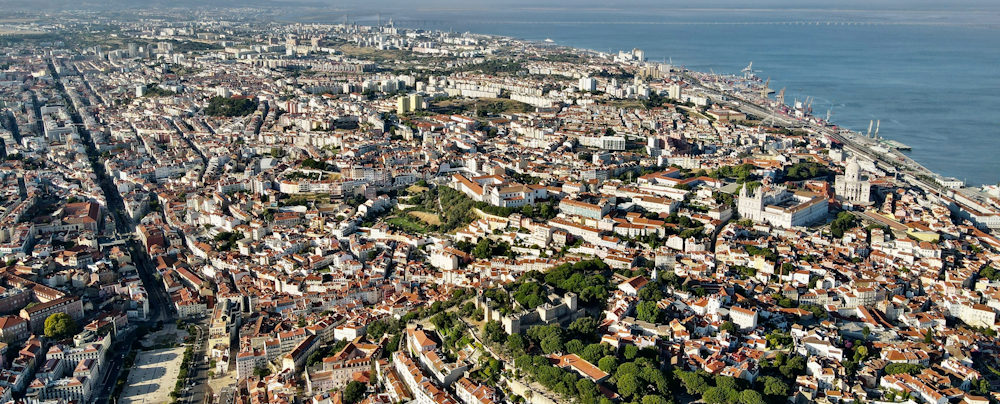
Expats will need to consider the city’s areas and suburbs carefully when finding accommodation in Lisbon. A flat in Alfama means medieval lanes and steep stairs; one in Parque das Nações lacks the old city charm but has modern infrastructure and easy metro access. Príncipe Real has its leafy elegance, Estrela and Lapa are suited to families, and Arroios and Graça are increasingly popular with younger expats who are looking for lower prices and don’t mind some character.
Most expats rent rather than buy, at least initially. The rental market has tightened considerably, and desirable apartments go quickly. You will need a NIF (Portuguese tax number) before signing a lease, and landlords may request a fiador (a Portuguese guarantor), although some accept a larger deposit instead.
Renting Expat Accommodation in Portugal
Cost of living in Lisbon
The cost of living in Lisbon is still lower than in London, Paris, or Amsterdam, but by a narrower margin than in the past. Rent is the largest single expense and has risen steeply in Lisbon’s central neighbourhoods. Local salaries have not kept pace, but expats earning in pounds, dollars, or other strong currencies have access to an entirely different city.
On the other hand, a three-course lunch at a neighbourhood tasca costs remarkably little, and an espresso at the local pastelaria is one of the cheapest you’ll experience in Europe. The metropolitan transport pass, which covers all forms of public transport across all 18 municipalities, is a fraction of the cost of equivalent passes in London or Paris. Groceries from supermarket chains and local markets are noticeably cheaper than in Northern Europe.
Where costs bite is in imported goods: electronics, speciality foods, international clothing brands, and imported vehicles. Lisbon rewards those who eat and shop locally and adopt the Portuguese way of life.
Living in Lisbon with children
Portugal is family oriented in a way that’s obvious to expats living in Lisbon with children from the start. Waiters crouch to greet toddlers, children are welcome everywhere, and nobody panics if a six-year-old is running around unsupervised.
The Oceanarium at Parque das Nações is one of Europe’s finest aquariums. Monsanto Forest Park has nature trails and free playgrounds. Sintra’s fairytale palaces make a perfect family day trip by train, and the gentle beaches along the Cascais line are ideal for younger children.
Portugal’s public healthcare system (SNS) is available to all legal residents once they have registered with the SNS and, for workers, are contributing to social security. Private healthcare is commonly used in Lisbon and costs less than in the UK or the US, and private insurance is mandatory for temporary residence visa holders. Most expats end up using both: the public system for emergencies, and private cover for routine appointments where public waiting times are long.
Healthcare and Medical Insurance in Portugal
Finding a school in Lisbon
Finding a school in Lisbon means sorting through an unusually wide range of choices for a city this size. Portugal has over 50 international schools, and most are clustered in Lisbon proper and nearby areas like Cascais, Oeiras, Sintra, and Carcavelos. Curricula include the International Baccalaureate, British (IGCSE and A-Levels), American (with AP), Cambridge International, French, and German programmes. Most teach in English with Portuguese as a subject.
Demand for top international schools is high, and waiting lists are common, so apply six to twelve months ahead if you can. Budget for more than the headline tuition. Transport, uniforms, lunches, and extras can add 20 to 30 percent on top.
Portuguese public schools are tuition free and follow the national curriculum, taught entirely in Portuguese. Enrolment is assigned by catchment area, so check which school covers your street before signing a lease.
Education and Schools in Portugal
Best International Schools in Portugal
Getting around in Lisbon
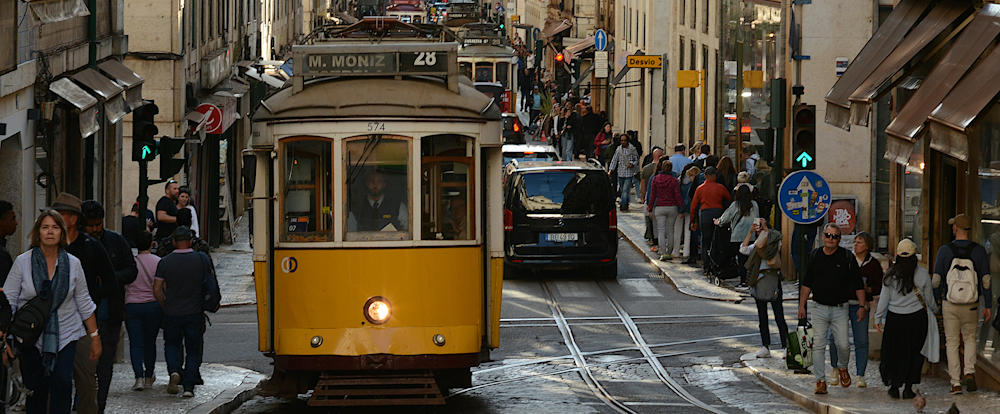
Getting around in Lisbon is an experience in itself. Few cities let you commute on a century-old wooden tram, cross a river by ferry, and connect to the airport by metro, all on a single travel card. The network spans four metro lines, an extensive bus system, iconic trams and funiculars, suburban rail to Cascais and Sintra, and Tagus ferry services. The Santa Justa Elevator links the Baixa to Chiado.
The Navegante card is a metropolitan monthly pass that covers unlimited travel across all 18 municipalities by metro, bus, tram, train, and ferry. Children up to 12 travel free, and thanks to the household cap, no family pays for more than two passes.
Most expats in central Lisbon manage without a car, although families in suburban areas typically find one necessary. Cycling infrastructure is expanding, and the GIRA bike-sharing scheme provides access to docked e-bikes across the city.
Public Transport, Driver’s Licences and Driving in Portugal
Climate and weather in Lisbon
The climate and weather in Lisbon follow a typical Mediterranean pattern: hot, dry summers; mild, moderately wet winters; and long, luminous seasons between. Lisbon gets roughly 2,800 hours of sunshine a year. Temperatures rarely drop below freezing, and the summer peaks that sometimes touch 95°F (35°C) in August are tempered by the Nortada, a northwesterly Atlantic breeze that keeps the city cooler than inland rivals like Madrid.
Lisbon gets around 24 to 29 inches (600 to 730mm) of rain in the city centre, and almost all of it falls entirely between October and April. July and August are rain free. Spring in Lisbon is most people’s favourite season: comfortable temperatures, the city green from winter rains, jacaranda trees blooming purple along the avenues, and the famous Festas de Santo António filling Lisbon with street parties throughout June.
The catch is indoor temperatures. Lisbon’s older buildings are poorly insulated; stone walls that keep flats cool in summer turn cold and damp in winter. Ask about heating and air conditioning before signing a lease.
All in all, Lisbon will get under your skin. The quality of life, the outdoor access, the food, the light, and the depth of history beneath your feet all add up. The adjustment takes patience, the bureaucracy takes fortitude, and the hills take calves of iron. But there's a reason more and more expats are choosing to put down roots in Lisbon.