
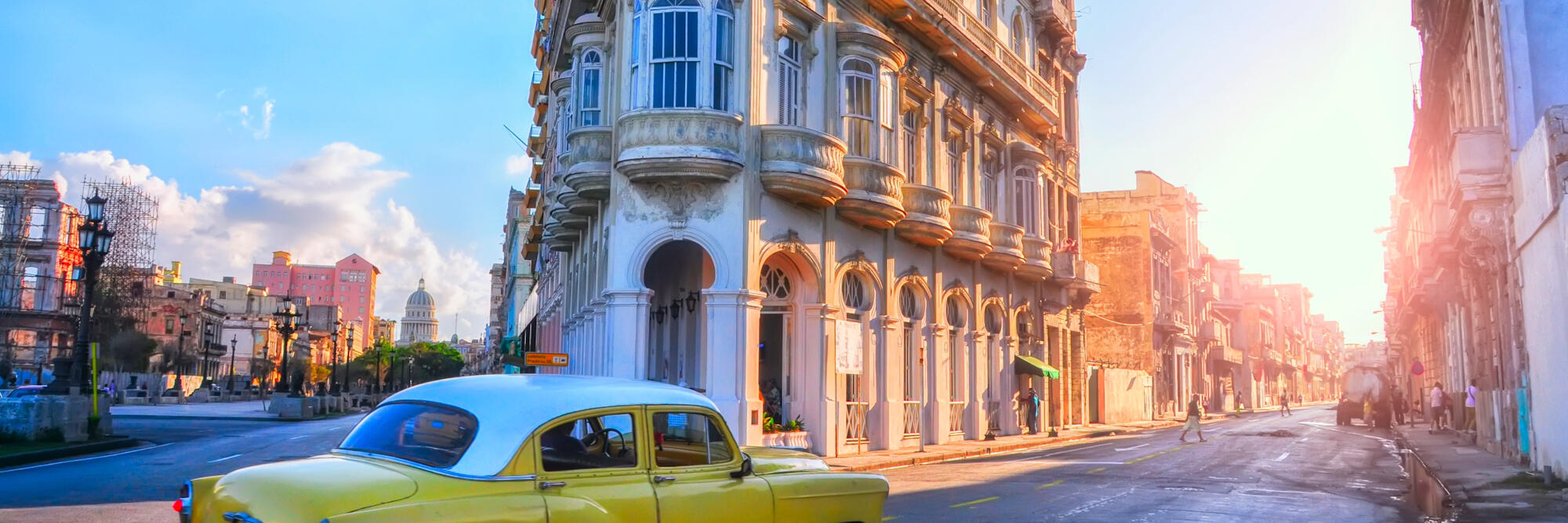
Those moving to Cuba should be prepared to step into a lively world of colours and sounds, a land where the warmth of its people rivals that of its climate. Beyond the clichéd images of vintage cars and white sandy beaches lies a rich mosaic of daily life that beckons with rhythm and resilience. The streets hum with music that has trickled through generations, and the air is as thick with history as it is with the scent of fresh tobacco and roasting coffee beans.
The island’s capital, Havana, presents a living museum of architecture and atmosphere, where each faded facade and cobbled street tells a story. That said, to live in Cuba is to embrace a lifestyle that prioritises simplicity and community over material wealth – a shift from the hustle of modern metropolises.
The Cuban spirit, undampened by years of economic hardships, is evident in the city’s lively street life and a culture rich in tradition and solidarity. For those ready to immerse themselves in the nuances of Cuban culture, the experiences gained are as enriching as the island’s storied heritage.
Living in Cuba as an expat
Expats moving to Cuba will find a distinct political and cultural condition deeply rooted in its history and principles. While it’s necessary to approach this with an open mind, it’s equally important to recognise that decades of US embargoes and international trade policies have posed significant challenges to Cuba’s economic potential.
The most prominent industries in Cuba are manufacturing, construction, tourism and agriculture, with exports of goods such as sugar, tobacco, and coffee. It’s noteworthy that, despite numerous economic challenges, Cuba has maintained self-sufficiency in several sectors, demonstrating its adaptability and commitment to national well-being.
Expats considering a move to Cuba will need a job offer before they can apply for a work permit, and will generally work for international businesses involved in tourism or industries such as mining and energy.
On the whole, Cuba is a relatively safe country, although expats should be aware of the hurricane season from June to November, and be prepared for occasional infrastructure challenges. Crime, specifically opportunistic theft, can also be an issue, so expats should avoid walking around Havana alone at night and use only legitimate taxis and tour operators.
Cost of living in Cuba
Cuba has a relatively low cost of living compared to many international destinations, making it an affordable place for expats. Everyday expenses such as rent, food, and utilities are largely inexpensive, although the availability of certain goods can be limited.
While basic costs are low, expats should be aware that local salaries are also quite modest, which can make maintaining a comfortable expat lifestyle difficult if working for a local company. Many foreigners who move to Cuba work remotely for an employer abroad, allowing them to take full advantage of the island’s affordability.
It’s worth noting that some imported goods can be difficult to find or may only be available through informal channels, requiring a degree of flexibility when shopping for specific products.
Expat families and children
Cuba has been internationally recognised for its solid education and healthcare systems, which testify to its commitment to public welfare. Furthermore, the medical tourism industry has flourished due to the high standard of care available at a fraction of the cost in many Western countries. That said, infrastructure development is an ongoing challenge. There are a few international schools in Cuba, all located in the country’s capital, Havana. These schools offer a good standard of education, although fees are high.
Cuba is a family-friendly destination. With its miles of coastline, expat families will have plenty of opportunities to enjoy the outdoors, from spending a day on the beach to activities such as kayaking and snorkelling. Town squares also often have fun things for kids to do, like enjoying a carousel ride or playing an impromptu baseball game with other local children.
Climate in Cuba
Cuba has a semitropical climate with two distinct seasons: a rainy season from May to October and a dry season from November to April. Generally, the weather in Cuba is sunny, hot and humid. The heat can get uncomfortable in summer, with high humidity and temperatures reaching 100°F (38°C). That said, those living on the coast will find the sea breeze tends to make conditions more pleasant during this time of the year. Throughout the year, the average temperatures range between 70°F (21°C) and 81°F (27°C).
As with any destination, there are considerations to keep in mind when choosing Cuba for an expat experience. Beyond its rich culture and fascinating history, adapting to Cuba’s unique socio-economic situation can be a rewarding journey, although it comes with its own set of challenges.
Fast facts
Population: About 11 million
Capital city: Havana
Geography: Cuba is situated at the convergence of the Caribbean Sea, the Atlantic Ocean, and the Gulf of Mexico. Most of the main island is relatively flat, though some areas are hilly. The southwest of the island is home to the Sierra Maestra mountain range.
Political system: Unitary one-party socialist republic
Major religions: Catholicism is the most widespread religion in Cuba, although a significant portion of the population is non-religious
Main language: Spanish
Money: Cuban Peso (CUP), which can be divided into 100 centavos. Expats will be able to find ATMs in most urban centres.
Tipping: Tips are generally expected and appreciated in Cuba. A tip of 10 percent is considered the standard, with more being offered for excellent service.
Time: GMT-4
Electricity: 110V/220V, 60Hz. Plugs with two flat blades or two round pins can be used throughout the country.
Internet TLD: .cu
International dialling code: +53
Emergency number: 106
Transport and driving: In Cuba, cars drive on the right-hand side of the road. The public transport system is sound in urban areas, and taxis are abundant and reasonably priced.