
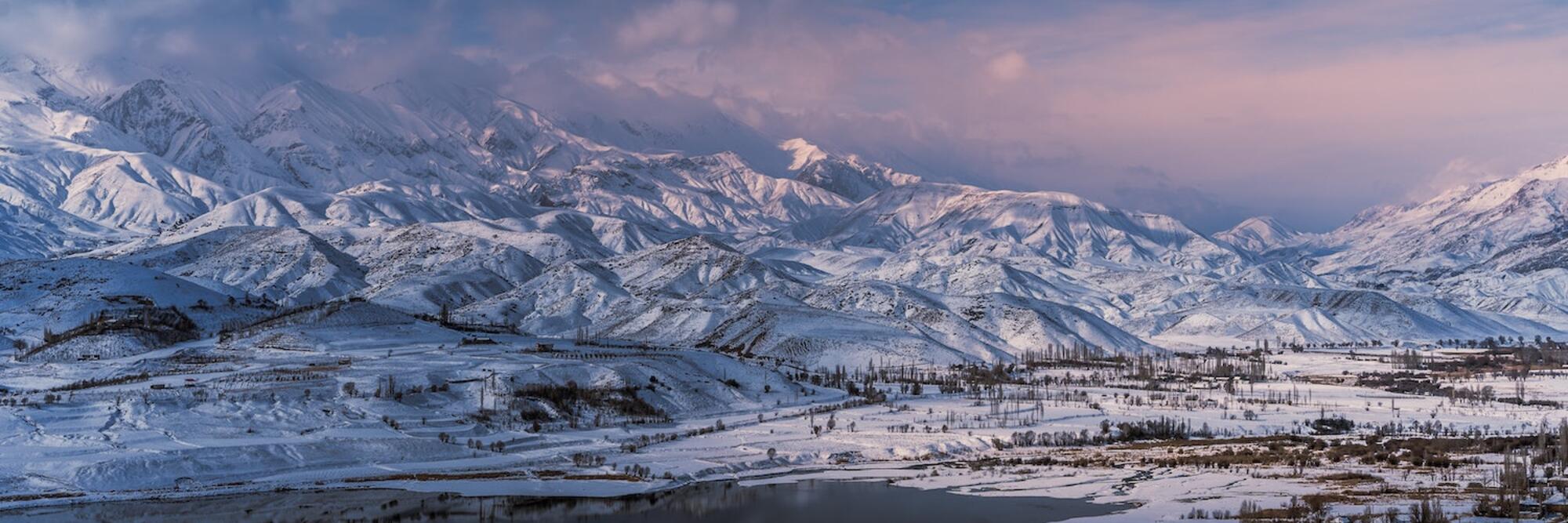
Situated in the Middle East, Iran is a mostly arid mountainous country perched along the Persian Gulf and the Gulf of Oman. Along with its many mountain ranges and peaks, the highest of which is the dormant volcano Mount Damavand, Iran contains a vast central plateau.
Expats moving to Iran will find a country born out of a rich and tumultuous history, and that became a unique Islamic republic in 1979 following a popular revolution that brought religious clerics to power.
Living in Iran as an expat
Most expats in Iran come from other Middle Eastern states, and many can be found working as senior management professionals in the abundant state-owned oil and natural gas sectors. Expats tend to be located in Iran’s capital, Tehran, which is also the political, cultural, industrial and commercial centre of the country.
While Persian, known locally as Farsi, is the official language of Iran, English is commonly spoken in business circles. Expats should always bear in mind that Iran is an Islamic country that strictly enforces its religious traditions, and this may lead to some culture shock. Women should dress modestly, both as a sign of respect for the local culture and to avoid unwanted attention.
Expats moving to Iran will have access to exciting activities to keep them entertained during their assignments. Popular activities are hiking and skiing in the Alborz Mountains and relaxing on the Caspian coast. Expats can also get stuck into Iran’s rich history and culture.
Cost of living in Iran
The cost of living in Iran is rather low. Accommodation will likely be the most significant expense facing expats. Those with children will also need to factor in the expense of international school fees, and health insurance plans can also be costly depending on the policy chosen. That said, transport, groceries and other everyday expenses tend to be cheap in Iran, therefore bringing down the general cost of living.
Expat families and children in Iran
There are several international schools in Iran to serve expat populations. There are also some good private hospitals in Tehran. The general standard of healthcare in Iran may not meet the standards that most expats are accustomed to, however, so it's paramount that those moving to Iran have a comprehensive health insurance package.
Safety in Iran
Iran is, on the whole, safer than most expats assume. That said, safety and security are concerns for expats travelling to and living in Iran. Due to strained relations between Iran and several other countries, Iran can feel politically volatile for many expats. Expats in Iran are advised to maintain a low profile and to stay well away from any mass gatherings or political protests.
Climate in Iran
The climate in Iran is arid and semi-arid, with hot and dry conditions. The weather in Iran differs throughout the country. The north of the country is subtropical, while the rest of the country generally experiences long hot summers and short cool winters.
Expats should note that Iran is prone to earthquakes, and destructive dust storms have been known to occur. New arrivals should prepare for their move accordingly and ensure they pay close attention to announcements from authorities.
Ultimately, while expats might be enticed to move to Iran for career progression, it's not a decision to be taken lightly. Expats living in Iran are likely to feel more restricted than they would in their home countries. Expats considering Iran should be aware that life there involves dealing with significant cultural, social, legal, and geopolitical differences from most Western home countries. It may be rewarding for some, but it’s not a decision to be taken lightly.
Fast facts
Population: Around 90 million
Capital city: Tehran
Neighbouring countries: Afghanistan, Armenia, Azerbaijan, Iraq, Pakistan, Turkey and Turkmenistan.
Geography: Located in the Middle East, Iran lies to the south of the Caspian Sea and north of the Persian Gulf and the Gulf of Oman. The country's mountains enclose several broad basins, or plateaus, on which major agricultural and urban settlements are located.
Political system: A hybrid system guided by Islamic ideologies featuring an elected president and parliament with an assembly of experts who appoint a supreme leader.
Major religion: Islam
Main languages: Persian (Farsi) is the official language of Iran, but English is widely spoken in business circles.
Money: Iranian Rial (IRR). In everyday transactions, Iranians universally quote prices in Tomans (1 Toman = 10 Rials), which can cause confusion for new arrivals.
Tipping: Tips are not expected, but a small tip is always appreciated, as wages in the service industries in Iran are low.
Time: GMT+3:30
Electricity: 230 volts, 50 Hz. Plug types C and F are used. Plug type C has two round pins, while plug type F has two round pins with two earth clips on the side.
Internet domain: .ir
International dialling code: +98
Emergency numbers: Ambulance 115, fire brigade 125, police 110
Transport and driving: Traffic drives on the right-hand side of the road. Public transport in Iran comprises buses, a metro, trains and taxis. Domestic flights are also widely accessible and affordable.