
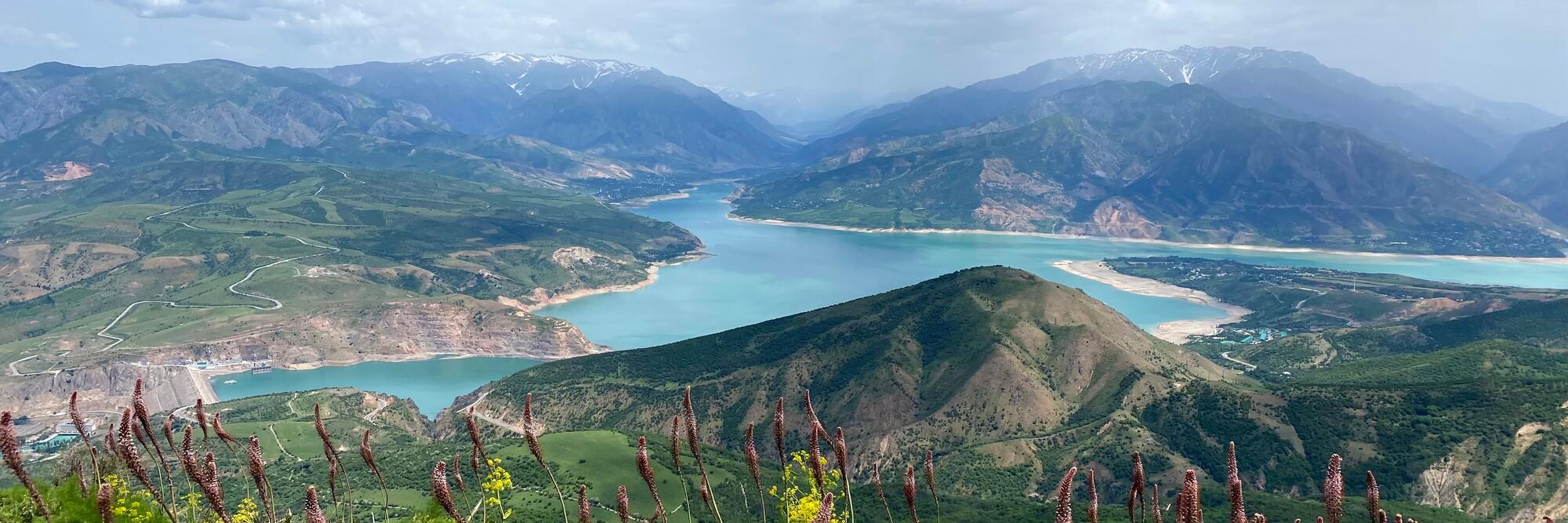
Moving to and living in Uzbekistan means stepping into a world of desert sands, awe-inspiring mountain peaks, and ancient Silk Road cities. While it may not be the most conventional of expat destinations, Uzbekistan certainly has a unique brand of charm. It can offer an interesting and enlightening stay for the open-minded.
Living in Uzbekistan as an expat
The expat community in Uzbekistan is relatively small but growing, as the country’s growing economy continues to draw foreigners who want career progression. Thanks to sweeping reforms since 2017, Uzbekistan’s GDP has been climbing steadily, reaching record growth of around 8 percent in 2025. Key sectors include mining and metallurgy, energy, manufacturing, construction, and a booming services industry that now accounts for nearly half of the GDP. Most expats work as senior management professionals, educators at international schools, or consultants in these fields. Teaching English is still a solid prospect for job-seeking expats.
Although some speak Russian, the country’s official language is Uzbek. Few Uzbek people speak fluent English, so basic knowledge of Uzbek or Russian is recommended. Those planning on living in Uzbekistan for an extended period should consider enrolling in a local language course to make the transition smoother.
Accommodation in Uzbekistan is varied, with old Soviet style apartments and newer builds available. Soviet-style apartments tend to be in old buildings in need of maintenance and are usually without some common modern conveniences. These are typically more affordable than newer builds that offer a wide range of amenities, modern appliances, and fixtures.
While most Uzbeks are Muslim, Uzbekistan is a very tolerant country, so expats shouldn’t have any difficulties practising their religion freely here. Regardless, expats should always demonstrate respect for local etiquette and should dress modestly.
Cost of living in Uzbekistan
The low cost of living in Uzbekistan is one of its most appealing attributes. The country’s capital, Tashkent, is one of the most budget-friendly cities in the region, and everyday expenses cost a fraction of what they would in Europe or the USA. It is slightly pricier than some neighbouring Central Asian countries like Kyrgyzstan and Tajikistan.
Excellent and well-priced fresh produce can be found in local markets, and dining out offers great value for money. Public transport is both comprehensive and affordable, and expats can also easily find reasonably priced accommodation.
Families and children in Uzbekistan
Expat families relocating to Uzbekistan with children will find a growing number of international schools in the country, the majority of which are located in Tashkent. Public education is free, but this is rarely an option for expats since the language of instruction is usually Uzbek or Russian.
Healthcare in Uzbekistan isn’t on par with standards in Western Europe or North America, and there’s a serious shortage of doctors and medical facilities. The Uzbek government is actively reforming the medical system – including the rollout of state health insurance and a National Health Strategy backed by the World Bank – but it’s best for expats to seek treatment in private hospitals. Many expats travel abroad for more complex medical procedures, and comprehensive international health insurance is strongly recommended.
International Schools in Uzbekistan
Climate in Uzbekistan
The arid continental climate in Uzbekistan can be trying, especially during winter when temperatures seem to hover around freezing. Thick, cosy coats are the order of the day at this time of year. Summers in Tashkent are scorching – temperatures routinely surpass 95°F (35°C), with peaks above 104°F (40°C) – so expats should take care to stay hydrated and keep cool.
While there is no doubt that Uzbekistan is firmly off the beaten path, its starkly beautiful countryside and welcoming local population have much to offer expats looking for something different.
Fast facts
Official name: Republic of Uzbekistan
Population: Over 38 million
Capital city: Tashkent (also the largest city)
Other cities: Namangan, Samarkand, Andijan, Bukhara
Neighbouring countries: Kazakhstan to the north, Kyrgyzstan to the east, Tajikistan to the southeast, Afghanistan to the south and Turkmenistan to the southwest.
Geography: Uzbekistan is one of only two doubly landlocked countries in the world. The terrain is dominated by vast desert plains – the Kyzylkum and parts of the Karakum – with fertile river valleys running through them. The mountainous east, including spurs of the Tian Shan range, rises above 14,000 feet (4,300m). The shrinking Aral Sea lies on the country’s northwestern border with Kazakhstan.
Political system: Unitary presidential constitutional secular republic
Major religions: Islam
Main languages: Uzbek (official). Russian is widely spoken as a second language.
Money: The local currency is the Uzbekistani Som (UZS). Card payments are increasingly common in Tashkent, and Visa and Mastercard, as well as local payment systems Uzcard and Humo, are accepted at most larger shops, hotels, and restaurants. Cash is still king in bazaars and smaller establishments, particularly outside the capital. ATMs are easy to find in larger cities, but are scarce in rural areas. Expats with a residence permit can open a local bank account at major banks such as Kapitalbank or the National Bank of Uzbekistan.
Tipping: It isn’t common or expected to tip in Uzbekistan. Some upmarket restaurants may add a 10 percent service fee to the bill.
Time: GMT+5
Electricity: 220V, 50Hz. Plugs with two rounded pins are used throughout the country.
Internet domain: .uz
International dialling code: +998
Emergency contacts: 102 (police), 103 (ambulance) and 101 (fire)
Transport and driving: Cars drive on the right-hand side of the road in Uzbekistan. Tashkent has an extensive metro system – the first in Central Asia – alongside a network of buses and minibuses. Ride-hailing apps such as Yandex Go are widely used and affordable. High-speed trains connect Tashkent with Samarkand and Bukhara.