
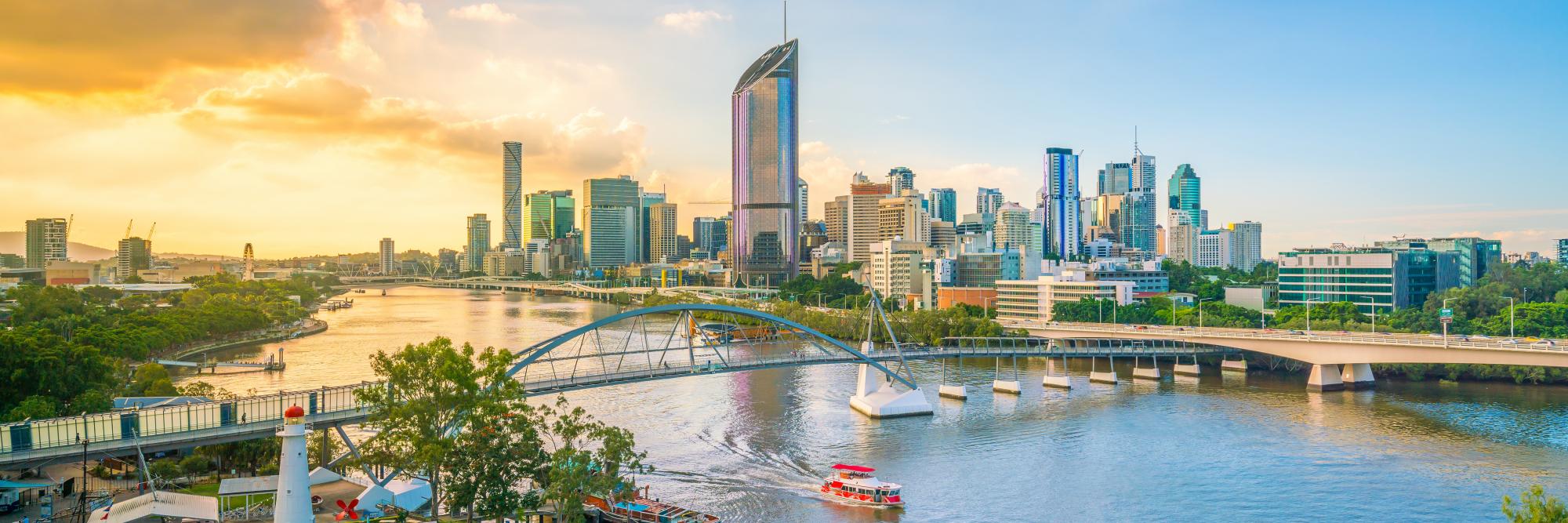
These days, the cost of living in Brisbane is among the highest in the country. Its costs are roughly level with Melbourne’s, and only Sydney is clearly more expensive among the big east-coast cities. You can still live well here on a budget, and there are plenty of ways to keep your costs down in the capital of the Sunshine State.
Cost of accommodation in Brisbane
The cost of accommodation in Brisbane is the largest expense most expats face, and you will spend more on rent than on anything else. The most sought-after suburbs are also the priciest, so living further out is a reliable way to trim your housing costs. Rental demand has been high and supply tight for years, so vacancies are scarce and prices are firm. You usually pay for utilities separately, on top of the rent.
Renting Expat Accommodation in Brisbane
Best and Worst Areas in Brisbane
Cost of transport in Brisbane
Public transport in Brisbane is remarkably cheap. You will pay next to nothing to get around by bus, train, ferry, or tram, because Translink now charges a permanent flat 50-cent fare for every journey, however far you travel. The Airtrain service to the airport is the main exception. A Go Card is the simplest way to tap on and off, and every payment method is charged the same flat fare. The real transport expense is running a car, once you add up petrol, parking, registration, and tolls on some motorways.
Cost of groceries in Brisbane
Shoppers pay more for groceries in Brisbane than in the state’s smaller towns and rural areas.
Aldi is the cheapest of the major supermarket chains, and Coles and Woolworths are not far behind. Expect to pay noticeably more at smaller convenience stores and speciality shops. Local farmers’ markets are a cheaper and often more enjoyable way to buy fresh produce.
Cost of entertainment and eating out in Brisbane
Brisbane’s warm, sunny climate is a real asset here, and you can fill whole days outdoors for next to nothing. Locals picnic in the parks, swim for free at South Bank’s Streets Beach, fire up the public barbecues dotted through the city, or drive out to a bayside town like Redcliffe for the day.
When you do pay for entertainment in Brisbane, the prices are much like those in any other big Australian city. Brisbane also has a growing independent market scene, and the weekend markets around the city are good hunting grounds for a bargain.
Eating out in Brisbane need not be expensive either. The high-end restaurants are pricey, but you are spoilt for cheaper options, from food markets and food trucks to cosy cafés and the low-cost Asian eateries around Sunnybank and Fortitude Valley.
Cost of education in Brisbane
The biggest factor in the cost of education in Brisbane is the type of school. Public schools charge no tuition for the children of citizens and permanent residents, and they follow the Australian curriculum. Private and international schools offer a wider range of curricula and smaller class sizes, although their fees are steep. In addition to tuition, you should budget for uniforms, textbooks, school excursions, and the voluntary contributions many schools request.
Education and Schools in Brisbane
Cost of healthcare in Brisbane
For anyone who qualifies for Medicare, healthcare in Brisbane is cheap, because the government scheme funds free or subsidised treatment nationwide. Australia has reciprocal healthcare agreements with 11 countries, so expats from the UK, Ireland, New Zealand, and several others can use Medicare-funded care. Expats from countries without an agreement, such as the United States and Canada, take out private health insurance instead.
You will pay much the same for private cover in Brisbane as anywhere else in Australia. Medicare does not fully cover dental care, optometry, physiotherapy, or the gap for many prescriptions, so many residents and expats buy private insurance to fill those gaps.
Cost of living in Brisbane chart
Prices are listed in Australian dollars (AUD) and may vary depending on the product and service provider. The list below shows average prices for Brisbane in August 2026.
| Accommodation (monthly rent) | |
| One-bedroom apartment in the city centre | AUD 2,850 |
| One-bedroom apartment outside the city centre | AUD 1,990 |
| Three-bedroom apartment in the city centre | AUD 4,900 |
| Three-bedroom apartment outside the city centre | AUD 3,400 |
| Shopping | |
| Eggs (dozen) | AUD 5.50 |
| Milk (1 litre) | AUD 1.90 |
| Rice (1kg) | AUD 3.15 |
| Loaf of white bread | AUD 3.20 |
| Chicken breasts (1kg) | AUD 15 |
| Cheese (500g) | AUD 7.50 |
| Eating out | |
| Three-course meal for two at a mid-range restaurant | AUD 120 |
| Big Mac Meal | AUD 15 |
| Coca-Cola (330ml) | AUD 3 |
| Cappuccino | AUD 5 |
| Local draft beer (500ml) | AUD 8 |
| Utilities | |
| Mobile phone monthly plan with calls and data | AUD 45 |
| Internet (uncapped broadband, average per month) | AUD 80 |
| Basic utilities (average per month for a standard household) | AUD 250 |
| Transport | |
| Taxi rate (per kilometre) | AUD 2.20 |
| Bus/train fare in the city centre | AUD 0.50 |
| Gasoline/petrol (per litre) | AUD 1.90 |