

- Download our Moving to Germany Guide (PDF)
Over the last few years, it’s become increasingly difficult for non-EU nationals without specialist skills to find employment or obtain work permits for Germany, and simultaneously, the country has expanded pathways for those with specialist skills or experience.
While the government has implemented policies to protect jobs for locals, citizens from certain EU member states have the right to live and work in Germany without restriction. But those hoping to stay longer than three months must get a residency permit. Those who have sought-after skills may qualify for a specialist professional residence permit.
EU citizens can work in Germany without a work permit and will only need to register their presence in Germany. If you are from outside the EU, you must apply for one of several types of work permits for Germany.
EU Blue Card for Germany
The EU Blue Card is the most popular residence permit for non-EU graduates who have secured a job in Germany. It is designed for those with a university degree or a comparable tertiary qualification that took at least three years to complete, and it offers faster routes to permanent residency than most other permit types.
To qualify, you must have a concrete job offer from a German employer for a position of at least six months, and your role must be appropriate to your level of qualification. The salary requirements depend on your situation.
- There’s the standard threshold for all qualifying graduates in any profession. At this salary level, Federal Employment Agency approval is not required.
- There’s also the lower threshold for those working in shortage occupations (including STEM professionals, doctors, nurses, teachers, and ICT managers) and for recent graduates who obtained their degree within the last three years. Federal Employment Agency approval is required at this level.
- IT specialists without a formal degree can also qualify for the EU Blue Card under the lower salary threshold, but they need at least three years of IT work experience at a graduate level within the last seven years, and a qualifying job offer in the IT sector. Federal Employment Agency approval is also required in this case.
EU Blue Card holders can apply for a settlement permit after 27 months, or just 21 months if they can demonstrate B1-level German. Family reunification is also facilitated for EU Blue Card holders.
General employment permit for Germany
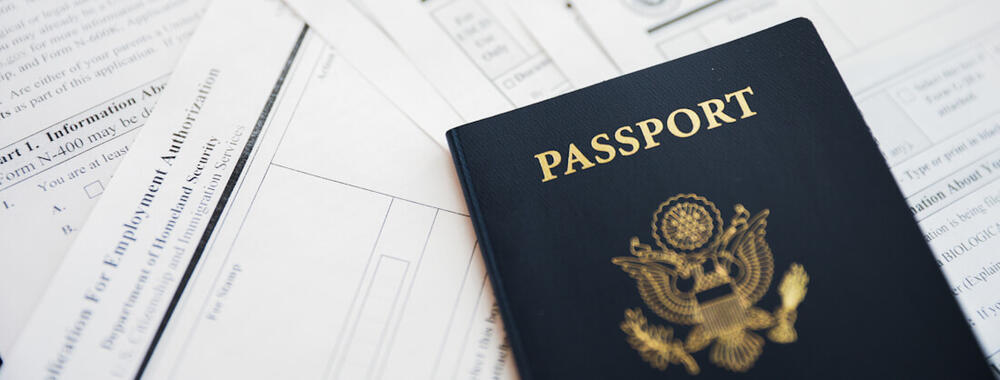
If you apply for a general employment permit (Arbeit), you need a firm offer of employment from a German company and a vocational qualification. Employment must also be approved by the Federal Employment Agency (Bundesagentur für Arbeit), which assesses whether your working conditions are comparable to those of domestic employees. The general employment permit is pretty challenging to obtain for those without recognised qualifications.
Specialist professional residence permit for Germany
Various expats can apply for a specialist professional residence permit in Germany. Most applicants are graduates with specialist skills. University professors, managers with numerous years of experience, and those with particular specialised skills can also apply for this type of permit.
Depending on the permit type, evidence of German language skills may strengthen your application; for the EU Blue Card, however, language skills are not a visa requirement. You must also provide a firm offer of employment, your degrees and qualifications, and proof of sufficient funds to support yourself while living in the country.
Opportunity Card (Chancenkarte) for Germany
Introduced in June 2024 under Germany’s updated Skilled Immigration Act, the Opportunity Card (Chancenkarte) is a residence permit that allows skilled non-EU workers to enter Germany for up to 12 months specifically to search for a job. If you do not find a job within the 12 months, the card cannot generally be extended, but you may reapply after a one-year gap.
Unlike most other work permits, the card is designed to give you time to find a job on the ground, so you don’t need a job offer before you apply. To be eligible, you need the following:
- A university degree recognised in your home country, or at least two years of completed vocational training
- Proof of financial self-sufficiency that meets a minimum threshold for the duration of your stay
- A minimum language level of A1in German or B2in English
- A score of at least six points under the Opportunity Card points system
The points system takes into account factors such as professional experience, German language skills, age, whether your foreign qualification is partially recognised in Germany, and whether you have previously lived in Germany legally. If your vocational qualification is already fully recognised in Germany, you don’t have to worry about points.
While you are in Germany on an Opportunity Card, you are permitted to take on part-time work of up to 20 hours per week or trial employment of up to two weeks at a time. If you secure a permanent position, you can then apply for the appropriate employment residence permit to stay in Germany in the long term.
Self-employed residence permit for Germany
This type of work permit is for freelancers, self-employed individuals, or those planning to set up a business. To get a self-employed residence permit, applicants must demonstrate how their specific skills are required in the particular area of Germany they plan on settling down in.
Those who want to set up a business need to show that their business will positively contribute to the local economy – by employing local staff, for instance. Applicants must also prove they can fund the startup of their business, as there are limited business funding opportunities for non-German nationals.
If you plan to apply for this type of visa, you should draw up a detailed business plan illustrating its long-term goals and the steps you’ll take to achieve them. It’s likely to be in your favour if you have a similar business elsewhere.
Self-employed residence permits are usually granted for three years to allow the business to get off the ground. For renewal, the permit will be extended indefinitely if the applicant can prove that they have been successful.
Useful links
Visa and work permit regulations are subject to change at short notice, and expats should contact their respective embassy or consulate for the latest details.