
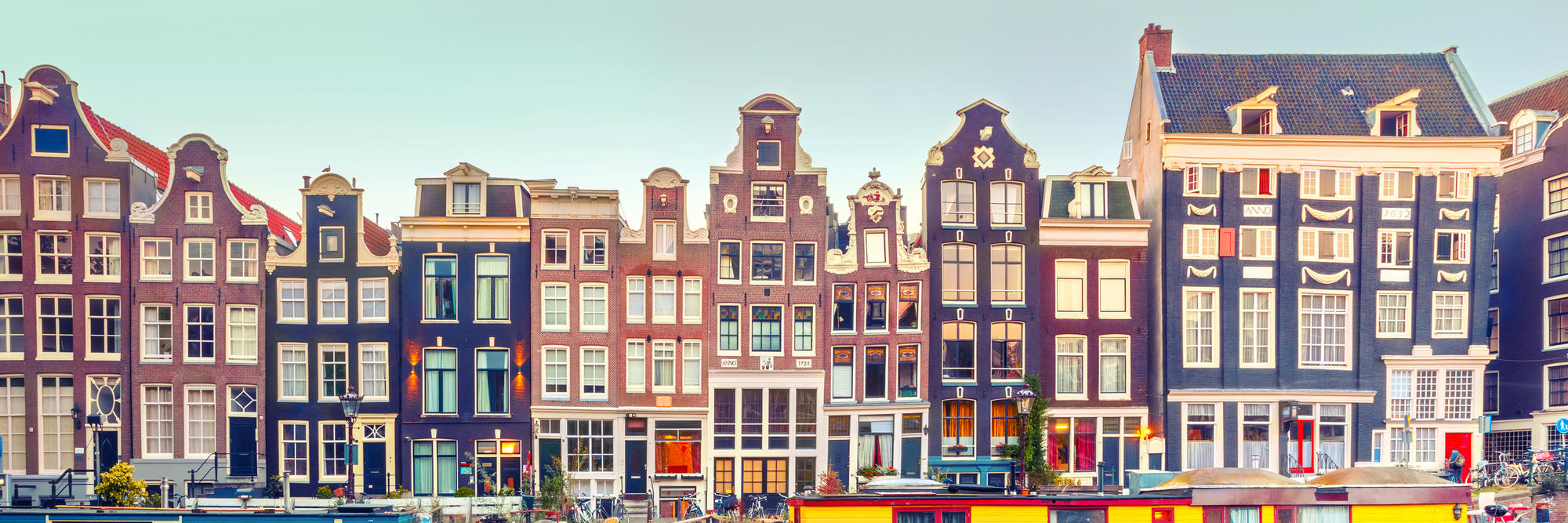
The cost of living in Amsterdam is high on a global scale. It is also considerably higher than other Dutch cities, and it’s considered expensive by locals and expats alike.
Although cheaper than cities such as London, UK and Copenhagen, Denmark, Amsterdam’s cost of living is comparable to that of other European capitals such as Vienna, Austria and Paris, France.
Cost of accommodation in Amsterdam
Accommodation is likely to take the biggest bite out of your budget in Amsterdam. Where you choose to live will dramatically affect what you pay. Renting in the city centre can cost nearly twice as much as outlying areas like Amsterdam Noord or Watergraafsmeer, which also offer larger apartments or houses with outdoor areas and green spaces.
In the city centre, rental prices for a one-bedroom apartment are significantly higher than in areas like Amsterdam Zuid or Bijlmer. These suburbs offer modern developments alongside residential charm, and they’re easier on the wallet. Purchasing property reflects a similar pattern, with prices per square foot far higher in the centre.
High demand and limited supply can make finding housing competitive, so start your search early by engaging local agents or joining housing groups. Be prepared to encounter the strict regulations and high costs that are a hallmark of Amsterdam’s rental market.
Renting Accommodation and Utilities in Amsterdam
Best Places to Live in Amsterdam
Cost of transport in Amsterdam
Cycling saves money, keeps you fit, and helps the environment. Cycling is the cheapest and often the fastest way to get around Amsterdam. Rain and colder weather can make cycling less appealing, though, and Amsterdam’s public transport network offers an excellent alternative.
Trams, buses, and trains connect all corners of the city. Using an OV Chipkaart, a rechargeable travel card, or the newer OVpay system that works with your debit card or phone, will reduce travel expenses. The city continues to invest in transport infrastructure, with plans to extend the North-South Metro Line to Schiphol Airport in the coming years.
If you prefer convenience over affordability, ride-hailing services like Uber are available. Free ferry rides from Central Station to Amsterdam Noord are another great option for budget-conscious travellers.
Cost of groceries in Amsterdam
Groceries in Amsterdam may cost a little more than in other Dutch cities, but they’re noticeably easier on the wallet compared to London or Paris.
When you shop for groceries in Amsterdam, you’ll want to watch both quality and price. Supermarkets like Lidl and Aldi are well known for their affordability and stock a wide range of essentials. Vomar is another budget-friendly option with locations across the city.
Local markets such as Albert Cuyp Market in De Pijp and Dappermarkt in the east offer fresh, seasonal produce at competitive prices. Shopping seasonally can also help lower costs, with fruits like strawberries being more affordable in summer when they’re locally harvested.
For international foods, some supermarkets have dedicated sections, and there are speciality shops that cater for a broader range of culinary traditions. Be aware that buying imported goods will quickly hike up your grocery bill, though.
Cost of entertainment and eating out in Amsterdam
Amsterdam is bursting with options to suit every budget, whether you’re dining out or seeking entertainment. Food halls offer a variety of cuisines at accessible prices, while street food and casual dining options provide quality meals without breaking the bank.
For low-cost entertainment, you can try free walking tours or enjoy the city’s public parks. Museums occasionally offer free entry days, although the major institutions increasingly require an annual Museumkaart for access. Ferries from Central Station to the northern part of the city are always free, allowing you to take in the harbour views without spending a penny.
More elaborate outings, like fine dining or concert events, may come with a high price tag, but they often deliver memorable experiences. Amsterdam’s cultural and culinary scenes provide countless ways to enjoy the city.
Lifestyle, Shopping, Activities and Attractions in Amsterdam
Cost of education and schools in Amsterdam
The government subsidises local Dutch schools, making them mostly free, apart from small yearly contributions towards school trips or activities. While most of these schools teach in Dutch, there are a few public schools in Amsterdam that teach an international curriculum. Bilingual public schools are another option that combines Dutch and English instruction. This way, your children can settle into Dutch culture without losing their English fluency.
On the other hand, international schools cater primarily for expats and provide globally recognised curricula such as the International Baccalaureate (IB). These schools are ideal for families with transient lifestyles, although they can be costly. Demand for international schools is high, so you’ll need to apply well in advance to secure a spot.
Schools and Education in Amsterdam
International Schools in Amsterdam
Cost of healthcare in Amsterdam
Healthcare in Amsterdam is of a high standard, but health insurance is mandatory for anyone living in the Netherlands. Regulated by the government, insurance premiums still vary depending on the coverage level you choose.
Expats often opt for additional international health insurance plans, which can cover treatments in other countries or even repatriation costs. Many healthcare providers in Amsterdam are proficient in English, making it easier for non-Dutch speakers to access medical services. General practitioners serve as the first point of contact for most healthcare needs, and referrals are required for specialist care.
EU residents can use their European Health Insurance Card (EHIC) for short-term treatments, such as urgent medical care during temporary stays, while UK residents now use the Global Health Insurance Card (GHIC), which provides similar coverage. Long-term residents will need Dutch health insurance. While healthcare in the Netherlands is less expensive than in countries like the United States, it is still a significant cost to account for when moving to Amsterdam.
Healthcare and Hospitals in Amsterdam
Cost of living in Amsterdam chart
Prices are listed in euros (EUR) and may vary depending on the product and service provider. The list below shows average prices for Amsterdam in January 2026.
| Accommodation (monthly rent) | |
| One-bedroom apartment in the city centre | EUR 2,200 |
| One-bedroom apartment outside the city centre | EUR 1,700 |
| Three-bedroom apartment in the city centre | EUR 3,750 |
| Three-bedroom apartment outside the city centre | EUR 2,800 |
| Shopping | |
| Eggs (dozen) | EUR 4.75 |
| Milk (1 litre) | EUR 1.50 |
| Rice (1kg) | EUR 2.50 |
| Loaf of white bread | EUR 2.00 |
| Chicken breasts (1kg) | EUR 12.50 |
| Cheese (500g) | EUR 13.50 |
| Eating out | |
| Three-course meal for two at a mid-range restaurant | EUR 100 |
| Big Mac Meal | EUR 14 |
| Coca-Cola (330ml) | EUR 2 |
| Cappuccino | EUR 4.50 |
| Local draft beer (500ml) | EUR 7.50 |
| Utilities | |
| Mobile phone monthly plan with calls and data | EUR 19.50 |
| Internet (uncapped ADSL or cable – average per month) | EUR 50 |
| Basic utilities (average per month for a standard household) | EUR 300 |
| Transport | |
| Taxi rate (per kilometre) | EUR 3.50 |
| Bus/train fare in the city centre | EUR 3.50 |
| Gasoline/petrol (per litre) | EUR 2.00 |