
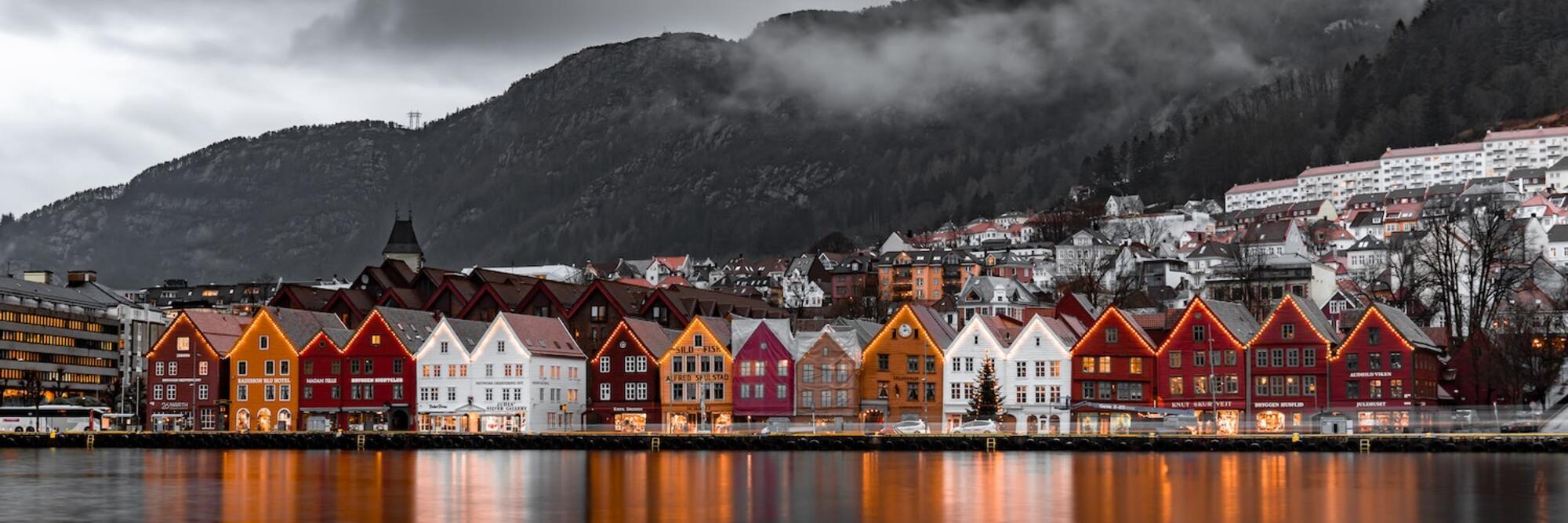
The cost of living in Bergen is steep, as is generally the case in Norway’s large cities, but the city offers magnificent scenery and an excellent quality of life in return.
Extensive healthcare and education benefits help reduce costs somewhat, while salaries in Norway are also typically lucrative, further offsetting the high cost of living.
Cost of accommodation in Bergen
The cost of accommodation in Bergen is among the most expensive in Europe. Rental prices continue to rise annually, largely due to low supply and high demand for housing.
Expats looking to reduce their monthly expenses should consider accommodation in areas and suburbs farther from the city centre. As a university city, Bergen also has a strong house- and apartment-sharing culture.
Renting Expat Accommodation in Bergen
Best Areas and Suburbs in Bergen
Cost of transport in Bergen
Getting around in Bergen is straightforward and painless, if a little pricey, thanks to the city’s reliable and efficient public transport network. Price-conscious new arrivals will have access to weekly and monthly bus and light rail passes to help reduce their travel expenses.
The city’s compact layout and growing cycling infrastructure also make two wheels a practical alternative, particularly in the warmer months.
Car ownership is largely unnecessary and expensive in Bergen. Expats looking to drive will need to budget for fuel, maintenance, and parking, which can all be high in Norway.
Cost of groceries in Bergen
While the cost of groceries in Bergen may be steeper than what most expats are used to, there are still some ways to find bargains and reduce the total monthly grocery bill.
Many locals do their weekly shop at discount chains like Kiwi and Rema 1000, and there are price-comparison apps which can direct shoppers to the lowest-priced option. Buying seasonal Norwegian produce rather than imported goods is another reliable way to keep costs down.
Cost of entertainment and eating out in Bergen
Bergen hosts a multicultural local community, which translates into a lively culinary scene. Eating out in Bergen is by no means cheap, but there are plenty of student watering holes and restaurants that are easier on the wallet.
The Bergen Card offers free entry to museums and attractions, free public transport, and select discounts on dining and parking. It is a useful way for new arrivals to see the city on a budget. For long-term residents, a monthly Skyss transport pass often offers better value. There are also many opportunities to take in Bergen’s striking natural beauty for free or at little cost. You can hike, swim, mountain bike, or drive out and see the mountains and fjords for which the area is famous.
Cost of education in Bergen
Expat parents will be delighted to find that public education in Bergen is free of charge and compulsory for children between the ages of six and 16. You’ll only need to pay mandatory building fees and cover transport, textbooks, and stationery costs. Norway also subsidises daycare (barnehage), which gives parents with young children access to childcare at a reasonable price.
If you’re in Bergen on a short assignment or would prefer for your children to learn English as a first language, you might opt for an international school. With just one international school in Bergen, there’s not much variety, but the school offers a high standard of English-language education.
To cover international school fees, which can be pricey, we advise negotiating for a school allowance in your relocation package, if possible.
Education and Schools in Bergen
Cost of healthcare in Bergen
The healthcare in Bergen, as in the rest of Norway, is excellent and heavily subsidised for all registered residents. Patients pay a small fee after each doctor’s visit, but the amount is capped annually. Thereafter, you’ll receive an exemption card (frikort) that enables you to access general practitioners at no cost.
The frikort does not cover dental care. Adult dental treatment is a significant out-of-pocket expense, although children under 18 receive free dental treatment.
Expats looking to avoid potentially long waiting times for more specialised care can purchase private health insurance. Premiums can be quite steep.
Healthcare and Hospitals in Bergen
Cost of living in Bergen chart
Prices are listed in Norwegian kroner (NOK) and may vary depending on the product and service provider. The list below shows average prices for Bergen in May 2026.
| Accommodation (monthly rent) | |
| One-bedroom apartment in the city centre | NOK 13,400 |
| One-bedroom apartment outside the city centre | NOK 10,000 |
| Three-bedroom apartment in the city centre | NOK 20,000 |
| Three-bedroom apartment outside the city centre | NOK 15,000 |
| Shopping | |
| Eggs (dozen) | NOK 61 |
| Milk (1 litre) | NOK 22 |
| Rice (1kg) | NOK 32 |
| Loaf of white bread | NOK 35 |
| Chicken breasts (1kg) | NOK 160 |
| Cheese (500g) | NOK 65 |
| Eating out | |
| Three-course meal for two at a mid-range restaurant | NOK 1,250 |
| Big Mac Meal | NOK 150 |
| Coca-Cola (330ml) | NOK 42 |
| Cappuccino | NOK 53 |
| Local draft beer (500ml) | NOK 120 |
| Utilities | |
| Mobile phone monthly plan with calls and data | NOK 310 |
| Broadband internet (60 Mbps or more, average per month) | NOK 740 |
| Basic utilities (average per month for a standard household) | NOK 2,600 |
| Transport | |
| Taxi rate (per kilometre) | NOK 18 |
| Bus/train fare in the city centre | NOK 50 |
| Gasoline/petrol (per litre) | NOK 22 |