
- Download our Doha Schools Guide
- Download our Moving to Doha Guide (PDF)
Finding suitable accommodation in Doha will be a priority for expats moving to the city. Navigating the bureaucracy of a foreign property market can be challenging. In addition, the ever-increasing housing supply can make securing accommodation in Doha daunting. Areas are constantly changing, and accommodation is being upgraded – it can be difficult to keep up, even for Doha residents.
For the most part, accommodation remains one of the main benefits included in the lucrative expat employment packages. This takes much of the hassle of manoeuvring the property market out of an expat's hands. But if they do need to find their own place to live, it becomes crucial for expats to understand local market trends, the range of accommodation options available, and the legalities of renting in Qatar.
Equipped with the right information and, if needed, assistance from reputable real estate professionals, newcomers can find a dwelling that not only meets their needs but also allows them to fully immerse themselves in Doha's vibrant life and culture.
Areas and suburbs in Doha
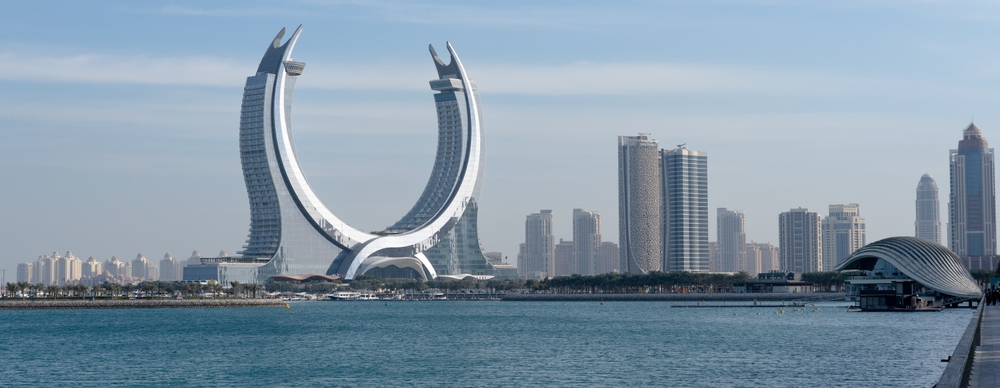
Doha offers a rich tapestry of neighbourhoods, each with its unique charm and appeal. West Bay, with its diplomatic enclaves and luxury villas, remains a top choice for high-income families, offering proximity to financial districts and shopping malls. Meanwhile, The Pearl-Qatar stands out as a symbol of luxury and exclusivity, with its upscale apartments, boutiques and eateries catering for a discerning clientele. Al Wakrah, on the other hand, offers a serene coastal lifestyle just a stone's throw from the capital, appealing to those seeking a quieter, more laid-back setting.
Read more in our comprehensive guide to the Best Areas and Suburbs in Doha.
Types of accommodation in Doha
Expats living in Doha will have a choice of accommodation options depending on the neighbourhood or area they prefer. From villas and apartments to sprawling, fully equipped expat compounds, new arrivals will be sure to find something to suit their individual needs.
Compounds often have community spaces, like swimming pools and gardens, that make it easy to strike up a conversation with a neighbour and make some new friends. While some compounds offer standard amenities, others have upscale luxury facilities, including gyms, tennis courts, and restaurants.
Demand for compound accommodation is high, making it difficult to secure, but expats may find villas and apartments equally attractive. Freestanding villas also have a homely feel to them, and those who can afford all the luxuries of living in Doha can enjoy a large house with a decent-sized garden. Additionally, apartments are often suitable for single residents and young professionals.
Finding accommodation in Doha
Before moving, expats can familiarise themselves with available property and living options through online realty websites and platforms such as Qatar Living and Property Finder.
Expats who don't have the luxury of their employer's assistance in the property search should enlist the services of a relocation company and a local real estate agent. These professionals have an intimate knowledge of Doha's property market and are often positioned to alert their clients to potential options before they are publicly advertised. Agents also help foreigners negotiate any language barrier in Qatar and can have any necessary documents translated.
Useful links
Renting accommodation in Doha

Most expats rent accommodation, rather than buy in Doha. Both the Ministry of Municipality and Environment and the Real Estate and Residences Registration Office oversee and manage matters on leases and land investments in Doha. When renting accommodation in the capital, expats must enlist real estate agents to ensure the necessary documents are certified and registered through the correct governing body.
Leases
If the employer is organising an expat's accommodation, they will negotiate the lease with the landlord. If not, expats may have to pay one year’s rent upfront or in quarterly instalments. The majority of expats in Doha choose to pay rent with post-dated cheques. Over the stipulated lease period, rent cannot increase.
Rental contracts in Doha are drawn up in Arabic and expats will receive a copy translated in English or their home language.
Deposits
Deposits are normally a month's worth of rent. For some expats working in Qatar, this may be included in an accommodation allowance, so negotiate for it where possible.
Terminating a lease
Expats must usually give two months' notice but face high penalties for breaking a tenancy contract. When negotiating with a landlord, try to understand what happens in the event of early termination.
Utilities in Doha

Tenants are normally responsible for paying utilities. Check your lease to find out who is responsible for utility fees, as this can vary.
Electricity and water
In Doha, the Qatar General Electricity & Water Corporation (Kahramaa) is the sole provider of electricity and water services, administering these essential utilities across the country. A straightforward process is in place for tenants or property owners looking to set up these services.
Initially, one must submit an application in person at a Kahramaa service centre, along with the necessary documents. A deposit is also required to initiate the service.
Once the application is processed, several options are available for paying utility bills. These include online payments through internet banking once the Kahramaa account is registered, in-person payments at Kahramaa customer service centres, or payments at any Qatar bank or QPost branch. It generally takes a minimum of 48 hours for services to be connected following the completion of the application process.
When vacating a property, tenants must disconnect their utilities to avoid financial penalties. This process involves submitting a disconnection form, along with the tenant's Qatar ID and electricity number, to a service centre. The final meter readings are recorded on this form, and any outstanding balance must be settled. Following this, a Clearance Certificate is issued to confirm the disconnection, and the initial deposit will be refunded.
Gas
In Doha, domestic gas supply is predominantly managed through the use of bottled LPG canisters, a common practice in the region. Residents are responsible for arranging their gas supply by purchasing or exchanging these LPG canisters, which are readily available at supermarkets and Woqod gas stations across Qatar.
Paying for domestic gas is straightforward, as it occurs at the point of purchase or exchange of the LPG canisters. The prices for new Shafaf cylinders, pre-filled with LPG, vary depending on the size, and refills are slightly less, indicating the direct exchange system in place for these gas supplies.
Bins and recycling
The Doha government and various organisations have made considerable effort to improve waste management and recycling practices. Residents are encouraged to participate actively in recycling programmes, starting with using colour-coded bins for waste segregation.
Black bins are designated for dry or recyclable waste such as plastics, paper, metals and other non-organic materials. In contrast, green bins are used for biodegradable waste, including food scraps, vegetable and fruit peels, and garden waste.
For residents looking to recycle beyond household waste, various recycling points for paper, cardboard, and plastics are available at locations like The Pearl and Dahl Al Hamam Park, as well as in malls throughout Doha.
Internet
Internet services in Doha are primarily provided by Ooredoo Qatar and Vodafone Qatar. These leading ISPs offer a spectrum of connection options, including high-speed fibre optic, DSL, and wireless broadband connections, to accommodate the diverse requirements of the city's residents.
Internet censorship is a reality in Qatar, with access to certain types of content being restricted. This includes material considered offensive or contrary to local laws and cultural norms, such as pornography, criticism of Islam, and content related to LGBTQ+ interests. Additionally, various messaging and VoIP applications are blocked. Expats and visitors often turn to VPNs to circumvent these restrictions, enabling access to blocked content by routing internet traffic through servers located outside Qatar.
While using VPNs is common, exercising caution and respecting local regulations is important. For expats navigating internet censorship, it's crucial to be informed about the local legal framework regarding internet use.
For more information on internet services and the latest offers, visit the official websites of Ooredoo Qatar and Vodafone Qatar.