
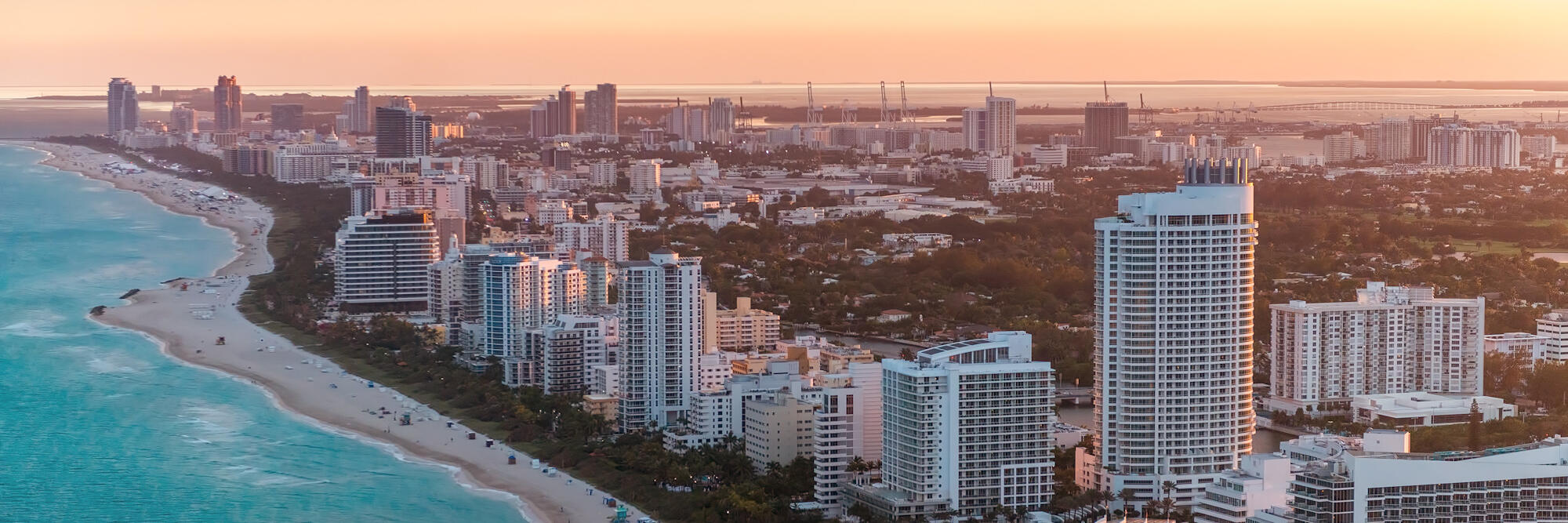
The pros and cons of moving to Miami start with the city itself: its Latin roots and racy creative energy make it one of the most evocative destinations in America. Wildly different from New York and Los Angeles, Miami’s signature flair runs through everything, from its gorgeous turquoise shoreline and tropical gardens to its whimsical Art Deco architecture and eclectic food choices.
Those moving there should look forward to its youthful character but should recognise the city’s drawbacks as well. Below, we list some of the pros and cons of moving to Miami to give new arrivals some perspective.
Accommodation in Miami
+ PRO: Diverse housing types
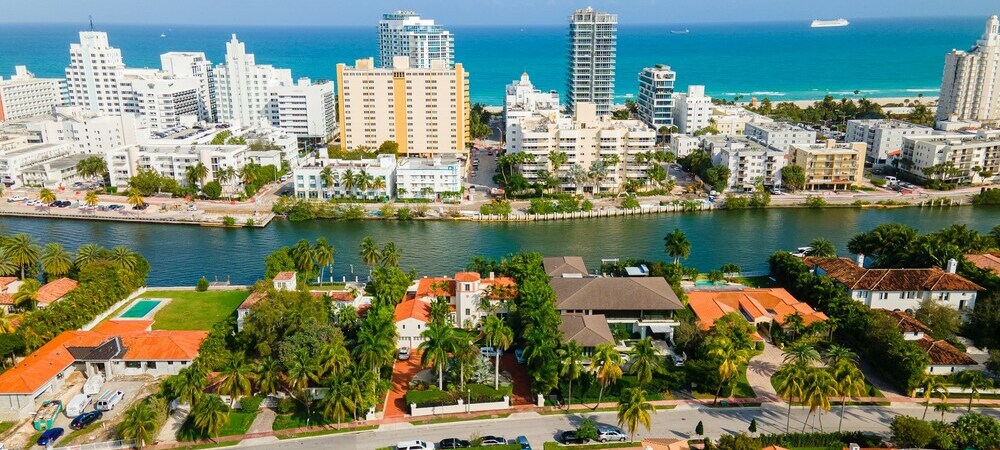
Accommodation in Miami comes in many forms, and some apartments are fully furnished. Some include amenities such as fitness centres and pools, and units often feature modern appliances. Condos and apartments dominate the market, although townhouses are also widely available.
Finding Rental Accommodation in Miami
Lifestyle in Miami

+ PRO: Outdoor activities are endless
Miami’s lush parks are great places to enjoy jogging, dog walking, yoga, volleyball, basketball, outdoor gyms, and, of course, barbecues. Visitors can fish along the pier at Oleta River State Park and canoe through the untamed Oleta River.
Other popular spots include Bayfront Park and Margaret Pace Park, both on the waterfront. The city also has terrific golf courses and a gorgeous coastline for yachting, sailing, surfing, and diving.
+ PRO: Great nightlife
Miami’s nightlife scene rivals that of any city in the United States. The city has an impressive selection of oceanfront clubs and live music venues.
+ PRO: Rich in food culture
Newcomers will find many authentic ethnic restaurants in Miami. Cuban, Haitian, Brazilian, Puerto Rican, and Colombian are just a few of the ethnicities that make up the food scene, although the Cuban sandwich is perhaps the city’s most representative dish. Newcomers can grab one almost anywhere in Miami.
+ PRO: Cultural melting pot
Miami is a true melting pot. Residents from Cuba, Haiti, Central and South America, and other parts of the Caribbean live throughout the city. Their art, food, dance, music, and observances are infused with the city’s character. Neighbourhoods like Little Havana and Little Haiti retain wonderfully distinctive cultural traits, as does Little Bahamas (formerly Coconut Grove Village West).
Cost of living in Miami
+ PRO: Low taxes
One of the perks of moving to Florida is that there is no state income tax. This means that Miami residents can save thousands of dollars if they have a fixed income. Property taxes vary by municipality, although residents will generally receive a discount if they pay early. There are several sales tax exemptions as well.
- CON: Accommodation costs are high
New arrivals often report that it’s tough to find an affordable house or apartment in Miami. The cost of accommodation in Miami is much higher than the average across the USA. A big factor that pushes accommodation prices up is the limited available coastal land.
- CON: Healthcare is expensive
Healthcare is extremely expensive in Miami, as it is in other US cities. Even with health insurance, many residents find that out-of-pocket costs for specialist and premium services can be burdensome.
Working in Miami

+ PRO: Work environment is rated highly
Working in Miami has its perks: the city often appears in surveys where employees report high job satisfaction. Employees frequently cite the city’s cultural openness and strong relationships between coworkers and management. Compensation and growth opportunities score well, and many workers value the degree of autonomy their employers grant.
- CON: Tight job market
One drawback to living in Miami is that the job market can feel more competitive than in other major US cities. Salaries are generally lower, and employers often prefer to hire candidates who speak both English and Spanish.
Getting around in Miami
+ PRO: Useful public transport options
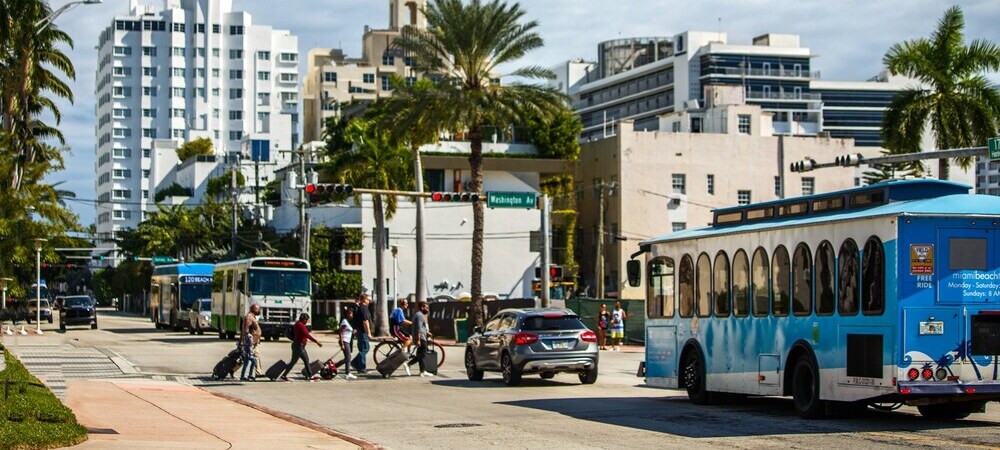
Although the public transport network in Miami is not as extensive as that in Boston or New York City, Miami’s bus service reaches most parts of the city. Miami-Dade Transit operates buses and two rail systems (the Metrorail and the free Metromover) under one integrated fare system, so transfers are straightforward.
- CON: Traffic is a problem
Miami regularly ranks among the most traffic-congested metros in America, and its drivers have a poor reputation. Commute times in Miami-Dade County are well above the national average and have been pushed higher by the city’s geography and rapid population growth.
Weather in Miami
- CON: High humidity
Miami’s heat and humidity can be overwhelming, especially in the summer. Shade alone is not enough; most residents plan their summer days around air-conditioned spaces. The warm, humid conditions also support an abundance of insects, spiders, lizards, and other wildlife that newcomers are often unprepared for.
- CON: Tropical storms
Hurricanes and tropical storms are a factor from June through November. This is also Miami’s rainy season, when torrential afternoon showers are an almost daily occurrence.
Education in Miami
- CON: School quality varies by area
Public school quality in Miami-Dade can differ sharply from one neighbourhood to the next. The most sought-after schools tend to be in suburbs where property is pricier, and many families let school zoning guide their choice of home.
+ PRO: Plenty of school options
Miami-Dade County runs one of the largest public school districts in the United States. Families can also choose from many private and international schools. Florida’s charter school system adds further choice, and several magnet and college preparatory programmes are well regarded.