
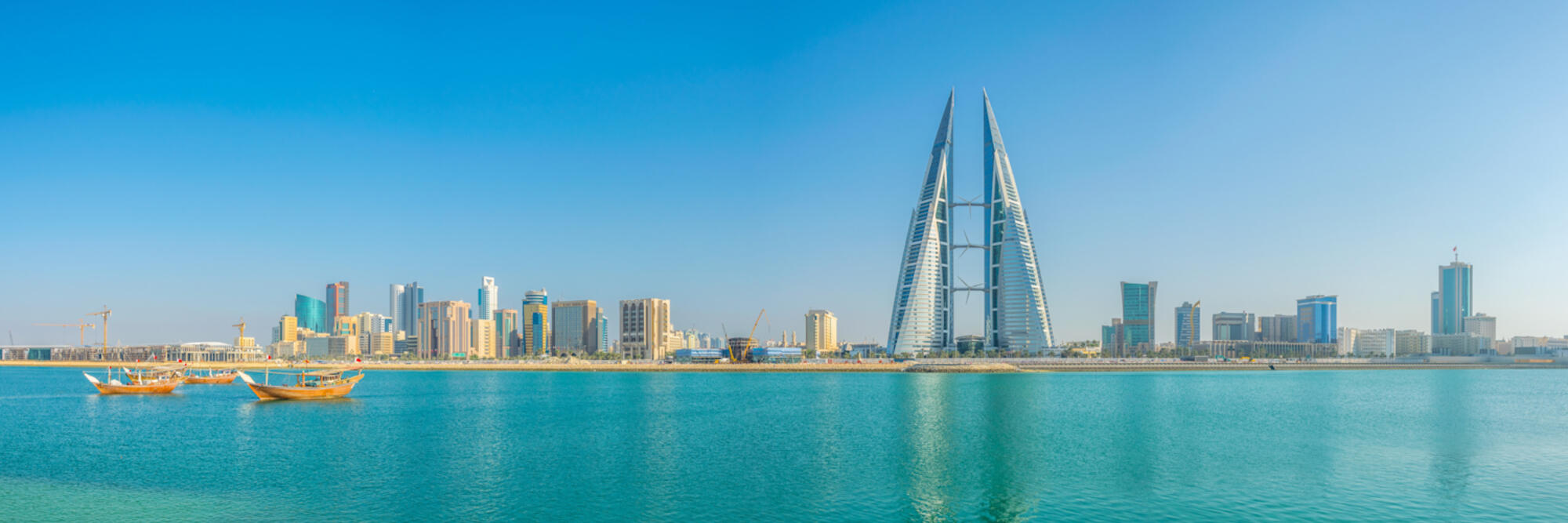
Expats moving to Bahrain will experience a busy and engaging city life that is surprisingly modern yet retains its traditional Islamic culture.
There is a sizeable expat community in Bahrain, but those relocating to this Gulf state will still have to contend with elements of culture shock and make some adjustments to their lifestyle. Often referred to as 'Middle East lite', Bahrain is considerably more progressive than its neighbours, Saudi Arabia and Qatar, but is still in touch with its Islamic roots.
Living in Bahrain as an expat
Most expats moving to Bahrain do so for the lucrative employment opportunities. The earning potential for expats is high in Bahrain, and many report enjoying a higher standard of living than they had in their home country.
As a financial centre of the Middle East, highly skilled foreigners will find plenty of positions available in the banking and construction sectors. And, as Bahrain has made efforts to diversify its economy beyond the petroleum industry, there are many jobs to be had in several multinational firms as well.
Moving to Bahrain also means bigger houses for many. A huge variety of accommodation designed to suit all budgets and tastes awaits new tenants. Expats can choose between towering high-rises, standalone villas or even homes enclaved in a secure compound.
Cost of living in Bahrain
Although the cost of living in Bahrain is increasing annually, it is still reasonable in comparison to its neighbours. Accommodation will certainly be an expat's biggest expense, and they will also have to shoulder the cost of a car due to the island's limited public transport network. That said, some companies may include these benefits in an expat's employment package.
Groceries in Bahrain are reasonable, but Western products are incredibly pricey due to import costs. Dining out can be expensive, particularly at Western-style restaurants, though more affordable local options are available, and those who want to save money should buy local produce and cook at home.
Expat families and children
While expats with children are unlikely to enrol their little ones in any of Bahrain's public schools, plenty of excellent private and international school options exist. Spots disappear quickly, though, so it's important to make registration a priority before the move.
While Bahrain lacks the vast entertainment infrastructure of some larger cities, families generally find plenty to keep children occupied; the island certainly has much on offer to entertain the little ones. Water parks, wildlife sanctuaries, museums, malls and an abundance of beaches for a day spent out in the sunshine are just some of the many things families in Bahrain can enjoy in their spare time.
Climate in Bahrain
Bahrain has an arid climate. The weather is marked by extreme heat and an uncomfortable humidity is present throughout the year. This may be quite a shock for expats when they first move to Bahrain, and adjusting to this could be difficult. Irregular, short and heavy bursts of rainfall occur throughout winter, and summer and spring bring occasional sandstorms.
As far as Middle Eastern destinations are concerned, Bahrain is increasingly becoming an expat favourite. It's a fantastic alternative location for those based in neighbouring countries looking to situate their families in a more liberal environment.
Fast facts
Population: About 1.6 million
Capital city: Manama (also largest city)
Neighbouring countries: Bahrain is a small set of islands in the Persian Gulf. The King Fahd Causeway is a series of bridges to the west of Bahrain, connecting it to its closest neighbour, Saudi Arabia. Across the Gulf, a short distance to the southeast, is Qatar, while Iran is further away on the northeastern side of the Gulf.
Geography: Bahrain is an archipelago, with a primarily flat and arid desert landscape. One of the smallest countries in Asia, the total length of the coastline of the Kingdom's main island is approximately 100 miles (161km).
Political system: Constitutional monarchy
Major religions: Islam, with a small Christian minority
Main languages: Arabic is Bahrain's official language, but English is widely spoken
Money: The Bahraini Dinar (BHD), divided into 1,000 fils. Expats will be able to open a local bank account, but the process requires extensive documentation and paperwork. ATMs are widely available in most parts of Bahrain.
Tipping: Restaurants in Bahrain generally include service charges in the bill. Additional tipping is not expected but will nonetheless be appreciated. Ten percent is usually appropriate.
Time: GMT+3
Electricity: 230V, 50Hz. Type G (British-style) three-pin plugs are standard.
International dialling code: +973
Emergency contacts: 999
Internet domain: .bh
Transport and driving: Cars drive on the right-hand side of the road in Bahrain. Public transport consists of buses and taxis; no rail network is yet in operation.