
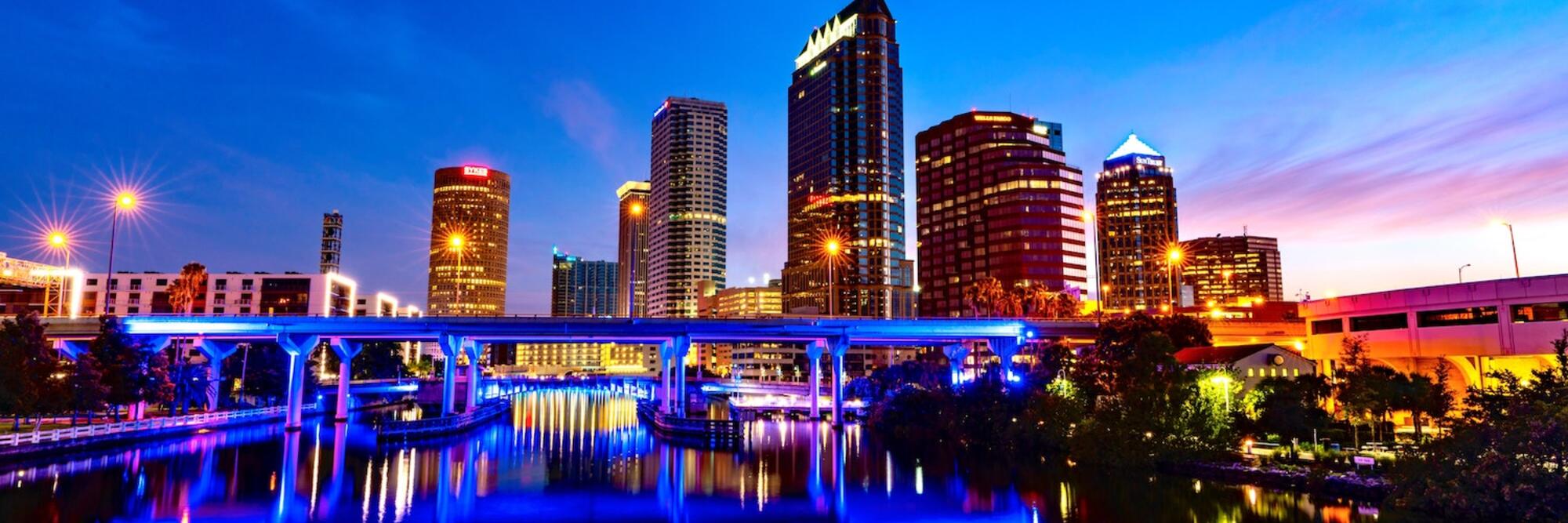
Getting around in Tampa without a car can be a challenge. The city has a public transport system, but it mostly serves the downtown area. New arrivals who own a car have the freedom to see much more of the surrounding area on their own schedule.
Anyone hoping to travel further afield around Florida and the rest of the US is in luck, because Tampa International Airport has nonstop flights to more than 90 domestic and international destinations.
Public transport in Tampa
New arrivals in Tampa might find the city’s public transport network somewhat disappointing, especially if they are accustomed to more sophisticated systems like those in cities like Boston, New York, San Francisco, and Chicago.
Public transport in Tampa is mainly useful for commuting within the city centre. There are some suburbs that have adequate public transport links, but on the whole, those living on the outskirts of the city would benefit from owning a car.
Buses
The Hillsborough Area Regional Transit Authority (HART) runs a fairly extensive network of wheelchair-accessible buses across Tampa. The network consists of local routes with frequent stops within a small area, and express routes that run from the suburbs into downtown Tampa. HART also operates MetroRapid, a faster limited-stop bus that runs between downtown and the University area roughly every 15 minutes.
HART now uses the Flamingo contactless fare system, so you tap a card or phone to ride. You needn’t worry about overpaying either, since fares are capped daily and monthly. There are reduced fares for students, senior citizens, and riders with disabilities, and university students ride free with a valid ID.
The frequency of services varies from one route to the next and also depends on the time of day, so it’s best to consult a schedule and plan journeys accordingly.
Streetcars
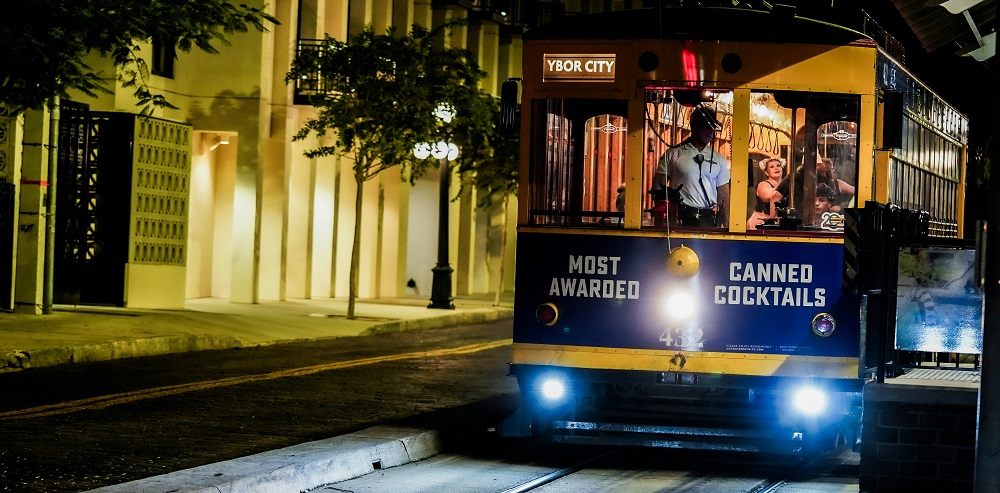
The TECO Line Streetcar runs from Whiting Street in downtown Tampa to Centennial Park in Ybor City. There are 11 stops along the single route. Rides are free, and since the service was modernised, it now comes frequently enough that downtown workers and residents use it alongside tourists and convention-goers. Along the way, you’ll pass the Tampa Convention Center, the downtown arena where the Tampa Bay Lightning play, the Florida Aquarium, and Ybor City’s restaurants and shops.
Streetcars are a novel way to get around, so even if new arrivals don’t use them for a daily commute, they are a fun way to see some of the city’s historical and cultural landmarks.
Useful links
Taxis in Tampa
Taxis are quite readily available in downtown Tampa, and they’re easy enough to hail outside any major attraction or along a busy shopping street. That said, for those travelling from or around the suburbs, it’s best to book a taxi ahead of time.
While taxi fares in Tampa are reasonable, they might not be a financially viable mode for longer journeys, but it’s always useful to have a reputable taxi company’s number on hand. Well-established taxi companies include Taxi Tampa and Yellow Cab of Tampa. Both also run wheelchair-accessible vehicles, which you can book in advance.
Popular ride-hailing services such as Uber and Lyft are well established in Tampa. Fares are similar to taxi prices, but ride-hailing tends to be more reliable and easier to arrange. Users simply need to download the relevant app onto their smartphone and register using a bank card.
Water taxis
The Pirate Water Taxi is one of the most scenic ways of getting around in Tampa, although it’s more of a sightseeing option than a practical commute. There’s a river route through downtown and the Channel District, plus an island loop out to Davis Islands. You can buy a single ticket, an all-day pass, a multi-ride pass, or an annual membership.
Useful links
Driving in Tampa
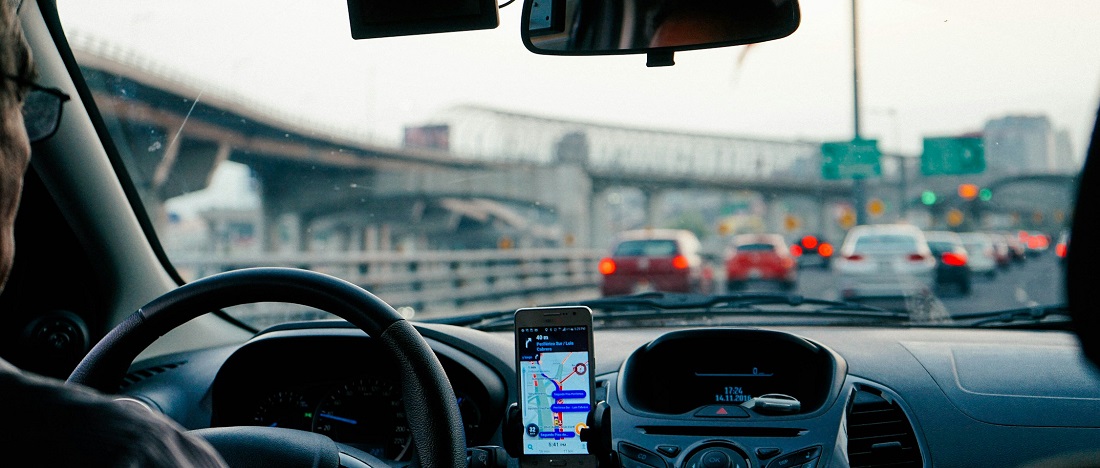
Most newcomers to Tampa quickly decide they need a car, since driving is the most practical way to cover a city this spread out. Beyond downtown and the handful of routes that link the centre to the suburbs, public transport is limited for most residents.
Tampa’s roads are generally in good shape, but they get more congested every year as the city’s population grows. It’s worst on I-275, I-4, SR60, and I-75 in the morning and late afternoon on weekdays.
Driver’s licences
If you hold a foreign driver’s licence, you can use it for up to 30 days after becoming a Florida resident. After that, you’ll need a Florida driver’s licence to keep driving.
Citizens of France, South Korea, and Taiwan can exchange a valid licence for a Florida driver’s licence without sitting the written or road test. Canadian licence holders can skip both tests too, as long as they surrender their Canadian licence. German licence holders still sit the written knowledge exam, but they’re exempt from the road test. Anyone from another country needs to pass both the written knowledge exam and a road test, and they’ll also take vision and hearing screenings.
Useful links
Cycling in Tampa

Over the past decade or so, cycling in Tampa has become a far more realistic way to get around. The city maintains around 60 miles (97km) of off-road greenway trails, plus a growing network of on-street bike lanes. There are plans to expand the trail system to roughly 125 miles (200km) in the years ahead. The city has also installed hundreds of bike racks, and there are shower and locker facilities around downtown. HART buses can carry a few bikes on front-mounted racks.
If you don’t own a bike, the City of Tampa’s shared micromobility programme is the main alternative. App-based operators put e-scooters and e-bikes on the streets across the city, and you can unlock one by scanning it with an app, then leave it at your destination when you’re done.
Useful links
Walking in Tampa
Tampa isn’t especially pedestrian-friendly on the whole, although walking in Tampa is a pleasure in a handful of neighbourhoods. If you’d rather get around without a car or just want some fresh air, Downtown Tampa, Ybor City, the Channel District, and Seminole Heights all suit a leisurely stroll. The Tampa Riverwalk is a 2.6-mile (4km) waterfront path through downtown that connects many of the city’s attractions, and Bayshore Boulevard has a long waterfront pavement that walkers and runners love.