

The accommodation in Washington, DC, is varied, with a range of housing options. That said, the actual city limits are considerably smaller than most expect, and many people who move to Washington, DC, for work end up living in neighbouring Virginia or Maryland. These nearby states generally offer better options for suburban family living and cheaper accommodation.
Many neighbourhoods in Washington, DC, are full of students attending the area’s universities or young professionals who have recently moved to the city to start their careers. Residential family homes are usually found further from the city centre and vary in quality and price.
Because property becomes more expensive closer to the city centre, car commutes are long. Accommodation near public transport, such as buses or metros, is therefore highly sought after.
Property prices and rent in Washington, DC, are among the most expensive in the country. It’ll likely be the most significant monthly expense for people planning to relocate there.
Areas and suburbs in Washington, DC
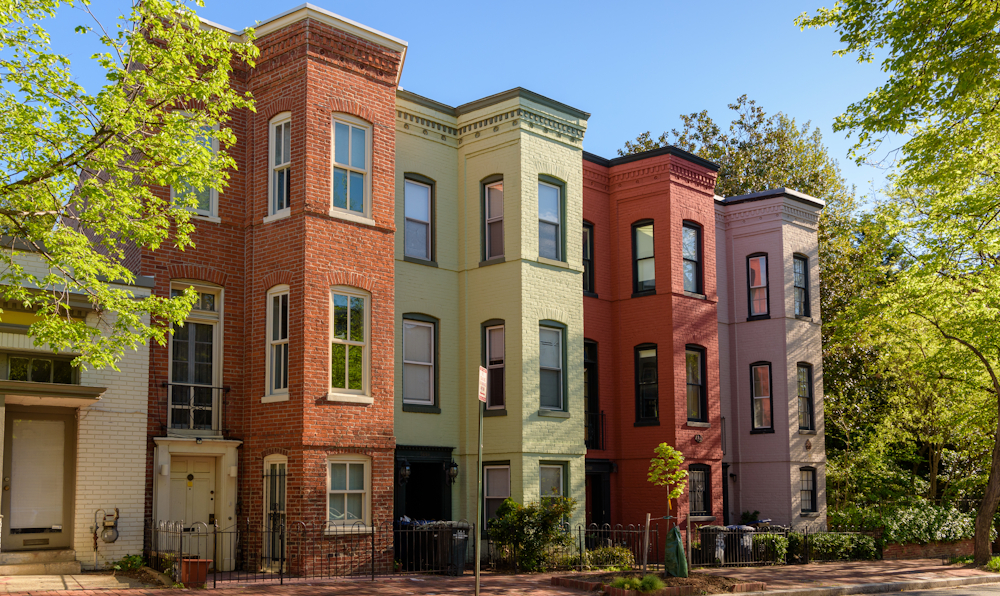
The city is divided into distinct areas and suburbs that cater to a range of lifestyles and budgets. Washington, DC, has something for everyone, from the historical charm of Georgetown to the trendy atmosphere of Adams Morgan.
For young professionals, areas like Dupont Circle and Foggy Bottom provide a lively urban experience. Family-oriented communities can be found in areas like Chevy Chase and Capitol Hill. Those seeking luxury and high-end living might consider neighbourhoods such as Kalorama and West End.
Areas and Suburbs in Washington, DC
Types of accommodation in Washington, DC
Apartments are the most common type of housing in DC, with options ranging from single-room studios to luxury multi-bedroom lofts and penthouses. Rent will naturally vary according to size and location, with the more expensive apartments closer to the city centre.
Another option for new arrivals to rent in DC is townhouses, which are cheaper than single-family homes but generally have separate entrances and multiple storeys. These are often historical Victorian homes built in a row along one street, hence referred to as row houses.
Single-family houses are fully detached residences which may be best suited for a family, as they usually include a garden and are located away from the city centre. Despite being predominantly in the suburbs, single-family detached houses are particularly expensive.
Finding accommodation in Washington, DC

Due to limited space in DC, we advise newcomers to begin the search for accommodation as early as possible. Knowing your price range and desired accommodation type is essential, as it will clarify the search and simplify the decision-making process. It’s worth considering factors such as space requirements, amenities, and proximity to shopping hubs, public transport and schools.
New arrivals may want to find a local real estate agent who understands the local area and can help identify a home suited to their requirements. If you’re considering living in the Maryland or Virginia suburbs, remember that agents require separate licences to work in different states, so you might need to hire more than one agent in order to fully explore your options.
Useful links
Renting accommodation in Washington, DC

With DC being such a small city, it follows that accommodation is in high demand. This has made housing expensive and hard to come by. If you have your heart set on a place, you should act quickly, as good properties don’t tend to stay on the market for long.
Making an application
As in most of the US, potential tenants in DC will need to obtain and fill out an application form from the landlord. The application typically requires references as well as proof of income and identity.
Having a US bank account will be in your favour when applying to rent accommodation in Washington, DC, especially for expats without a Social Security number.
The landlord may also request permission to conduct a background check, including a credit and criminal record check. You may be charged a screening fee to cover the costs of the background check and verification process.
If the application is approved, a rental agreement will be drawn up for both parties to sign.
Leases
The lease length in Washington, DC, typically ranges from six months to a year, although some landlords offer more flexible terms. The lease will outline the rent, security deposit, any additional fees and the tenant’s and landlord’s responsibilities.
You absolutely need to thoroughly read and understand the lease before signing, as breaking a lease can lead to financial penalties. If possible, consulting a legal expert is advised.
Deposits, costs and fees
A security deposit, usually equivalent to one month’s rent, must be paid at the start of the tenancy. It will be returned in full once you move out, as long as the home is returned in the same condition it was rented out, barring normal wear and tear.
Other additional costs may include application fees, pet fees (if applicable), and utility initiation fees or deposits. Utilities such as water, gas, and electricity are usually not included in the rent and must be paid separately.
Terminating the lease
When drawing up the lease, you should check to see if an early termination clause is included. This should outline the process for breaking the lease early. This usually entails providing written notice of early termination 30 to 60 days in advance, finding a replacement tenant, and, in some cases, negotiating a lease buyout.
Utilities in Washington, DC
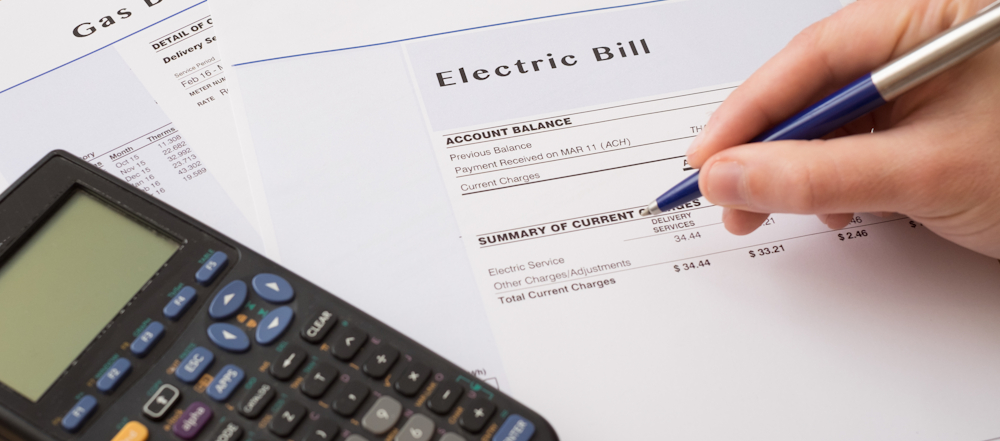
Newcomers renting accommodation in Washington, DC, should check the conditions set out in their lease to find out the details on utilities. In some cases, the landlord may assume responsibility for utilities such as gas, electricity, and water.
Tenants will typically be expected to pay for extras like telephone services, internet, and cable TV packages. New arrivals should spend some time looking into different service providers, as it’s often possible to find a good range of inclusive deals for telephone and internet services.
Electricity and gas
Electricity and gas services in Washington, DC, are competitive and provided by various companies. New tenants must set up these services in their name, choose a suitable plan, and pay a deposit.
Comparing rates and providers online can help to find the best deal, and many suppliers offer both electricity and gas, providing an opportunity for bundled savings. Service reliability and customer support may vary between providers. Newcomers are encouraged to consult local reviews and ask neighbours for recommendations to ensure a smooth transition into their new homes.
It’s essential to note the type of energy used in the property, as some buildings may rely solely on electricity. Washington, DC, is also known for its green energy initiatives, and several providers offer renewable energy options.
Water
Water services in the city are managed by the DC Water and Sewer Authority. Residents receive bills every two months, and charges depend on consumption. Payment options are available online, by mail, or in person at various locations throughout the city.
New residents must typically notify the DC Water and Sewer Authority of their move-in date, and in some cases, a deposit may be required. Services include water supply and wastewater treatment, and residents can monitor their water usage online through the customer portal.
For those concerned about sustainability, the DC Water and Sewer Authority provides information about water conservation practices and offers tips to reduce usage and save on bills.
Waste management and recycling
Waste collection and recycling services in Washington, DC, are provided by the Department of Public Works (DPW). Schedules vary by neighbourhood, and information about what materials can be recycled is available on the DPW website. Rubbish collection includes household rubbish, yard waste, and recyclables.
Special arrangements can be made to dispose of bulky items, hazardous waste and electronics. Recycling is encouraged and supported by various programmes and initiatives aiming to reduce waste and promote sustainability in the city.
The DPW also offers seasonal services like leaf and holiday tree collection. Residents are encouraged to stay informed about specific guidelines and schedules to ensure proper waste disposal and contribute to a cleaner environment.
Internet
Several companies provide internet services in Washington, DC, and the selection depends on speed requirements, budget, and availability in the area. Major providers include Verizon and Comcast. Internet packages vary widely, with options for high-speed connections, bundled services with TV and phone and family-friendly content filters.
Installation may require scheduling a visit from a technician, or some providers offer self-installation kits. New residents should consider the internet speed needed for their household, accounting for activities such as streaming, online gaming, and remote work. Special promotions and discounts are often available for new customers.
As with other utilities, it’s advisable to consult local reviews and ask neighbours about their experiences with various internet providers. Customer service, reliability, and contract terms can vary, so it’s essential to carefully review all details before making a decision.