
- Download our Singapore Schools Guide
- Download our Moving to Singapore Guide (PDF)
Real estate agencies in Singapore
The Liu Organization
The Liu Organization has represented expat renters, buyers and sellers for 40+ years in Singapore, with over USD 200,000,000 in completed sales and rentals.
They've worked with clients from Fortune 500 companies, international schools, and governmental organizations, and they've been featured in The Straits Times and CNA as the top recommended boutique housing service for expats.
The Liu Organization works with expats and international families every day, so they understand the real considerations – budget package, schools, commute, lifestyle fit, building quality, and value.
For all things real estate in Singapore, choose The Liu Organization.
You can reach them at info@theliuorganization.com or visit theliuorganization.com/singapore for more information.

Accommodation in Singapore is of a high standard, comes in all shapes and sizes, and has a wide price spectrum. The cost of rent varies depending on the area, the property's size, and its proximity to schools and public transport.
The property market in Singapore can be divided into public and private sectors, with public housing being offered by the Housing and Development Board (HDB). Unlike in many other countries, public housing in Singapore isn't necessarily associated with lower-income groups; it even includes luxury options.
Around 80 percent of Singapore's population lives in HDB housing. Expats holding certain visas are eligible to rent HDB accommodation, but non-citizen quotas are in place, so availability is limited.
Many foreigners, especially high-earning Westerners, prefer to rent a private apartment, condominium or bungalow. But while some companies might cover rental costs, others may not. Given the increasing price of accommodation in Singapore, expats need to negotiate their salaries accordingly.
Areas and suburbs in Singapore
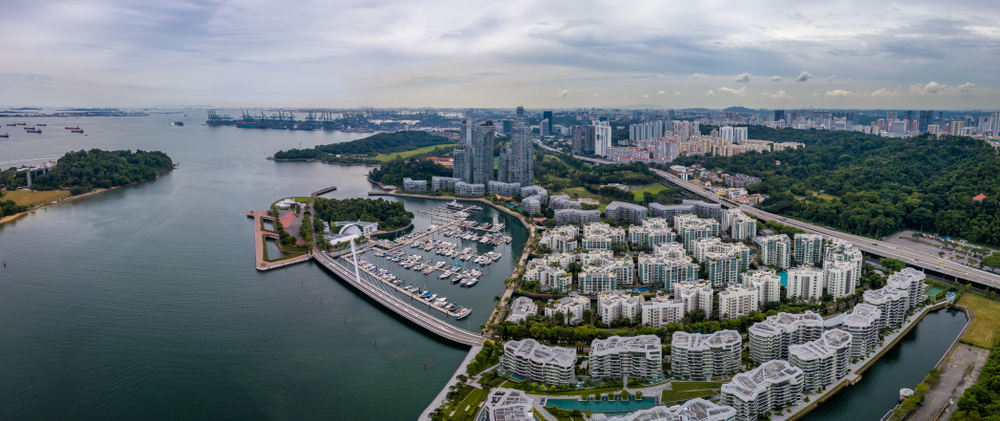
In the Central Region of Singapore, expats enjoy a blend of cosmopolitan living with convenient access to Singapore's bustling business district, shopping centres, and a plethora of dining options. High-rise condos and apartments, often complete with luxurious amenities, dominate this area. Although this region offers a high standard of living and proximity to several prestigious international schools, residents may find rental costs quite steep and the noise from traffic and construction somewhat intrusive.
The North Region of Singapore offers a tranquil escape from city life, immersed in lush greenery. Though it's further from the city centre, it's still easily accessible and offers a unique view of Malaysia from the Woodlands district. The serene environment is ideal for those preferring a quieter lifestyle.
The East Region offers a charming coastal lifestyle, merging the allure of the old with the convenience of the modern. Home to Changi International Airport, this area is a melting pot of cultures, featuring a diverse population and exciting amenities. Expats here enjoy spacious condominiums, a sense of community, and proximity to quality international schools. The region's appeal is further enhanced by its beautiful beaches and an array of exquisite eateries, providing a balanced quality of life away from the city's hustle and bustle.
Check out the Best Areas and Suburbs in Singapore
Types of accommodation in Singapore
Prospective new residents of Singapore will be spoilt for choice, as the city is home to a considerable variety of neighbourhoods and housing in just about every price bracket. Both furnished and unfurnished accommodation is available in Singapore, so this should be taken into account when deciding whether to ship goods from home.
Apartments
A common choice among expats, apartments are (mainly) smaller, self-contained units in larger buildings, often referred to as 'flats' in some parts of the world. Many apartments are subsidised by the HBD, which can save expats some money.
Condominiums
These complexes are similar to apartments but are more luxurious and will generally offer a wide range of facilities. Those at the top of the scale will offer a full suite of facilities, including a pool, gym, playground, tennis and squash courts, and 24-hour security.
Landed houses
This category includes terraced houses, semi-detached houses, and bungalows. All landed homes have some form of garden, though the size can vary from tiny to expansive.
Terraced houses are the most common type of landed property in Singapore. They're connected by a shared wall on either side, while semi-detached houses share only one wall. Both terraced and semi-detached houses tend to be two or three storeys tall.
Bungalows are large, standalone houses. They're usually only one storey, though some have upper rooms set in the roof. These are difficult to come by and pricey, but they offer ample space.
Finding accommodation in Singapore

Estate agents are an essential part of the process of finding property in Singapore. While expats can find accommodation using property websites, it's preferable to let an agent do the legwork. A good agent with extensive knowledge of the property market is a valuable asset. The best way to go about acquiring an agent is to ask for recommendations from fellow expats or recruit one from a reputable property site. Always check the public register of the Council for Estate Agents (CEA) to ensure your prospective estate agent is listed. Relocation companies are another option; many providers offer house-hunting in addition to regular shipping and moving services.
The hunt for a home should be thorough, and the result will determine where you spend most of your time in Singapore. Besides being sure about a property before signing on the dotted line, it's also important to survey the area to make sure it suits your lifestyle before settling.
Useful links
Renting accommodation in Singapore

New arrivals in Singapore tend to rent rather than buy, as rules and regulations make it difficult and costly for foreigners to purchase property.
Expats going about the process on their own will often rent a short-term serviced apartment while checking out an area and deciding on long-term accommodation. This isn’t strictly necessary, though, and with a good agent, long-term rentals can be secured without the need for temporary accommodation.
Apartments, condos, and bungalows can be rented furnished or unfurnished – often, both options are available to the tenant, who can make their decision based on their own preferences and needs.
Making an application
Having found a suitable place in their desired neighbourhood, expats should inform the landlord of their interest as soon as possible. In a city short on land and high in population, there are likely to be many interested parties.
HDB owners in Singapore aren’t allowed to rent out entire apartments without special permission from the government, so expats looking to rent an HDB unit are advised to ask for the permission slip to avoid getting into trouble.
The next step is for the prospective tenant and the landlord to both sign a Letter of Intent (LOI). The LOI should state the expat’s intention to rent the place, along with the price, the term, and any other terms agreed upon by the tenant and landlord. If expats choose to work through a property agent, the agent will likely set up this document for them.
It’s also prudent to have references and testimonials from current and former employers and former landlords, as these will improve your chances of securing the lease.
Leases
Once the LOI is signed, the tenant and landlord must sign a lease agreement. A lease specifies the period of tenancy (usually 12 to 24 months) along with other important terms and conditions. Expats are urged to review the agreement and ensure that all verbal agreements with the landlord are in writing and acknowledged by both parties. Both the tenant and the landlord should also agree on an inventory list at the start of the lease.
Deposits and fees
Upon signing the lease, tenants must pay a security deposit, usually equal to one month's rent per year of the lease. This is generally paid before the start of the lease, along with the first month’s rent.
Deposits remain the property of the tenant while held by the property owner and must be refunded upon the conclusion of the lease. However, landlords may deduct from the deposit or retain the entire amount for various reasons. These include covering unpaid rent, damages beyond normal wear and tear, other breaches of the lease agreement, unpaid utility bills, or – if pre-arranged with the tenant – to cover the last month’s rent.
Additional fees to consider include the agent’s commission fee (if an agent was employed). The commission fee typically comes to about half a month’s rent for every year of the rental term agreed to in the lease. Stamp duty may also be payable on rentals above a certain monthly amount.
Terminating the lease
At the end of the lease period, the landlord and tenant can either agree to renew it or end it. Importantly, expats should insist on a diplomatic clause in the lease agreement. The clause is vital, as it would allow the expat to terminate the contract if their employment is terminated or their company transfers them to another country. It also ensures the expat’s security deposit is returned.
Utilities in Singapore
Prospective tenants must scrutinise a lease agreement carefully to ascertain which utilities are included in the rental cost before committing.
Utilities in Singapore are usually billed to the tenant and typically include internet, electricity, water, and gas. The main provider of electricity and gas is SP Group, which is owned and operated by the government.
Electricity
SP Group is the default supplier when you open an electricity account, but you have the option to switch to a private electricity provider on the Open Electricity Market (OEM). The various providers offer a range of pricing plans, catering to different consumer needs.
Switching to an OEM retailer can lead to significant savings, making it a worthwhile consideration for expats. However, it's essential to compare plans and understand the terms and conditions to ensure the chosen plan suits your lifestyle and usage patterns. Note that electricity is billed and paid through SP Group, even if you use a different provider.
Gas
Gas in Singapore is widely used for cooking and heating in both residential and commercial settings. City Energy manages piped gas installation and supply. Once you've registered with SP Group for electricity, you can contact City Energy with your account details to arrange and initiate service. Payments are made via SP Group.
Water
Singapore has safe, high-quality tap water. The water undergoes an extensive and robust purification process, making it perfectly safe to drink straight from the tap.
In Singapore, the Public Utility Board (PUB) manages the water supply. To set up a water account, you must first register with SP Group. Once you've got an SP Group account number, you can contact PUB to connect or install your home's water supply.
Bins and recycling
Singapore's waste is managed by the National Environment Agency (NEA).
General waste is discarded in green bins, while recyclables are placed in blue bins. In HDB flats, these blue recycling bins are conveniently located at every block and are emptied a minimum of three times a week. Private landed properties are provided with individual recycling bins, with collections occurring weekly.
The recycling system in Singapore operates on a 'co-mingled' basis, meaning there is no need to separate recyclables into different categories. Remember to ensure that non-recyclables and food waste aren't put into recycling bins, as this contaminates the contents.
Internet
In Singapore, residents have access to a variety of internet service providers (ISPs), with leading names including Singtel, StarHub and M1. The country is known for its high-speed broadband connectivity, which is widely available across the island. This extensive coverage ensures reliable and fast internet access, which is vital for both personal and professional use.