

Most new arrivals in Ghana will be pleasantly surprised by the locals’ helpfulness and warmth, but getting to grips with the local culture in Ghana may be much more intense for those who have never been to Africa prior to the move.
Many foreigners find the stark differences overwhelming and respond by isolating themselves in small enclaves of expat ‘safety’. Although these insular spheres can be comfortable, it often means missing out on all that Ghanaian culture has to offer.
Ghana’s capital, Accra, is a modern city with shopping malls, movie theatres and restaurants catering to various tastes and budgets. On the other hand, the smaller cities and villages are much more traditional and culture shock may be more severe for expats living in rural areas.
Meeting and greeting in Ghana
Ghanaians are generally open and friendly, and it is common for locals to strike up a conversation with foreigners. They are incredibly hospitable, and you should take the opportunity to visit acquaintances and colleagues in their homes whenever possible. Ghanaians also appreciate conversations about themselves and their family, and this comes across in business settings, where getting to know one another is valued.
Shaking hands is a common way of greeting. Elders are respected in Ghanaian culture, and when greeting people, especially those who are older, appropriate titles, such as Sir or Madam, should be used.
Traditional food and cuisine in Ghana
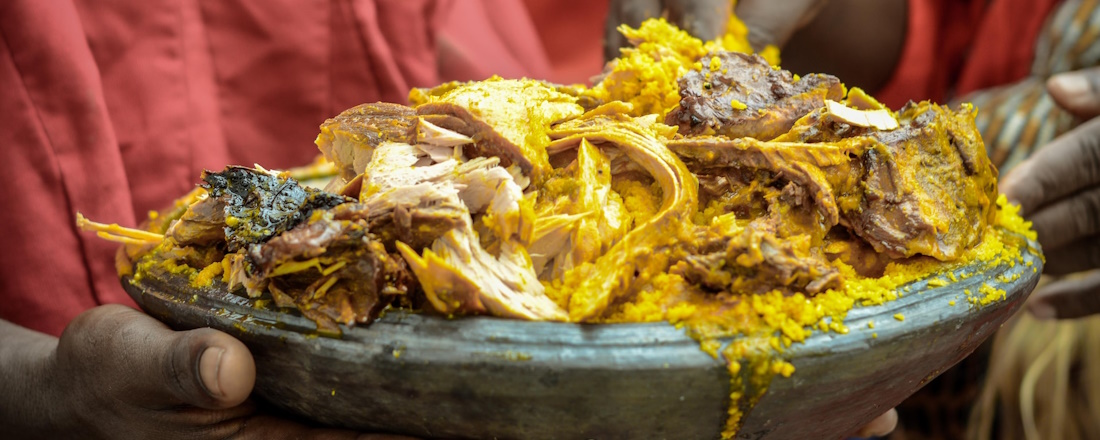
Ghanaians love local traditional food. The cuisine is quite different from what many expats are used to, especially if they have not been to Africa before, and some dishes are an acquired taste. Most meals include a main staple alongside a meat stew or soup accompaniment.
The national dish is fufu, a pounded ball of cassava and yam dough placed in a large bowl of soup. Utensils are not typically used, and sharing one bowl between friends and family is common. Eat only with the right hand, using the thumb and first two fingers to scoop up food.
Languages in Ghana
Although there are more than 30 local languages, English is Ghana’s official language, meaning expats fluent in English are unlikely to experience significant language barriers. That said, while English is widely spoken in the cities, some rural areas might see people speaking only their tribal language.
With its various dialects, Akan is the most widely spoken local language, and many phrases are quite easy to learn. If you do take the time to learn some of these phrases, you’ll find that the locals’ appreciative responses make it well worth the effort.
Shopping and bargaining in Ghana
Bargaining is a cultural institution in Ghana, and the social meaning of bargaining is as essential as the financial benefits. Expats will surely enjoy mastering the art of haggling, negotiation and the associated banter, particularly when shopping in local markets or hailing a taxi.
The process usually goes as follows: the seller announces a price. The buyer then responds with a remark about how expensive that is and offers a counter amount, often less than half the original fee. Remember to be friendly and smile, engaging in banter and a chat. Bargaining then ensues until a price somewhere between the two is agreed.
Attitude towards the LGBTQ+ community in Ghana
The cultural milieu of Ghana may pose a significant challenge to LGBTQ+ expats due to the conservative stance towards LGBTQ+ rights and identities. As a legacy of British colonial legislation, same-sex conduct has been criminalised under Ghanaian law for decades and carries penalties of up to three years in prison.
Parliament has repeatedly advanced the Human Sexual Rights and Family Values Bill, which would dramatically expand criminalisation to include identifying as LGBTQ+, advocacy, allyship, and even renting property to LGBTQ+ people. Public attitudes are similarly hostile, and surveys consistently show that the vast majority of Ghanaians oppose homosexuality.
It’s prudent for LGBTQ+ expats to exercise caution in both personal and professional interactions.