
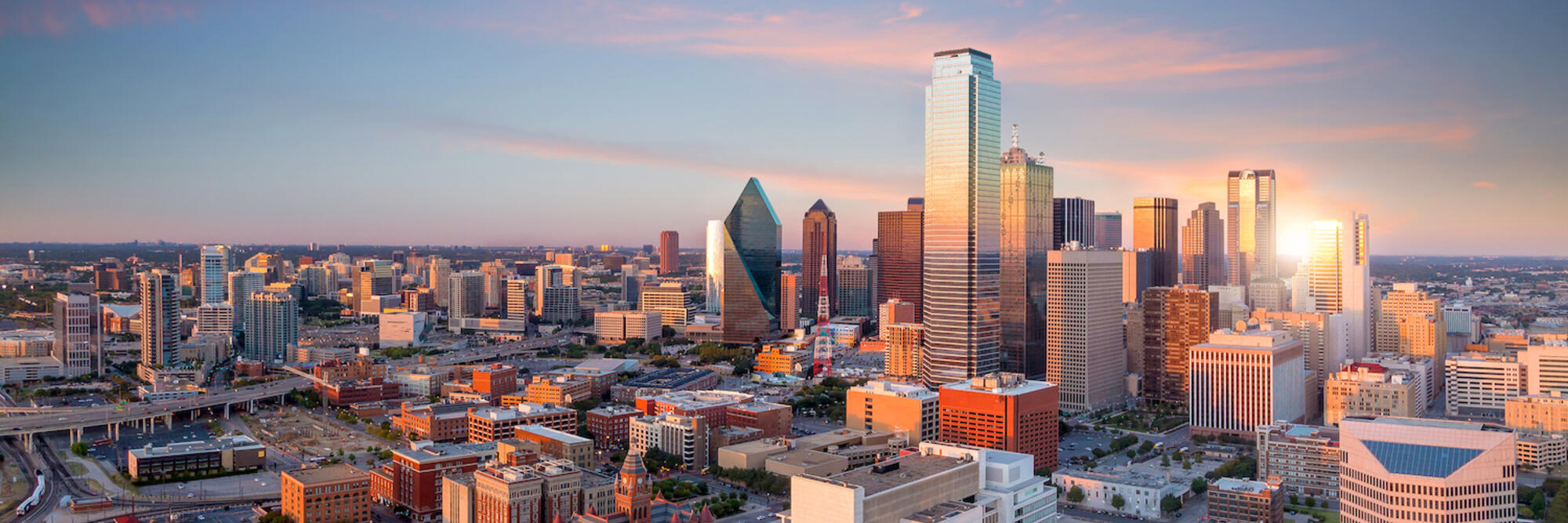
Getting around in Dallas usually means getting behind the wheel, although the city’s Dallas Area Rapid Transit (DART) system offers a genuine alternative. DART’s services include buses, light rail, commuter rail and paratransit, and in 2024, the system recorded over 55 million trips. Despite this, most residents opt to purchase and drive a car for their daily commutes. Even regular public transport commuters tend to own a car – it earns its keep on weekends and during holidays.
Public transport in Dallas
Public transport in Dallas revolves around DART, which serves the city and 12 surrounding suburbs. The network’s reach is broad – light rail, buses, commuter rail, on-demand shuttles and streetcars all feed into the same fare system – although the reality is that most journeys still favour the car.
Light rail
Dallas’s light rail network serves most of the city’s suburbs and spans 93 miles (150km) between four colour-coded lines – Red, Blue, Green and Orange. Trains operate from 5am to 12am daily, with trains arriving roughly every 20 minutes throughout the day. Weekend and late-night frequencies are similar.
Train
The Trinity Railway Express (TRE) is a commuter rail line jointly operated by DART and Fort Worth’s Trinity Metro. It connects Dallas Union Station to downtown Fort Worth, serving the mid-cities in between. The TRE runs on weekdays and Saturdays, with Sunday services limited to major events such as the State Fair of Texas.
Silver Line
The Silver Line is DART’s newest commuter rail service, opened in late 2025. This 26-mile (42km) route links Plano, Richardson, Addison, Carrollton and Coppell to DFW International Airport – the first direct east-west rail connection in the network. Trains run daily from 4am to 1am, with 30-minute frequency during peak hours and hourly service at other times.
Buses
The bus network in Dallas is extensive and accounts for most of DART’s trips. DART’s bus network covers around 75 routes that operate daily from 5.30am to midnight. One can get almost anywhere using the city’s buses, although most bus journeys will require multiple transfers that lengthen travelling times.
In lower-density suburbs where fixed bus routes aren’t practical, DART runs GoLink – an on-demand shuttle service operating across more than 20 zones. Rides are booked through the GoPass app and connect passengers to nearby rail stations and bus corridors.
Streetcars
DART operates a modern streetcar service running from the Bishop Arts District to Union Station, the central transport hub downtown. Streetcars run from 5.30am to midnight and arrive every 20 minutes.
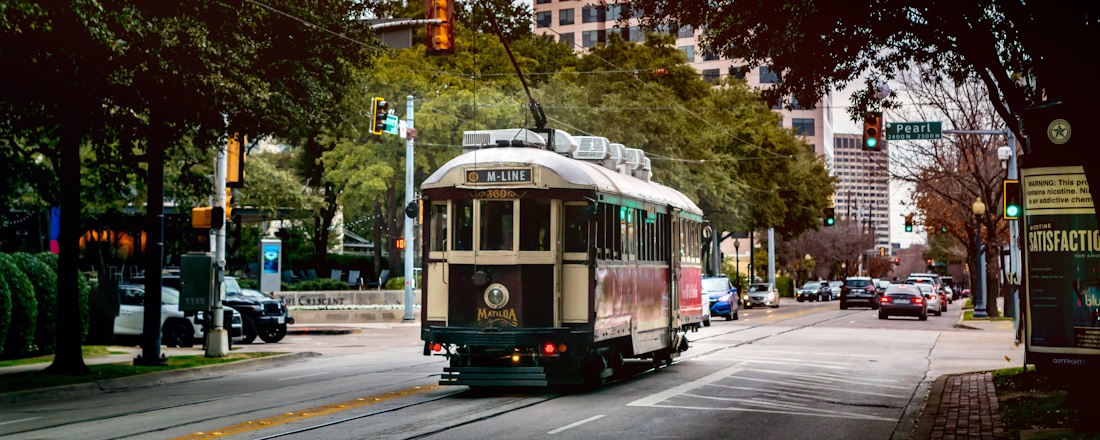
The M-Line Trolley is a separate, free heritage streetcar service. Run by a non-profit, it loops through the Uptown neighbourhood and the Dallas Arts District seven days a week. Shops, galleries and restaurants line the route.
Useful links
- DART: Dallas Area Rapid Transit
- DART: Fares and Passes
- Trinity Railway Express
- McKinney Avenue Transit Authority: M-Line Trolley
Taxis in Dallas
Various taxi firms operate in the city. While taxis are readily available in downtown Dallas, locals don’t generally use them on a regular basis.
It’s possible to hail a taxi from the side of the road in the downtown area of Dallas, but it’s best to prebook a vehicle if travelling from the suburbs. Taxis use a metered system and are quite expensive. The trade-off is that metered fares stay flat – no surge pricing, whatever the hour or weather. Ride-hailing applications such as Uber and Lyft are also operational in Dallas.
Useful links
Driving in Dallas
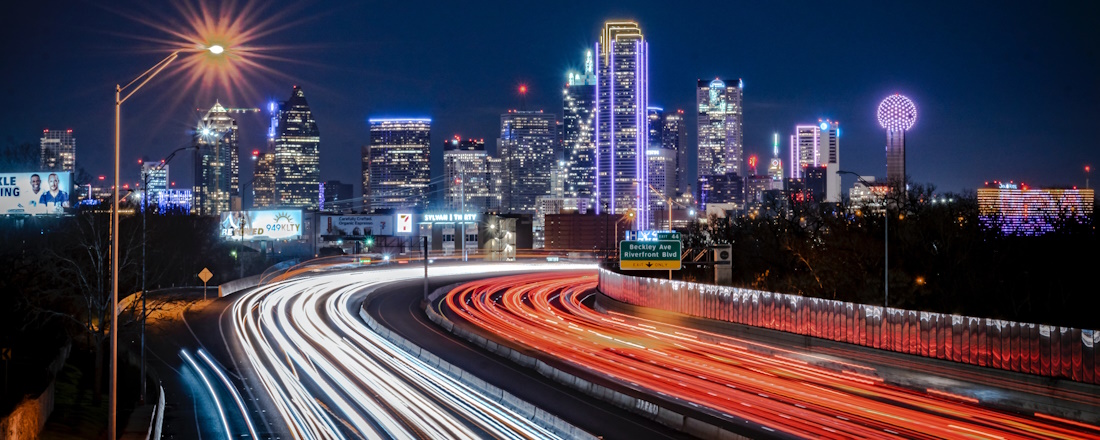
Driving in Dallas is by far the path of least resistance. The road networks are sophisticated, making it possible to get across town relatively quickly. Petrol in Texas is quite cheap due to its proximity to oil production, and petrol stations are plentiful, making life convenient for drivers. Road conditions in Dallas are also excellent, and signage is clear.
One thing to watch out for: several major routes, including the Dallas North Tollway and the President George Bush Turnpike, are cashless toll roads. Drivers without an electronic TollTag are billed by post at roughly double the tagged rate. It’s worth setting up a TollTag account early – the tag also works for parking at DFW and Love Field airports.
Driver’s licences
Expats with residency in Dallas and newcomers from other states can drive on their foreign licence for up to 90 days before they have to get a local one. After this, they’re required to obtain a Texas driver’s licence. Texas has reciprocal agreements with France, Germany, South Korea, Taiwan and the United Arab Emirates, allowing a valid foreign licence from these countries to be exchanged without sitting the knowledge or skills tests.
Those from other countries will need to pass both knowledge and skills tests. If your foreign driver’s licence isn’t in English or Spanish, you’ll need it translated by a certified service or your consulate before applying. Carrying an International Driving Permit (IDP) alongside the original is also advisable.
Useful links
Cycling in Dallas
Cycling in Dallas is more recreation than commute. The city adopted a new Bike Plan in May 2025, and the trail network is expanding – but on-street protected lanes are scarce outside downtown and Uptown.
For recreational riding, the city’s trails are another matter entirely. The Katy Trail, White Rock Lake loop and Santa Fe Trail are popular with joggers and cyclists alike, and the Loop Dallas project is gradually stitching these segments into a 50-mile citywide circuit. Dockless e-bikes and scooters from operators like Lime are available in some areas, although coverage varies.