Print
  • Hold down Ctrl key and select the sections you want to print. If using a Mac, hold down the Cmd key.
  • Use Ctrl + A or on Mac, Cmd + A to select all sections (if you are using the Chrome browser).
  • Click "Apply" and the site will customise your print guide in the preview below.
  • Click the "Print" button and a print pop up should appear to print to your printer of choice.

Moving to Dallas

Living in Dallas as an expat

Moving to Dallas means stepping into a city whose motto, ‘Big things happen here’, barely scratches the surface. As one of the 10 most populous cities in the USA, Dallas lives up to the Texan reputation for doing everything on a grand scale. Newcomers can look forward to a high quality of life and a cost of living that still punches well below the weight of comparable American metros.

While the topography of Dallas is fairly flat throughout, the city more than makes up for it in character. Dallas is firmly inland, but its plentiful lakes, creeks and the Trinity River watershed go some way towards making up for the lack of a coastline.

The pace of life in Dallas may catch newcomers off guard – this is a city that runs on ambition. It’s less laid back than other cities in the state and takes a more serious approach to work. That isn’t to say the city is unfriendly, but new arrivals will experience something in between warm Southern hospitality and a steely business mentality.

Working in Dallas

Working in Dallas puts you at the heart of one of America’s most aggressive job markets. The Dallas–Fort Worth metroplex was the number one US metro for corporate headquarters relocations between 2018 and 2024, and is home to around 20 Fortune 500 companies across sectors from telecoms and defence to financial services and healthcare. Texas has no state income tax, which makes a noticeable difference to take-home pay – and it’s one of the main reasons companies and employees alike keep heading south.

The city’s economy is broad shouldered. Technology, finance, logistics and healthcare all have deep roots here, and the rapid expansion of data centres and AI infrastructure across the metroplex is creating a fresh wave of high-paying roles.

The work culture leans more towards corporate and results driven, with longer hours than you might find in Austin or Houston, but the trade-off is genuine upward mobility and no shortage of professional networking opportunities.

Finding a Job and Working in Dallas

Lifestyle in Dallas
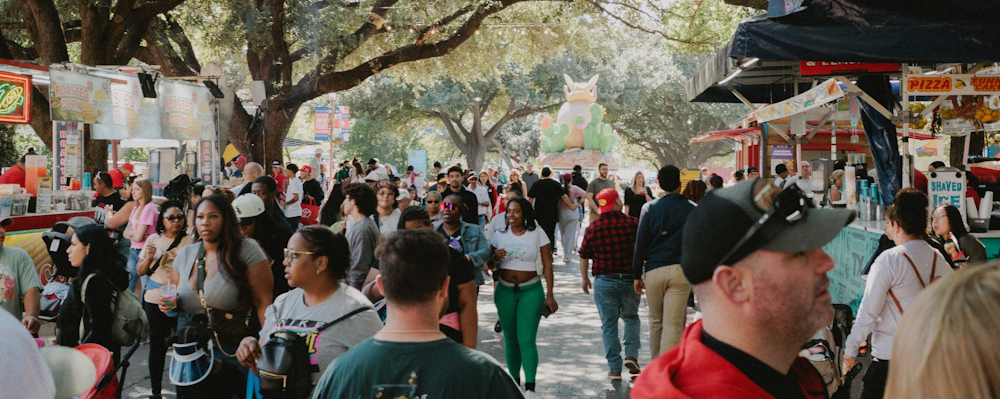
People at the State Fair Of Texas Park in Dallas by Cody Groce on Unsplash

The lifestyle in Dallas has come a long way from the city’s oil-and-cattle reputation.  There has been a cultural renaissance of sorts in Dallas in recent years, resulting in the development of the Dallas Arts District, at 68 acres, the largest contiguous urban arts district in the United States.

The Arts District anchors a cultural scene that includes world-class museums, galleries and performing arts venues, and neighbourhoods like Deep Ellum and the Bishop Arts District keep live music and independent culture alive and kicking. Uptown draws the after-work crowd with its bars and restaurants within walking distance of one another – a rarity in this sprawling city.

Sport is woven into daily life here. The Dallas Cowboys command near religious devotion, and the Mavericks, Stars, and FC Dallas all have loyal followings. Fair Park hosts the annual State Fair of Texas every autumn – a Texas institution and a rite of passage for anyone new to the city. Green spaces like White Rock Lake and the Katy Trail offer welcome breathing room, and weekend escapes to the Hill Country or East Texas are within easy driving distance.

Lifestyle in Dallas

Finding accommodation in Dallas

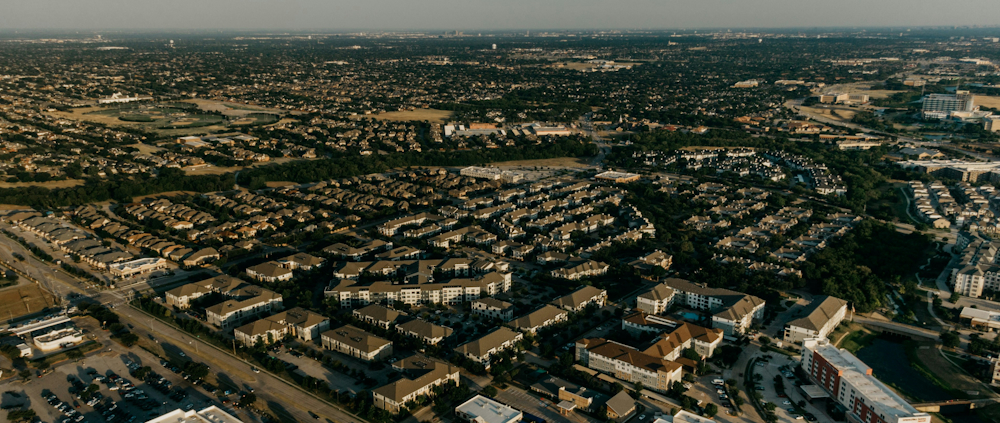
Aerial View of Frisco in Dallas by Daniel on Unsplash

Accommodation in Dallas offers various options catering to different preferences and budgets. New arrivals can choose from apartments in the city centre, close to the hustle and bustle, or suburban homes that provide a quieter and more spacious living environment.

The city has witnessed a rise in housing costs in recent years; it remains an attractive destination, though, for individuals transitioning from pricier cities. It pays to start your search early, as desirable properties in popular areas rarely sit on the market for long.

Unfurnished rentals are the norm, and most leases run for 12 months. The application process is straightforward but moves quickly – landlords typically expect a credit check, proof of income, and references. New arrivals without a US credit history may need to put down a larger deposit or provide a letter from their employer.

Accommodation in Dallas 
Neighbourhoods in Dallas

Cost of living in Dallas

One of the major benefits is the overall lower cost of living in Dallas compared to other major US cities. In many ways, Dallas offers the perks of big city life without the price tags of New York or San Francisco. Newcomers from pricier cities are often struck by how much more space their money buys in Dallas. Costs have been creeping up in recent years, though, particularly for housing, as demand continues to grow.

The absence of state income tax is a significant draw for high earners, and one of the reasons Texas consistently tops lists for corporate relocation. Groceries, utilities and transport costs all sit close to the national average, although property taxes in Texas run higher than in most states – something to factor in if you plan to buy rather than rent.

Cost of Living in Dallas

Living in Dallas with children

Another drawcard for people relocating to Dallas is its abundance of family-friendly neighbourhoods with historic houses and leafy, spacious parks. Those who settle in the suburbs can expect tree-lined avenues and interesting architecture around every turn.

Dallas is well stocked with things for children to do. The Perot Museum of Nature and Science, the Dallas Zoo – one of the largest in the country at 106 acres – and the Dallas Arboretum all cater to families year-round. White Rock Lake is a favourite weekend spot for cycling, picnics, and birdwatching. The warm climate means outdoor play is possible for most of the year, although the fierce summer heat does push families indoors between June and August.

On the healthcare front, Dallas is home to several top-rated medical facilities and hospitals, so new arrivals have access to high-quality healthcare. UT Southwestern and Baylor University Medical Center are both nationally ranked, and paediatric care is readily available across the metro area. Health insurance is highly recommended to offset the cost of medical care, and many employers offer insurance packages as part of the employment benefits.

Healthcare in Dallas

Finding a school in Dallas

Finding a school in Dallas starts with understanding the public system, which is organised into independent school districts (ISDs). Quality varies considerably from one district to the next, and families often choose their neighbourhood based on the local ISD’s reputation. Some suburban districts – particularly those in Plano, Coppell, and Southlake – are nationally recognised for academic performance.

Private schools are plentiful, many with a religious or Montessori focus, and tend to offer smaller class sizes and a wider range of extracurricular activities. For internationally mobile families, options are more limited than in other major US cities.

The Dallas International School is the only dedicated international private school in the metro area, offering a bilingual French English curriculum with IB and French Baccalaureate pathways. Several private schools also offer the International Baccalaureate, so it is worth casting a wider net.

Education and Schools in Dallas

Getting around in Dallas
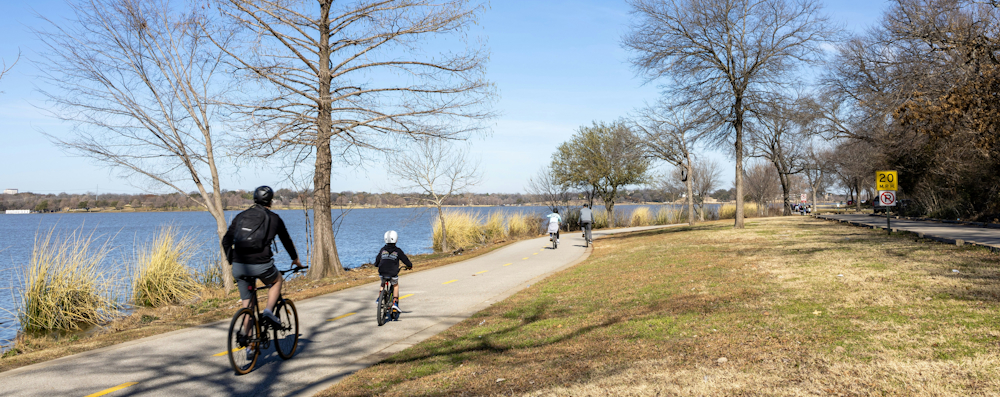
Cyclists on a White Rock Lake Trail in Dallas by Matthew Thompson on Unsplash

Dallas is a car city, and most residents would tell you a vehicle is close to non-negotiable. The metropolitan area sprawls across more than 9,000 square miles (23,000 sq km), and the distances between neighbourhoods, workplaces, amenities, and attractions can add up quickly.

Dallas Area Rapid Transit (DART) operates an extensive light rail network – 93 miles (150km) of track with more than 60 stations – alongside buses, the Dallas Streetcar and the M-Line Trolley. The system is useful for commuting along its corridors, particularly into and out of downtown, but coverage thins out in the suburbs. Ride-sharing apps are widely used and fill the gaps where public transport falls short.

DFW International Airport is one of the busiest in the world. It's roughly 20 miles (32km) northwest of downtown and offers direct flights to most major global destinations. The recently opened Silver Line connects DFW International Airport to Plano, adding a valuable commuter link. Dallas Love Field, closer to the city centre, handles primarily domestic routes.

Public Transport and Driving in Dallas

Climate and weather in Dallas

Dallas gets around 230 sunny days a year – ideal for those who like warm weather and plenty of sunshine. The warm climate means outdoor sports can be played year-round, and new arrivals will soon notice the locals’ enthusiastic support of their city’s football team, the Dallas Cowboys.

Summers are hot and sticky, though – Dallas sits in a humid subtropical zone, and temperatures regularly top 100°F (38°C) between June and August. Winters are short and generally mild, but a sudden cold snap known locally as a Blue Norther can send temperatures plummeting overnight.

Spring and autumn are the most comfortable seasons, with temperatures in the 70s and 80s°F (low to mid 20s°C) and lower humidity. These are the months when Dallas feels at its best – wildflowers bloom along the highways, and the city’s parks fill up. Newcomers would do well to time their arrival for autumn if they have the choice. Spring brings the most volatile weather, with thunderstorms, hail and the occasional tornado (the city lies at the southern end of Tornado Alley).

Weather and Climate in Dallas

Dallas won’t suit everyone – the summers test your patience, the car dependency takes getting used to, and the sheer scale of the metroplex can feel overwhelming at first. But for those willing to lean into it, the city rewards with genuine opportunity and a cost of living that leaves room to actually enjoy life. It’s a place where newcomers tend to arrive for the job and stay for everything else.

Weather in Dallas

The weather in Dallas is influenced by its inland position, set back from the moderating effects of large bodies of water. This results in a humid subtropical climate, characterised by hot summers and mild winters, with temperatures ranging from 37°F to 96°F (3°C to 36°C) throughout the year. Temperatures occasionally drop below 24°F (-4°C) during winter cold snaps, and summer regularly brings stretches above 102°F (39°C).

The warmest months in Dallas are from June through September, and August claims the title of hottest. During this season, residents and visitors can expect temperatures between 73°F and 96°F (23°C to 36°C). Rainfall is sporadic during this period, but when it does occur, it can be intense due to the city’s susceptibility to thunderstorms.

Winter, spanning from December to February, is relatively mild, with temperatures ranging from 37°F to 61°F (3°C to 16°C). This season brings more consistent rainfall. Snow is uncommon – a light dusting some years, nothing in others – but ice storms pose the greater winter threat, occasionally shutting down the city for days.

Located in the Southern Plains of the United States, Dallas’s climate is unique in its vulnerability to extreme weather events, including tornadoes, especially in spring and fall. The city’s position in Tornado Alley means that it’s not uncommon for severe weather warnings to be issued during these transitional seasons.


Working in Dallas

Expats looking at working in Dallas will find a city with a broad economy and job opportunities across multiple sectors. Due to the city’s strategic location, pro-business attitude and favourable economic climate, Dallas has become a place where business has thrived. As such, increasing numbers of global companies have chosen to start operations here. The job market rewards experience and specialist skills, although expats will need to tackle the US work visa process to take advantage of it.


Job market in Dallas

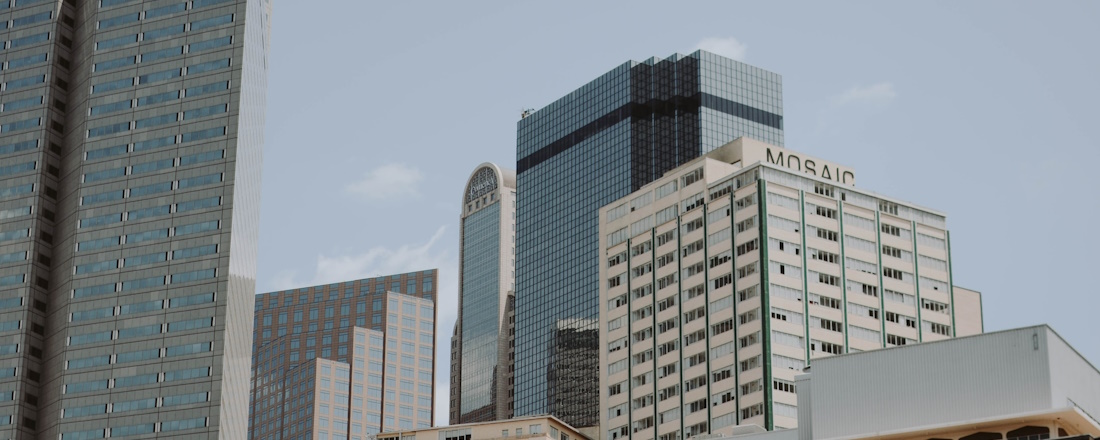
high-rise buildings under clear sky

The job market in Dallas is anchored by banking, commerce, telecommunications, technology, energy, and healthcare. The city is home to more than a dozen Fortune 500 companies, including AT&T, Energy Transfer, Southwest Airlines and Texas Instruments. Financial services have surged in recent years – the region has earned the nickname ‘Y’all Street’ as firms like Goldman Sachs and Charles Schwab expand their operations in Dallas. Tourism and leisure also account for a healthy share of employment.

Dallas has become known as the ‘Silicon Prairie’, as it’s among America’s largest employment centres for high-tech industries. The DFW metroplex was ranked the top tech hub in North America in 2026 by Site Selection magazine, driven largely by data centre development, AI infrastructure, and telecom. Owing to the presence of multiple universities in Dallas, the education sector is another significant employer in the city.


Finding a job in Dallas

laptop on a desk

We strongly recommend finding a job in Dallas before arrival, as getting employment isn’t always straightforward. There's fierce competition for corporate roles, and it’s tough to get in as a recent graduate. That said, Texas led the US in job creation in 2025, and unemployment in the Dallas area is lower than the national average.

Online job portals – LinkedIn chief among them for corporate and white collar roles – advertise open positions, and recruitment agencies can also help with the process. Those lucky enough to land a job in Dallas will discover that many of the big employers in the city offer a pleasant working environment with good training opportunities and incentives. It is essential to note that expats seeking employment in Dallas will need to be in possession of the necessary work permit or green card.

Work Permits in the USA

Useful links


Work culture in Dallas

The work culture in Dallas might surprise newcomers. A 2025 WalletHub study ranked Dallas the fourth-hardest-working city in America – ahead of San Francisco – so the old reputation for a slower Southern pace doesn’t quite hold up anymore, although the atmosphere can vary by industry. Different workplaces inevitably have differing policies and prevailing attitudes when it comes to dress codes, office atmosphere, and coworker relations. A job at a major bank will likely be more formal than working at a tech start-up, for example.

The all-American value of hard work runs deep in Dallas. Once you have your foot in the door, your output is the primary determinant of success. Colleagues are generally warm and approachable – ‘Southern hospitality’ is real in the office – but the expectation to deliver is just as high as in coastal cities. European expats in particular should note that US annual leave entitlements are far less generous than what they may be used to back home.

Cost of living in Dallas

The cost of living in Dallas is relatively moderate compared to other major metropolitan areas in the US. With a city population of nearly 1.4 million – and a wider metro area topping eight million – Dallas can seem daunting at first glance. Housing in prime areas commands a premium, and Dallas now ranks as the most expensive city in Texas. That said, overall living costs are still far more manageable than in New York or San Francisco.

Texas levies no state income tax, a significant perk for higher earners. Many Dallas residents also use mobile apps and online platforms to find deals on everything from shopping to dining.


Cost of accommodation in Dallas

The cost of accommodation in Dallas is a broad spectrum, from contemporary apartments in the bustling downtown area to historical homes that offer a glimpse into the city's past. Townhouses and single-family homes are familiar sights.

As in most major cities, the price of paradise varies. Upscale neighbourhoods like Highland Park, University Park, and Preston Hollow are the go-to for luxury. For those seeking affordability without sacrificing quality, Pleasant Grove and parts of South Oak Cliff still offer real value – although North Oak Cliff and West Dallas have gentrified sharply in recent years.

The old real estate adage – ‘location, location, location’ – rings true in Dallas. Some areas outside the city centre offer more affordable rents and are still conveniently connected by public transport.

Other costs for new arrivals to Dallas to consider include a security deposit equivalent to one or two months' rent and monthly utility costs.

Renting Accommodation in Dallas
Best Areas and Suburbs in Dallas


Cost of transport in Dallas

The cost of transport in Dallas depends heavily on whether you own a car. Dallas Area Rapid Transit (DART) operates a network of buses, light rail, and commuter rail – the latter boosted by the Silver Line, which opened in late 2025 and connects the northern suburbs to DFW Airport. Monthly transit passes can trim commuting costs, and the city also offers bike-sharing and car-sharing programmes.

Public transit is relatively affordable, but most residents still rely on personal vehicles. Fuel, car insurance, and parking fees – particularly in high-demand areas – add up quickly. On the plus side, petrol prices in Texas run consistently below the national average. For those who must drive, carpooling or car-sharing services can reduce costs compared to maintaining a personal vehicle.

Getting Around in Dallas


Cost of groceries in Dallas

The cost of groceries in Dallas sits at or slightly below the national average, so eating well here doesn't have to mean eating into your savings. Popular grocery chains include Kroger, Tom Thumb, and Walmart, and the aggressive expansion of Texas favourite H-E-B into the DFW metro has put welcome downward pressure on prices.

Local markets offer occasional bargains, but chain stores tend to be more consistent in delivering value. Buying in bulk and using loyalty programmes at large grocery chains can lead to real savings, and store-brand products often match name-brand quality at a fraction of the price.


Cost of entertainment and eating out in Dallas

You'll find no shortage of ways to spend your money – and your evenings – when it comes to entertainment and eating out in Dallas. Cultural landmarks like the Dallas Museum of Art offer a dose of refinement, while the Dallas Zoo promises wholesome family fun. For sports enthusiasts, venues such as the AT&T Stadium are the epicentre of excitement.

The culinary scene ranges from modest, wallet-friendly eateries to high-end restaurants. Recreational pursuits like fitness centres and spas also span a wide price range.

Those on a tight budget should look for free or donation-based events, often listed on community boards or local websites. The Dallas Museum of Art, for instance, offers free general admission year-round, and many other museums and attractions run discounted days or hours. Diners can try lunch specials, usually cheaper than dinner prices, or sample the wide range of food trucks serving delicious and affordable meals around the city.

Lifestyle in Dallas


Cost of education in Dallas

The cost of education in Dallas depends largely on whether you opt for public or private schooling. Choices are abundant, from charter and magnet schools to well-regarded private institutions. Public schools are the most cost-effective route, and many newly arrived families aim for the suburban independent school districts (ISDs) of Plano, Richardson, Frisco, and Highland Park as being among the state's best.

Dallas's private institutions, with their varied curricula and facilities, come at a premium. Many of these schools do offer scholarships or financial aid, and families seeking an international curriculum can look to Dallas International School, which offers French and International Baccalaureate programmes. Parents should also ask about sliding-scale fees or sibling discounts.

Education and Schools in Dallas


Cost of healthcare in Dallas

The cost of healthcare in Dallas is informed by a well-developed medical infrastructure. Public and private hospitals and clinics dot the city, with prestigious institutions like Baylor University Medical Center and UT Southwestern Medical Center at the helm.

Insurance is a critical consideration, and costs fluctuate based on factors like the plan type and an individual's profile. For those without employer-sponsored insurance, the Affordable Care Act (ACA) marketplace provides a range of health insurance options. It is worth noting, though, that Texas has not expanded Medicaid, which can leave some lower-income residents in a coverage gap.

Community health fairs often offer free screenings and essential services. Generic drugs, available at pharmacies, are usually much cheaper than branded alternatives. Some local clinics also operate on a sliding fee scale based on income.

Healthcare in Dallas


Cost of living in Dallas chart

Prices are listed in US dollars (USD) and may vary depending on the product and service provider. The list below shows average prices for Dallas in February 2026.

Accommodation (monthly rent)
Three-bedroom apartment in the city centreUSD 3,600
Three-bedroom apartment outside the city centreUSD 2,700
One-bedroom apartment in the city centreUSD 1,800
One-bedroom apartment outside the city centreUSD 1,500
Food and drink
Eggs (dozen)USD 4
Milk (1 litre)USD 1.10
Rice (1kg)USD 4.50
Loaf of white breadUSD 3.70
Chicken breasts (1kg)USD 13.50
Cheese (500g)USD 7
Eating out
Three-course meal for two at a mid-range restaurantUSD 85
Big Mac MealUSD 11.50
Coca-Cola (330ml)USD 2.80
CappuccinoUSD 5.75
Local draft beer (500ml)USD 7
Utilities/household
Mobile phone monthly plan with calls and dataUSD 70
Internet (fibre or cable – average per month)USD 70
Basic utilities (average per month for a standard household)USD 230
Transportation
Taxi rate (per kilometre)USD 1.80
Bus/train fare in the city centreUSD 3
Gasoline/petrol (per litre)USD 0.65

Accommodation in Dallas

Finding accommodation in Dallas will be one of the biggest hurdles you face when moving to the city. A construction boom has brought fresh rental stock onto the market, but it’s still tough to find homes to buy, and accommodation in desirable neighbourhoods goes quickly regardless.

That said, the quality of apartments and houses in Dallas is high, and property prices reflect this. In fact, Dallas is home to some of the most luxurious and expensive properties in the United States. More affordable options do exist, although they tend to lie farther from the city centre or in less sought-after pockets.

In popular neighbourhoods, good properties still get snapped up quickly, so it pays to start your search early. There are plenty of real estate agents in Dallas – including apartment locators, whose services are free to tenants – ready to help newcomers find their feet in the city’s property market.


Areas and suburbs in Dallas

Areas and suburbs in Dallas

The areas and suburbs in Dallas are wildly varied, and choosing the right neighbourhood to match your lifestyle is half the battle. The Uptown and Downtown areas are bustling with activity, offering a variety of dining, entertainment and shopping options. For those seeking a more suburban feel, areas such as Highland Park and Preston Hollow provide quieter environments with larger plots of land and green spaces.

Lakewood and the M Streets are trendy spots, chock-full of old Dallas charm and modern amenities. The Bishop Arts District has a Bohemian streak – independent shops and artisanal eateries line its streets, although gentrification has picked up the pace in recent years.

For families, Plano and Richardson – slightly north of the city – have excellent school districts and more spacious properties. Frisco and McKinney, farther north still, have overtaken them in terms of new construction and are drawing young families in droves.

See Areas and Suburbs in Dallas for more on the best neighbourhoods in the city.


Types of accommodation in Dallas

The types of accommodation in Dallas run the gamut – from modern apartments and converted loft spaces downtown to luxury condos and sprawling family homes in the suburbs. Mid-rise apartment blocks (often built around parking garages, known locally as ‘Texas Donuts’) are the most common new builds, while urban townhomes – tall, narrow three-storey affairs – have sprung up across neighbourhoods like Bishop Arts and Grand Prairie.

Property is big business in Dallas, and the standard is generally high – buildings are well maintained, and finishes are modern. That quality comes at a price, though, and it’s worth doing thorough research into the going rates in your preferred neighbourhoods before committing to a move.


Finding accommodation in Dallas

Finding accommodation in Dallas

Finding accommodation in Dallas takes some legwork, especially in the most popular neighbourhoods. New arrivals will benefit from the services of a real estate agent familiar with the local market. In Dallas, ‘apartment locators’ – licensed agents who specialise in rentals – are a particularly useful resource, and their services cost the tenant nothing (the landlord pays the commission). It’s worth speaking to other newcomers for recommendations, too.

The internet is another good place to begin a search for a property. Online portals can be used to get an idea of the property prices in particular neighbourhoods. Property in sought-after areas is snapped up quickly in Dallas – often within 24 to 48 hours, and sometimes before agents can even advertise online. Get a head start by briefing your agent on your ideal areas, budget and preferred housing type.

Some newcomers will be lucky enough to have a relocation company working on their behalf, particularly those moving with a corporate transfer. These firms assess your preferences and shortlist properties for you to view.

Useful links


Renting accommodation in Dallas

Most people renting accommodation in Dallas do so as a first step, opting to get a feel for the city’s neighbourhoods before committing to a purchase.

Making an application

Once you’ve chosen a property, you’ll need to make a formal application. This usually involves filling out a form with personal information, employment history and references. Most landlords or agencies will also run a credit check.

It’s wise to gather previous landlord references, pay stubs and a letter of employment beforehand. For international newcomers without a US credit history, some larger property management companies use services like Nova Credit to translate overseas credit records into a US equivalent score. Alternatively, offering two to three months’ rent upfront or using a guarantor service can help bridge the gap.

Some properties may also require a background check. If you have a pet, check the property’s pet policy – be prepared for an additional deposit or monthly fee.

Leases, costs and fees

Landlords typically look for tenants who can commit to a lease of 12 months or more. Short-term leases of three to six months are sometimes available but attract significant premiums. Read any lease carefully before signing – look out for limitations it might impose and check whether there are costs beyond the headline rent.

You’ll generally be expected to put down a deposit of at least one month’s rent. Under Texas law, your landlord has 30 days after you vacate to return the deposit, minus any itemised deductions for damage beyond normal wear and tear.

On top of the deposit, watch out for application fees, administrative charges and pet fees. Some are one-off costs; others, like pet rent, may be added to your monthly bill. Clarify everything upfront to avoid surprises.

Terminating the lease

Most leases require 30 to 60 days’ written notice before the end of the lease term if you do not intend to renew. Check your lease carefully for the exact notice period – missing it can trigger automatic renewal or additional charges.

Texas law does not grant tenants an automatic right to break a lease early for reasons like a job transfer or a home purchase. Unless the lease includes a specific early termination or ‘reletting’ clause, penalties can be steep – typically including repayment of any rent concessions received, a reletting fee, and continued rent until a replacement tenant is found.

See Accommodation in the USA for more on rental processes in the country.

Useful links


Utilities in Dallas

Utilities in Dallas

Utilities in Dallas are typically not included in your rent, so you’ll need to budget for them separately.

Setting up utilities should be a priority once you’ve secured a place. Some rental agreements include certain utilities; most will require you to set up your own accounts.

Most utility companies in Dallas offer online account management for tracking usage and payments.

Electricity and gas

Texas has a deregulated energy market, which means you must actively choose your electricity provider – there is no default. The state-run comparison tool at PowerToChoose.org is the best starting point for comparing rates and contract lengths. Major providers include TXU Energy, Reliant and Direct Energy, although dozens of smaller retailers compete on price and plan structure.

For gas, Atmos Energy is the primary provider in the Dallas area. They offer both residential and commercial services.

Worth knowing: the Texas electricity grid (ERCOT) operates independently of the rest of the US. Since the severe winter storm failures of 2021, significant investment has gone into grid resilience. However, newcomers would be wise to ask whether their building has a backup generator or sits on a critical power circuit, particularly if moving into an apartment.

Water

Water and sewerage services are typically handled by the City of Dallas. Upon moving, residents need to set up an account with the city’s water utility service. Bills are usually sent monthly, and payments can be made online, by mail or in person. It’s also wise to be aware of water conservation guidelines, especially during the drier months when restrictions might be in place.

Bins and recycling

The City of Dallas provides waste collection and recycling services. Households are usually supplied with bins for regular waste, recyclables and yard waste. Collection schedules vary depending on the neighbourhood.

Familiarise yourself with the recycling guidelines – paper, plastic and glass should be sorted correctly.

Useful links

Areas and suburbs in Dallas

The best places to live in Dallas

Deciding on what areas and suburbs in Dallas are worth considering is a big question for most new arrivals. Choosing the right neighbourhood to match your priorities will have a significant impact on the experience of living in the city.

Property is big business in Dallas. It would be beneficial to seek the advice of a real estate agent. These professionals have in-depth knowledge of the city’s property market and have access to a larger pool of potential properties to suit the different requirements of each person.


City living in Dallas

Ryan Duffy

Living in downtown Dallas is perfect for those who want easy access to the newest restaurants, clubs, bars, and shopping experiences. City living options tend to be a little less spacious and pricier than those in the suburbs, but these areas are very convenient for limiting the commute time to work.

Bryan Place

Bryan Place is an east Dallas neighbourhood near the Arts District in the city centre. Being so close to the commercial centre of Dallas, it’s popular among young professionals and executives.

Accommodation in Bryan Place is varied. Although there are some older standalone homes available, most of the housing consists of townhouses, low-rise condos, and modern apartment complexes. For nature lovers, Exall Park is close by and is a great place to enjoy the city’s favourable climate.

Highland Park

Highland Park provides all the best elements of city living. Located just outside the city centre, it’s within easy reach of all major facilities. Those settling in this neighbourhood will have access to some of the city’s best shopping and entertainment facilities.

There are several good schools in the area, which accounts for its enduring appeal among families. There are many local parks in the area which provide open spaces for recreational activities.


Family-friendly neighbourhoods in Dallas

Alec Mason

Dallas is a great city for expats moving to the USA with children. To a large extent, schooling choices will ultimately determine where families live. Still, there are plenty of safe, family-friendly communities to choose from.

Parker

Parker is popular among families because of its excellent quality of life. Most of the accommodation in Parker comes in the form of freestanding family homes with spacious gardens and swimming pools. The area sits well north of the city centre. Parker has good road links via US-75, although the commute to downtown Dallas can take 45 to 60 minutes during rush hour. There are modern malls in nearby Allen and Garland.

In addition to the green open spaces and fresh country air in Parker, the schools are exceptional, and the crime rate is low, making it a great place to raise children.

Southlake

Southlake is another popular choice for families with children and pets. The schools are really what draw people to the area, and there are lots of great options.

Accommodation in Southlake mainly consists of large family homes. The area has plenty of shopping and dining options, most of which are located at Southlake Town Square. It’s also very safe and known for having strong community ties.

Healthcare in Dallas

The standard of healthcare in Dallas is good, and there are many excellent hospitals to choose from. That said, the USA does not have universal healthcare, meaning that access to quality medical care in Dallas is directly related to having a comprehensive health insurance policy.

If you’re moving to Texas, you’ll either need to invest in health insurance or ensure you have a policy as part of your employment package. Medical care may be denied without insurance or the ability to pay up front. In the case of an emergency, hospitals are obligated to give life-saving treatment, but you will still be presented with a bill once you have been stabilised. Federal law (the No Surprises Act) does protect against surprise out-of-network charges during emergencies, although you will still owe your deductible and copay. Pharmacies are easy to find in Dallas, with many operating 24/7.

Below are some of the most well-regarded hospitals in Dallas.

Healthcare in the USA


Hospitals in Dallas

healthcare professionals in a hospital corridor

Baylor University Medical Center

Website: www.bswhealth.com/dallas 
Address: 3500 Gaston Avenue, Dallas 75246

Medical City Dallas

Website: www.medicalcityhealthcare.com 
Address: 7777 Forest Lane, Dallas, 75230

Parkland Memorial Hospital

Website: www.parklandhealth.org 
Address: 5200 Harry Hines Boulevard, Dallas, 75235

Texas Health Presbyterian Hospital Dallas

Website: www.texashealth.org
Address: 8200 Walnut Hill Lane, Dallas, 75231

UT Southwestern Medical Center

Website: www.utsouthwestern.edu 
Address: 5323 Harry Hines Boulevard, 75390

Education and Schools in Dallas

Education and schools in Dallas play a central role in the city. Dallas is a major centre of education for much of the South Central region of the USA. Thousands of Americans and people from abroad head to Dallas each year to attend one of the city’s universities, colleges, or trade schools.

The Dallas Independent School District oversees the provision of education in the city and is one of the largest school districts in the USA. The standard of schooling in Dallas is good, and there are plenty of options for students moving to the city from abroad.

When picking schools, those moving to Dallas will need to evaluate their priorities for their children’s education carefully. It’s necessary to consider cost, the proximity of the school to home and the workplace, and the curriculum and teaching style followed by the school.


Public schools in Dallas

American classroom

The standard of public schools in Dallas is varied. On one end of the spectrum, Dallas boasts many excellent charter and magnet schools that cater for gifted students and produce outstanding results – yet the city is also home to some schools that don’t perform as well.

Parents choosing to send their children to a public school in Dallas will want to do their homework. The Texas Academic Performance Reports (TAPR), published annually by the Texas Education Agency, track student performance across every public school and district in the state. The reports cover school staff, programmes, student demographics, and more.

One major advantage of picking a public school in Dallas is the cost, as no fees are charged. Since public school attendance is based on zoning, it also allows children to mix with local kids from the neighbourhood, which is especially helpful for expat families new to the US.

Charter and magnet schools

Both charter and magnet schools are associated with high achievement and a broader cultural outlook. They’re great options for parents looking for a higher standard of education for their children.

Charter schools have more scope to be flexible in their teaching methods than traditional public schools. Magnet schools follow an alternative, more specialised curriculum focusing on particular subjects such as languages, science or the performing arts. The Dallas Independent School District (ISD) offers students more than 30 magnet schools, some among the country’s top performers.

With long waiting lists, competition for places at these schools can be fierce. Lottery systems are used to confirm enrolment for charter schools in Dallas, while magnet schools admit students based on eligibility criteria. Arts-focused magnet schools, such as the well-known Booker T. Washington High School for the Performing and Visual Arts, may also require an audition.

Education and Schools in the USA

Useful links


Private schools in Dallas

New arrivals in Dallas can also send their children to one of the city’s private schools. Private schools generally follow the state’s curriculum but tend to have some degree of flexibility regarding teaching styles. These schools often teach through a religious lens, such as Christian schools, or an alternative education philosophy, such as Montessori schools.

Private schools in Dallas provide a high standard of teaching and lots of scope for gifted students to flourish academically. They also tend to offer a more varied range of extracurricular activities. The downside of sending children to private schools is the high fees.

Useful links


International schools in Dallas

teens using a laptop

Unlike in other major US cities, there aren’t many international schools in Dallas. Most expats from English-speaking countries find that sending their child to a public or private school is a viable option, and therefore, there isn’t a massive demand for international schools in the city.

Francophones and parents who want to give their children a bilingual education can send them to Dallas International School (DIS), part of the Mission Laïque Française network. The school’s French track pairs the French national curriculum with the International Baccalaureate (IB), and since 2025, a new English-based International Program runs from Grade 5 through to the IB Diploma – no French required.

The German International School of Dallas caters to children from 12 months to around 11 years old, covering preschool through Grade 5. The school follows the Bavarian education framework and takes a full-immersion approach to German language and culture throughout the school day.

There are also many private and magnet schools in Dallas that offer the option of studying for the IB Diploma. Demand for places at international schools is high, and waiting lists are long, so it’s best to start the application process early. Fees at international schools can be costly. Expats considering this option should factor this into their negotiations for their employment package.

Useful links


Special educational needs in Dallas

learner using a wheelchair in a classroom

Support for special educational needs in Dallas is well established. The city has a strong track record of inclusion initiatives and adaptive programmes, from accessible playgrounds to sensory-friendly museums, and beyond.

Texas is one of the few states with solid Early Childhood Intervention programmes. There are professionals available who can analyse a child’s circumstances and determine the appropriate course of action, such as setting up a personalised learning plan, getting access to early intervention therapists, and getting assistance with transitioning into public schooling. Dallas also has several schools that cater specifically to students with special needs.

New parents can contact the Texas Education Agency (TEA) for more assistance. There are also parent support networks across the city where families can connect with those who have children enrolled in a range of special needs programmes.

Useful links


Homeschooling in Dallas

Homeschooling in Dallas – and across Texas – is legal and lightly regulated. Under state law, children taught at home are treated much like students enrolled in a private school, exempt from the compulsory attendance requirement.

Parents who homeschool their children in Dallas need to follow specific rules with which they should familiarise themselves. Parents also need to know that the public school district may ask them to provide written assurances that they intend to homeschool their child.

Useful links


Tutors in Dallas

Finding good tutors in Dallas is straightforward – the city has no shortage of options for students who need extra help with specific school subjects. For expat children, tutoring can be invaluable for catching up with a new curriculum and covering possible knowledge gaps. Non-English-speaking families may find hiring a tutor valuable for helping their children learn English or maintain their mother tongue if their full-time schooling is in English.

Several reputable tutoring services can be found in Dallas. There are also numerous private tutors in the city, ranging from retired teachers to university students.

Useful links

Lifestyle in Dallas

The lifestyle in Dallas runs on big energy – a city steeped in live music, homegrown art and seriously good Southern cooking. There’s no beach and no mountain backdrop, but there’s always a new restaurant to try, a party worth dressing up for, or a festival spilling out onto the streets.

The ninth-largest city in the US – and part of the fourth-largest metro area – Dallas is known for its shopping, scorching summers and warm Southern hospitality. It is a car-dependent city, so newcomers will want to get behind the wheel early.


Shopping in Dallas

Shopping in Dallas caters to those who enjoy both high-end department stores and quirky independent boutiques. New arrivals in search of unique finds should head straight for the Bishop Arts District. Here, newcomers can browse antique shops, record shops and one-of-a-kind boutiques, with good eateries to boot.

Malls such as NorthPark Center and the Galleria Dallas are extremely popular. Here, shoppers will find exclusive designer stores. Outlet malls are located nearby in Allen and Grand Prairie, where shoppers can pick up big brand names at discounted prices.


Entertainment and eating out in Dallas

Dallas has arrived as a serious food city. The Michelin Guide expanded into Texas in 2024, and Dallas now counts its own starred restaurants alongside a strong showing of Bib Gourmand and recommended spots. From white-tablecloth dining to no-frills taco joints, there’s a cuisine and an atmosphere to match any mood.

Dallas also takes its brunch seriously. On weekends, many restaurants offer a delicious brunch menu with specials on mimosas or Bloody Marys.

When the sun goes down, Uptown Dallas is the place to see and be seen, with wall-to-wall bars and a polished club scene at weekends. Deep Ellum draws the live-music crowd with a grittier edge, while Lower Greenville offers a more laid-back evening on its stretch of patios and neighbourhood bars. Those looking for a relaxed atmosphere will find a few dive bars in the city where people play pool and watch live sports over a beer.


Arts and culture in Dallas

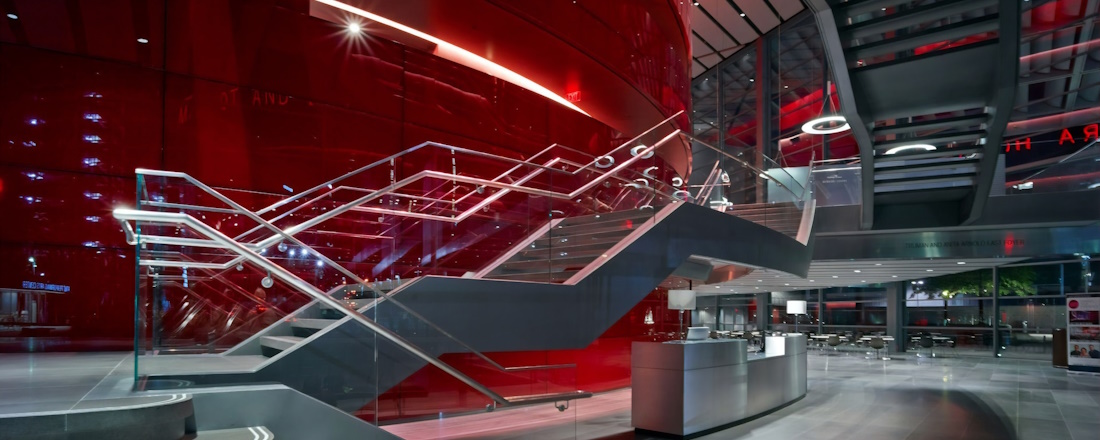
Lobby of the Margot and Bill Winspear Opera House

Arts and culture in Dallas go well beyond the expected. The city’s Arts District – the largest contiguous urban arts district in the US, spanning 19 blocks – houses major museums, performance venues, and galleries. Smaller pockets of creativity are scattered across neighbourhoods like Deep Ellum and the Design District.

The Perot Museum of Nature and Science is a favourite among locals and expats alike for its striking architecture and hands-on exhibits.

The Nasher Sculpture Center is worth a visit for its outdoor collection alone, and the Dallas Arboretum and Botanical Garden hosts open-air concerts through the summer months.


Outdoor activities and sports in Dallas

For outdoor activities and sports in Dallas, White Rock Lake is hard to beat. A nine-mile (14.5km) loop trail circles the lake, popular with runners and cyclists, and the water is open to kayaks and canoes.

Dallas has no shortage of well-kept green spaces. Klyde Warren Park, Main Street Garden Park, and Lakeside Park are a few of the city’s most popular.

Sports fans are spoilt for choice. The Dallas Cowboys (NFL) and Texas Rangers (MLB) both play in nearby Arlington, about a 30-minute drive from downtown. Closer to home, the Dallas Mavericks (NBA) and Dallas Stars (NHL) play at the American Airlines Center in the Victory Park district.


See and do in Dallas

boy in red shirt standing in front of wall with American Art

Dallas Arboretum and Botanical Garden

Located on the shores of White Rock Lake, this 66-acre garden puts on an ever-changing show of floral displays throughout the year. The unique Rory Meyers Children’s Adventure Garden, designed to help the little ones connect with nature, is a highlight.

Dallas Museum of Art

Since 1903, this has been a prominent arts venue in Dallas and is home to more than 24,000 objects spanning 5,000 years of history. Many of the 19th and 20th centuries’ most renowned artists have works in the museum, including Degas, Gauguin and Monet.

The Sixth Floor Museum at Dealey Plaza

This museum occupies the sixth floor of the former Texas School Book Depository, from which Lee Harvey Oswald fired on the presidential motorcade. The exhibit chronicles the life, times, assassination, and legacy of President John F. Kennedy.


Meeting people and making friends in Dallas

Meeting people and making friends in Dallas is easier than you might expect. The DFW metroplex is full of transplants – people who’ve moved from other states or countries – so many residents are in the same boat and open to meeting new people.

Recreational sports leagues are one of the fastest ways in. The Dallas Sport & Social Club runs year-round leagues in everything from kickball to beach volleyball, where the post-game social is half the point. Meetup is also well used here, with groups for hiking, happy hours, language exchange and more.

For professionals with a global outlook, the British American Business Council of Texas (BABC Texas) hosts regular networking events across DFW, and the World Affairs Council of Dallas/Fort Worth runs programmes for internationally minded young professionals. Philanthropy plays a big part in Dallas social life, too – volunteering with a local charity is a well-worn route to a ready-made circle of friends.

Useful links

Getting Around in Dallas

Getting around in Dallas usually means getting behind the wheel, although the city’s Dallas Area Rapid Transit (DART) system offers a genuine alternative. DART’s services include buses, light rail, commuter rail and paratransit, and in 2024, the system recorded over 55 million trips. Despite this, most residents opt to purchase and drive a car for their daily commutes. Even regular public transport commuters tend to own a car – it earns its keep on weekends and during holidays.


Public transport in Dallas

white and brown tram on road during daytime

Public transport in Dallas revolves around DART, which serves the city and 12 surrounding suburbs. The network’s reach is broad – light rail, buses, commuter rail, on-demand shuttles and streetcars all feed into the same fare system – although the reality is that most journeys still favour the car.

Light rail

Dallas’s light rail network serves most of the city’s suburbs and spans 93 miles (150km) between four colour-coded lines – Red, Blue, Green and Orange. Trains operate from 5am to 12am daily, with trains arriving roughly every 20 minutes throughout the day. Weekend and late-night frequencies are similar.

Train

The Trinity Railway Express (TRE) is a commuter rail line jointly operated by DART and Fort Worth’s Trinity Metro. It connects Dallas Union Station to downtown Fort Worth, serving the mid-cities in between. The TRE runs on weekdays and Saturdays, with Sunday services limited to major events such as the State Fair of Texas.

Silver Line

The Silver Line is DART’s newest commuter rail service, opened in late 2025. This 26-mile (42km) route links Plano, Richardson, Addison, Carrollton and Coppell to DFW International Airport – the first direct east-west rail connection in the network. Trains run daily from 4am to 1am, with 30-minute frequency during peak hours and hourly service at other times.

Buses

The bus network in Dallas is extensive and accounts for most of DART’s trips. DART’s bus network covers around 75 routes that operate daily from 5.30am to midnight. One can get almost anywhere using the city’s buses, although most bus journeys will require multiple transfers that lengthen travelling times.

In lower-density suburbs where fixed bus routes aren’t practical, DART runs GoLink – an on-demand shuttle service operating across more than 20 zones. Rides are booked through the GoPass app and connect passengers to nearby rail stations and bus corridors.

Streetcars

DART operates a modern streetcar service running from the Bishop Arts District to Union Station, the central transport hub downtown. Streetcars run from 5.30am to midnight and arrive every 20 minutes.

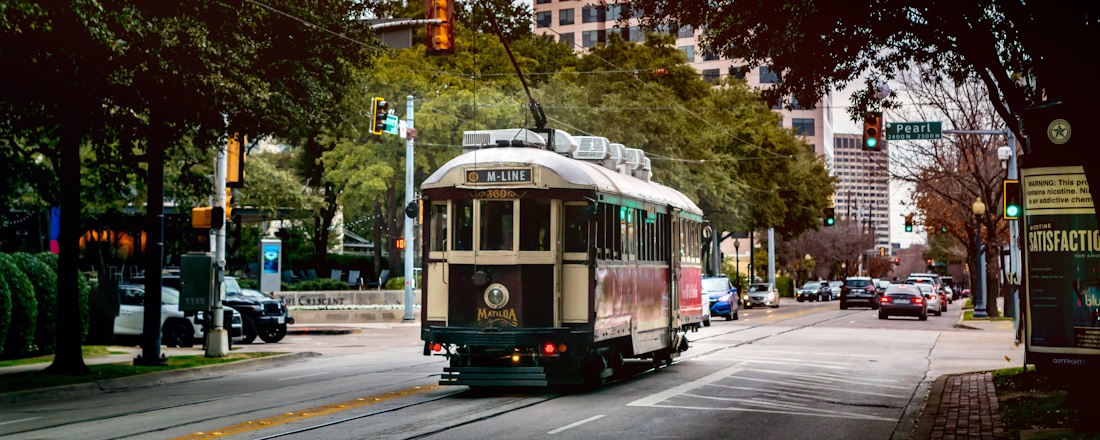
The M-Line Trolley is a separate, free heritage streetcar service. Run by a non-profit, it loops through the Uptown neighbourhood and the Dallas Arts District seven days a week. Shops, galleries and restaurants line the route.

Useful links


Taxis in Dallas

Various taxi firms operate in the city. While taxis are readily available in downtown Dallas, locals don’t generally use them on a regular basis.

It’s possible to hail a taxi from the side of the road in the downtown area of Dallas, but it’s best to prebook a vehicle if travelling from the suburbs. Taxis use a metered system and are quite expensive. The trade-off is that metered fares stay flat – no surge pricing, whatever the hour or weather. Ride-hailing applications such as Uber and Lyft are also operational in Dallas.

Useful links


Driving in Dallas

time lapse photography of city during night time

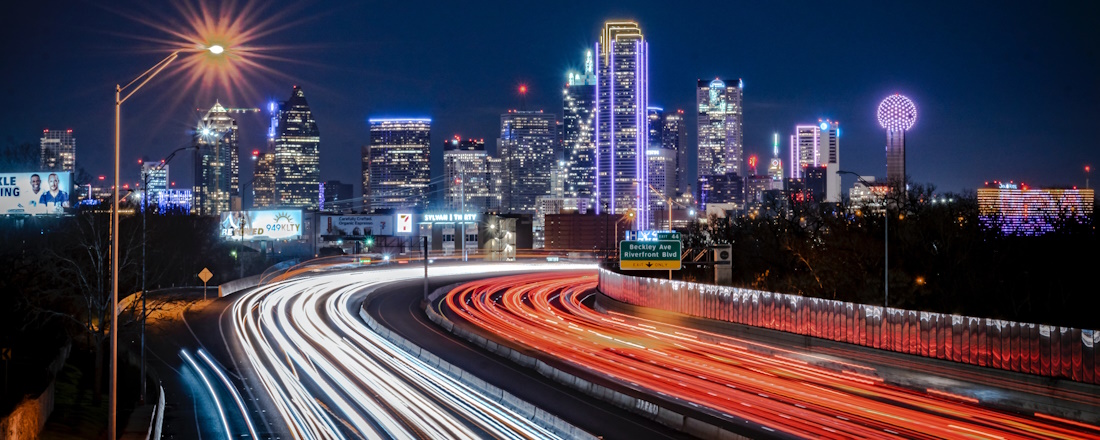
Driving in Dallas is by far the path of least resistance. The road networks are sophisticated, making it possible to get across town relatively quickly. Petrol in Texas is quite cheap due to its proximity to oil production, and petrol stations are plentiful, making life convenient for drivers. Road conditions in Dallas are also excellent, and signage is clear.

One thing to watch out for: several major routes, including the Dallas North Tollway and the President George Bush Turnpike, are cashless toll roads. Drivers without an electronic TollTag are billed by post at roughly double the tagged rate. It’s worth setting up a TollTag account early – the tag also works for parking at DFW and Love Field airports.

Driver’s licences

Expats with residency in Dallas and newcomers from other states can drive on their foreign licence for up to 90 days before they have to get a local one. After this, they’re required to obtain a Texas driver’s licence. Texas has reciprocal agreements with France, Germany, South Korea, Taiwan and the United Arab Emirates, allowing a valid foreign licence from these countries to be exchanged without sitting the knowledge or skills tests.

Those from other countries will need to pass both knowledge and skills tests. If your foreign driver’s licence isn’t in English or Spanish, you’ll need it translated by a certified service or your consulate before applying. Carrying an International Driving Permit (IDP) alongside the original is also advisable.

Useful links


Cycling in Dallas

Cycling in Dallas is more recreation than commute. The city adopted a new Bike Plan in May 2025, and the trail network is expanding – but on-street protected lanes are scarce outside downtown and Uptown.

For recreational riding, the city’s trails are another matter entirely. The Katy Trail, White Rock Lake loop and Santa Fe Trail are popular with joggers and cyclists alike, and the Loop Dallas project is gradually stitching these segments into a 50-mile citywide circuit. Dockless e-bikes and scooters from operators like Lime are available in some areas, although coverage varies.

Useful links