

Getting around in New Orleans is easy enough in the historic core, where a short walk, a streetcar, a bus, or the ferry will usually get you where you’re going. Head out into the suburbs, and it’s a different story, so a lot of residents there keep a car for the commute to work and school.
Public transport in New Orleans
The New Orleans Regional Transit Authority (NORTA, usually shortened to RTA) runs the public transport in New Orleans. There’s a single app for paying your fare across the different modes of transport. The LePass app lets you buy and store a mobile pass for any RTA service, so you can just tap and ride. You can also plan a journey, check schedules, track when the next streetcar, bus, or ferry is due, and reload your fare straight from your phone.
If you’re a frequent rider, it's cheaper to get a Jazzy Pass. It’s good for unlimited trips across the RTA network, and comes in one-day, three-day, weekly, and monthly versions, so you can match it to how long you’re in town or how often you commute.

Streetcars
New Orleans is famous for its streetcars, and the RTA runs four main lines through the central neighbourhoods. The St. Charles Avenue line, the oldest continuously operating streetcar line in the world, runs around the clock.
The NORTA website and app are worth a look for checking whether a line runs overnight or stops around midnight. Most streetcars come every 15 to 30 minutes, although you’ll wait longer late at night.
Buses
There are about 30 RTA bus routes across New Orleans. The busiest lines come every 15 to 30 minutes, while quieter routes can be an hour apart. The bus service really thins out at night, so check the last departure if you’re heading home after an evening out.
Ferries
There are two ferry routes across the Mississippi River. The one most newcomers use links the foot of Canal Street with Algiers Point, a historic neighbourhood on the west bank, and boats leave every half-hour, seven days a week. There’s also a smaller route between Lower Algiers and Chalmette further downriver, although it’s been a less reliable service over the years, so check that it’s running before you build a trip around it.
Useful links
Taxis in New Orleans
Taxis are easy to find in New Orleans, if not always easy to flag down on the street. Most taxi companies have mobile apps these days, which makes it easier to book a ride in advance.
United Cabs is the best-known operator with the biggest fleet, covering the whole metro area, including runs to and from Louis Armstrong International Airport. It can still pay to ask which firms serve your particular neighbourhood, since a local one sometimes comes out cheaper. Uber and Lyft are both well established here, too.
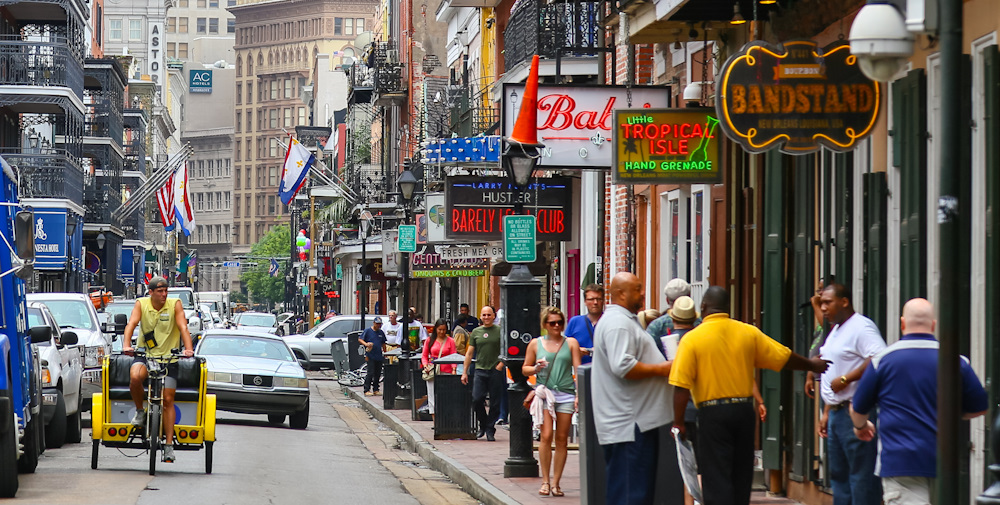
Pedicabs
Pedicabs are the rickshaw-style bikes for hire around the French Quarter, downtown, the Warehouse District, and the Marigny, and they’re great for short hops. They’re more of a novelty than a legitimate everyday commuting option, but going for a slow loop of the Quarter is a fun way for newcomers to get their bearings. The drivers will happily point out the history and the best places to eat as they pedal.
Useful links
Driving in New Orleans

Plenty of newcomers find that driving in New Orleans takes some getting used to. Much of the city was laid out long before the advent of the automobile, so a lot of the streets are narrow and knotted with one-way systems. Parking’s tight and pricey in the centre, and you’ll want to have perfected your parallel parking before you consider taking on a French Quarter kerb.
The road surface is another gripe. Potholes are a local institution, and the drainage is poor enough that heavy rain can flood the low-lying streets within minutes.
For all that, a car makes life far simpler out in the suburbs, especially for parents doing the school run. It also gives newcomers the freedom to get out and see the wider region, from the bayous to the Gulf beaches, at their own pace.
Obtaining a local driver’s licence
Once you’ve established residency in New Orleans, you’ll need a Louisiana driver’s licence to drive legally, and the state gives new residents 30 days to switch over. This is handled by the Office of Motor Vehicles (OMV).
Anyone with a foreign licence should expect to sit the written and road tests, much like a first-time applicant. A handful of countries have reciprocity agreements, and their nationals can skip the tests and just take the vision check. The same goes for anyone transferring a valid licence from another US state, who’ll usually need nothing more than the eye test.
Useful links
Cycling in New Orleans
Cycling in New Orleans makes a lot of sense. There are bike lanes on many of the main streets and fitted racks on the buses, and you can wheel a bike straight onto the ferries. There’s more bike parking around the centre these days, too. Local drivers aren’t always used to sharing the road, though, so a helmet and a bit of route planning go a long way.
The city’s bike-share scheme is called Blue Bikes, and the fleet is now all pedal-assist e-bikes, so headwinds and the few gentle rises are less of a slog. Sign up through the app or the website, find a bike on the map, then scan the QR code on the handlebars to unlock it. You can pay as you go by the minute or take out a monthly membership if you ride a lot. When you’re done, lock the bike at a Blue Bikes station, or at any public rack within the service area for a small extra fee.
Useful links
Walking in New Orleans
By day and in the early evening, walking in New Orleans is one of the real pleasures of the place. Some parts of the city are far better for it than others. The oldest neighbourhoods are the ones to cover on foot: the French Quarter, the Central Business District, the Marigny, and the Garden District are all flat and compact enough to see in an afternoon.
Out in the suburbs, there’s less within walking distance, and the pavements can be patchy, so a car makes more sense for daily errands.