

Dealing with banking, money, and taxes in India involves some bureaucracy.
Something to get used to is the Indian numbering system. In this system, the lakh and crore are the main terms to be familiar with. Lakh is a unit equal to 100,000, while 100 lakhs is one crore, or 10 million.
Globally, commas are put after every three digits when dealing with large numbers. In India, the first comma is placed after three digits from the right, and subsequent commas are placed every two digits. This can be confusing, especially when dealing with financial statements. This way of dealing with numbers is an interesting and perhaps unexpected element of adapting to the local culture in India.
Money in India
The official currency in India is the rupee, abbreviated as INR, and it's controlled by the Reserve Bank of India (RBI).
The rupee is technically subdivided into 100 paise, but coins valued at less than 1 rupee are no longer in circulation. Getting change is often difficult in India, so keeping a stock of smaller denominations is wise.
Here are the frequently used banknotes and coins in India:
- Notes: INR 10, INR 20, INR 50, INR 100, INR 200, INR 500, and INR 2,000
- Coins: INR 1, INR 2, INR 5, and INR 10
To get local currency, there are several factors to consider. India restricts foreign nationals from bringing any Indian currency into the country, while residents may bring up to INR 25,000, and large sums of foreign cash must be declared. It's best to explore the different options for obtaining local rupees in the country.
You can exchange money at the airport, though the rate is unlikely to be favourable. It's possible to exchange money at local and international banks in India, and there are also RBI-approved organisations or money changers that can exchange foreign currency.
Digital payment methods have become immensely popular in India. Platforms like UPI (Unified Payments Interface), Paytm, and Google Pay are widely used for everyday transactions, making them a convenient choice. These platforms allow for seamless transactions without cash, which is particularly beneficial for expats who may not carry large amounts of Indian currency.
Useful links
Banking in India
The Indian banking sector is robust and offers numerous services in public, private, and international banks. Public sector banks include Punjab National Bank, Central Bank of India, Bank of Baroda, and State Bank of India. Private sector banks include ICICI Bank and HDFC Bank. International and foreign-owned banks such as Standard Chartered Bank and HSBC also operate in India.
Opening a bank account
Non-residents can hold a select few types of bank accounts in India. Some may only apply to Non-Resident Indians (NRIs) and persons of Indian origin (PIOs), while the main account type available to foreign citizens in India is called the Non-Resident Ordinary Rupee Account Scheme, also known as NRO accounts.
Most banks offer a non-resident (NRO) savings or current account for you if you earn an income in India. Features vary between banks, but account holders will at least be provided with debit or credit cards, as well as internet and phone banking.
Most NRO accounts require you to maintain an average quarterly balance. While the amount may vary by bank, failure to maintain the balance will incur a penalty fee.
Opening a bank account is normally a simple process if you provide the correct documents. Some bank accounts can be opened online without going into a physical branch. Many expats benefit from their company opening an account for them, often with an international bank.
To open a bank account in India, you will generally need to provide proof of identity, proof of address, copies of your passport and visa, and a mobile phone number. Some bank accounts require applicants to provide a 12-digit Aadhaar number (Indian identification number) and a 10-character PAN (permanent account or tax number). For information on Aadhaar, visit the official Unique Identification Authority of India (UIDAI) website.
Credit cards and ATMs
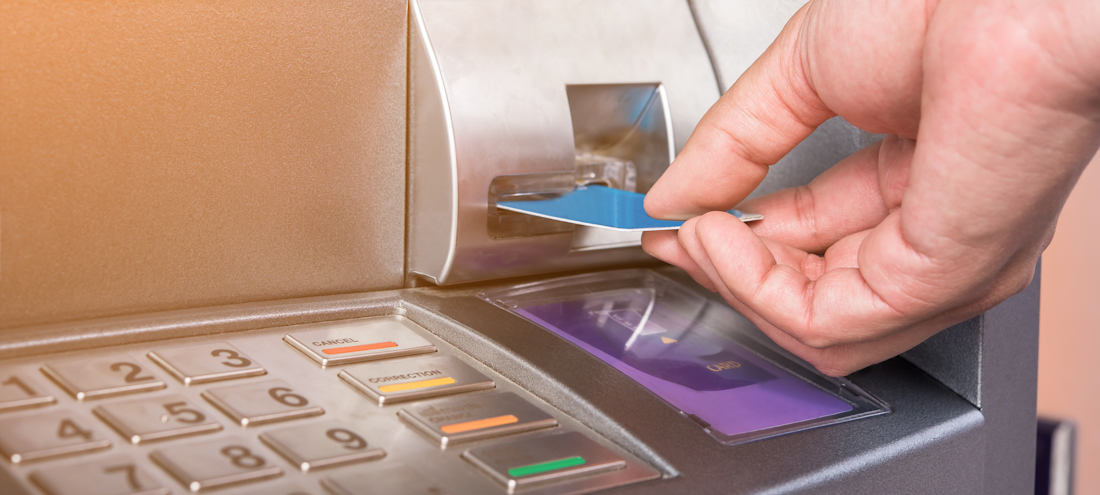
ATMs and bank branches are easily accessible in major cities and towns. Credit cards are widely accepted, and most banks offer internet banking services. Still, carrying cash when travelling outside major cities is advisable.
Useful links
Taxes in India

If you live in India for 182 days or more a year, you are considered a tax resident and need to pay tax on your local income. Personal income tax in India is progressive up to 30 percent.
India has full double-taxation avoidance agreements with many countries, and you should confirm whether your home country is on this list.
If you earn above a given threshold, you must file an individual tax return, and you can do this yourself online. Given that taxes in India are relatively complicated, if you aren't especially tax-savvy or simply prefer that a professional complete the process, you can enlist the help of an accountant or expat tax consultant.
The new tax regime has become the default for individual taxpayers, including non-residents. This means you will now be taxed under this regime unless you opt for the old tax regime, which allows for various deductions and exemptions.
Getting a tax number
In India, a tax number is called a Permanent Account Number or PAN. The best resource for getting a PAN in India is online via the Protean eGov or UTI Infrastructure Technology And Services Limited (UTIITSL) websites. Many tax-related processes, including linking Aadhaar to PAN, can be completed swiftly online, provided the necessary e-services and support are available.
For the latest info, also see the Indian Government's Income Tax Department website.