
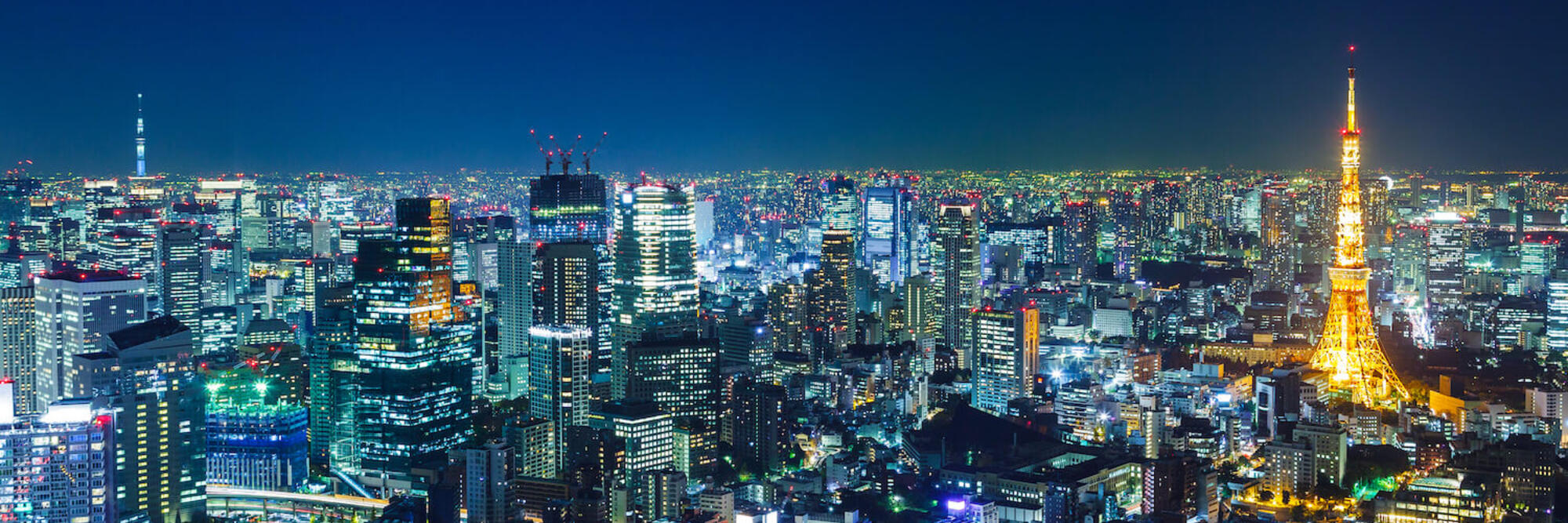
Most expats brace themselves for the cost of living in Tokyo, and the capital is indeed Japan’s most expensive city. It’s relatively affordable for a global financial hub, though. Daily expenses and rents are far lower than in New York or London, and the exchange rate is a big factor for anyone paid in a foreign currency.
Rent and international school fees are the biggest expenses for most expat households, while restaurant meals and public transport are cheap by Western standards. Salaries at Japanese firms are modest compared with those in the US or the UK, and foreign-owned companies usually pay considerably more. If your employer has asked you to move to Tokyo, we recommend you negotiate your relocation package with accommodation and education costs in mind.
Cost of accommodation in Tokyo
The cost of accommodation in Tokyo is the largest item in most expat budgets. Apartments are the norm, and monthly rents are high for the space you get. Japanese apartments are much smaller than most new arrivals are used to, and landlords in central Tokyo have steadily raised rents in recent years.
Rents are highest in central wards such as Minato, Chiyoda, Chuo, and Shibuya, while eastern wards such as Adachi and Katsushika are far cheaper. Older blocks and apartments a long walk from the nearest station are also easier on the wallet. In the neighbouring prefectures, rents for family-sized apartments are roughly half those in the 23 wards, and many commuters choose Yokohama or Kawasaki for this reason.
Newcomers are often caught off guard by the upfront costs. Before you get the keys, you’ll usually pay a refundable deposit (shikikin), non-refundable key money (reikin), an agency fee, a guarantor company fee, fire insurance, and the first month’s rent in advance. The total is often four to six months’ rent. Many landlords also charge a renewal fee of around one month’s rent at the end of a standard two-year lease.
The government-affiliated landlord UR (Urban Renaissance Agency) is a good option for tenants who want to keep upfront costs down. It doesn’t ask for key money, agency fees, renewal fees, or a guarantor.
Utilities are rarely included in the rent. Gas bills are noticeably higher in apartments on propane than in those on city gas, so ask the agent which type of gas a property has before you sign.
Renting Expat Accommodation in Tokyo
Best Areas and Suburbs in Tokyo
Cost of transport in Tokyo
Most residents rely on trains and the subway rather than cars, so the cost of transport in Tokyo is low. Single fares are a fraction of London’s, and the network is famously punctual. Tickets are priced by distance, though, and you’ll pay a separate fare each time you change between JR and subway lines. The big rail operators have also raised their prices in recent years.
The vast majority of employers in Japan cover the cost of a monthly commuter pass (teiki-ken), so you’re unlikely to pay for the daily trip to the office yourself. Check your contract, as employers aren’t legally obliged to offer this perk.
Taxis are expensive, and fares are higher still late at night. Few expats bother with a car, as off-street spaces are scarce and costly. You’ll also need a garage certificate (shako shomeisho) to show you have somewhere to park before you can register a vehicle. Bicycles are a cheaper option for short trips, and plenty of residents ride to their local station each day.
Cost of groceries in Tokyo
Home cooks who stick to Japanese staples can keep the cost of groceries in Tokyo under control, while those who want familiar brands from home will pay a premium. Imported products such as cheese, butter, cereal, and wine are expensive, and fresh fruit is notoriously pricey. Seafood, tofu, noodles, and seasonal vegetables are better value, and the quality is consistently high.
Prices for staples such as rice and eggs have been volatile in recent years. Budget-conscious households tend to shop at discount chains such as Gyomu Super and OK Store, and Costco operates several warehouses in the Greater Tokyo Area. Many supermarkets also cut prices on fresh food and ready meals late in the day, and savvy shoppers time their visits around the half-price (hangaku) stickers.
Cost of entertainment and eating out in Tokyo
Many new arrivals find the cost of entertainment and eating out in Tokyo a pleasant surprise. Restaurant prices are well below those in most Western capitals. Ramen shops, beef bowl chains, curry houses, and set-meal (teishoku) restaurants are all cheap places for a quick, filling meal. If you’re on a budget, convenience-store bentos and the basement food halls (depachika) of department stores are affordable alternatives to sit-down restaurants. Many depachika vendors also mark down their stock in the final hour of the day.
Tokyo also has more Michelin-starred restaurants than any other city, and many top chefs serve far cheaper set menus at lunch than at dinner. Diners don’t tip in Japan, although most izakaya add a cover charge for a small compulsory appetiser (otoshi).
Entry to theme parks and paid observation towers is pricey, but plenty of the city’s best sights are free. Shrines and temples such as Meiji Shrine and Senso-ji have no admission fee, and you can visit the observation decks at the Tokyo Metropolitan Government Building free of charge. Yoyogi Park is a favourite spot for cherry-blossom picnics (hanami) each spring, and anyone can watch the summer fireworks festival on the Sumida River from the riverbanks. Children get in free or at a discount at Ueno Zoo and many of the city’s museums.
Shopping, Entertainment and Nightlife in Tokyo
Top Attractions in Tokyo
Cost of education in Tokyo
Expat parents usually choose an international school, and tuition is the single biggest part of the cost of education in Tokyo. Most international schools in Tokyo teach either the International Baccalaureate or a national curriculum from countries such as the US, the UK, France, and Germany. Standards are generally excellent, but fees are high.
Besides tuition, budget for registration fees, uniforms, books, and excursions. Many schools also charge a sizeable one-off capital fee when your child enrols. The most popular schools are often full, so apply as early as you can. Some schools have scholarships or financial aid, but these are far from guaranteed.
Families on a tighter budget should look at the local system. Japanese public schools don’t charge tuition, and lunches at public elementary and junior high schools are free across the 23 wards. Lessons are in Japanese, so local schools are a more realistic option for younger children and families who plan to stay long term. Licensed daycare centres (hoikuen) are free for every preschool age group in Tokyo, although places in popular areas can be hard to come by. Private international preschools are far more expensive.
Education and Schools in Tokyo
Best International Schools in Tokyo
Cost of healthcare in Tokyo
Once you’re in the public insurance system, the cost of healthcare in Tokyo is moderate, and the standard of care is excellent. Most adult patients pay 30 percent of their medical bills, and there’s a monthly cap on out-of-pocket costs for expensive treatment. In all 23 wards, children’s medical care is free until the end of high school.
Foreign residents who stay in Japan for three months or more are required by law to join a public health insurance scheme. Full-time employees join their employer’s health insurance plan, and the company pays half the premium. Other residents sign up for National Health Insurance at their local ward office. Expats can buy private health insurance on top of public cover, but they can’t use it to opt out of the public system.
English-speaking doctors are easiest to find at international clinics in central wards such as Minato and Shibuya. Some of these clinics don’t accept national insurance and charge considerably more, so private cover is useful here. Large hospitals also add a hefty surcharge for patients who turn up without a referral. A local clinic is the cheaper first stop.
Healthcare System and Health Insurance in Japan
Best Hospitals in Tokyo
Cost of living in Tokyo chart
Prices are listed in Japanese yen (JPY) and may vary depending on the product and service provider. The list below shows average prices for Tokyo in November 2026.
| Accommodation (monthly rent) | |
| Three-bedroom apartment in the city centre | JPY 420,000 |
| Three-bedroom apartment outside the city centre | JPY 228,000 |
| One-bedroom apartment in the city centre | JPY 208,000 |
| One-bedroom apartment outside the city centre | JPY 113,000 |
| Shopping | |
| Eggs (dozen) | JPY 355 |
| Milk (1 litre) | JPY 240 |
| Rice (1kg) | JPY 600 |
| Loaf of white bread | JPY 240 |
| Chicken breasts (1kg) | JPY 1,050 |
| Cheese (500g) | JPY 900 |
| Eating out | |
| Three-course meal for two at a mid-range restaurant | JPY 7,000 |
| Big Mac Meal | JPY 770 |
| Coca-Cola (330ml) | JPY 260 |
| Cappuccino | JPY 580 |
| Draft beer (domestic) | JPY 600 |
| Utilities/household | |
| Mobile phone monthly plan with calls and data | JPY 3,700 |
| Internet (uncapped fibre, average per month) | JPY 4,800 |
| Basic utilities (average per month for a standard household) | JPY 24,800 |
| Transportation | |
| Taxi rate (per kilometre) | JPY 430 |
| City-centre public transport fare | JPY 200 |
| Gasoline/petrol (per litre) | JPY 170 |