
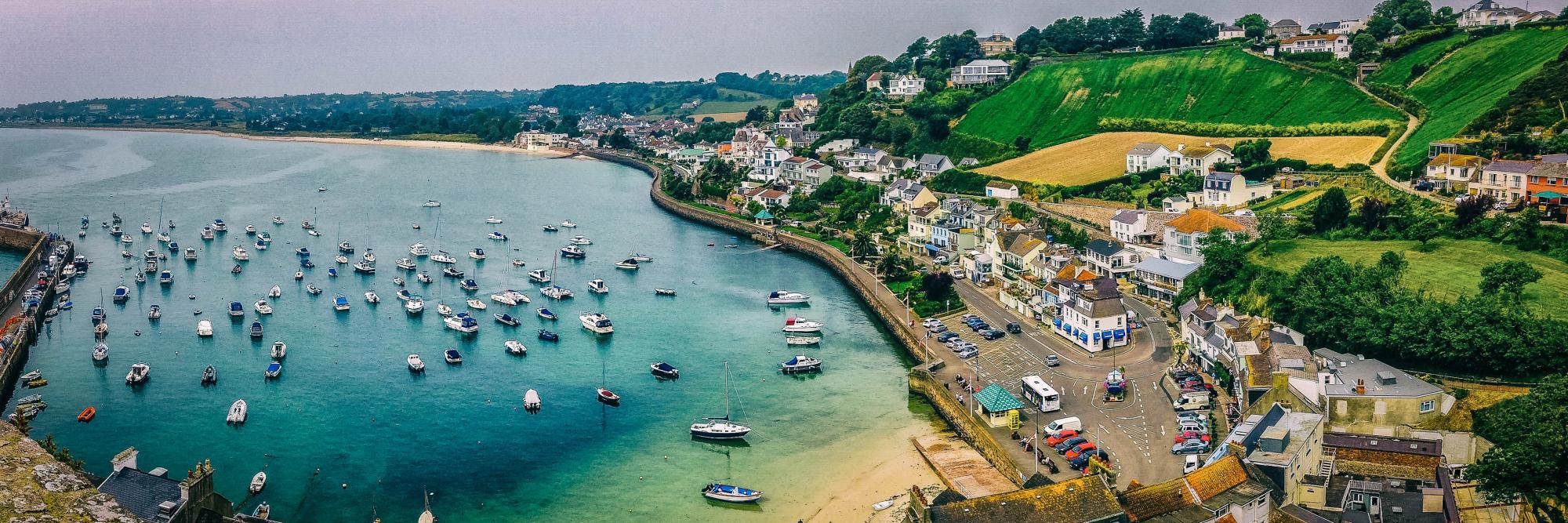
The cost of living in the Channel Islands is high, and residents pay that ‘sunshine tax’ for the privilege of island life. While salaries can be lucrative and tax rates attractive, the day-to-day expense of living in Jersey or Guernsey is generally higher than in the UK, driven largely by the logistical costs of freight and a captive market.
Jersey, the larger bailiwick, typically has slightly higher prices than Guernsey, particularly when it comes to rentals. Essentials like fuel and car insurance are cheaper than on the mainland, but this is often offset by significantly higher costs for housing, groceries, and dining out.
Cost of accommodation in the Channel Islands
Housing is widely considered the single biggest expense for expats. Both islands operate complex two-tier housing markets that strictly control who can live where. As an expat, you will likely be restricted to a specific segment of the market where prices are inflated due to high demand and limited stock.
Competition for high-standard rental homes is fierce. New arrivals frequently report needing to act quickly with documentation and deposits to secure a lease. While there are initiatives to convert unused commercial sites and former glasshouses into housing, supply struggles to keep up with demand. Be aware that advertised rental prices frequently exclude expensive utility bills and parking fees.
Renting Accommodation in the Channel Islands
Cost of transport in the Channel Islands
Given the compact size of the islands, living without a vehicle is feasible, particularly if you live and work in St Helier or St Peter Port. Many residents still choose to drive. The good news is that petrol and diesel are generally cheaper than in the UK due to lower fuel duties.
Public transport is reliable and affordable, with flat fare bus systems in place. Commuting by bicycle is increasingly popular, especially with the rise of e-bikes to tackle the hilly terrain.
A hidden cost to consider is travel off the island; residents frequently note that flights and ferries to the UK or France can be expensive, particularly during school holidays or bad weather.
Public Transport in the Channel Islands
Cost of groceries in the Channel Islands
Grocery shopping is almost universally more expensive here than in the UK. Almost all goods are imported by sea, and freight costs are passed directly to the consumer. A common complaint among expats is the lack of budget discount chains found on the mainland, meaning you are often limited to higher-end supermarkets or local convenience franchises where prices are steeper.
While local farm stalls and ‘hedge veg’ boxes offer high-quality seasonal produce, they aren’t always cheaper than supermarkets. Fresh seafood and dairy are exceptional, but your weekly shop for standard household brands will likely cost noticeably more than you are used to paying.
Cost of entertainment and eating out in the Channel Islands
Socialising can be a pricey affair. Because the islands are prime tourist hubs, restaurant and bar prices tend to reflect the holiday market. Dining out in St Helier or St Peter Port is comparable to, and occasionally exceeds, prices in central London.
Residents offset these costs by taking advantage of the free outdoors. Hiking along the cliff paths, sea swimming, and beach barbecues are popular, low-cost weekend activities. While you won’t find the same variety of nightlife or large-scale events as in a major city, the trade-off is a safer, community-focused lifestyle with excellent access to nature.
Cost of education in the Channel Islands
The state education systems in Jersey and Guernsey are of high quality and free for eligible residents, following curricula very similar to those in the UK. This makes the islands attractive for families, as the standard of public schooling often rivals that of the private sector.
For expats choosing private education, fees are substantial. In Guernsey specifically, parents should be aware of ongoing political moves to phase out state grants for private colleges. In the meantime, private tuition here is often more affordable than equivalent top-tier boarding schools in the UK.
Education in the Channel Islands
Cost of healthcare in the Channel Islands
A critical distinction for UK expats is that the NHS does not exist here. Jersey and Guernsey have their own independent healthcare systems. While emergency treatment in A&E is usually free, visits to a General Practitioner (GP) are not free.
Residents who have lived and worked on the islands for six months may qualify for a social security card that subsidises these costs, but you will still pay a portion of the bill. Specialists and dentists are almost exclusively private and expensive. Consequently, comprehensive private health insurance is strongly recommended to cover gaps in the state subsidy and to ensure faster access to treatment.
Healthcare and Health Insurance in the Channel Islands
Cost of living in the Channel Islands chart
Prices are listed in Jersey Pounds (JEP) and may vary depending on the product and service provider. The list below shows average prices for St Helier, Jersey, in February 2026.
| Accommodation (monthly rent) | |
| One-bedroom apartment in the city centre | JEP 1,400 |
| One-bedroom apartment outside the city centre | JEP 1,190 |
| Three-bedroom apartment in the city centre | JEP 2,700 |
| Three-bedroom apartment outside the city centre | JEP 2,400 |
| Shopping | |
| Eggs (dozen) | JEP 4.60 |
| Milk (1 litre) | JEP 1.65 |
| Rice (1kg) | JEP 2.80 |
| Loaf of white bread | JEP 1.60 |
| Chicken breasts (1kg) | JEP 9.15 |
| Cheese (500g) | JEP 8.85 |
| Eating out | |
| Three-course meal for two at a mid-range restaurant | JEP 75 |
| Big Mac Meal | JEP 7.65 |
| Coca-Cola (330ml) | JEP 1.55 |
| Cappuccino | JEP 3.50 |
| Local draft beer (500ml) | JEP 3 |
| Utilities | |
| Mobile phone monthly plan with calls and data | JEP 30 |
| Internet (uncapped ADSL or cable – average per month) | JEP 45 |
| Basic utilities (average per month for a standard household) | JEP 200 |
| Transport | |
| Taxi rate (per kilometre) | JEP 2.05 |
| Bus/train fare in the city centre | JEP 2.50 |
| Gasoline/petrol (per litre) | JEP 1.45 |