
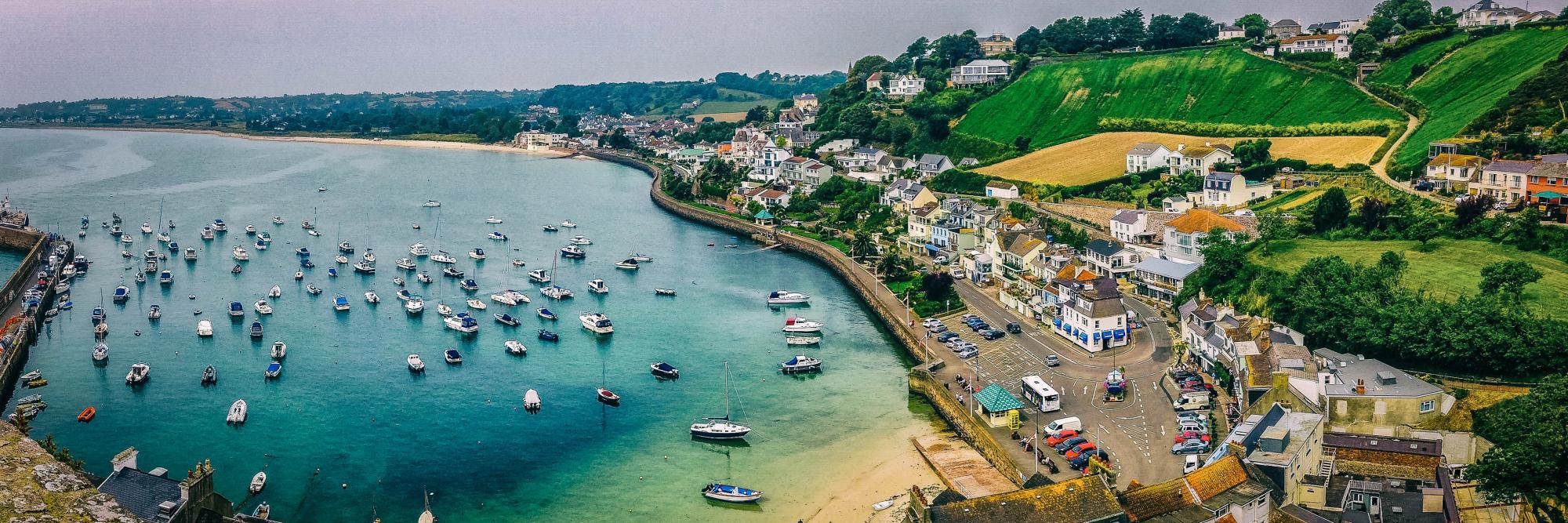
Moving to the Channel Islands is always an adventure, but it can be difficult to imagine the ups and downs of everyday life before the big move. To help prospective expats prepare, here are some of the pros and cons of moving to the Channel Islands.
Lifestyle in the Channel Islands
+ PRO: Easy travel to France and the UK
The Channel Islands are situated in the English Channel between Britain and France. A ferry from Jersey can reach the seaside city of St Malo in less than 90 minutes; the crossing from Guernsey takes somewhat longer. Ferries to the UK take around three hours. Both islands also have their own airports, with flights to London taking under an hour – although the islands’ dependence on a few regional carriers means air links can be vulnerable to disruption.
+ PRO: Relaxed island living
Both Guernsey and Jersey are small islands, so a beach is never far away. Jersey has an area of 45 square miles (120km²), while Guernsey covers just 24 square miles (62km²).
+ PRO: Good weather
Most of the year, expats can expect a decent amount of sunshine in the Channel Islands. The weather here is generally much more pleasant than the cold, overcast conditions that the mainland UK is known for.
Weather in the Channel Islands
Accommodation in the Channel Islands
- CON: Complicated and limiting housing regulations
Due to limited space, housing in the Channel Islands is strictly regulated. Whether planning to rent or buy, expats often find the various requirements and allowances difficult to untangle. After all the restrictions are applied, the resulting accommodation options tend to be among the most expensive on the island. Both islands have government-funded relocation agencies – Locate Jersey and Locate Guernsey – that offer free guidance on understanding the rules.
Accommodation in the Channel Islands
Working in the Channel Islands
- CON: Difficult to find a job
Although the islands have several strong industries, including finance and tourism, job opportunities are limited. To obtain employment, expats will need to be able to fill a skills gap in the local workforce.
+ PRO: Favourable tax regulations
Both Jersey and Guernsey have a flat income tax rate of 20 percent, and there’s no capital gains tax or inheritance tax. Neither island has VAT, although Jersey does levy a low rate of goods and services tax (GST); Guernsey has no equivalent.
Working in the Channel Islands
Tax in the Channel Islands
Education in the Channel Islands
- CON: Limited options
There aren’t any foreign curriculum schools on the islands. This means that expats who wish for their children to continue with their home country’s curriculum will need to consider other options, such as boarding school abroad or homeschooling. Higher education options on the islands are also limited – most students leave for UK universities after sixth form.
+ PRO: Good quality education at a good price
Both Jersey and Guernsey are home to some excellent state and private schools. While private schools are, of course, more expensive than state schools, Channel Island private schools typically offer a quality of education equivalent to UK mainland private schools at a much lower fee point. Several private schools also offer the International Baccalaureate, which may suit expat families seeking a globally recognised qualification.