
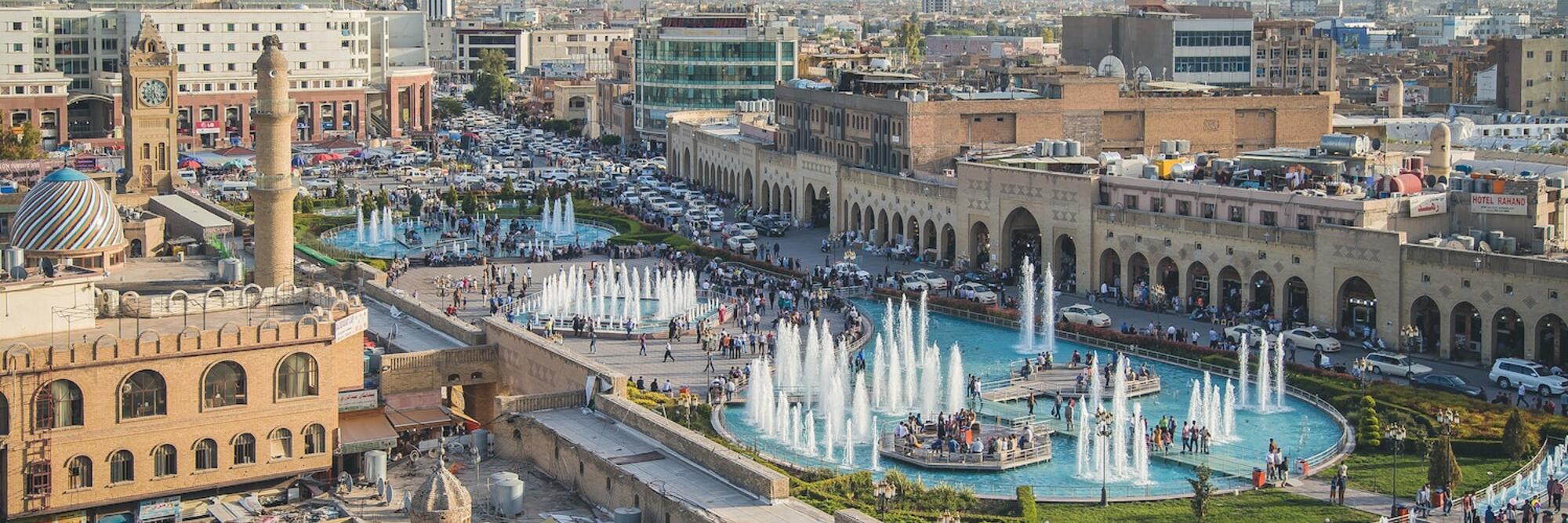
Moving to Iraq may not be at the top of expats' lists, but those who can look beyond the country's reputation may be surprised to find real opportunities, particularly in the energy and humanitarian sectors. The geography of Iraq can be beautiful in its starkness, consisting mostly of desert with regions of alluvial plains and mountains between the Tigris and Euphrates Rivers.
Living in Iraq as an expat
Expats living in Iraq tend to be working either on a lucrative short-term expat contract in the oil and natural gas industries or as NGO employees. Foreigners will need to secure employment before relocating to Iraq.
Most expats will find themselves relocating to the Iraqi capital of Baghdad on the banks of the Tigris River. Expats living in Iraq are generally housed in secure compounds. Although these living arrangements tend to restrict one's freedom, most expats report feeling relatively secure. The general standard of accommodation in these compounds is comfortable and includes facilities to keep residents entertained, such as gyms, swimming pools, restaurants and shops.
Cost of living in Iraq
The cost of living in Iraq is not too high, and expats are generally well remunerated – indeed, financial benefits are one of the main reasons expats move to Iraq. Leisure activities tend to be expensive, however, and expats may also find themselves paying large sums towards utilities such as water and electricity. While rent, transport, groceries and general shopping are not necessarily expensive in Iraq, they are not exactly cheap either.
That said, the short-term work contracts that most expats move to Iraq for generally include many of the everyday costs of living, such as accommodation and transport. On top of being well paid for their work, expats will therefore not have to worry about high expenditure on living costs during their stay in Iraq.
Expat families and children
As a result of ongoing security issues in Iraq, the expat community tends to be small and self-contained. Most governments and employers have historically discouraged employees from relocating to Iraq with their spouses and children.
While education is highly valued in Iraqi society, there are minimal schooling options available for expat children. While the number of international schools in Iraq is limited compared to the pre-war era, there are some good options, primarily in Baghdad and the Kurdistan Region.
Climate in Iraq
Expats who haven't previously lived elsewhere in the Middle East may struggle to adjust to the climate of Iraq. The country is mostly desert, where winters are cool, and summers are hot, dry and cloudless. The mountainous regions along the Iranian and Turkish borders are particularly chilly and experience occasional heavy snowfalls.
Expats considering moving to Iraq will have to consider the safety risks involved, as well as the possibility of having to leave their families behind. For those who do choose to relocate, life in Iraq could be both professionally interesting and financially rewarding, despite the challenges.
Fast facts
Population: Approximately 46 million
Capital city: Baghdad
Neighbouring countries: Turkey, Iran, Kuwait, Saudi Arabia, Jordan and Syria.
Geography: Located in the Middle East, Iraq is geographically diverse. There is desert in the west and southwest, rolling upland between the upper Tigris and Euphrates Rivers, the mountainous highlands of the north and northeast and alluvial plains through which the Tigris and Euphrates flow.
Political system: Federal Parliamentary Constitutional Republic
Major religion: Islam
Main languages: Arabic and Kurdish
Money: Iraqi dinar (IQD)
Tipping: Not expected, but a small tip is always appreciated, as wages in the service industries in Iraq are low.
Time: GMT+3
Electricity: 230V, 50 Hz. Type C, D and G plugs are used.
Internet domain: .iq
International dialling code: +964
Emergency numbers: Police: 104, Ambulance: 122, Fire: 115
Transport and driving: Drive on the right-hand side of the road. Public transport exists in the form of buses and shared taxis but is generally chaotic and avoided by expats.