
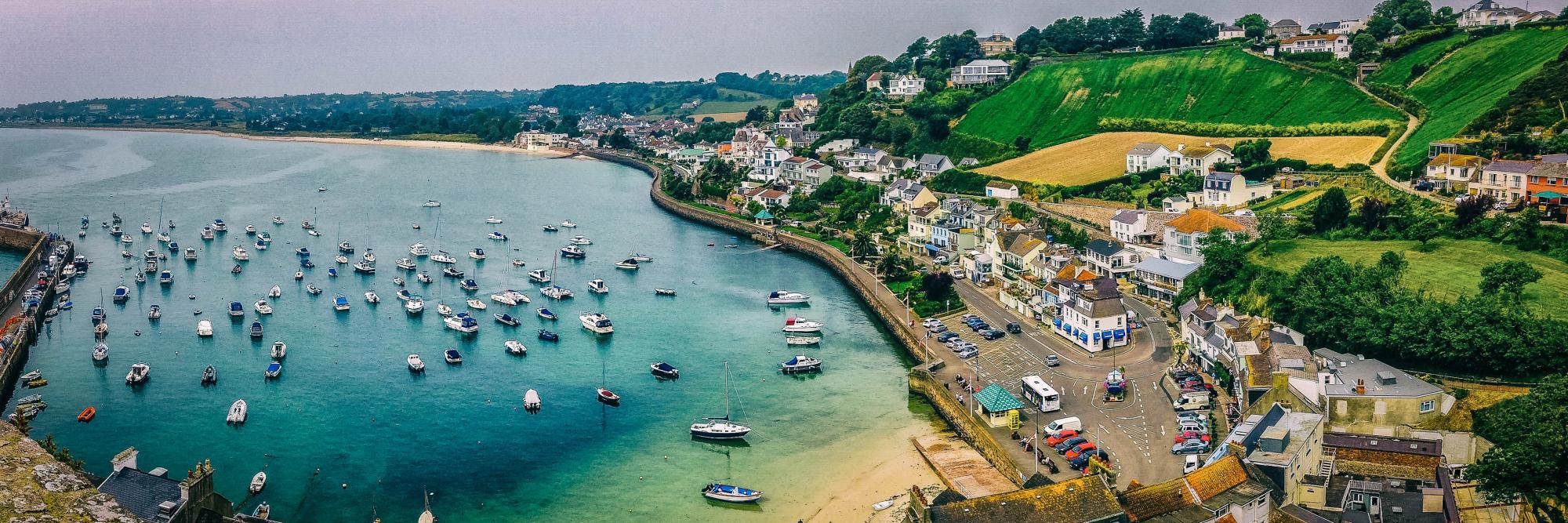
The local culture of the Channel Islands sits at a fascinating crossroads – geographically, the islands are a stone’s throw from Normandy, yet they have been thoroughly influenced by Britain, particularly the south of England.
National identity in the Channel Islands
The unique history, geography, and politics of the Channel Islands intersect in a complex way that can be difficult to grasp at first.
Jersey and Guernsey are not part of the UK, but are rather dependencies of the British Crown. All governance and political matters are managed solely by the islands. The UK government is responsible only for the defence and international representation of the islands.
Those born in the Channel Islands have British citizenship, but they do not identify as English, Irish, Welsh, or Scottish. Expats should make note of this distinction as born-and-bred Jersey and Guernsey locals, proud of their heritage, may not take kindly to being called ‘English’.
The demonyms for Jersey and Guernsey are ‘Jerseyman’ or ‘Jerseywoman’ and ‘Guernseyman’ and ‘Guernseywoman’. More commonly, the term ‘Channel Islanders’ or simply ‘Islanders’ is used.
Population groups in the Channel Islands
The population of Guernsey and Jersey is made up of about 50 percent locals, with about another 30 percent of the population being born in the UK. Portugal is the most common country of origin apart from the UK, and in Jersey, the Portuguese make up 8 percent of the population. Other minority groups include expats from Poland, Romania and France.
Languages in the Channel Islands
Until 1948, French was Guernsey’s sole official language. Today, English, French, and Guernésiais – the island’s native Norman tongue – all hold official status, although English dominates in daily life. French remains in use in administration. In Jersey, French and English share official language status.
Each island has a local French dialect – Jèrriais in Jersey and Guernésiais in Guernsey, but both are spoken only by a small percentage of the population today.