

- Download our Moving to Dublin Guide (PDF)
Dublin is split in two by the River Liffey and is bordered on the east by the Irish Sea. An old city founded centuries ago, Dublin has expanded gradually and comprises many narrow alleys and broad streets. Despite these historical and geographical challenges, getting around in Dublin isn't too difficult.
Dublin's transport infrastructure is modern and efficient, making car ownership here unnecessary. Many expats still opt for a personal vehicle, citing the freedom and independence it offers.
Public transport in Dublin
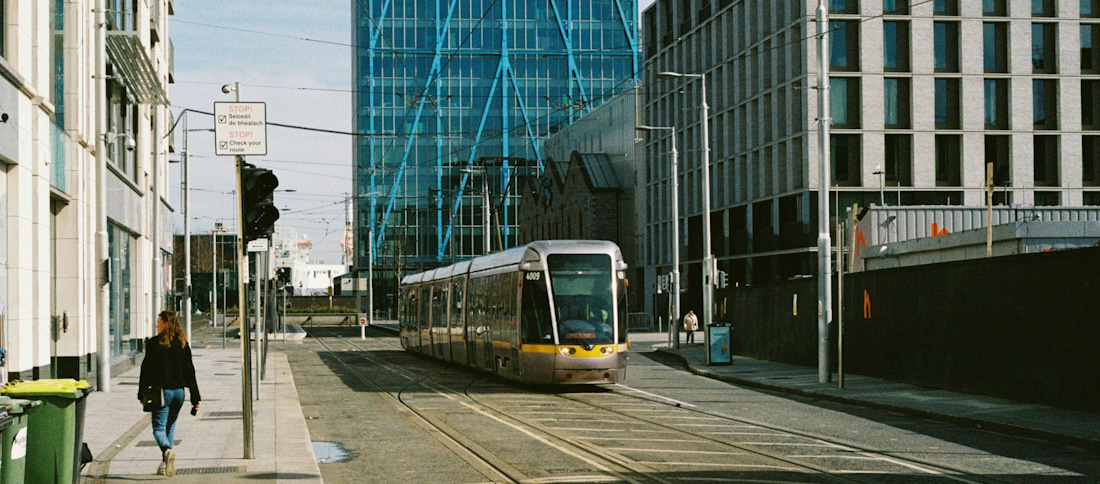
Dublin’s transport network includes buses, light rail (LUAS), and surface rail (DART). It's often cheaper and faster for you to take public transport than to drive or take a taxi in rush hour. Like most public transport, there are crowds at peak times, but services are clean, frequent, and punctual.
You can purchase tickets for trains, buses, and trams online, via an app, from the driver, or from station terminals. Tickets are available as single-, return-, and multi-journey options. Different routes start and end at different times, so be sure to research the routes you'll be using carefully.
Leap Card
The Leap Card is Dublin’s integrated ticketing system. Although you can buy tickets on the bus or at the station, this is the best option if you commute frequently and want to save money.
You can buy and top up Leap Cards at stations, certain shops, or online. Leap Cards can be used on Dublin buses, the Luas, Commuter Rail, and the DART. Leap Card fares are typically 20 to 30 percent cheaper than single tickets, and a daily and weekly fare cap limits the total amount you pay.
Buses
The Dublin Bus Service operates the iconic yellow-and-blue double-deckers seen throughout County Dublin. Most are wheelchair accessible. You can buy tickets from the driver. Designated bus lanes mean you can often beat the traffic by taking the bus.
Dublin Bus operates over 100 routes across the city, connecting most neighbourhoods, while Go-Ahead Ireland operates more than 20 additional routes.
Trains
The DART (Dublin Area Rapid Transit) is a surface rail service, with trains arriving every 10 to 20 minutes during the day. It runs from around 6am to midnight.
Commuter Rail, operated by Irish Rail, provides services out of Dublin, which is handy for day trips and for those who live outside County Dublin but work in the city.
Trams
Dublin has a light rail service, the LUAS, servicing the inner city as well as the south and southwestern suburbs. Luas services are frequent and reliable, running every 5 to 15 minutes. Operating hours are from around 5.30am to 12.30am on weekdays, with slightly later start times on weekends.
Useful links
Taxis in Dublin
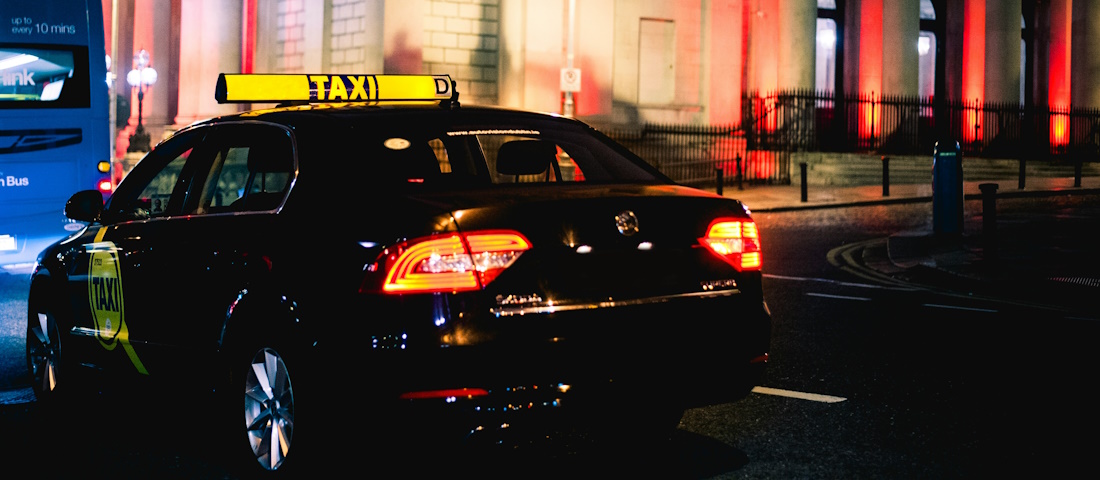
Taxis are widely available in the city centre, especially outside large hotels and in certain spots along the main city streets. They look like private cars with a yellow light on top, indicating that they are in service.
Ireland has restrictive laws for ride-hailing services, so Uber functions as a booking service for regular licensed taxis. Fares are calculated based on a base rate plus a per-kilometre charge, with additional fees for luggage, late-night travel, and waiting time.
You can hail a taxi on the street, use a taxi rank, or book through a licensed taxi company's app or phone number. Reputable companies include Lynk and Freenow (operated by Lyft), which allow you to track the driver's location and get an estimated fare.
For safety, only use licensed taxis displaying the NTA licence number. Sit in the back seat and keep your seatbelt on. Avoid sharing a taxi with strangers, especially at night, and keep your valuables secure.
Useful links
Driving in Dublin
Driving in Dublin can be a challenge if you're new to the city. The one-way system can be confusing at first, but it greatly improves traffic flow. Parking in the city centre is expensive and limited, so it might be easier to catch public transport, cycle or walk, depending on where you live.
The M50 motorway, the Dublin Port Tunnel, and the M4 motorway are all tolled. To avoid tolls, you can plan alternative routes or use public transport like the Luas or DART.
Driver's licences
You can drive on a valid foreign driver's licence for up to 12 months in Ireland. After that, you must apply for an Irish driver's licence. Ireland has agreements with numerous countries for licence conversion without testing. Other countries can convert their licences after completing testing.
Useful links
Cycling in Dublin
Cycling is becoming more popular in Ireland. With the development of dedicated cycle lanes, it is also becoming safer to ride a bicycle. These lanes have significantly enhanced cycling safety by separating cyclists from motorised traffic.
You should always wear a helmet and preferably high-visibility clothing. Although neither is required by the law. Bicycles must follow the rules of the road like any other vehicle. If you are a confident cyclist, you will have no trouble cycling into town from the suburbs.
Popular routes include the Howth Peninsula Loop, which offers stunning coastal views and the Sally Gap Loop, which provides a challenging ride into the Wicklow Mountains. The Canal Way Cycle Route follows tranquil green spaces along the Grand Canal.
Dublinbikes is a growing service with distinctive blue bicycles that you can hire and ride between specified bicycle parks. There are more than 110 stations across Dublin which accept Dublin Bikes Long Term Cards and offer three-day tickets. In addition to the subscription, there is a small fee for rides longer than half an hour.
Useful links
Walking in Dublin
Dublin's compact size makes it ideal for walking. Many locals and visitors regularly commute to work and run errands on foot. Exploring the city on foot reveals many hidden treasures you might miss when travelling by vehicle or public transport.
Recommended walking tours include Dublin Free Walking Tours, which offers free tours twice daily from the Spire on O’Connell Street and the Dublin Literary Pub Crawl, a two-hour tour combining literary history with pub culture. The Dublin Tasting Trail is a three-hour food tour that stops at various eateries, offering a culinary experience of the city.
For those interested in history, the Historical Walking Tours of Dublin provides a comprehensive tour led by history graduates, covering significant events from the Great Famine to the Northern Ireland conflict.
Hidden Dublin Walks offer guided tours that explore the real Dublin, focusing on characters, mysteries, and histories across various historical periods.