
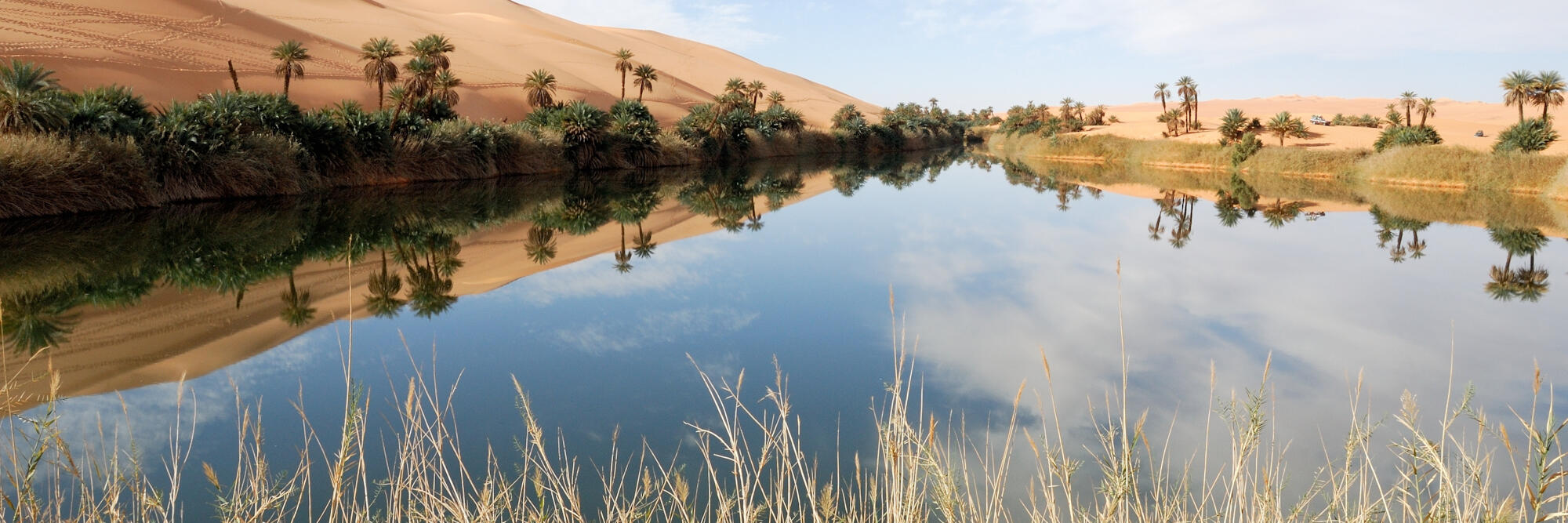
Libya is located in the Maghreb region of North Africa and has vast stretches of desert and a long Mediterranean coastline. Expats moving to Libya will find a country still recovering from a violent civil uprising in 2011. The security situation in Libya is uncertain to this day, and protests and violent clashes between opposition groups and clan factions continue to occur sporadically across the country.
Living in Libya as an expat
Living in Libya as an expat comes with its fair share of risks and challenges – the safety situation in the country is precarious, and many factions and non-state groups have vied for power after the 2011 revolution. Although some foreign companies and workers who left Libya during the conflict have slowly trickled back, the situation is uncertain, and jobs are not guaranteed. Work opportunities in Libya exist for those with the right skills, but it pays to consider your options carefully.
Libya is an Islamic country, and Western expats may have difficulty integrating into a conservative society in which nightlife is limited, alcohol is banned, and eating out is nowhere near as frivolous an experience as in the Western world.
Most expats relocating to Libya are concentrated in Tripoli, nearby Janzour, or in Benghazi. Misurata and Zawia also attract their fair share of expats. It’s rare for foreigners to relocate to Libya without confirmed employment – most roles filled by expats are in the hydrocarbon or construction industries. As a result, many new arrivals have their accommodation, visas, healthcare, and even their children’s education arranged by a relocation company or by their employer. The demand for university ESL teachers is also high across Libya and attracts a fair share of expats.
Renting Expat Accommodation in Libya
Visas for Libya
Shipping and Removals for Libya
Safety in Libya
Cost of living in Libya
The cost of living in Libya is exceedingly reasonable, and thanks to lucrative relocation packages, expats moving here enjoy an excellent quality of life. Everything from petrol and groceries to public transport is cheap. Perhaps the biggest expenses you’ll face in Libya are accommodation and backup power. The country experiences frequent and prolonged power cuts, which necessitate the use of a generator.
Fast and reliable internet and cable are also quite expensive relative to the general cost of goods and services in Libya. You’ll also need to budget for a comprehensive private health insurance policy that covers medical evacuation to neighbouring countries in the event of an emergency.
Families and children in Libya
You may find that the public education standards in Libya are well below what you’re used to. It is only in recent years that more options have become available for expats with children. Although there are few choices, the handful of international schools available are generally well organised and reputable. Tuition at these schools is pricey, so it’s best practice to negotiate an education allowance in your employment package.
Healthcare in Libya
Keeping in Touch in Libya
Climate in Libya
The climate in Libya is influenced by the Mediterranean Sea in the north and the Sahara Desert in the south. This results in diverse and unpredictable weather conditions. The north of the country experiences dry summers and wet winters, while the south is known for pre-desert and desert conditions with sweltering daily temperatures and cold (sometimes freezing) nights.
Libya is a developing country and one that has been severely impacted by a devastating conflict. Expats moving to Libya should not expect a modern country replete with cultural, retail, and nightlife opportunities, but one where uncertainty rules and every day is an adventure.
Fast facts
Official name: State of Libya
Population: Approximately 7.08 million
Capital city: Tripoli (also the largest city)
Other cities: Benghazi, Misrata, Al Zawiya
Neighbouring countries: Libya is bordered by Tunisia to the northwest, Algeria to the west, Niger, Chad, and Sudan to the south, and Egypt to the east.
Geography: Libya is divided into three main regions: the Mediterranean coastal plain in the north, the fertile uplands of Jabal al Akhdar and Nafusah, and the vast Sahara Desert, which covers most of the country’s southern regions.
Political system: Provisional government
Major religion: Islam
Main languages: Libyan Arabic (official), English (tourist centres, business)
Money: The Libyan Dinar (LYD) is the official currency, and it is divided into 1,000 dirhams. Libya is a largely cash-based society. ATMs can be found in major cities and larger towns, but are frequently empty or out of service. Expats can open bank accounts in the country, but the level of service and availability of banking products varies significantly.
Tipping: Not common, and may be offensive. That said, tipping tour guides is appreciated.
Time: GMT +2
Electricity: 127/230V, 50Hz. Round two-pin and three-pin plugs (types D, F, and C) are used.
International dialling code: +218
Emergency numbers: 1515 (police and fire) and 193 (ambulance)
Internet domain: .ly
Transport and driving: Cars drive on the right-hand side of the road. Driving conditions can be hazardous due to chaotic traffic and poorly maintained roads. Buses operate in Major cities, but service is unreliable. Taxis and informal taxis are also available.