
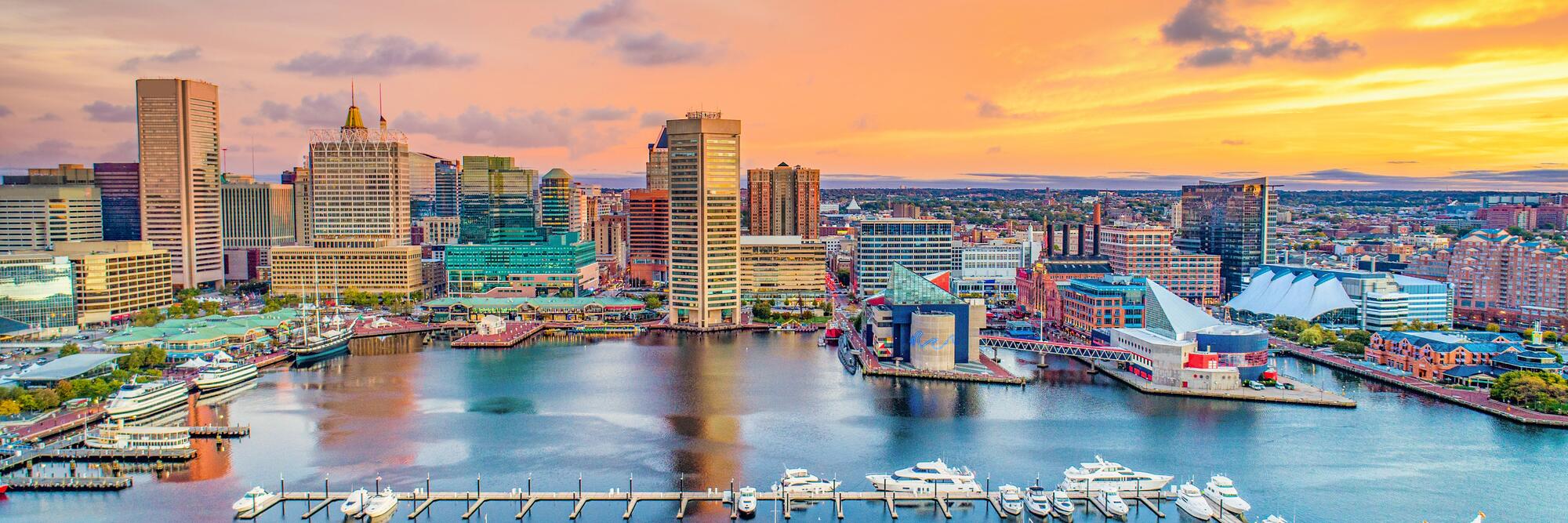
The weather in Baltimore is characterised by four distinct seasons thanks to the city’s subtropical humid climate. New arrivals should expect long, hot summers and cool winters.
Summer, from June to August, is humid and hot with daily highs averaging 87°F (31°C), and heat waves routinely push into the mid-90s (35°C). The humidity can feel stifling – locals joke about ‘air you can wear’. Afternoon thunderstorms are common. Rain is spread fairly evenly through the year, with late summer typically being the wettest period.
Winter, from December to February, is generally mild. Baltimore historically averages about 19 inches (48cm) of snow a year, although recent winters have seen far less – the city went two years without a significant snowfall before January 2024. A single Nor’easter can still dump a foot or more overnight. Winter temperatures range from 29°F (-2°C) to 44°F (7°C), but can drop to 19°F (-7°C), depending on the influence of Arctic air masses.
Spring and autumn are usually the most pleasant seasons in Baltimore. They’re also the most comfortable months for a move – relocating in July or August is physically punishing. Hurricanes haven’t been much of an issue recently, but Baltimore does lie in the path of Atlantic storms, and the remnants of hurricanes have been known to cause flooding in low-lying waterfront areas like Fells Point and the Inner Harbor. Tidal flooding also strikes these neighbourhoods several times a year, even without a storm – something well worth checking on flood maps before purchasing property.
Summer air quality can be poor. Baltimore regularly records Code Orange ozone days during the hottest months, and the region has never met federal ozone standards. Those with asthma or other respiratory conditions should monitor daily air quality forecasts.