

Accommodation in Nashville is plentiful, and many property types are available. The property market has boomed as the city’s economy has grown and new residents have continued to arrive.
Most long-term residents don’t live anywhere close to downtown Nashville. A major advantage of this is that they have access to larger, more spacious homes and get more wiggle room when deciding exactly what they are looking for.
Areas and suburbs in Nashville
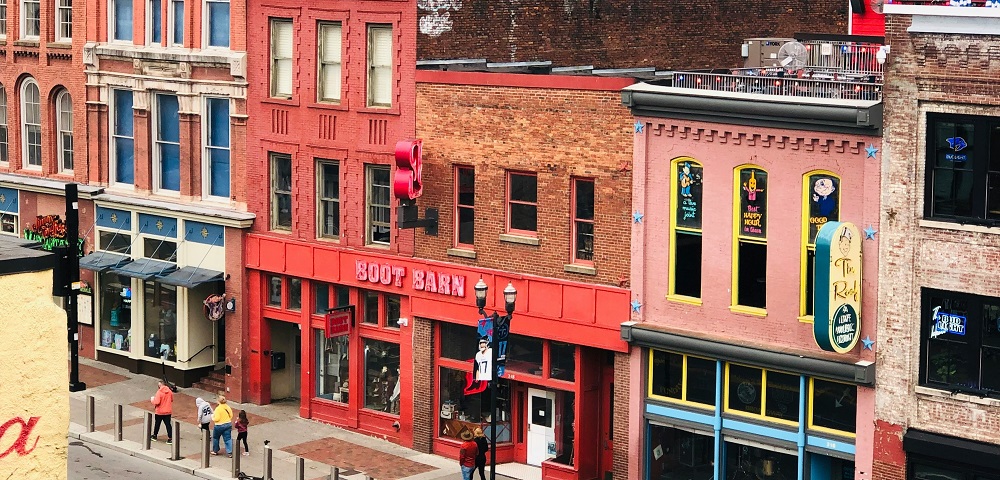
People weighing up the areas and suburbs in Nashville have more than 20 neighbourhoods to choose from, and each has its own character and amenities. Newcomers of every kind settle here, from students and young professionals to large families.
Young professionals and students who want a walkable neighbourhood close to downtown should consider The Nations. This former industrial area has been revitalised in recent years and is now a sought-after place to live. East Village is a short walk from downtown and has a strong creative streak; young professionals flock to its cafés and art galleries. The Gulch and 12 South are two more neighbourhoods worth a look.
Families have plenty of options too. Franklin, Brentwood, Spring Hill, and Green Hills are among the most popular, and all have good schools and spacious homes on tree-lined streets. Green Hills, in particular, has everything from historic Victorian homes to modern new builds that suit young families.
Read more about the Best (and Worst) Neighbourhoods in Nashville.
Types of accommodation in Nashville
The types of accommodation in Nashville are spacious across the board. Whether you want a downtown apartment, a condo, a duplex, or a family house with a garden, there's plenty on offer.
Apartments
Apartments are most common close to downtown. Most long-term residents move out to the suburbs for more space and a quieter pace, but apartments are a good choice for young people just starting out. The complexes are generally modern and well maintained.
Condos
Condos are like apartments but usually have more communal facilities, such as gardens, swimming pools, fitness centres, and laundry rooms. They're a good option for anyone who has just moved to the city, as these complexes often have a strong sense of community and newcomers find it easy to build a social circle.
Duplexes
Duplexes and fourplexes are common in the city. A duplex has two units, and a fourplex has four, all attached under one roof. You will often find them close to the centre, in areas such as Germantown, the Vanderbilt area, East Nashville, and West Nashville.
Houses
You will be spoilt for choice when it comes to houses. You may need to look a little further from the city centre for the best options, but these properties are worth the extra distance.
In Nashville, you'll have your pick of minimalist modern builds, classic Victorian homes, Cape Cod style properties, and craftsman bungalows, and that is only a sample of what is available. Whatever the facade, houses in Nashville are spacious and good value for money.
Finding accommodation in Nashville
Finding accommodation in Nashville is rarely a struggle. Developers keep building new homes to house the thousands of new residents who arrive each year. Before you relocate, use online property portals to get a feel for the market. They are a good starting point, and you can get to grips with the property types on offer in different parts of the city and roughly what they cost.
When looking for a home in Nashville, you should also weigh up transport links, local amenities and shops, proximity to work, and, if you have children, nearby schools.
Real estate agents are another reliable source of help when you are looking for a home in Nashville. They know the local market inside out, so they are well placed to steer newcomers towards a home that fits their needs.
Working in Nashville
Education and Schools in Nashville
Useful links
Renting accommodation in Nashville
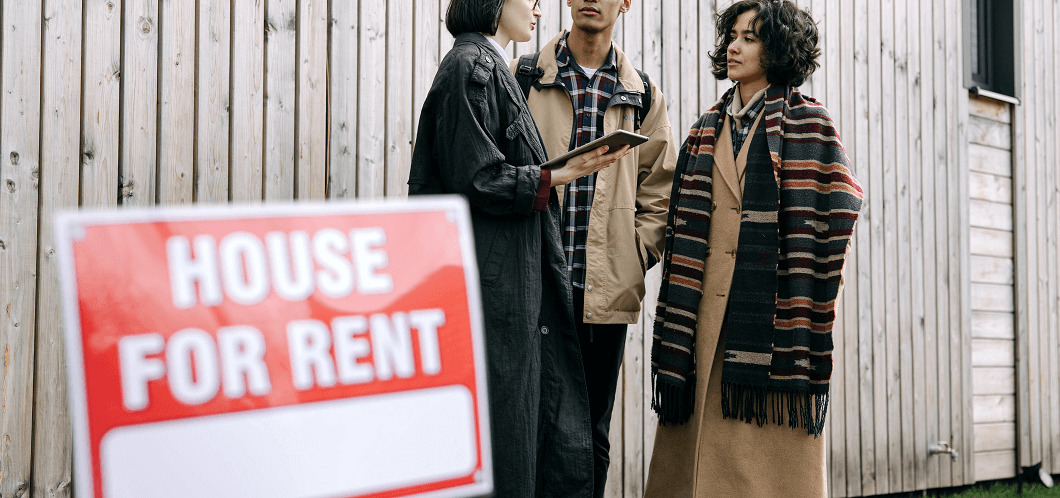
Renting accommodation in Nashville is fairly straightforward once you have settled on the type of home and the suburbs you like. Demand is high, but builders keep adding new homes to meet it.
Making an application
When you find a property you like, you make a formal application, either through the landlord or through the letting agent. The landlord will run the usual credit and reference checks before you sign a lease. It pays to look up reviews of any landlord or management company first, as Nashville renters often warn each other online about firms to avoid. Foreign nationals will find the process quicker once they have a US bank account and a Social Security Number.
Leases, costs, and fees
A standard lease in Nashville is a year long, and you can usually renew it when the term ends. In some parts of the city, you may be able to negotiate a shorter lease.
Deposits
You will need to put down a security deposit when you rent in Nashville, usually one or two months’ rent. There is no legal cap on the amount in Tennessee. By law, the landlord must return the deposit, less any deductions for damage, but the return is tied to a move-out inspection rather than a fixed calendar deadline. If a landlord holds on to money you are owed, you generally have up to 60 days to make a written demand. Take dated photos and make a detailed inventory when you move in and when you leave, so you have evidence in case of a dispute later.
Terminating the lease
How much notice you owe when you end a lease in Nashville depends on the type of tenancy. For a yearly lease that is coming to an end, or a month-to-month tenancy, you give 30 days’ notice. For a week-to-week tenancy, you give 10 days. For a breach that can be fixed, the party at fault gets 14 days to put things right. In serious cases that involve violence or a threat to safety, the notice period is as little as three days. If you break a lease early, you may have to pay a penalty, so read the termination clause closely before you sign.
For more on renting across the country, read Accommodation in the USA.
Utilities in Nashville
When you sort out utilities in Nashville, start with the lease: check which services are included and which you pay for yourself. Landlords often cover water and rubbish collection, while tenants usually handle electricity, gas, internet, phone, and TV. Where a service is left to you, set up the account in your own name. Photograph the meter readings on move-in day, in case of a billing dispute later.

Electricity
Nashville Electric Service (NES) supplies electricity across Davidson County. To start or transfer an account, you can call or visit your local NES office with an ID document and your Social Security Number, then fill out an application. New customers go through a credit check. Pass it, and you avoid a security deposit; if you do pay one, NES credits it back after 12 months of on-time payments. Anyone transferring an existing account pays a small connection fee instead. You can also pay your bills on the NES website with no service charge.
Gas
To connect mains gas or transfer an account, contact Piedmont Natural Gas, the main supplier in Nashville. You can start service through the Piedmont website, but your electricity and water must be on first, or the technician’s visit will be held up.
If your credit is not strong, Piedmont may ask for a deposit, usually around two months’ worth of usage. Should Piedmont hold that deposit for more than six months, it must pay you interest at a rate set by the state. Paying gas bills online is the easiest option, and you can also pay by mail, by bank transfer, by phone, or in person at a local Walmart.
Water
The drinking water in Nashville is drawn from the Cumberland River, and the City of Nashville’s Metro Water Services department treats and supplies it. To connect your water, call Metro Water Services with your ID and social security details. You can choose a same-day connection for a higher fee, or standard next-day service for a lower fee.
Paying online is the easiest route, and you can also pay in person at one of the department’s customer service lobbies.
Bins and recycling
The Metro Nashville Waste Services department collects waste across the city. If you live in a single-family home or a small building of up to four units, such as a duplex, you get kerbside rubbish and recycling collection. In an apartment block, your building or a private hauler handles collection through shared bins.
The city collects rubbish every week and recycling every two weeks. Your pickup day depends on your address, so look it up on the Waste Services website when you move in. For anything that does not fit kerbside collection, you can use the Metro Convenience Centers and the recycling drop-off sites dotted around the city.
Internet
Internet in Nashville is easy to come by, and speeds are among the fastest in the region. Fibre is now available to about three-quarters of the city, and cable is available almost everywhere. AT&T Fiber and Google Fiber are the main fibre providers, while Xfinity is the most widely available cable option. Fibre availability is patchy at street level, so check which providers reach your exact address before you commit.