

Getting around Nashville is one of the first things to sort out when you move, because most residents rely on their cars far more than on public transport. Anyone arriving from a city with a strong transit network will probably need to adjust once they settle in here.
Public transport is limited beyond the city centre, so most residents drive, and newcomers usually end up doing the same. There are still occasions when another option makes more sense, and it helps to know your choices before you depend on a car for everything.
Public transport in Nashville
If you are used to a comprehensive transit network like New York City’s or Chicago’s, public transport in Nashville will feel limited by comparison.
Public transport here is thin on the ground, and anyone settling in soon works out that a car makes sense, given how far most residents travel for work. Change is on the way, though.
In 2024, Nashville voters approved a major transportation funding plan called Choose How You Move. Over the coming years, the city will expand bus service, add more frequent and round-the-clock routes, upgrade hundreds of bus stops, and improve sidewalks and traffic signals across the county. Light rail is not part of the plan, so a car will be the practical choice for most people for a good while yet.
Ride-hailing apps such as Uber and Lyft are popular in Nashville, and a handy backup when driving is not an option.
Buses
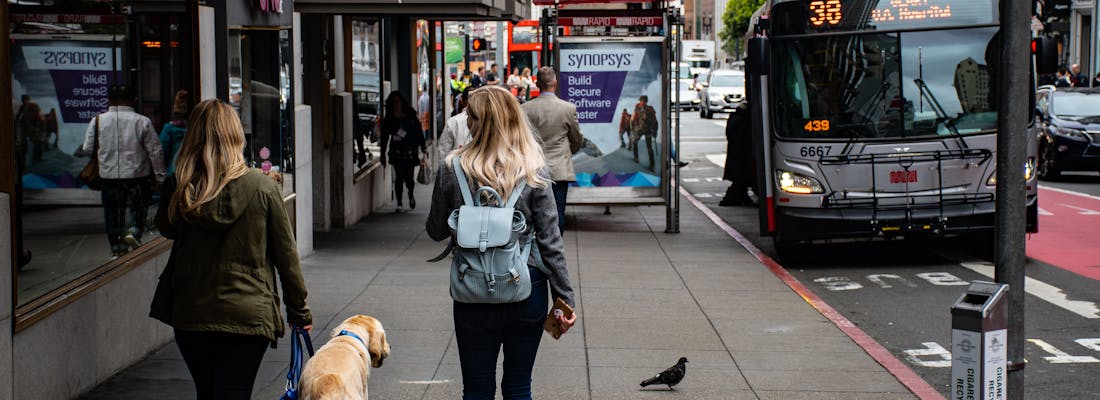
WeGo Public Transit, formerly known as Nashville MTA, runs Nashville’s bus network and serves the wider Davidson County area. WeGo designs its routes around a central downtown hub and operates more than 30 routes across downtown and the surrounding neighbourhoods.
The buses are reliable enough on the main routes, where services generally run on time, but the system is a harder sell for anyone commuting from the suburbs. Out there, buses come less often and do not always keep to schedule. Most routes run from around 5am into the evening. Late-night services run too, but only in certain areas. WeGo also runs a bus between downtown and Nashville International Airport (BNA), which is useful when you first land and don’t have a car.
Set against the big transit cities, it will feel limited, but for a mid-sized US city, Nashville’s buses are far from the worst, at least on the busier routes.
Trains
The WeGo Star is Nashville’s only commuter rail line, and it runs between Lebanon and Riverfront Station in downtown. Along the route, it calls at Hamilton Springs, Martha, Mount Juliet, Hermitage, and Donelson.
From Riverfront Station, connecting shuttles carry riders into the downtown core, including the Broadway entertainment strip and the West End near Vanderbilt University.
Trains run on weekday mornings and afternoons only. There are several services in each peak, and none at weekends. The timetable is built around commuters, and the last train back from downtown leaves in the early evening, so it works for a nine-to-five commute rather than a late night in town.
WeGo Star fares are reasonable, and a ten-ride or monthly pass is cheaper still. Children under four travel free, and there are discounts for students, seniors, riders with disabilities, and Medicare cardholders.
Areas and Suburbs in Nashville
Useful links
Driving in Nashville
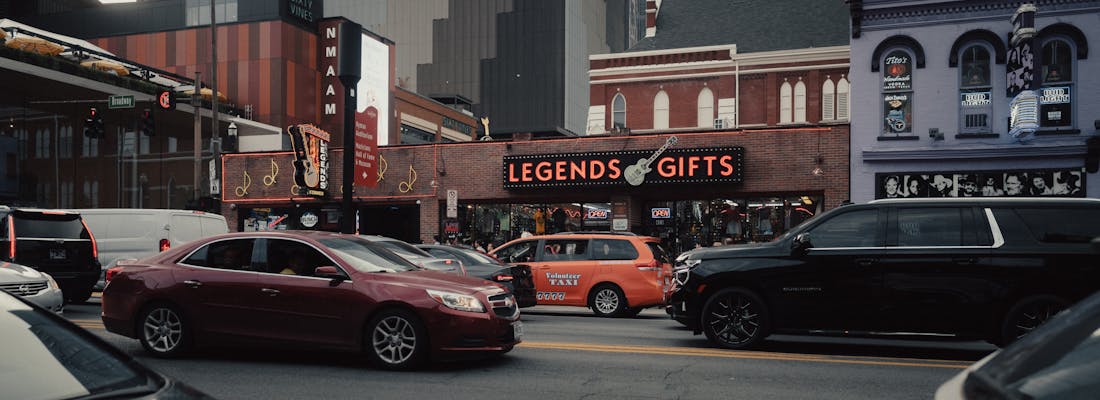
Driving in Nashville is close to essential, much as it is across the US. Public transport hours are limited, and the network is small, so even people downtown or in the inner suburbs tend to keep a car.
With a car, you have far more freedom: you can get around on your own schedule and pick a neighbourhood without first checking the bus map.
The main drawback is the traffic, which turns dreadful at peak times, and you can get held up by roadworks or a crash with little warning. Google Maps and Apple Maps both show live congestion, so you can plan around the worst of it.
Parking is the other headache, and it gets expensive fast if you head downtown often. Free kerbside spaces are hard to find, and you will pay more the closer you get to the popular spots, so it helps to line up a space ahead of time with an app like ParkMobile.
Driver’s licences
If you are moving to Nashville from another US state, you must swap your old licence for a Tennessee driver’s licence within 30 days of the move. Drivers coming from abroad can start the application on the Driver Services Centre e-services portal. You then visit a Driver Services Centre in person with your original licence, your Motor Vehicle Record (MVR), proof of citizenship or lawful presence, your Social Security Number, and proof of Tennessee residency. If your paperwork is prepared in advance, you can typically finish in a single visit.
Drivers from countries with a reciprocal agreement with the US can trade a foreign licence straight for a Tennessee driver’s licence. Everyone else will need to take and pass both a knowledge test and a practical driving test first.
Useful links
Taxis in Nashville
Taxis in Nashville are easy to find, especially downtown, and several established firms operate across the city. Music City Taxi and Allied Cab are two of the longer-standing names, and both run alongside the ride-hailing apps.
Most firms run around the clock. In the busy heart of the city, around Broadway or Midtown, you can flag one down at any hour. Further out, you are better off pre-booking by phone.
Ride-hailing services such as Lyft and Uber are well established in Nashville. Most locals own a car, but ride-hailing is handy on the nights when nobody wants to be the designated driver, or on game days when downtown parking turns into a nightmare.
To use them, download the app, register with a credit card, and you are ready to ride.
Useful links
Cycling and scooters in Nashville
Cycling and scooters in Nashville have grown more popular in recent years, and for short hops, they're quicker than sitting in traffic. Electric scooters, in particular, are now a common sight, and several hiring companies operate across the city.
The city has poured money into cycling infrastructure, and Nashville now has a growing network of bike lanes and more places to lock up. The lanes don't always connect, though, and riders on forums still flag gaps and safety worries on busier roads, so plan your route before you set off.
Nashville BCycle is the city’s docked bike-share scheme, and it is a solid bet for a straightforward ride. For dockless travel, the three licensed operators – Bird, Lime, and Spin – run app-based e-bikes and scooters that you unlock from your phone. Regulators have shifted the balance towards e-bikes in recent years, so expect more bikes than scooters in the mix. Register a card in the app, and you can pick one up in many parts of the county.
Useful links
Walking in Nashville

Walking in Nashville only gets you so far: this is one of the least walkable big cities in the US. Roughly three-quarters of residents live in the suburbs, where a car is all but essential. In some of those neighbourhoods, you will even drive to the nearest grocery shop or to drop the children off at school.
For all that sprawl, a handful of neighbourhoods are genuinely walkable and best seen on foot. Germantown, Hillsboro Village, East Nashville, 12 South, and The Gulch are all worth an afternoon on foot. In each, the shops, cafés, bars, and restaurants are close enough together to leave the car behind.