

There’s plenty of opportunity for expats working in Pune, and the best openings for foreign hires are in tech, automotive manufacturing, banking, and education. Competition is stiff though. Most roles are filled from India’s huge pool of graduates, and the government issues Employment Visas only for high-skilled, well-paid positions.
Job market in Pune
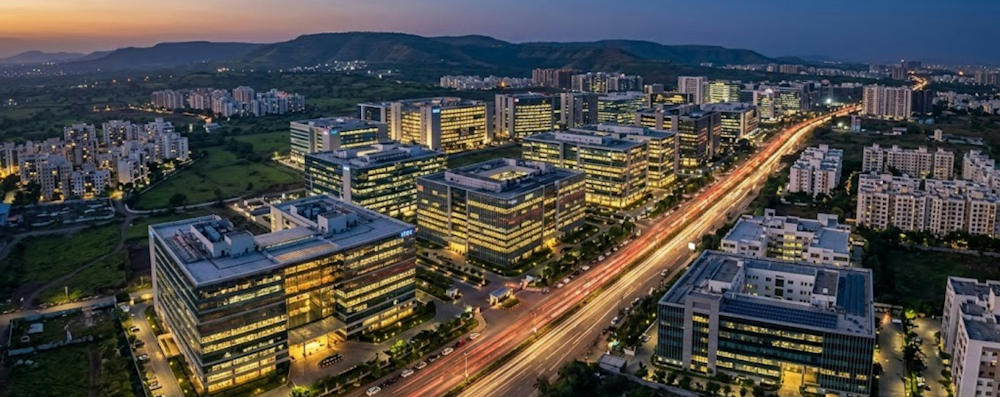
Tech is the fastest-growing part of the job market in Pune. Bengaluru is still India’s biggest IT hub, but Pune is now one of the country’s top locations for global capability centres (GCCs). Multinationals set up these in-house centres to run their own technology and operations work. Global banks such as Barclays and Deutsche Bank have large teams in the city, as do many engineering and software firms.
Most tech employers are based in a handful of IT parks. The largest is the Rajiv Gandhi Infotech Park in Hinjewadi on the city’s western edge. Kharadi and Magarpatta in the east also have large office parks.
Manufacturing has been big business in Pune since the 1960s, when Bajaj Auto and Tata Motors opened factories in Pimpri-Chinchwad. The city is now the largest single base for German companies in India. Volkswagen and Mercedes-Benz both have car plants in Chakan on the northern outskirts, and logistics firms have built large warehouse parks around Chakan and Talegaon.
Pune has long been known as the ‘Oxford of the East’ because of its many universities and colleges, and the education sector is a major employer. Expats in education tend to work at international schools or private universities. Foreign academics can also find research posts at national institutes such as the National Chemical Laboratory and the Indian Institute of Science Education and Research (IISER).
Pharmaceuticals and consumer electronics are big industries in Pune too. The city is home to the Serum Institute of India, which makes more vaccine doses than any other company in the world. LG and Whirlpool both have appliance factories in Ranjangaon.
Finding a job in Pune

Expats with senior or specialist skills will find a job in Pune far more easily than generalists. Many foreigners arrive through an internal transfer. If your current employer already has an office in the city, this is often the quickest route in.
For those without an inside track, Naukri.com is India’s biggest job portal and a sensible first stop. Recruiters at multinationals and GCCs also rely heavily on LinkedIn, and many senior appointments are handled by executive search firms. The Pune branch of the Indo-German Chamber of Commerce organises regular business networking events, and so does the Mahratta Chamber of Commerce, Industries and Agriculture (MCCIA).
Foreign nationals need an Employment Visa to work in India, which they must apply for before they come to the country. Most employers handle the paperwork and ask their new hires for supporting documents. Your employment visa is tied to one employer, so you’ll have to apply again if you change jobs. Overseas Citizenship of India (OCI) cardholders don’t need an Employment Visa for most jobs.
Visas for India
Work Permits for India
Useful links
Work culture in Pune

Most expats find their colleagues welcoming and the work culture in Pune friendly. English is the working language in most offices, although Marathi and Hindi are what colleagues speak on factory floors and over lunch.
The biggest contrast is between global firms and traditional Indian companies. GCCs and foreign multinationals are usually quite informal, and first names are the norm. Traditional Indian companies are often more hierarchical. Senior managers make most of the decisions, and junior staff rarely challenge them in meetings. Staff at banks and finance firms work in noticeably more formal offices than tech employees do.
Expats in GCCs and IT services firms should expect some evening calls. Teams that work with clients in the US often stay online into the evening to overlap with them. Five-day weeks are standard in tech, but some manufacturers and smaller Indian businesses still expect staff in on Saturdays.
The commute to Hinjewadi is a common gripe among tech workers. Rush-hour traffic there is notoriously slow, and waterlogged roads are a regular problem during the monsoon. Many employers let staff work from home on the worst days, and a good number of employees live in nearby Wakad or Baner to keep the journey short. Metro Line 3, between Hinjewadi and Shivajinagar in the city centre, is a newer alternative to road travel.
Ganeshotsav is Pune’s signature festival, and expats should plan around its 10 days in August or September. Police divert traffic in the old city for much of the festival, and the final day’s immersion procession is often an all-night affair. Diwali in October or November is the main holiday of the year, and many colleagues take leave around it.