
Doing business in Pakistan can feel unfamiliar at first if you are used to the work culture of the USA or Europe, although most expats settle in before long. It pays to learn the country’s working customs soon after you arrive.
The Pakistani business world sets great store by hierarchy. Respect and trust carry real weight, and the oldest, most experienced, and most senior person present should be greeted and addressed first. Once you have the basic etiquette down, the rest tends to fall into place.
Fast facts
Business hours
Most private offices keep hours of roughly 9am to 5pm or 5.30pm, Monday to Friday. Government departments and banks run on their own timetables. Pakistani labour law caps the working week at 48 hours, longer than the standard week in many countries.
Business language
English is the language of business. Urdu is also commonly spoken.
Greetings
Greetings in Pakistan are warm but formal. Men shake hands with one another and often hug once a relationship has formed; a man should not offer his hand to a woman unless she extends hers first. A friendly ‘Salaam Alaikum’ goes down well. First names are rarely used, so address an associate by their title and surname. When in doubt, simply ask how they prefer to be addressed.
Dress
The dress code in Pakistan is quite conservative. Corporate settings in Pakistan call for smart, formal clothing. Elsewhere, business casual (trousers and a collared shirt) is fine, but bring a jacket and tie for high-level meetings. Women should dress modestly and cover their shoulders, arms, and legs in a tailored trouser suit or a long dress.
Gifts
If you are invited to a Pakistani home, flowers or quality chocolates are good gifts. Give them with both hands or your right hand. Do not gift alcohol, as most families are Muslim. Avoid white flowers, which are usually for weddings. It’s normal for hosts to set gifts aside to open later. If a man gives a gift to a woman, it is best to say it is from his wife or a female relative.
Gender equality
Gender disparity exists in the workplace, and women are seldom in senior positions. Foreign businesswomen are usually treated with courtesy and professionalism, even if they are often among the few women in the room.
Business culture in Pakistan
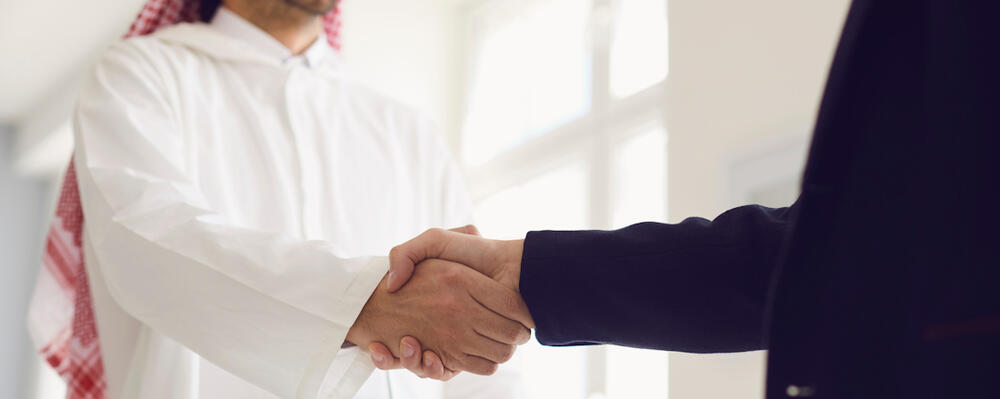
Business culture in Pakistan is rooted in personal relationships and a clear sense of hierarchy. Communication tends to be courteous and indirect, and trust is built before any deal is done.
Communication
Trust matters a great deal in Pakistani business, so unhurried small talk tends to come before a meeting gets down to business. Communication is usually indirect and protective of face, or izzat: a soft ‘we’ll see’ or ‘we’ll try’ can mean no, so listen for what is implied. Steer clear of touchy subjects such as politics, religion, terrorism, and the relationship with India. Colleagues will often ask after your family and other personal matters as a way of showing friendly interest; if you’re reciprocating, keep your own questions about their family in general rather than directed at the women in it, as this can be misconstrued.
Time
Time is more flexible in Pakistan than in the USA or Europe. Deadlines may change, and business often takes longer than expected. Allow extra time and be patient. Expats are still expected to arrive on time, even if meetings start late or are rescheduled at the last minute.
Hierarchy
Pakistani workplaces place great emphasis on hierarchy. Decisions are made by senior leaders, and junior staff rarely disagree openly with their bosses. It can take time to get approvals because several levels of authorisation are often needed, so patience is important.
Meetings
Plan meetings for the late morning or early afternoon, and a bit earlier during Ramadan. Working hours during Ramadan are shorter, and the working pace slows, especially further into the holy month.
Dos and don’ts of business in Pakistan
- Don’t feel uncomfortable if colleagues stand very close, as this is common
- Do accept business cards with the right hand or both hands
- Do be punctual for meetings, but don’t be surprised if meetings are cancelled at the last minute
- Don’t maintain constant eye contact. This can seem threatening, especially for seniors.
- Do use your right hand to eat, offer, and receive, as the left hand is considered unclean
- Do work around Friday prayers, daily prayer times, and Ramadan when arranging your schedule
- Don’t point the soles of your feet or shoes at anyone, as it comes across as disrespectful