
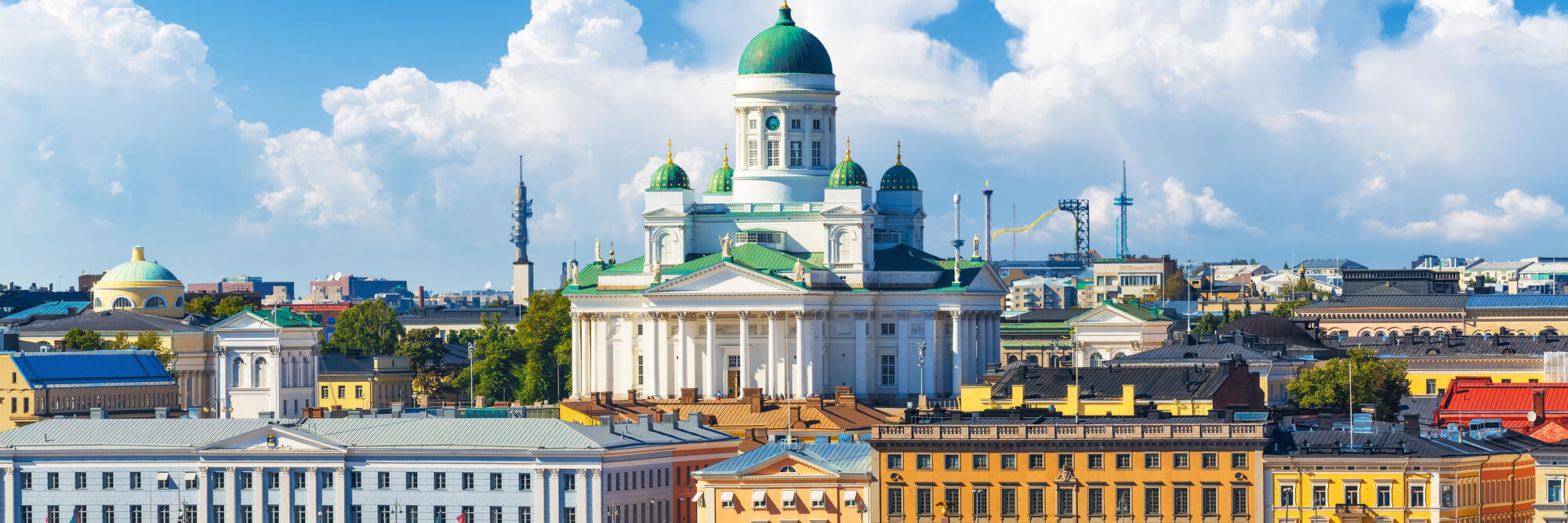
Getting around in Helsinki by public transport is straightforward and efficient. People can commute easily to and from the suburbs and around the city centre for work and school. Most expats in Helsinki elect not to buy a car, as parking is limited and expensive.
Public transport is generally faster and more cost effective. The network includes buses, trains, trams, the metro, and the Suomenlinna ferry.
Public transport in Helsinki
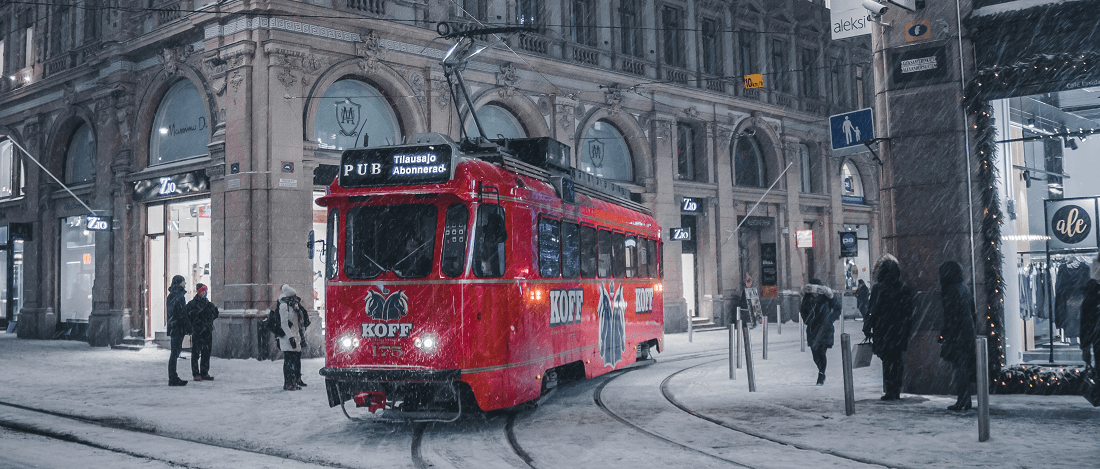
The city has an integrated public transport network coordinated by the Helsinki Region Transport Authority (HSL). Tickets are valid on buses, commuter trains, the metro, trams, and the Suomenlinna ferry.
Tickets can be bought from a kiosk, a ticket machine, or online through the website and HSL app. Expats who plan to commute regularly should get a reloadable travel card.
Helsinki public transport is split into four zones (A, B, C and D), covering not only Helsinki but also Espoo and Vantaa. Expats should buy their tickets based on the zones they will be travelling in, and can find more information on the HSL website. The Helsinki Card, a tourist pass for attractions and public transport, includes unlimited travel in zones AB (City version) or ABC (Region version) for its duration.
HSL generally operates an honesty system on trains, trams, and the metro, but inspectors do random checks, and those caught without a valid ticket will face a hefty fine.
Using public transport at night can be tricky because most trains, trams, and the metro stop running around midnight. A limited night bus network operates on weekends, but journeys can be slow.
Trams
Helsinki’s tram network is a scenic way to get around within the city limits. It’s one of the main forms of transport around the city centre and is popular with tourists, too. Trams offer new arrivals an excellent opportunity to get to know their new home, sightseeing and soaking in the city’s architecture. Expats should note that tickets cannot be purchased from drivers on trams, so they should ensure they are well prepared for their tram rides.
Buses
The bus network covers areas and suburbs well beyond the city centre and across the capital region. The main hubs are at Eliel Square, Railway Square (Rautatientori) and Kamppi Centre. Long-distance buses depart from the Kamppi bus terminal, and trips servicing the airport depart regularly from various hubs.
Buses run regularly on most routes, and it’s best to check the HSL website when planning a journey.
Metro
Helsinki’s metro extends well beyond the city centre. The line runs from Kivenlahti, Espoo, to Helsinki’s city centre and its eastern suburbs. There are two main lines, Kivenlahti–Vuosaari and Tapiola–Mellunmäki, and they run quickly and efficiently with short waiting times, especially during peak hours. For expats commuting between Espoo and Helsinki, the metro provides a useful mode of transport.
Trains
Suburban trains leave from the Central Railway Station and branch out in three directions. There is the Tampere line running from Riihimäki via Tikkurila, the Turku line running from Kirkkonummi via Espoo, and a line from Vantaankoski via Myyrmäki.
While the Helsinki Card and HSL tickets are valid around the greater capital area, a commuter train ticket is needed when travelling further afield beyond Helsinki’s municipalities.
Boats and ferries
Helsinki is a coastal city facing an archipelago of over 300 islands. HSL-issued public transport tickets and the Helsinki Card are both valid for use on the Suomenlinna ferry, which connects various islands, where expats and locals enjoy the natural scenery. Other private ferry companies operate different routes and timetables, and separate tickets must be bought for these.
Useful links
Taxis in Helsinki
Taxis are readily available and generally easy to find in Helsinki. Available taxis, identified by a yellow light on their roof, can be hailed from the street at various taxi stands, including Helsinki Central Station and around Senate Square, Esplanade Park, and ferry terminals. Taxis, convenient as they may be, are a pricey way to get around. Finland’s taxi market was deregulated in 2018, so fares vary considerably across companies; it is wise to check the estimated fare before booking.
Ride-sharing apps such as Uber and Bolt are available too. Booking a ride using an app can help avoid misunderstandings if you don't speak Finnish or the driver doesn't speak English.
Useful links
Driving in Helsinki
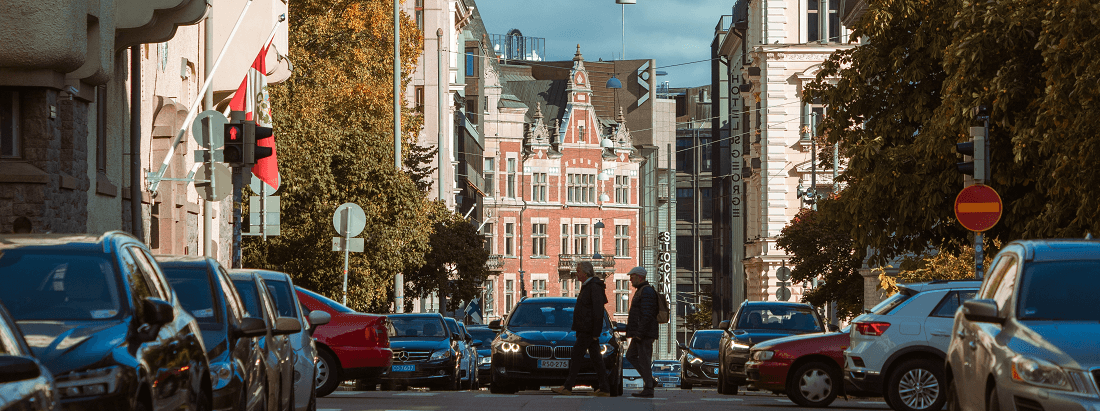
Driving in Helsinki’s city centre is not recommended. It is easier to walk, cycle, and use public transport. Avoiding congestion and keeping pollution to a minimum are prioritised, so drivers coming into Helsinki from further away are encouraged to use Park and Ride facilities at various public transport stations to continue the commute by other modes.
Parking is charged on most city centre streets during the week and in the CBD on Saturday, quickly adding up. Fees vary by parking zone.
To get out and about and see more of the region and country, many expats rent a car from one of the many international car hire companies. Drivers should remember to use headlights at all times and to drive on the right-hand side of the road. Winter tyres are legally required from 1 November to 31 March when conditions demand it. In some cases, an International Driving Permit may be needed.
Driver’s licences
Expats from EU/EEA countries can drive on their existing licence for as long as it remains valid. Those from countries that have ratified the Geneva or Vienna Road Traffic Convention (including Hong Kong and Taiwan) can exchange their valid foreign driver’s licence for a Finnish one, but must do so within two years of establishing permanent residence in Finland.
Those who are not from EU/EEA countries or Contracting States will need to pass a theory test and a practical driving test to obtain a Finnish driver’s licence. A medical certificate is also required.
Useful links
Cycling in Helsinki
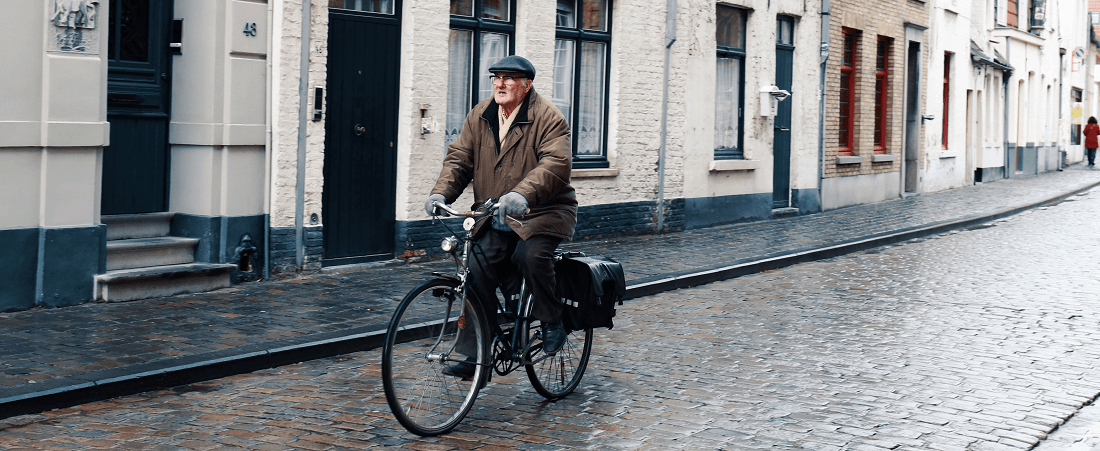
Avid cyclists will be pleased to know that Helsinki has an extensive network of bike lanes that are marked with blue signs. Cyclists are required to stay in their designated lane, and cycling is allowed on pedestrian streets if the bike is fitted with a bell.
The most popular cycling route in Helsinki is the Baana, a pedestrian and cycling corridor that stretches roughly 0.8 miles (1.3km) through the city centre. It is part of a wider Baana network of high-quality cycle paths, planned to reach 87 miles (140km) once complete. Expats who don’t own a bike will find several rental options. The yellow Helsinki City Bikes are available seasonally from April to October through HSL, and private operators such as Ecobike offer year-round rentals.
Useful links
Walking in Helsinki
Helsinki is a highly pedestrianised and relatively flat city. Walking is one of the easiest ways of getting around the city; it’s free, healthy, and allows new arrivals to get to know their surroundings on foot. In winter, icy pavements can be treacherous, so ice cleats for shoes (known locally as liukuesteet) are a worthwhile purchase.