
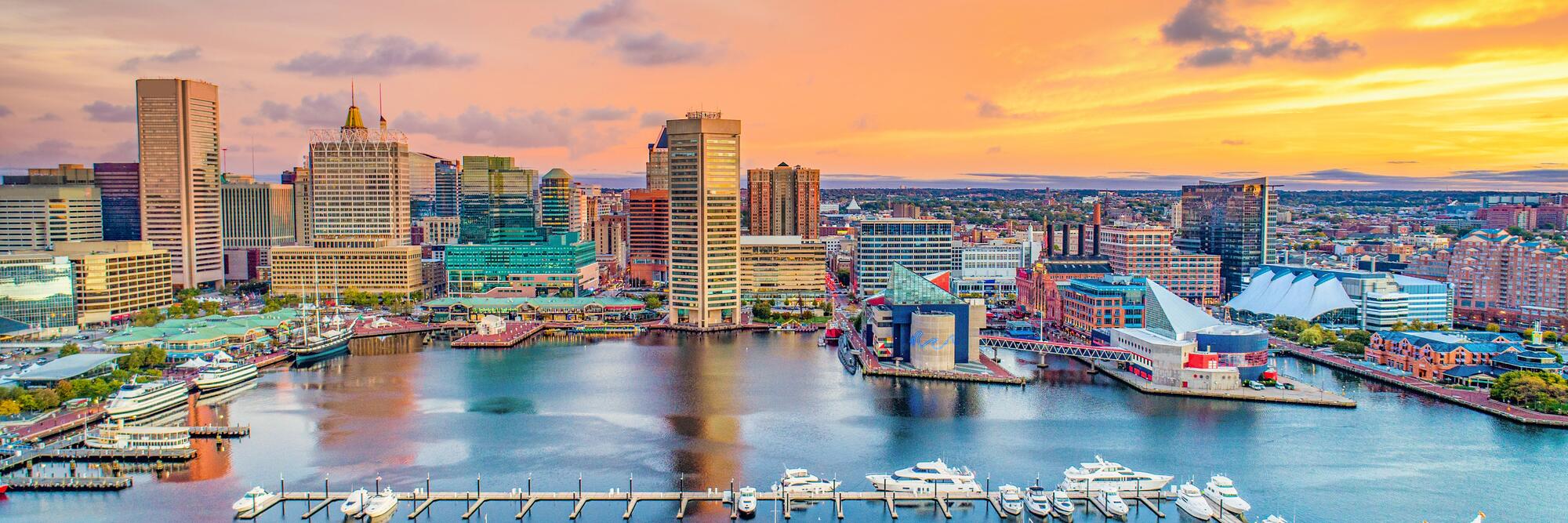
The pros and cons of moving to Baltimore may surprise those who’ve written off the Charm City. After a decade of population decline, recent Census data shows Baltimore’s numbers have finally stabilised – and for the first time since 2014, the city actually gained residents. Much of this turnaround stems from a historic drop in violent crime and a cost of living that undercuts almost every other major East Coast metro, backed by sustained local government investment.
Some of the major drawcards for those looking to move to Baltimore include its location just a 45-to-60-minute train ride from Washington, DC, paired with relatively affordable housing and well-regarded schools. On the flip side, the city still wrestles with crime in certain neighbourhoods, stubborn traffic congestion, and property taxes that are the highest in Maryland. For some, these are reason enough to look elsewhere.
Here is a broad overview of the pros and cons of moving to Baltimore that prospective residents should weigh before relocating to the Charm City.
Accommodation in Baltimore
+ PRO: Plenty of housing options and neighbourhoods
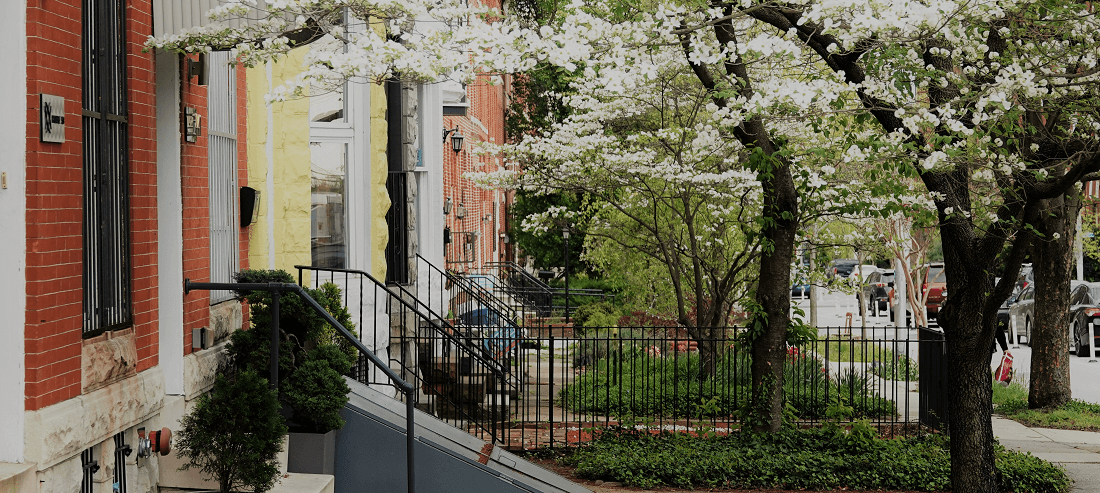
Accommodation in Baltimore comes in all shapes and sizes. The city is officially known as a ‘city of neighbourhoods’, with the Department of Planning recognising over 250 distinct communities. Newcomers can take their pick from modern apartments and luxury condos to historic rowhouses – many with the famous Formstone facades – and converted factory lofts in areas like Hampden and Canton. There is bound to be something to suit every budget.
Areas and Suburbs in Baltimore
Accommodation in Baltimore
Getting around in Baltimore
+ PRO: Free downtown circulator and rail connections
Getting around in Baltimore is easiest in the city centre, where the Charm City Circulator – a free shuttle service running five routes – is a handy way to hop between neighbourhoods, the Inner Harbour, and transit connections. The wider MTA network includes buses, a light rail line, and the Metro Subway, which together cover the most prominent areas of the city. MARC commuter trains also link Baltimore to Washington, DC and the surrounding suburbs.
- CON: Bus reliability is a sore point
The broader MTA bus system draws regular criticism for inconsistent arrival times. Riders on forums and social media frequently report ‘ghost buses’ – services that appear on the app but never show up – and long waits during off-peak hours. The Metro Subway, meanwhile, runs only a single line. Baltimore’s transit earned a D+ for reliability in a recent regional report card, so newcomers used to European or big-city American networks should temper their expectations. A car remains the practical choice for much of the metro area.
- CON: Traffic jams
Baltimore, like most big cities, suffers from traffic congestion. The average commute hovers around 30 minutes. While it isn’t strictly necessary to drive, those who do should avoid rush hour on the I-695 Beltway and I-95, which are the primary bottlenecks.
Safety in Baltimore
- CON: Crime rates remain high in some areas
The HBO series The Wire left a lasting mark on Baltimore’s reputation, and while the show was a dramatisation, the city has long had genuine issues with violent crime. Safety in Baltimore varies block by block – one street may be perfectly pleasant, while a couple of blocks over, the picture changes. Crime is heavily concentrated in a small number of high-poverty neighbourhoods, and locals often tell newcomers that sticking to well-known areas and using common sense goes a long way.
+ PRO: Historic drop in violent crime
The good news is hard to overstate. Baltimore recorded 133 homicides in 2025 – its lowest figure in nearly 50 years. Non-fatal shootings have fallen sharply, too. The city credits its Group Violence Reduction Strategy and stronger community intervention programmes for the turnaround. Baltimore’s homicide rate, once the highest in the country, has fallen below those of several other major cities. The trend has held for multiple years now, which is the kind of sustained progress that residents and city leaders have been working towards for a generation.
Working in Baltimore
+ PRO: Strong job market in healthcare and education
Working in Baltimore means tapping into an economy powered by ‘Eds and Meds’ – Johns Hopkins University, the University of Maryland Medical System, and their associated research institutions are the city’s biggest employers by a wide margin. Newcomers with a background in healthcare, higher education, or bioscience should find the job market welcoming. Entrepreneurs, too, will find that local authorities offer real support for small businesses and start ups.
- CON: Fewer corporate headquarters than neighbouring cities
Those who are well established in their field and hunting for more lucrative packages may find Baltimore’s options limited. The city proper has few Fortune 500 headquarters – Constellation Energy is a notable exception – and the economy is less varied than those of New York, Boston, or Washington, DC.
+ PRO: Work culture that favours a good work-life balance
Locals call it ‘Smalltimore’ for a reason. The work culture in Baltimore is relaxed and far less status driven than in DC. Employees are not routinely expected to clock long hours, and many companies actively encourage a healthy work-life balance. For those looking to step back from the treadmill, it is a welcome change of pace.
Lifestyle in Baltimore
+ PRO: A foodie’s paradise
Chesapeake Bay seafood is the headline act, but the food scene goes well beyond crab cakes. Baltimore has a rising wave of Afghan, Ethiopian, and Salvadoran restaurants, and its annual food festivals give local producers a chance to show off. Foodies will eat well here – and at prices that would be unthinkable in DC or New York.
+ PRO: Lively nightlife
The lifestyle in Baltimore comes alive after dark. Federal Hill skews younger and post-grad; Fells Point draws a mix of locals, tourists, and live music lovers. Canton and Hampden have also become popular nightlife hubs. Each neighbourhood has its own character when it comes to going out.
+ PRO: Attractions galore
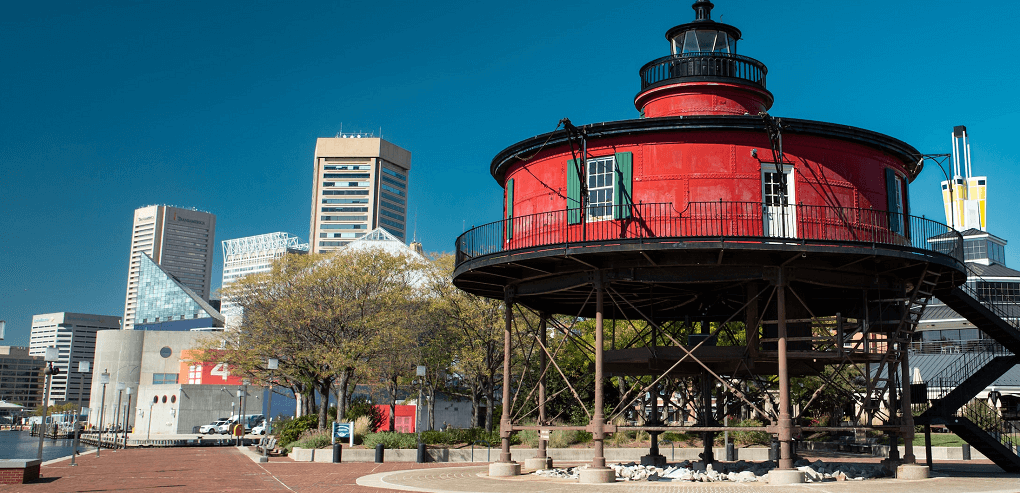
New residents will enjoy getting to know their new home. There is plenty to see and do in Baltimore, especially along the waterfront. Inner Harbor is lined with shops, restaurants, and bars, while the Maryland Science Center and the historic USS Constellation are a stone’s throw away. The city’s galleries and museums could fill weeks of exploring. It is the sort of city where a weekend can vanish in the best possible way.
Lifestyle and Attractions in Baltimore
Education and schools in Baltimore
+ PRO: Well-regarded public schools in certain areas
Those moving to Baltimore will be pleased to find that the city boasts a number of excellent schools. Public school admission is typically based on catchment areas, so the proximity of good schools should be a factor when choosing where to live. There are also several charter and magnet schools, which are not tied to catchment zones – great options for students with strengths in particular subject areas.
+ PRO: Strong network of private and parochial schools
Because public school quality in Baltimore varies widely by neighbourhood, many middle to upper-income families turn to the city’s extensive private school network. The Archdiocese of Baltimore alone runs dozens of Catholic schools in and around the city, and well-known independent schools offer education from pre-kindergarten through to grade 12. These schools are a major draw for families who want consistent quality regardless of where they live.
- CON: No international schools
Education in Baltimore does not cater specifically to the expat community. The city has no international schools following foreign curricula – the kind of establishment diplomats and expat families often rely on. The Baltimore International Academy exists, but it is a public charter school offering language immersion, not a private expat institution. A handful of public and private schools in Baltimore do offer the internationally recognised IB programme. Families who want their children to study a home-country curriculum can look to Washington, DC, which offers a wider range of international schooling options and is just a short drive or train ride away.
Cost of living in Baltimore
+ PRO: Living expenses are reasonable
The cost of living in Baltimore is one of the city’s strongest selling points. It remains one of the few major East Coast cities where middle-class families can comfortably afford to live in the downtown area. Housing costs run roughly 50 to 60 percent lower than in DC, and everyday expenses follow a similar pattern. For the quality of life on offer, Baltimore is hard to beat on this stretch of the seaboard.
- CON: Higher property taxes than the surrounding area
As a politically independent city – not part of any county – Baltimore sets its own tax rates, and they are steep. The property tax rate is roughly double that of surrounding Baltimore County, and the highest in Maryland. Income tax is capped at the state maximum. Prospective buyers should carefully factor these figures in, as the savings on housing can be partly offset by the tax burden.
Weather in Baltimore
- CON: Risk of tropical storms
Baltimore sits in the path of Atlantic hurricanes and tropical storms. Direct hits are rare – the last to cause serious damage were Hurricane Isabel in 2003 and the remnants of Superstorm Sandy in 2012 – but the city does occasionally see heavy rains and strong winds from passing systems. Flooding can be a concern in low-lying areas near the harbour.
+ PRO: Temperate climate with four distinct seasons
Thanks to its East Coast location, the weather in Baltimore is temperate. Winters bring some snow and freezing temperatures, but nothing like the bitter cold of Boston or Chicago. Summers are warm and humid without being unbearable. Rainfall is moderate throughout the year, so it is rarely a bad time to get out and explore.