

Finding accommodation in Pune is sure to be high up on any expat’s priority list when they move to this sprawling city. The main factors to weigh up are budget, desired amenities, water supply, and proximity to work and (if applicable) schools.
Areas and suburbs in Pune
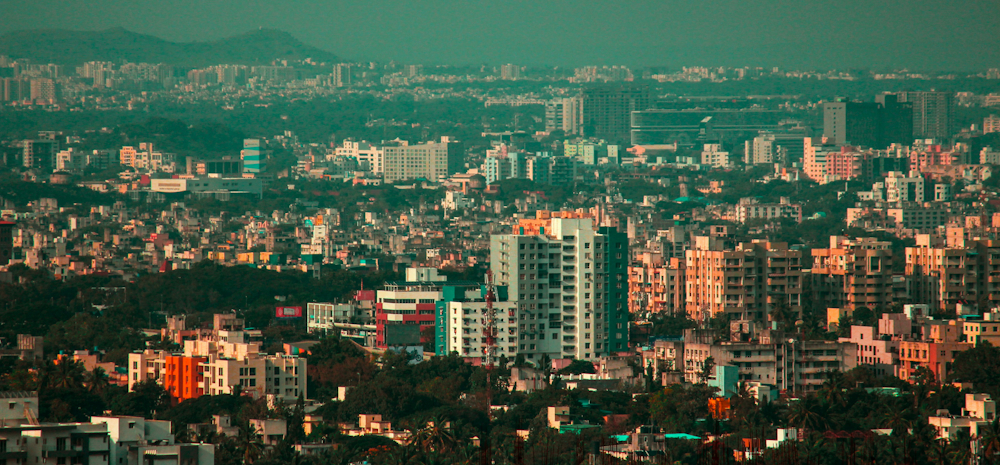
Expats tend to choose between areas and suburbs in Pune according to where they work. Rush-hour traffic is notoriously slow, so residents who live near the office save themselves hours each week.
Koregaon Park and Kalyani Nagar have long been expat favourites. Both have leafy streets and upmarket apartments, and Koregaon Park is the city’s nightlife hub.
Pune’s biggest IT hub is in Hinjewadi on the western edge of the city, and expats who work there usually look at Aundh, Baner, Balewadi or Wakad. Those with offices in the eastern business parks often settle in Kharadi or Viman Nagar, and both are close to the airport.
Types of accommodation in Pune
Anyone who looks at the types of accommodation in Pune will soon spot the acronym ‘BHK’. It’s short for bedroom, hall and kitchen. The hall is the living room, so a 3 BHK flat has three bedrooms as well as the hall and kitchen. Studios are listed as 1 RK (one room and kitchen).
In the city centre and around the industrial and IT hubs, apartments are the main form of accommodation. Most expats rent in gated housing societies. These complexes usually have round-the-clock security and backup generators, and many have a gym and a pool too.
Some larger developments, such as Magarpatta City in Hadapsar, are self-contained townships. Residents there have offices, schools, shops and parks within the gates. There’s more space in the suburbs further out, where row houses and villas in gated communities are easier to find. Standalone bungalows with gardens are rarer, and most of those left are in older neighbourhoods such as Koregaon Park.
Furnished vs unfurnished
Alongside furnished and unfurnished homes, Pune listings have a middle category called ‘semi-furnished’. A semi-furnished flat usually has built-in wardrobes, a modular kitchen, light fittings and ceiling fans. In a fully furnished home, the landlord also supplies furniture and the main appliances, such as a fridge, a washing machine, air conditioning and a water purifier. Landlords don’t all mean the same thing by ‘fully furnished’, so tenants should check the inventory against the flat before they sign.
Short lets
Many new arrivals spend their first few weeks in a serviced apartment while they look for something longer term. There are serviced apartments near the main business districts, and most operators have monthly rates. Short-term rentals on Airbnb are another option. Hosts must register foreign guests with the immigration authorities, so expect to share passport and visa details at check-in.
Useful links
Finding accommodation in Pune
New arrivals to the city might find the prospect of finding accommodation in Pune a daunting one. Those unsure of where to start would do well to hire a reputable estate agent. These professionals know the local property market well and may have access to listings before they’re made public. Agents usually charge the tenant a month’s rent as brokerage, and many charge the landlord as well.
Some employers arrange a relocation company as part of the move. These firms shortlist homes that match the brief and arrange viewings. Most also negotiate the terms and handle the registration and police paperwork.
Those who’d rather go it alone can ould make use of online property portals such as MagicBricks, 99acres, Housing.com and NoBroker, all of which have plenty of Pune listings. NoBroker connects tenants directly with owners, so there’s no brokerage to pay.
Some housing societies restrict who can rent, and single tenants, pet owners, foreign nationals and non-vegetarian households sometimes meet resistance. Ask about society rules before a viewing to avoid a wasted trip.
Useful links
Renting accommodation in Pune
There’s a fair amount of paperwork involved in renting accommodation in Pune, although agents and relocation firms usually take care of most of it.
Making an application
Few landlords in Pune have a formal process for making an application. Once both sides agree on terms, the landlord often asks for a small token payment to take the flat off the market and later counts it towards the deposit.
Landlords usually want copies of your passport and visa, your Foreigners Regional Registration Office (FRRO) registration once you have it, an employment letter and passport photos. Many housing societies have their own tenant form as well, and some issue a no-objection certificate (NOC) before a tenant moves in.
Landlords must also register every new tenant with the local police. Foreign tenants must file what’s commonly called a C-Form with the immigration authorities within 24 hours of move-in. Keep a copy, as the FRRO often asks for it as proof of address.
Leases
Nearly all leases in Pune are leave and licence agreements. Under Maharashtra law, every rental agreement must be in writing and registered, and the landlord is responsible for registration. The standard 11-month agreement is no exception.
Most agreements are for 11 months, and the rent is usually raised at each renewal. Expats on multi-year assignments can sign an agreement of up to five years instead. It may be possible to negotiate for a shorter lease period if required.
Landlords can register agreements online, but both parties need to verify their identity through Aadhaar. This is India’s biometric ID number, and most new arrivals won’t have one yet. In that case, the landlord and tenant register in person at a sub-registrar’s office and bring two witnesses. Both sides should also agree in writing who pays the stamp duty and registration fees.
Deposits and fees
The biggest of the upfront deposits and fees in Pune is the security deposit, which is usually between two and six months’ rent. Landlords tend to ask for more on furnished flats. Maharashtra has no legal cap on deposits, so the amount is negotiable. The other main costs are the agent’s brokerage and the stamp duty and registration fees for the agreement.
Landlords usually deduct the cost of any damage beyond normal wear and tear and return the rest of the deposit when the tenant moves out. Some routinely charge for repainting too, so settle that point in writing before you sign. Take dated photos of the flat on move-in day in case of a dispute later.
Terminating the lease
Notice periods for terminating the lease in Pune are usually one month for either side. Many agreements also have a lock-in period of a few months. A tenant who leaves during the lock-in may have to pay rent for the remainder of the lock-in period or lose part of the deposit.
Expats who could be transferred at short notice should negotiate a short lock-in or none at all. They should also ask for the right to leave early if their employer moves them elsewhere.
Renting Accommodation in India
Useful links
Utilities in Pune
In most cases, utilities in Pune are extra costs on top of the rent. Nearly every housing society also charges a monthly maintenance fee, which it uses to pay for security, housekeeping, upkeep of shared facilities, and, in many buildings, water. Some landlords include this fee in the rent, and others pass it on to the tenant, so check the agreement before you sign. It’s also a good idea to ask the landlord for a few recent bills to help you budget.
Electricity
Maharashtra State Electricity Distribution Company Limited (MSEDCL) supplies electricity across Pune and Pimpri-Chinchwad, and it’s also known as Mahavitaran. Landlords usually keep the account in their own name, and tenants pay the bills online or through the Mahavitaran app. MSEDCL has fitted smart meters in many homes across the city, and households that have one can track their usage on the app.
Pune’s power supply is fairly reliable by Indian standards, although short outages are common during monsoon storms. Most gated societies have generators for lifts and common areas, and some extend power backup to individual flats. Many households also keep a battery system, which locals call an inverter, to run fans and lights during a cut.
Gas
Many newer housing societies in Pune have piped natural gas (PNG) from Maharashtra Natural Gas Limited (MNGL). Elsewhere, households cook with LPG cylinders, which state-run distributors deliver to the door. Tenants usually take over the landlord’s existing cylinder connection rather than apply for their own. Where a building has a PNG line, it’s generally the cheaper and simpler choice, and the authorities have urged households with access to switch over from cylinders.
Water
Pune Municipal Corporation (PMC) supplies water to most of the city, and Pimpri-Chinchwad Municipal Corporation (PCMC) is responsible for its own area in the northwest. Supply is patchy in fast-growing suburbs such as Kharadi, Wagholi, Baner, Balewadi and Hinjewadi. Many housing societies there buy water from private tankers to make up the shortfall, and they recover the cost through maintenance charges. The problem is worse in the hot months before the monsoon, so ask the society office whether residents rely on tankers in summer before you commit to a flat.
Tap water isn’t safe to drink, and most homes have a reverse osmosis (RO) purifier in the kitchen.
Bins and recycling
Pune has a door-to-door system for bins and recycling, and residents have to separate their waste before collection. Households put kitchen scraps in one bin and dry waste, such as paper, plastic, glass, and metal, in another. They also bag nappies and sanitary products separately and mark the bag with a red dot.
Across most of the PMC area, waste pickers from the SWaCH cooperative collect from each home every day, and households pay them a small monthly user fee directly. In Pimpri-Chinchwad, PCMC’s contractors handle collection. Many larger societies also compost their wet waste on-site.