

You'll need some patience to get around Nairobi. Roads are congested, and the transport infrastructure is stretched. Many drivers, too, treat traffic laws as loose guidelines.
For public transport, Nairobi has matatus (shared minibus taxis), buses, commuter trains, and the motorcycle taxis known as boda bodas. Safety records are poor across the board, so many expats use public transport sparingly.
Driving in Nairobi is risky too, so plenty of expats hire a local driver who knows the roads well. Others rely on ride-hailing apps or local cab firms.
Public transport in Nairobi
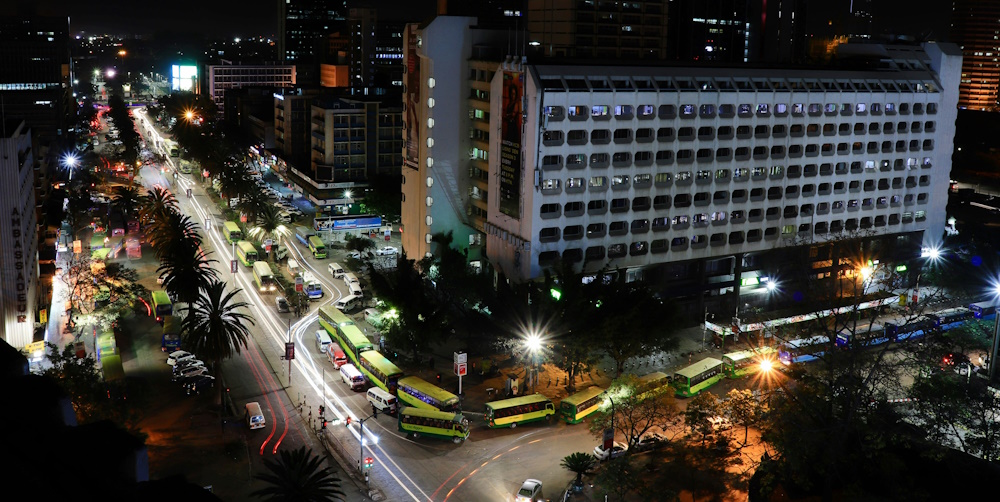
If you do use public transport in Nairobi, stay aware of your surroundings and keep an eye on your belongings, just as you would in any big city.
Matatus
Matatus are shared minibus taxis that carry several passengers at once. The network is fairly informally organised, but you'll find matatus just about everywhere in greater Nairobi and its suburbs.
Most expats give matatus a wide berth. If you do ride one, be ready for the unruly, aggressive driving they're known for, and note that they're often packed well beyond capacity.
The government requires matatu operators to join registered transport companies or savings and credit cooperatives (Saccos) to improve safety and accountability. Even so, many passengers still find matatus risky.
Buses
There are several bus companies in Nairobi, and they are a more predictable alternative to matatus. Most routes end up in the city centre, where a handful of terminals are the main drop-off and pick-up points.
Some bus companies are unreliable, though, and their drivers may flout traffic laws, so the ride can be risky. Fares are low, but journeys can be slow because Nairobi's traffic is relentless, especially in the city centre.
After years of stop-start progress, the government is pushing ahead with the Nairobi Bus Rapid Transit (BRT) network. Funding is now in place for all five planned lines, and work has begun on some sections. One line is planned between the city centre and the airport. No line is fully up and running yet, so treat the BRT as one to watch rather than rely on for now.
You'll also find frequent long-distance, intercity buses between Nairobi and the rest of the country. You can pick from several operators. First-class seats are more comfortable, and the better coaches sometimes have USB ports and screens for films.
Trains
Kenya Railways has commuter trains between the city centre and outlying areas such as Ruiru, Kikuyu, Embakasi, and Syokimau. The train service is handy for the daily commute, although it can be less reliable and comfortable than you might expect.
Reliability has been patchy. Trains are sometimes suspended over holiday periods, and services can be disrupted by heavy rain. Kenya Railways is modernising the network, though. It has opened new stations along the busy Nairobi-to-Ruiru route and is upgrading tracks and stations across the metropolitan area.
For longer trips, Kenya Railways also runs the Madaraka Express on the Standard Gauge Railway (SGR) between Nairobi and Mombasa. The journey takes around five hours, far quicker than the old line or the long drive, so it's a comfortable way to reach the coast for work or a weekend away.
Transport and Driving in Kenya
Useful links
Taxis in Nairobi
Taxis in Nairobi are the most convenient way to get around for anyone here on a short stay or without a company car, and they're often the safest option too. You'll find them near international hotels, big shopping malls, tourist sites, and in the city centre. If there's no meter, agree on a fare before you get in.
Ride-hailing apps are widely used in Nairobi. Uber and Bolt both operate here, alongside Kenyan-built options like Little. These apps are generally safer than street taxis because the companies vet their drivers and set vehicle standards. The apps also have boda bodas (motorbike taxis), which are cheaper, quicker in heavy traffic, and much, much riskier than going by car.
Useful links
Driving in Nairobi
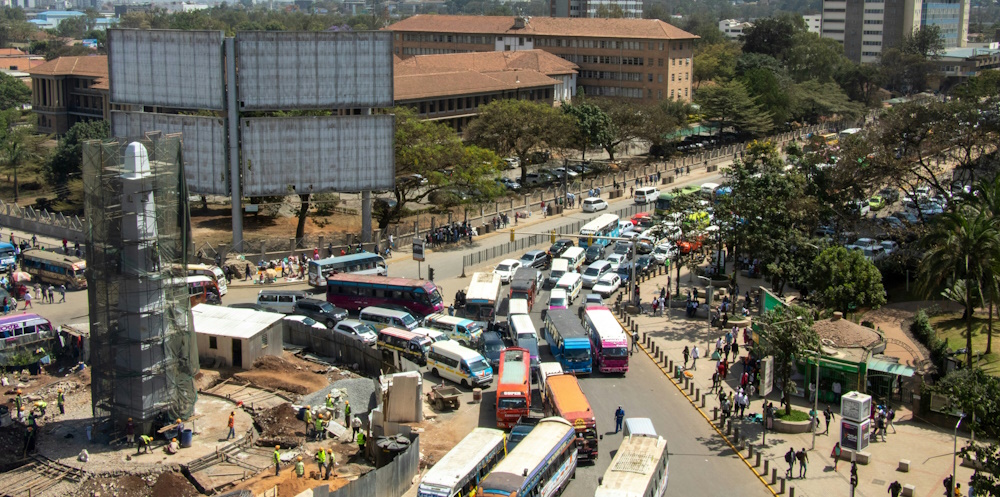
Driving in Nairobi isn't for the faint-hearted. Many expats hire a local driver who knows the roads and can read the erratic moves of other road users. Firms that employ expats often provide a car and driver as part of the package.
If you do get behind the wheel, drive defensively and stay alert. Several international car-hire firms operate in Nairobi, although anyone staying for the long term usually ends up buying a car.
Kenyans drive on the left-hand side of the road. Sign coverage is pretty patchy, so if you're new to the city and plan to drive, it’s a good idea to use a GPS or map app.
The government has stepped up road safety efforts through the National Road Safety Action Plan 2024-–028 and wants to cut road deaths by half by 2030. Under the plan, cameras are going up at accident black spots on major highways to monitor driving and enforce the rules.
Driver's licences
A foreign licence or International Driving Permit is valid for the first three months after you arrive. After that, you'll need a Kenyan licence, which you apply for online through the NTSA's TIMS portal on eCitizen. Drivers from Commonwealth countries can use their national licence in the meantime; everyone else needs an International Driving Permit alongside it.
Useful links
Walking in Nairobi
Nairobi has been called a 'walking city', and plenty of residents do get around on foot, whether to work, home, the shops, or to see friends and family. In the city centre though, walking can be chaotic, and drivers pay little heed to people on foot.
For safety reasons, it's best not to walk alone or after dark, especially around the suburbs. If you do walk, take extra care and stay aware of what's around you.
Pedestrian infrastructure has improved a little, but there are still big gaps. When the Nairobi Expressway opened in 2022, residents and campaigners criticised it for prioritising cars over people on foot, and some of the old walkways beneath it were lost during construction. The authorities have since added footbridges and overpasses at several points to make crossing safer.
The NTSA is also pushing pedestrian safety more broadly. It has brought in lower speed limits in busy areas and is redesigning roads to better protect people on foot. Pedestrians make up a large share of road deaths in Kenya, so the authority now enforces the use of footbridges and designated crossings, and you can be fined for crossing away from them.
Useful links
Cycling in Nairobi
Cycling in Nairobi is slowly catching on, although it is still a risky way to get around. Many roads have no cycle lanes, so riders have to mix with traffic, and accidents involving cyclists are common. Those planning new roads too often leave cyclists and pedestrians out, so little changes. Things are improving in pockets, but there's a long way to go.