Print
  • Hold down Ctrl key and select the sections you want to print. If using a Mac, hold down the Cmd key.
  • Use Ctrl + A or on Mac, Cmd + A to select all sections (if you are using the Chrome browser).
  • Click "Apply" and the site will customise your print guide in the preview below.
  • Click the "Print" button and a print pop up should appear to print to your printer of choice.

Moving to Nairobi

Living in Nairobi as an expat

Living in Nairobi as an expat has its pros and cons, but most expats decide the upsides are worth it, and the quality of life is the big draw. Plenty fall for the warm welcome and the mild highland climate, and end up staying far longer than they first planned.

Nairobi is one of East Africa's most prominent cities, and it's a busy, fast-moving place. As Kenya's capital, it's a place for those who want to work hard and maintain an active social life outside the office. You'll build a career in the business world, and there's a lively social scene to come home to.

The dining and nightlife are cosmopolitan, and at weekends, some of Africa's finest safari country is right on your doorstep. As East Africa's economic hub, Nairobi is a strong base for an internationally minded career.

Nairobi has one of Africa's most established expat communities. Its members work for the UN and international NGOs, for multinationals with regional offices here, for diplomatic missions, and in a fast-growing startup scene, so you won't be short on a ready-made social network. Domestic help is common too, and many expats employ a housekeeper or gardener.

Personal safety is something to keep in mind in Nairobi. Most crime in Nairobi is opportunistic, and expats usually live in gated homes or complexes with round-the-clock security. When out and about, take all the precautions you would in a big city. Keep your wits about you in crowds, keep your belongings close, avoid walking alone after dark, and use a trusted taxi or ride-hailing app at night.

Pros and Cons of Living in Nairobi
Safety in Nairobi

Working in Nairobi
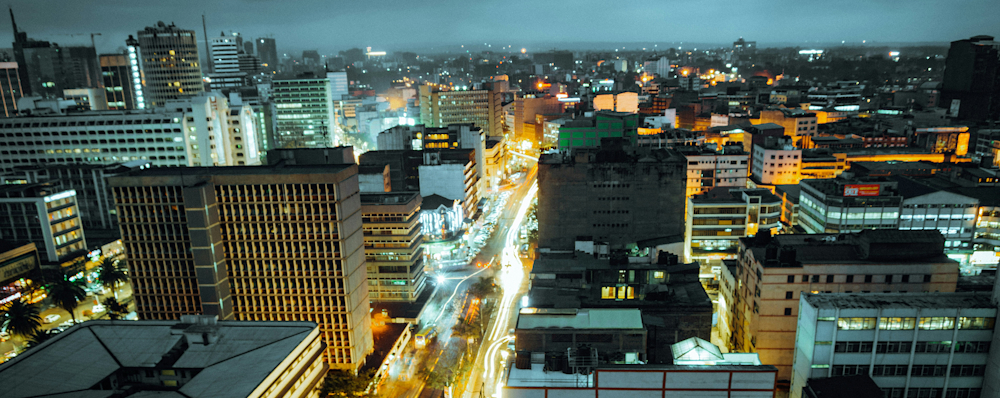
Nairobi CBD by Click Smith on Unsplash

Working in Nairobi is the reason most expats are here in the first place. As East Africa's largest city and Kenya's main commercial centre, it's where multinationals base their regional operations, so there's steady demand for skilled foreign professionals. The Nairobi Securities Exchange (NSE) is here, and so are the African headquarters of firms such as Google, Microsoft, General Electric, and Coca-Cola.

Nairobi is also the UN's main hub in Africa. The UN Environment Programme (UNEP) and UN-Habitat are both headquartered in the city, and hundreds of international NGOs and development agencies run their regional operations from here. The fields most likely to hire from abroad are telecoms, banking, consumer goods, and the fast-growing tech sector known as 'Silicon Savannah'. The mobile-money service M-Pesa was born in Nairobi.

Few expats move to Nairobi without a job already lined up. Most expats have a contract negotiated in advance, and the employer sponsors the work permit. If you are looking for work while living in Nairobi, a lot of the hiring happens through word of mouth. To open more doors, get to a few business meetups and industry events.

Working in Nairobi
Doing Business in Nairobi

Lifestyle in Nairobi

Once you clock off, the lifestyle in Nairobi has plenty going for it, and the cosmopolitan dining scene is a good place to start. You'll find everything from Kenyan nyama choma (grilled meat) to Indian, Japanese, Ethiopian, and Middle Eastern cooking. Westlands and Parklands have the densest cluster of bars and clubs, while in Kilimani and Lavington, you'll find lounges, live-music spots, comedy nights, and a quieter scene overall. For shopping, you can choose between open-air markets and the large modern malls in areas like Westlands, Karen, Gigiri, and Kilimani.

The big difference, though, is the wildlife on the doorstep. Nairobi National Park is a proper safari destination about four miles (6km) from the city centre, and it's one of the few places on earth where you can photograph lions against a skyline. Beyond the park, you've got the Karen Blixen Museum, the forest trails at Karura, the Ngong Hills, and the Masai Mara all within reach. The coast at Mombasa is a short flight away too.

Lifestyle in Nairobi

Finding accommodation in Nairobi

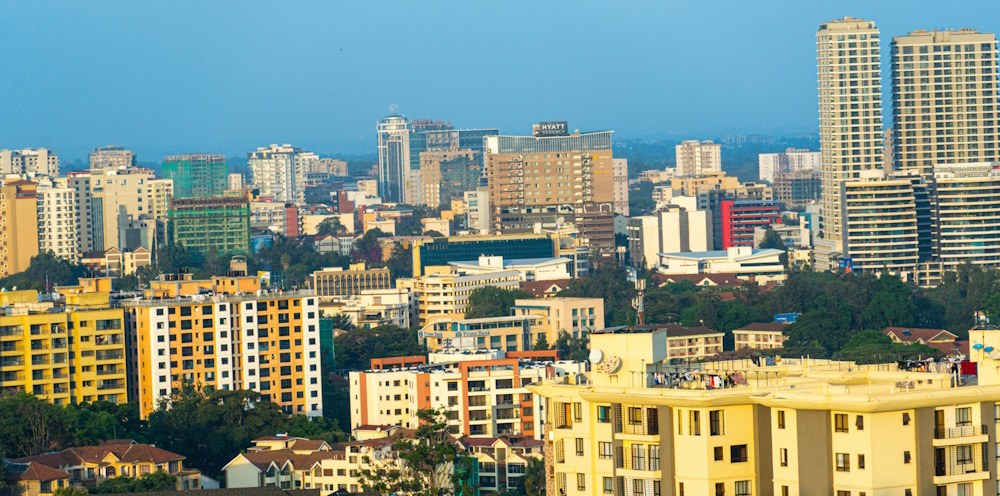
Nairobi Cityscape by Seth Salimo on Unsplash

Finding accommodation in Nairobi usually comes down to your commute, your budget, whether you've got children in school, and whether you'd rather have a house with a garden or an apartment. Most expats settle in a cluster of leafy suburbs on the western and northern sides of the city. Karen and Runda are the classic family choices. Both have big standalone homes, large gardens, quiet streets, and quick access to the international schools. Gigiri is right next to the UN complex and the embassies, so it's popular with diplomatic and UN staff. Muthaiga is Nairobi's old-money address, and locals have long called it the 'Beverly Hills of Nairobi'.

Younger professionals and smaller families often prefer Kilimani, Kileleshwa, Lavington, or Westlands, which are more central and have a good supply of modern apartments. Almost all expat housing has 24-hour security, and many blocks have their own backup generator and water tank. Both are useful, because power and water cuts still happen from time to time. The best properties in these suburbs are snapped up quickly because employers all compete for the same limited pool. Start your search early.

Areas and Suburbs in Nairobi
Renting Accommodation in Nairobi

Cost of living in Nairobi

By international standards, the cost of living in Nairobi is reasonable, and that's a big part of why so many expats settle in happily. On a skilled professional's or a manager's salary, you can usually afford most of the creature comforts you had back home, and then some.

Relocation packages tend to be generous, and they often include housing, schooling, health insurance, and home-leave flights. Senior executives may also get a company car and a driver, which helps keep their day-to-day costs low. You'll spend a lot more, though, if you stick to imported goods and Western-style shops and restaurants, because the government charges import duty on anything shipped in. Shop for local produce and eat where Nairobians eat, and you'll spend far less.

Cost of Living in Nairobi

Living in Nairobi with children

Families settling in Nairobi tend to find it an easy place to raise children. The suburbs where expats live are green and spacious, and there's no shortage of things for kids to do at the weekend. Within easy reach, you've got the Giraffe Centre, the elephant orphanage, the Karura Forest trails, and Nairobi National Park, and the elephant orphanage in particular is a firm favourite with younger children.

Healthcare is the other big issue for parents, and Nairobi has the best facilities in the region. The top private hospitals are well equipped and accustomed to treating international families, and most expats take out private health insurance so they can skip the public queues. Employers often fold health cover into the relocation package, so check what yours includes before you arrive.

Healthcare and Hospitals in Nairobi

Finding a school in Nairobi

Most expat parents finding a school in Nairobi look to the city's international schools, and the choice is wide across the British, American, International Baccalaureate, and French systems. The best-known names include the International School of Kenya, Brookhouse, Hillcrest, the Banda School, and Braeburn, all of which have long track records of sending students on to top universities abroad.

The schools are concentrated in the same western and northern suburbs where expat families tend to live, so Karen, Runda, Gigiri, and Lavington are all handy for the school run. The most sought-after schools have long waiting lists, and fees are high. Apply well ahead of your move, and check whether your employer will cover schooling as part of your package.

International Schools in Nairobi
Education and Schools in Nairobi

Getting around in Nairobi
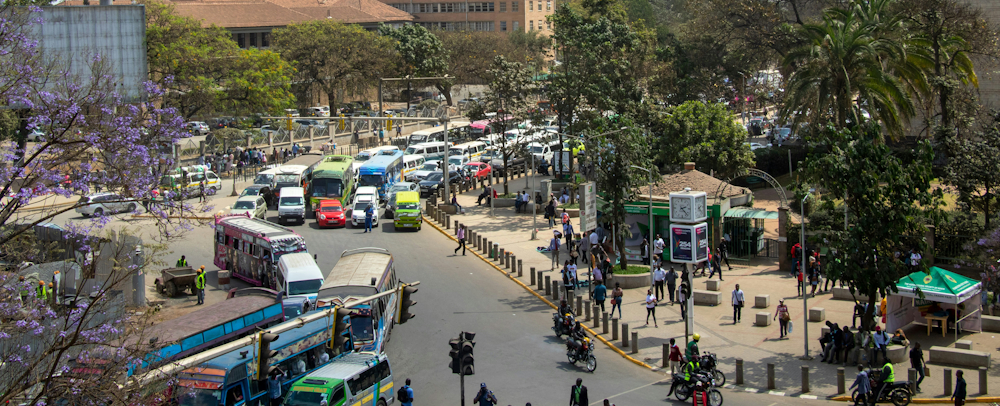
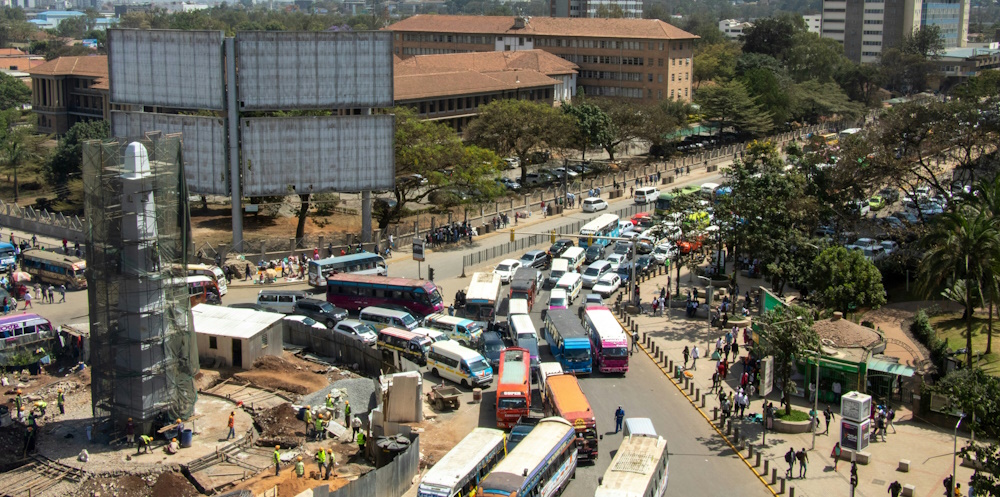
Nairobi Traffic by Michael Njoroge on Unsplash

Getting around Nairobi takes some planning, mainly because the traffic is heavy and public transport is patchy. The workhorses of the system are matatus, the brightly painted minibuses that run set routes for next to nothing, and boda bodas, the motorbike taxis that weave through the jams for short hops. Both are cheap and handy, but neither is the safest option, especially after dark.

Most expats get around by car. Plenty hire a driver or have one provided by their employer, which takes the stress out of the traffic and the parking. Ride-hailing apps like Uber and Bolt are widely used and reliable, and they're the sensible choice for a night out. A toll road called the Nairobi Expressway opened in 2022, and the airport run and the drive along Mombasa Road are now far quicker. There's also a commuter rail service into the centre that's handy at rush hour. Jomo Kenyatta International Airport has direct flights to more than 50 destinations, so it's easy to get out of the country for work or a break.

Transport and Driving in Nairobi

Climate and weather in Nairobi

The climate in Nairobi is one of the quiet pleasures of living here. Thanks to its high altitude, about 5,900 feet (1,800m) up and right on the equator, the city is mild and temperate all year, and noticeably cooler than the coast and the lowlands. Days are warm and evenings can get chilly, and there's barely any change in temperature from one month to the next.

There are two rainy seasons to plan around: the 'long rains' from March to May, and the shorter rains towards the end of the year. July and August are the coolest, driest months. Whatever the season, you're rarely far from a bright highland day.

Climate Charts for Kenya

If you've got a sense of adventure, you'll savour your time in Nairobi. Outdoor lovers in particular tend to find they never want to leave.

Pros and cons of moving to Nairobi

Moving to Nairobi brings both advantages and disadvantages. For all the ups and downs, life in this East African economic hub is nothing if not exciting. Here's our rundown of the pros and cons of living in Nairobi.


Lifestyle in Nairobi

Nairobi National Park by Grace Nandi on Unsplash

+ PRO: Relatively integrated expat and local society

Nairobi's expat and local communities mix more freely than in a lot of cities. A large professional middle class and a famously warm local culture mean the two overlap easily. You'll rub shoulders with Kenyans at the kids' school, the country club, the shops, the bar, and your neighbourhood restaurant, and plenty of expats get stuck into local markets and festivals as well.

+ PRO: Pleasant weather

Nairobi's weather is one of its quiet pleasures. The climate is mild all year, and there's little in the way of extremes. Because the city is so high up, the days are warm and sunny, and the evenings cool, so you won't need central heating or a winter coat. There are fewer mosquitoes at this altitude, so malaria risk in the city itself is low. Head to the coast or out on safari, though, or travel during the long or short rains, and antimalarial precautions make sense again.

- CON: Limited shopping opportunities

There are many modern shopping centres in Nairobi, but it is difficult to find affordable imported goods. Since clothes, shoes, electronics, and toys are generally more expensive and less varied here, most expats still buy them in advance back home.

+ PRO: Easily accessible holiday destinations

You'd struggle to find another capital this close to the wild. Nairobi National Park is right on the city's edge, and big-name reserves like the Maasai Mara and Amboseli are only a short hop away by road or light aircraft. The coast is a quick flight south, where the beaches are fringed with palms and the warm Indian Ocean is good for snorkelling over coral reefs, sailing, deep-sea fishing, and kitesurfing off Diani. Closer to home, easy outings include the Giraffe Centre, the Sheldrick elephant orphanage, the Karen Blixen Museum, and Lake Naivasha.

+ PRO: Active social life

Nairobi's social life is one of the reasons expats stay on. The restaurant and bar scene is a real draw, and live music and the arts are easy to find. Something is usually on, from food and music festivals to arts and sporting events. Plenty of people arrive for a posting and end up making the city home.

Lifestyle in Nairobi
Weather in Nairobi


Local culture in Nairobi

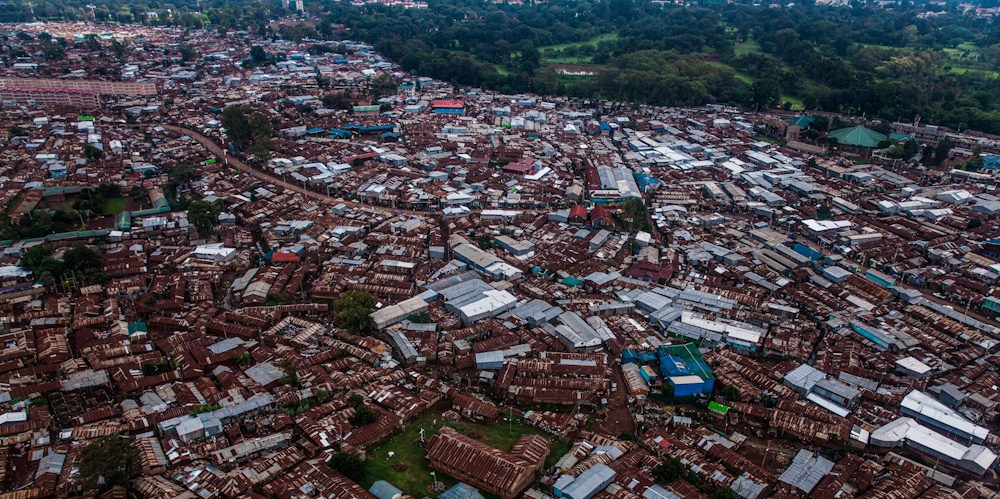
Aerial view of Kibera, Nairobi by Evans Dims

- CON: Adjusting may take time

Culture shock can be a factor for new arrivals to Nairobi, especially for those who have incorrect preconceived notions before they arrive. Poverty is visible across the city, and persistent hawkers may approach you. Rather than get flustered, keep smiling and say 'no, thank you'. Most newcomers settle into the rhythm of the place within a few months.

+ PRO: Locals are friendly, and English is widely spoken

Kenyans are famously warm and welcoming to newcomers. English and Swahili are both official languages, and many Kenyans are trilingual and speak a regional mother tongue as well. You'll rarely hit a language barrier at work or day to day, and picking up a little Swahili goes a long way with locals.

Local Culture in Kenya


Safety in Nairobi

- CON: Personal safety is an issue

Personal safety takes real attention in Nairobi. Armed carjacking, mugging, home invasion, and the occasional kidnapping for ransom all occur, and foreigners are often assumed to be worth robbing. That's why most expats live in well-secured homes and use ride-hailing apps instead of walking after dark. Keeping valuables out of sight becomes second nature too. Crime is concentrated in particular areas, so where you live and how you get around make a real difference.

- CON: Dangerous driving conditions

Kenya's roads are dangerous. The road’s potholed surfaces, poorly maintained lorries, speeding matatus (shared minibuses), and swarms of motorbike taxis all add to the risk, and accidents are common. Rather than drive themselves, many expats hire a local driver who knows how to negotiate the chaos.

Safety in Kenya


Working in Nairobi

+ PRO: East Africa's business hub

Nairobi is the business capital of East Africa, and that counts for a lot when you work here. Multinationals from Google to General Electric run their regional operations out of the city, it is home to the only UN headquarters in Africa (the Gigiri complex), and its tech and startup scene, nicknamed 'Silicon Savannah', is the best known on the continent. For anyone working here, that means strong professional networks and one of Africa's most established expat business communities to plug into.

- CON: Corruption affects business

Bribery and corruption are part of everyday life in Nairobi. Officials usually require a bribe (known locally as kitu kidogo or 'something small') before they will advance your paperwork, and the resulting delays and various workarounds can greatly hinder business.

+ PRO: Doing business keeps getting easier

Kenya has worked hard to cut its red tape. Most government services are now handled through the eCitizen portal, so business registration, tax filing, permits, and licence applications that once meant queuing at a counter can be done online. Lawmakers also introduced electronic signatures and digital registries through the Business Laws (Amendment) Act, which reduced paperwork and face-to-face contact where bribes used to change hands.

Working in Nairobi
Doing Business in Kenya


Cost of living in Nairobi

+ PRO: General expenses are affordable

Everyday spending in Nairobi can be pleasantly low. Local fruit and vegetables are cheap, plentiful, seasonal, and full of flavour, and much of the meat is the same story. Kenya is one of the world's biggest flower exporters, so cut flowers like roses cost next to nothing. Keep to local markets and local brands, and you'll spend very little day to day; it's imported and branded goods that push a budget up.

- CON: Certain utilities are pricey

Electricity is expensive by regional standards, and you'll usually be expected to chip in for private security. Budget for both when you work out your monthly costs.

Cost of Living in Nairobi


Accommodation in Nairobi

Parklands in Nairobi by Paulstern Madegwa on Unsplash

+ PRO: Domestic staff are easy to find and affordable

Hiring domestic help is completely normal in Nairobi. Plenty of households employ a house help, a nanny, a gardener, or a day guard, and by expat standards, the wages are modest. It may feel unfamiliar at first, but most newcomers come to rely on the extra pair of hands.

- CON: Power and water supply issues

Blackouts are common, and as a result, most houses have some form of backup, typically either a generator or solar. Since Kenya experiences droughts regularly, many homes have storage tanks and then refill them using delivery tankers when the taps stop working.

Accommodation in Nairobi


Education in Nairobi

+ PRO: High-quality international schools

Nairobi has plenty of high-quality international schools that teach the British, American, International Baccalaureate, and French curricula. Some, like the International School of Kenya, have been going for decades. The teaching is strong, and the facilities are good, and most schools run a full programme of sport, music, drama, and clubs such as Model UN, so children get a rounded education.

- CON: Limited options for special education

Support for children with special educational needs is limited. While a few schools have learning-support staff, there is little dedicated provision for special needs, and it can be difficult to find the right school for a child who requires such support.

+ PRO: Diverse cultural exposure

The upside for families is how international the schools are. Your children will share a classroom with peers from all over the world and grow up comfortable around other languages and cultures. Children who start out this way tend to carry that ease with them wherever they go next.

International Schools in Nairobi
Education and Schools in Nairobi

Working in Nairobi

Expats working in Nairobi will be at the heart of East Africa's largest economy. Kenya's capital is the entire region's commercial hub, and it has a strong industrial base and a fast-growing tech sector known as the Silicon Savannah. The Nairobi Securities Exchange (NSE) is based here, and many multinationals and international organisations run their regional operations from the city.

Most expats line up a job before they arrive. Employers usually settle the contract and relocation package in advance. To work in Kenya, you'll need a work permit, which your employer will usually handle. The main one for employed expats is the Class D (employment) permit. 

our employer has to show that your skills are hard to find locally and name a Kenyan understudy for you to train during your posting. The permit is tied to that one job, so you can't move to a new employer without applying again. Get your permit and visa sorted before you move.


Job market in Nairobi

Expressway in Nairobi with skyscrapers in background by Sophie Maurine

Nairobi has the most varied job market in the region, as you'd expect of Kenya's capital and East Africa's economic heart. Multinationals, local corporates, banks, and a large development sector all recruit here.

Agriculture was Kenya's biggest industry for decades, and many Kenyans still work the land, although the fastest growth now is in technology and services. Nairobi is known as the Silicon Savannah, and its tech companies work in software development, fintech, data, and telecoms. Mobile money was pioneered here with M-Pesa, and Safaricom is still one of the country's largest employers. Global firms such as Google and Microsoft have set up engineering and product hubs in the city, and other multinationals run their East African operations from here.

Construction and property are busy sectors too. Tatu City and Two Rivers are two large mixed-use developments on the city's edges, and both are special economic zones, so companies based there get tax breaks. Conservation and environmental work is another draw for foreign professionals, and you'll find both volunteer placements and full-time jobs. Nairobi also has a lively startup scene.

The city is one of only four major United Nations centres worldwide, alongside New York, Geneva, and Vienna. The UN Environment Programme and UN-Habitat both have their global headquarters here, and the broader UN and NGO presence is a big draw for development and humanitarian professionals. Many foreign embassies and consulates are in the leafy Gigiri area. It's home to one of the largest expat communities in Africa, and expat children have a good choice of international schools nearby.

International Schools in Nairobi
Working in Kenya


Finding a job in Nairobi

Most expats who find work in Nairobi do so through a pre-secured contract or an intra-company transfer. These packages are usually generous. Expect a good salary, an accommodation allowance, help with transport, school fees for your children, and medical cover. Your employer will normally sort out the work permit and visa too.

If you arrive in Nairobi without a job lined up, give yourself more time for the search. Start with a strong CV. Put your qualifications and relevant experience up front.

For online listings, BrighterMonday and MyJobMag are the biggest local job boards, and LinkedIn is widely used. Check the careers pages of companies you'd like to work for, too. Networking is a big deal in Nairobi. Many roles are filled through referrals, so go to industry events and get active in professional groups online. Local recruitment agencies can help as well, and your expat contacts are often the quickest way to hear about openings and get an honest read on employers.

Work Permits for Kenya

Useful links


Work culture in Nairobi

diverse office team in a corporate setting

Anyone working in Nairobi will find a work culture that's part international, part distinctly local. English is the main language of business, so you won't face a language barrier in most offices. Standard business hours are 8am to 5pm, Monday to Friday.

Kenyans put a lot of weight on personal relationships at work, so expect to spend time on them before deals get done. Colleagues usually spend the first few minutes of a meeting on small talk about family, sport, traffic, or the weekend. Punctuality is valued in professional settings, although the pace outside the office is more relaxed. There's real respect for age and seniority, so it helps to know who the senior people in the room are.

One practical thing to plan for is traffic. Nairobi's congestion is notorious, and at peak times, you can lose a big chunk of your day to a cross-town commute, so many employers offer flexible or staggered hours. For the finer points of etiquette, meetings, gift-giving, and negotiation, see our guide to business culture in Kenya.

Business Culture in Kenya

Cost of Living in Nairobi

Expats weighing up the cost of living in Nairobi will likely earn a good salary, and expat employers will often cover the major expenses. These can include housing allowances, company cars, health insurance contributions, education benefits, and help with visa and permit charges.

Don’t be fooled into thinking the cost of living here is cheap, though. Nairobi is among East Africa’s pricier cities for foreign professionals, but it’s still affordable next to global hubs like London or Singapore. You can live on a budget, but many expats prefer imported goods and services, which come at a price. Your chief expenses in Nairobi will be accommodation, school fees, transport, food, clothes, and utilities.


Cost of accommodation in Nairobi

The cost of accommodation in Nairobi is highest in the sought-after suburbs, where returning Kenyans and foreign professionals have pushed up rents. Good quality housing is expensive, and rents in these areas can be volatile. Expat employers typically offer to cover this expense. That offer can also include the security deposit, which is usually one to two months’ rent, although it can be three in a tight market. Utilities such as electricity, water, internet, and refuse collection are likely to be your responsibility.

An accommodation-related expense you might not anticipate is security. In a gated community, this is usually part of the rent, but that’s rarely the case in standalone homes.

Renting Accommodation in Nairobi 
Working in Nairobi


Cost of transport in Nairobi

Many expats weighing the cost of transport in Nairobi prefer to own a car for the added freedom. Cars can be expensive to buy, especially newer or well-kept models. Once you’ve bought one, you might also hire a driver. Chauffeurs are relatively affordable and worth considering, as Nairobi’s traffic can be stressful to drive in.

Renting a car can be more convenient if you’ll only be in the country for a limited time. Senior executives are sometimes given a company car and driver as part of the package.

The main form of public transport in Kenya is the matatu, a van or minibus on a fixed or semi-fixed route. Fares are cheap, but the vehicles are often overcrowded and poorly maintained. Regulators keep trying to clean up the sector through cashless fares, licensed terminals, published fare schedules, and limits on the number of vehicles per route, but overcrowding is still a problem.

Street taxis are still common. They rarely use meters or a set fare, so it’s best to agree a price with the driver before you set off. For most expats though, app-based ride-hailing is now the default. Uber and Bolt are the main players, but there are homegrown apps like Little too.

If you drive, you can pay the toll to use the Nairobi Expressway and skip a long crawl through the city centre.

Getting Around in Nairobi


Cost of groceries in Nairobi

The cost of groceries in Nairobi is manageable if you buy local, but imported items soon add up. Supermarkets stock both local and imported products. Local produce is relatively affordable, but imported goods like cheese, meat, wine, and packaged foods are surprisingly expensive. Import duties on many foods are steep, and shipping costs add to the bill.


Cost of entertainment and eating out in Nairobi

The cost of entertainment and eating out in Nairobi needn’t be high, whether you fancy the outdoors or a night at a local bar. Nairobi National Park is just south of the city and is popular with locals and visitors alike. The Kenya Wildlife Service charges non-residents considerably more than residents to get in. It also sells a bundled Nairobi Package that includes the park, the Safari Walk, and the Animal Orphanage. Shopping and dining in the city are relatively affordable, although it’s easy to overspend.

If you cook at home, you can save a lot, but expats here like to eat out. Nairobi has a busy food scene, and you’ll find Kenyan, Indian, continental, and international dishes across the city. As with groceries, expect to pay more at high-end restaurants that use imported ingredients than at smaller spots with local menus.

Lifestyle, Shopping, Eating Out and Attractions in Nairobi


Cost of education in Nairobi

The cost of education in Nairobi is a major expense for expat families, most of whom send their children to fee-paying international schools. On top of fees, expect extra costs for registration, transport, food, and field trips. Expat employers often fold some kind of education allowance into the package. If it’s not in the initial offer, negotiate for it.

International Schools in Nairobi


Cost of healthcare in Nairobi

The cost of healthcare in Nairobi is reasonable for routine treatment, and the top private hospitals are excellent. Serious illness or an emergency is another matter, though, and bills at the leading hospitals can be steep. Health insurance is strongly recommended, especially coverage that includes emergencies and medical evacuation.

Aga Khan University Hospital and Nairobi Hospital are among the best private hospitals, but treatment there is expensive without proper cover. There are plenty of health insurance providers in Nairobi, and most expats have cover included in their salary package.

Healthcare and Hospitals in Nairobi


Cost of living in Nairobi chart

Prices are listed in Kenyan shillings (KES) and may vary depending on the product and service provider. The list below shows average prices for Nairobi in September 2026.

Accommodation (monthly rent)
One-bedroom apartment in the city centreKES 56,000
One-bedroom apartment outside the city centreKES 28,500
Three-bedroom apartment in the city centreKES 150,000
Three-bedroom apartment outside the city centreKES 69,000
Shopping
Eggs (dozen)KES 230
Milk (1 litre)KES 120
Rice (1kg)KES 250
Loaf of white breadKES 65
Chicken breasts (1kg)KES 845
Cheese (500g)KES 700
Eating out
Three-course meal for two at a mid-range restaurantKES 4,500
Big Mac MealKES 800
Coca-Cola (330ml)KES 80
CappuccinoKES 350
Draft beer (domestic)KES 290
Utilities
Mobile phone monthly plan with calls and dataKES 2,000
Internet (uncapped fibre, average per month)KES 4,500
Basic utilities (average per month for a standard household)KES 8,500
Transport
Taxi rate (per kilometre)KES 200
Bus/train fare in the city centreKES 100
Gasoline/petrol (per litre)KES 205

Accommodation in Nairobi

Renting a home in Nairobi takes some planning. Weigh up the budget, the cost of living, commute times, and security before you settle on a suburb, since the balance between them changes from one part of the city to the next.


Areas and suburbs in Nairobi

Nairobi cityscape with high-rise apartment blocks

You can find all sorts of areas and suburbs in Nairobi, from quiet, low-density enclaves to crowded blocks of apartments. When making your decision, consider the housing types available, the proximity of hospitals, the transport links, and how close you will be to both work and school.

The most exclusive neighbourhoods are Karen, Runda, Muthaiga, and Gigiri, all of which have big houses on spacious plots situated behind high fences and enjoying 24-hour security. Families who have slightly smaller budgets generally go for Lang'ata because of its gated compounds and its easy access to Nairobi National Park and the Giraffe Centre.

Young professionals usually choose to live in Parklands and Westlands, since both areas are near the central business district and have a large number of shops, restaurants, cafés, and late-night bars. Those who want high-rise apartments tend to go for Kilimani and Hurlingham, as many of the apartments there come with pools and gyms. Certain parts of the CBD have a higher level of crime, which is why most renters avoid them.

Best (and Worst) Areas and Suburbs in Nairobi


Types of rental accommodation in Nairobi

The types of rental accommodation in Nairobi change as you move out from the centre. In and around the CBD, most rentals are apartments; Further out, homes are a bit roomier. Out in the suburbs, you'll come across standalone houses on large plots, townhouse complexes, semi-detached houses, and maisonettes.

Families with children usually look for a freestanding house, whether to rent or buy. You'll find both older and newer standalone homes, and some suburbs have far more of them than others.

High-rise apartment blocks have multiplied across the city centre and inner suburbs, and they continue to pop up in areas like Kilimani and Kileleshwa. Many have a shared pool and round-the-clock security, so home safety is one less thing to fret about. Smaller blocks of flats and townhouses are dotted around the city too.

Gated complexes and estates are among the most common setups for expats in Nairobi. You'll find houses, villas, apartments, and townhouses, all behind a single controlled entrance. Residents prefer them for their comfort and security. Expect CCTV and manned entry and exit points around the clock. Shared pools and well-kept gardens are good places to meet neighbours, which helps when you're new in town.

Furnished vs unfurnished

You can rent either furnished or unfurnished, whatever the property type. Unfurnished places are easier to come by and cheaper to rent. Furniture is easy enough to buy locally, but if you'd rather bring your own, factor in the cost of shipping it over.

Short lets

Short lets are on the rise in Nairobi, and serviced apartments are the usual choice. They're fully furnished and flexible, which suits business travellers and anyone here on a short assignment while they hunt for something permanent. You'll find most of them in Westlands and around Kilimani and Hurlingham.

Shipping and Removals in Nairobi
Best (and Worst) Areas and Suburbs in Nairobi


Finding rental accommodation in Nairobi

Searching online property portals for a rental home in Nairobi

Finding rental accommodation in Nairobi is far easier with a good estate agent and a couple of online portals. Agents know the market street by street, and they often hear about homes before they're advertised. A good agent will negotiate the rent and terms and walk you through the paperwork. Agree early on who pays the agent. In Kenya, it's usually the tenant who covers the letting fee (sometimes as much as a month's rent), so nail this down before you start viewing. If your employer has hired a relocation company, they'll handle most of the legwork and line up viewings that fit your brief.

Start the search online. You'll find the widest range of listings on Property24 and BuyRentKenya, and each entry usually has photos, floor plans, location details, and agent contacts. Expat housing groups on social media are worth a look too.

Useful links


Renting accommodation in Nairobi

Renting accommodation in Nairobi is pricier than anywhere else in Kenya, and at the top of the market, you'll find some genuinely exclusive homes. Keep a close eye on your budget, and read every clause of the lease before you sign.

Leases

Most leases in Nairobi are for a year, although you'll also see shorter and longer terms. Go through the tenancy agreement with a fine-tooth comb and check the notice periods, early termination clauses, renewal terms, and deposit conditions. An estate agent is worth using here, since they know the local paperwork and property law. Many clauses are written in the landlord's favour, so read carefully.

On a fixed-term lease, the rent usually can't be raised until the term is up unless it's written into the agreement, and the landlord must give written notice of any rise. If you think an increase is unfair, you can take it to the Rent Tribunal.

Deposits

Deposits are usually one to three months' rent, and it'll be outlined in your lease. You're entitled to get the whole deposit back once the lease ends as long as you haven't damaged the property or fallen behind on rent. Photograph the condition of the place when you move in and again when you leave, and make sure the refund terms are spelt out in the lease. If a landlord withholds your deposit unfairly, you have grounds to challenge it.

Security costs

Security costs are a real line item in Nairobi, because home safety is a genuine concern here. In a complex or apartment block, they're usually bundled into the rent or shared among residents. A standalone house is different. You'll arrange your own cover, and a round-the-clock guard from one of the many local security firms is well worth the money. CCTV and smart home systems are increasingly common on top of that.

Terminating the lease

Ending a lease early in Kenya is mostly a matter of giving the right notice as outlined in your contract. For most agreements, either party must give one to two months' written notice. If you leave without giving proper notice, you risk losing part of your deposit or having to wait until the original end date to get it back.


Utilities in Nairobi

Working through a moving checklist among boxes in Nairobi

Utilities in Nairobi are almost never included in the rent, so budget for electricity, water, gas, and internet on top.

Electricity

Electricity in Nairobi is billed on a tiered tariff, so you'll pay more per unit in a bigger home or one with lots of appliances. Much of the country's electricity comes from renewables, chiefly geothermal and hydro, so supply is fairly clean, even if it isn't always uninterrupted.

Kenya Power runs the grid, and most rentals have a prepaid meter that you top up as you go. Residents generally pay through M-Pesa (Pay Bill 888880 for prepaid tokens, or 888888 for a postpaid bill). Bank transfer and Kenya Power offices are the other options.

Gas

LPG cylinders are used for cooking. You buy a cylinder, then refill it as needed, either at a petrol station or with a licensed dealer. K-Gas, ProGas, Total, and Afrigas are among the big names.

Water

Water in Nairobi is supplied by the Nairobi City Water and Sewerage Company. The supply is unreliable, and it’s normal for properties to have a water storage tank. Boreholes and water-truck deliveries are common backups in the city. Tap water isn't reliably safe to drink, so filter it or buy bottled.

Bins and recycling

In estates and gated communities, rubbish is usually collected by private companies. Elsewhere, the county collects, sometimes through subcontractors. Recycling is still quite limited, although there are a handful of private firms and NGOs that collect plastics and glass in some areas.

Internet

Home internet in Nairobi is easy to sort, and fibre to the home is available in most suburbs. For fibre, the big names are Safaricom Home Fibre, Faiba, and Zuku. On a tighter budget, Poa and Airtel's 5G home plans are worth a look. You'll find plans from modest speeds up to gigabit fibre. Getting set up takes a few days, and the provider supplies a router.

Useful links

Areas and suburbs in Nairobi

The best places to live in Nairobi

There are plenty of welcoming areas and suburbs in Nairobi for expats looking to make a new home. Before choosing a neighbourhood, weigh up the housing on offer, nearby hospitals, transport links, and how close each area is to work and school. Families gravitate towards some neighbourhoods, while single residents prefer others, and a few areas work well for either.

If your budget allows, the leafier suburbs have upmarket housing and the facilities you would expect at that level. On a more modest income, you can still find a comfortable home in Nairobi's more affordable areas.

Keep two things in mind wherever you look. Nairobi has heavy traffic, so the closer you live to work, the better. Flooding is common during the long rains, so check the drainage in low-lying estates before you sign a lease.

Below are some of the main areas to consider.


Family-friendly suburbs in Nairobi

Family-friendly suburbs in Nairobi

The most family-friendly suburbs in Nairobi are mostly west and north of the city centre. Households with children choose them for their big plots, quiet streets, strong security, and easy access to good schools.

Housing choice is wide here, and the top private and international schools are within reach, so these suburbs are always in demand. They are also close to embassies, good restaurants, popular bars, and Nairobi's country clubs.

Lang'ata

Lang'ata is a residential suburb southwest of the city centre. Middle-class residents favour the secure gated estates and apartment blocks here, although prices are higher in the smarter gated compounds. Whether you are young or old, you'll enjoy Lang'ata's relaxed, attraction-filled setting. Nairobi National Park, the Giraffe Centre, Bomas of Kenya, and Uhuru Gardens are all close by, and there is regular live music at the nearby Carnivore grounds. Parents also value being near several private schools.

Karen

Karen is one of Nairobi's most exclusive areas. It is southwest of the centre, far enough out that the commute is longer than from most other suburbs on this list. If you can afford it, you can buy spacious townhouses with large gardens and other upmarket homes. There are several private schools and kindergartens nearby, and the Karen Country Club golf course is a big draw. Karen also has modern shopping complexes and plenty of good restaurants.

Runda

Runda is a self-contained, leafy suburb north of the city centre. The US Embassy and the UN complex in nearby Gigiri are close at hand, so it is a convenient base if you work for either of them. Most homes here are large, modern houses on big plots. Families like Runda because there are several kindergartens and nearby primary and secondary international schools. The area is easy to reach by both public and private transport.

Muthaiga

Muthaiga is often called the 'Beverly Hills of Nairobi', and it is home to some of the wealthiest Kenyans and expats. Most homes here are gated and have round-the-clock security. If you have children, you'll appreciate living near a handful of good international schools. The area's country clubs also have excellent sports and recreation facilities.

International Schools in Nairobi
Transport and Driving in Nairobi


Areas for young professionals in Nairobi

Parklands, a central suburb in Nairobi

The best areas for young professionals in Nairobi are closer to the CBD. Here you'll find more apartments than houses, and nightlife, shops, restaurants, and offices are all within easy reach. City living has its own pros and cons, but here you can enjoy an urban lifestyle without giving up green space.

Parklands

Parklands is a mixed residential and commercial area just north of the central business district. It is well connected to the rest of the city, so many young professionals and students rent apartments here. Parklands also has some of Nairobi's best hospitals, such as the Aga Khan University Hospital, and the neighbouring City Park is good for walks and picnics among its resident monkeys.

Westlands

Westlands is close to the city centre and next to Parklands, so it is a convenient base for young professionals who want to live near work. It is Nairobi's main commercial and social hub, and it has plenty of shops, restaurants, nightclubs, and bars. Major malls such as Sarit Centre and Westgate are close by. Spring Valley, the quieter corner of Westlands, is known for bungalows and large detached houses, whereas the rest of Westlands is mostly apartment blocks. Some of the housing is gated and has security staff at the entrance.

Kilimani and Hurlingham

Kilimani and Hurlingham are full of high-rise apartment complexes, and several have swimming pools and round-the-clock security. The better complexes have extras such as gyms and saunas, and the top ones have their own health clubs. In Kilimani, you'll find gated estates and both furnished and unfurnished apartments for rent and sale, whereas Hurlingham is better known for freestanding townhouses.

Kilimani has grown fast, so it is now densely built up and busy. It is central, though, and outside rush hour the CBD, Westlands, Upper Hill, and Lavington are all a short drive away. The area also has several international schools, and there is plenty to do, from shopping malls and cinemas to restaurants and even a casino.

Lavington and Kileleshwa

Many families with children settle in Lavington or Kileleshwa, usually in bungalows with lush gardens or in contemporary apartments. Both areas are quiet and leafy, and they are popular with UN and NGO staff. Several embassies are here too, along with international schools such as Nairobi International School. Lavington has the Valley Arcade and Lavington Mall shopping centres, while Kileleshwa is the quieter, more residential of the two. Both are close to the city centre and within reach of some of Nairobi's best museums and galleries.

Pros and Cons of Living in Nairobi
Hospitals in Nairobi
Lifestyle in Nairobi

Healthcare in Nairobi

Healthcare in Nairobi is split between an overstretched public system and a well-developed private sector, and expats rely almost entirely on the latter. The city has some of the best hospitals in East Africa. The harder part is picking the private facility that suits you.

Most expats choose a hospital close to home or work. Nairobi traffic is notorious, so a nearby hospital is worth a lot when someone falls ill. Beyond location, weigh up your family's needs, from maternity to paediatric care.

The public system is funded through the Social Health Authority (SHA). Registration is mandatory for every resident, and expats do not get an exception. If you're on a local payroll, your employer will deduct your contributions from your salary.

Very few expats actually rely on the SHA for anything serious. Public hospitals are crowded, and since the switch, payments to private providers have often been slow and unreliable. A growing number of private hospitals now want cash upfront or proof of a private policy before they'll admit you.

Private health insurance isn't compulsory, but it's well worth having. Without cover, the bill for a serious illness or an emergency can be crippling, and medical evacuation abroad is beyond what most families could pay on their own.

Pharmacies are easy to find across Nairobi. The big hospitals have their own, and many are open around the clock, so you can pick up medication at any hour. You'll also find chemists in shopping malls and along the main roads.

Healthcare and Health Insurance in Kenya


Hospitals in Nairobi

Hospitals in Nairobi

The hospitals in Nairobi listed below are the ones expats and their families turn to most. Check what your insurer covers before you need it, since not every policy is accepted at every hospital.

Aga Khan University Hospital

Website: hospitals.aku.edu
Address: 3rd Parklands Avenue, Limuru Road, Nairobi

Gertrude's Children's Hospital

Website: www.gerties.org
Address: 34 Muthaiga Road, Nairobi

The Karen Hospital

Website: www.karenhospital.org
Address: Karen Road, Karen, Nairobi

Kenyatta National Hospital

Website: www.knh.or.ke
Address: Hospital Road, Upper Hill, Nairobi

M.P. Shah Hospital

Website: www.mpshahhosp.org
Address: Shivachi Road, Parklands, Nairobi

The Nairobi Hospital

Website: www.nairobihospital.org
Address: Argwings Kodhek Road, Upper Hill, Nairobi

Education and Schools in Nairobi

If you're moving to the city with kids, finding a school in Nairobi will be near the top of your to-do list. There's a solid range of private and international options, although fees can be steep at the top end. The public schools in Nairobi are free but stretched, although Nairobi's are far better resourced than those in rural Kenya.

For families coming from the UK, the private and international sector tends to be the more natural fit, since many of these schools teach the British curriculum. American and International Baccalaureate options are available too. An international school is often the least disruptive choice for your children, because they can carry on with a curriculum they already know.


Public schools in Nairobi

Public schools in Nairobi – globe, atlas and school supplies

Public schools in Nairobi follow Kenya's Competency-Based Education (CBE) system, the framework that replaced the long-running 8-4-4 model. Children now do two years of pre-primary, six years of primary, three years of junior school, and three years of senior school. Tuition in public primary and secondary schools is free, but the schools themselves are often underfunded and under-resourced.

Pupils study a broad range of subjects, grouped into areas such as languages, sciences, humanities, applied and technical subjects, and the creative arts. English is the main language of instruction, and every pupil takes Kiswahili and maths as well.

At senior school, learners choose one of three pathways: STEM, social sciences, and arts and sports science. There's also a technical and vocational route for teenagers heading into a trade. Classes in the public system are large, and resources are thin, so a lot of expat parents end up looking to the private sector instead.

Education and Schools in Kenya

Useful links


Private schools in Nairobi

Expat families often gravitate towards private schools in Nairobi, which teach a wide choice of curricula and subjects. You'll pay for the privilege, but the trade-off is smaller class sizes, better facilities, more experienced teachers, and stronger exam results than in the public system.

Fees are high, and there are extras stacked up on top of them. Expect charges for registration, uniforms, transport, and extracurricular activities.

Children in private schools tend to do better academically than their peers in the public system. Smaller classes and better-qualified teachers push up results, and the facilities are a clear step up. Most schools run a full slate of extracurriculars, from sports and music to community service and academic clubs.


International schools in Nairobi

International schools in Nairobi – primary school learners in class

You'll have no shortage of international schools in Nairobi to pick from. The city has more than 40 of them, one of the biggest clusters anywhere in East Africa. Many schools accept new pupils throughout the year, but places aren't guaranteed, and the popular ones keep waiting lists. Apply early if you've set your heart on a particular school.

British programmes such as IGCSE and A-levels are the most common. A few of the older, well-established schools also teach the International Baccalaureate or an American curriculum.

The catch is cost. Nairobi has some of the steepest international school fees on the continent, so if you're relocating for work, try to negotiate an education allowance into your package.

Best International Schools in Nairobi


Nurseries in Nairobi

Parents of young children will find no shortage of nurseries in Nairobi, from standalone daycares to the early-years sections of the big international schools. Plenty of them follow the Montessori method, where children learn through hands-on, child-led play rather than formal lessons. The better nurseries don't come cheap, so factor them into your budget.

When you're choosing, weigh the usual things (curriculum, staff, facilities, and fees), but pay just as much attention to location. Nairobi's traffic is notorious, and a nursery on the wrong side of town can wreck your daily school run.


Special educational needs in Nairobi

Special educational needs in Nairobi – a tutor helping a pupil

Families raising a child with special educational needs in Nairobi will have a few options. The Kenya Institute of Special Education (KISE) trains specialist teachers and assesses children for the right educational placement.

Many public schools in Nairobi integrate children with disabilities into mainstream classes. Support is uneven from school to school, though, so ask each one directly what it can provide before you commit. Private and international schools usually provide stronger support. 

You'll also find dedicated special schools across the city:

  • St Gerald's Centre works with children on the autism spectrum
  • the Kenya Community Centre for Learning (KCCL) supports children with a range of learning difficulties
  • Nile Road Special School supports children with physical and developmental disabilities, and
  • Humble Hearts School teaches deaf children in both Kenyan Sign Language and English.

In practice, there are still gaps. Many schools still lack the basics of accessibility, from ramps and lifts to adapted desks and accessible washrooms. The government waives taxes on assistive devices to bring costs down, but there's still a wide gap between what the law promises and what schools can actually deliver.

Useful links


Homeschooling in Nairobi

Plenty of expat families take up homeschooling in Nairobi. The mainstream options don't suit everyone. Public schools are stretched, private and international ones are expensive, and some parents simply feel the local system piles too much pressure on their children.

Check which international schools run exam centres where homeschooled children can sit their exams under supervision. After that, other homeschooling families are your best resource. Local homeschooling groups on social media arrange meet-ups and swap advice, and they're worth joining early on.


Tutors in Nairobi

Finding tutors in Nairobi is easy enough, and more parents than ever are hiring them. Families often top up their children's schooling, especially in STEM subjects and the run-up to exams. Your child's school can usually point you to someone reliable, and there are online platforms and physical tuition centres to choose from as well.

Expect to pay more for experienced tutors and for high-demand subjects like maths and the sciences.

Useful links

International Schools in Nairobi

Expat families in Nairobi can choose from a wide range of international schools, and the city's large and varied foreign community keeps them well subscribed. Between them, these schools teach the national curricula of the UK, the US, Sweden, the Netherlands, Germany, and France, as well as the International Baccalaureate. You'll find plenty of options, whatever your children's needs.

If you'd like your children's schooling to include a religious element, Nairobi also has several Christian international schools. A number of the schools below also take boarders. That's a useful option for families who travel often or live outside the city.

The most popular international schools in and around Nairobi are listed below. Places fill quickly, and waiting lists are long, so you should apply well in advance to secure your child's spot at your preferred school.


International schools in Nairobi

Children at their desks in an international school in Nairobi

St Andrew's, Turi

St Andrew's is one of the leading independent international schools in East Africa. Numbering approximately 550 boarding students and comprising both preparatory and senior schools, the school offers an outstanding education based on the British curriculum to students across the whole age range. Read more

Gender: Co-educational 
Curriculum: British (English National Curriculum, Cambridge IGCSE and A-Levels) 
Ages: 3 to 18

Banda School

The Banda School is on the edge of Nairobi National Park in Langata, and it's one of the best-known British prep schools outside the UK. Its 35-acre (14-hectare) campus has plenty of space for play, and classes are small, so teachers can keep a close eye on each child in and out of the classroom. Weekly boarding is available too.

Gender: Co-educational 
Curriculum: British (English National Curriculum) 
Ages: 1 to 13 
Website: www.bandaschool.com

Braeburn School

Braeburn School in Nairobi has taught the English National Curriculum on its Gitanga Road campus in Lavington since 1979. Alongside the core academic subjects, pupils take music, drama, sport, and art. The school is known for its pastoral care and a calm, friendly atmosphere that helps children settle in and do their best.

Gender: Co-educational
Curriculum: British (English National Curriculum, Cambridge IGCSE, A-Levels and BTEC)
Ages: 3 to 18
Website: braeburnschool.braeburn.com

Brookhouse School

Brookhouse School opened in 1981 and teaches the British curriculum across two Nairobi campuses, one in Karen and a second at Runda off Kiambu Road that opened in 2017. Pupils sit IGCSE and A-Level exams through the Cambridge and Edexcel boards, and the Karen campus has boarding for older students. The school is known for a personal, values-driven approach.

Gender: Co-educational 
Curriculum: British (English National Curriculum, Cambridge IGCSE, A-Levels and BTEC) 
Ages: 2 to 18 
Website: www.brookhouse.ac.ke

Deutsche Schule Nairobi

The German School Nairobi, also called the Michael-Grzimek-Schule, follows the German curriculum and is in Gigiri, opposite the Village Market. Teaching is mainly in German, although geography is taught in English and history bilingually, and pupils add French in Year 6. Children can start in kindergarten and continue through to the German International Abitur, and universities in Germany and elsewhere recognise the qualification.

Gender: Co-educational 
Curriculum: German 
Ages: 1.5 to 18 
Website: dsnairobi.de

Hillcrest International School

Hillcrest International School was founded in 1965 and follows the British curriculum on a campus in the Karen-Langata area. Its three schools, Early Years, Preparatory, and Secondary, share one 35-acre (14-hectare) site, and older pupils can board. Small classes and a family feel are a big part of the appeal for expat families.

Gender: Co-educational 
Curriculum: British (English National Curriculum, Cambridge IGCSE, A-Levels and BTEC) 
Ages: 1.5 to 18 
Website: www.hillcrest.ac.ke

International School of Kenya

The International School of Kenya (ISK) was set up in 1976 by the American and Canadian governments, and it now teaches a North American curriculum alongside the International Baccalaureate Diploma. Around 70 percent of students take the IB Diploma, and graduates head to competitive universities in the US, UK, Canada, and Europe. The 40-acre (16-hectare) campus off Peponi Road was once a coffee plantation.

Gender: Co-educational 
Curriculum: North American and International Baccalaureate 
Ages: 3 to 18 
Website: www.isk.ac.ke

Lycée Denis Diderot

The Lycée Denis Diderot has taught the full French curriculum in Nairobi since 1962, and it is one of the oldest international schools in the city. It's the only school in Nairobi that teaches the French curriculum right through from kindergarten to the baccalauréat, and lessons are taught in both French and English. The school is in Kilimani, near the Yaya Centre, and it is accredited by the French Ministry of Education.

Gender: Co-educational 
Curriculum: French 
Ages: 2 to 18 
Website: www.diderot.ac.ke

The Netherlands School Society

The Netherlands School Society (NSS) teaches a bilingual Dutch and English programme for younger children, from toddlers up to the end of primary school. Lessons draw on both the Dutch national curriculum and the International Primary Curriculum. Classes are small, and the green campus in Karen has plenty of space to play.

Gender: Co-educational 
Curriculum: Dutch and International Primary Curriculum 
Ages: 1.5 to 12 
Website: www.netherlandsschool.com

Rosslyn Academy

Rosslyn Academy is a Christian day school in Gigiri, Nairobi's diplomatic suburb. The UN complex and the US Embassy are close by. It has taught a North American curriculum for more than 75 years, from preschool up to Grade 12, and older students can take Advanced Placement courses. The 40-acre (16-hectare) campus is partly solar-powered and has its own water-recycling plant.

Gender: Co-educational 
Curriculum: American 
Ages: 4 to 18 
Website: www.rosslynacademy.org

Rusinga School

Rusinga School is a Christian school on Gitanga Road in Lavington. A group of missionaries founded it in 1975. It follows the British curriculum from kindergarten through to A-Level, and Christian teaching is part of daily school life. Pupils sit IGCSE and A-Level exams, and they can also take BTEC courses.

Gender: Co-educational 
Curriculum: British (English National Curriculum, Cambridge IGCSE, A-Levels and BTEC) 
Ages: 2 to 18 
Website: www.rusinga.ac.ke

Swedish School of Nairobi

The Swedish School of Nairobi follows the Swedish curriculum, from preschool up to upper secondary. Teaching is in Swedish, so Swedish and other Nordic families can slot straight back into schooling at home when they leave. Most upper secondary students board, and the school also takes exchange students from Sweden.

Gender: Co-educational 
Curriculum: Swedish 
Ages: 3 to 18 
Website: www.ssn.or.ke

Woodland Star School

Woodland Star School is set in the tea fields of Tigoni, just outside Nairobi, and nature is at the heart of how it teaches. Children learn outdoors in the surrounding forest as a normal part of the week, and the curriculum draws on American and Australian frameworks. The school now takes children from age two right up to Grade 12, and few other schools in the area put the environment first in the same way.

Gender: Co-educational 
Curriculum: American and Australian 
Ages: 2 to 18 
Website: www.woodlandstarkenya.com

Lifestyle in Nairobi

Not many capital cities have a national park on the doorstep, but Nairobi does. You can shop in an air-conditioned mall in the morning and be watching giraffes on the open plains by mid-afternoon; in between, there's a growing international restaurant scene to work through. This page is a quick tour of the lifestyle in Nairobi: shopping, eating out, nightlife, the outdoors, and where to meet people.


Eating out in Nairobi

There's plenty of choice when it comes to eating out in Nairobi. The city is home to residents from all over the world, and you can see that on the menus, from fine-dining restaurants and street-food stalls to Indian canteens and neighbourhood nyama choma grills. The main areas for restaurants are Westlands, Kilimani, Karen, and Gigiri, where you'll find international kitchens alongside Kenyan cooking.

Restaurateurs have opened a lot of new places over the past decade, and coffee is now a real feature of the scene. Kenyan farmers grow some of the world's best-known beans, and the city has the cafés to match, from long-standing local chains to small independent roasters.


Shopping in Nairobi

You'll do most of your shopping in Nairobi in one of its many malls. Two Rivers Mall, out in Runda, is one of the largest malls in East Africa. It has a cinema, a Ferris wheel, a Carrefour hypermarket, and a small theme park. The Hub Karen is the main one for the Karen and Langata side of the city. Older centres such as Sarit Centre and Westgate have both undergone major facelifts and expansions, so the shops and restaurants inside them are up to date.

For crafts, head to the markets. The best-known is the Maasai Market, although it isn't in one place: traders set up at a different location each day of the week, often at one of the malls. The Kariokor Market is a fixed spot and good for leather goods. At either, you'll find handmade clothes, jewellery, woodcarvings, and leatherwork. Buying straight from the makers is the best way to support local artists, and prices are rarely fixed, so haggling is expected. Walk between a few stalls to see what things should cost before you commit.

Nairobi also has plenty of large supermarket chains and pricier gourmet grocers, but don't overlook the open-air produce markets. That's where the fresh fruit and vegetables are cheapest, straight from the farmers who grew them.


Nightlife and entertainment in Nairobi

Nightlife in Nairobi

Nightlife and entertainment in Nairobi are easy to find, wherever you end up living. Most neighbourhoods have at least one decent bar, so you're rarely far from a spot for a drink after work or a place to take clients. The busiest areas after dark are Westlands, Kilimani, Karen, and the CBD.

Rooftop bars have been a big trend in recent years. Beyond them, you'll find live-music venues, themed club nights, sports bars, and cigar lounges pitched at the city's better-off drinkers. The clubs are open into the early hours, especially at weekends.

For something earlier in the evening, most of the big malls have cinemas, and a couple have IMAX screens. The city also has a steady run of concerts, theatre productions, art exhibitions, and cultural festivals throughout the year.


Sports and outdoor activities in Nairobi

Sports Fans in Nairobi by Justin Lagat on Unsplash

The big draw for sports and outdoor activities in Nairobi is the wildlife, and you don't even have to leave the city for it. Nairobi National Park is on the southern edge of town, about four miles (7km) from the centre, and it's one of the only places on earth where you can watch lions, black rhinos, buffalo, and giraffes against a backdrop of city skyscrapers. Next to it, the Nairobi Safari Walk is a raised boardwalk through samples of Kenya's main habitats, and it's a good introduction for anyone who wants the animals without a full game drive.

Karura Forest, in the north of the city, is one of the largest urban forests in the world and a favourite weekend escape. It has more than 30 miles (50km) of trails for walking, running, cycling, and birdwatching, plus a waterfall and a network of caves that Mau Mau fighters used as hideouts during the struggle for independence. There are shaded picnic areas and guided walks for anyone who wants to learn about the plants and wildlife.

The Nairobi Arboretum, a short drive from the CBD, has more than 300 species of indigenous and exotic trees, and its birds and Sykes' monkeys are easy to spot. It's a favourite with joggers and weekend walkers. Closer to the centre, Uhuru Park and the neighbouring Central Park are open again after long renovations, and both are free to enter.

Golf is big in Nairobi, and the city has some long-established clubs: Royal Nairobi Golf Club, Muthaiga Golf Club, Karen Country Club, and Windsor Golf Hotel and Country Club, among them. Several run regular competitions if you want to play beyond a casual round.

You don't have to go far out of town for bigger scenery. The Great Rift Valley is an easy drive away, and there are several popular day trips within reach. Mount Longonot is good for hiking, Hell's Gate National Park for rock climbing and cycling, Ngong Hills for the views along the ridge, and Lake Naivasha for boat rides and birdwatching. Kiambethu Tea Farm, up in Limuru, is a gentler day out, where you can tour a working tea estate and taste what it produces.


See and do in Nairobi

There's a lot to see and do in Nairobi beyond the malls and restaurants, and much of it is tied to wildlife and the outdoors.

Zebras grazing with the Nairobi skyline behind them

Nairobi National Park

A full national park on the edge of a capital is a genuine rarity, and Nairobi National Park is about four miles (7km) from the city centre. It has four of the Big Five (elephants are the exception) and is one of Kenya's most important black rhino sanctuaries. Lions, leopards, buffalo, giraffes, zebras, and more than 400 bird species live inside its fences, and you can photograph them against the city skyline.

Bomas of Kenya

Bomas of Kenya, in Langata, is a cultural centre. It's built around recreated homesteads from the country's many ethnic communities, and it hosts live traditional music and dance performances. It's long been a highlight for anyone interested in Kenyan culture. The site is being redeveloped into the Bomas International Convention Complex, though, so access and the performance schedule can change while the builders are on site; check before you set out.

Sheldrick Wildlife Trust

The Sheldrick Wildlife Trust runs an elephant orphanage inside Nairobi National Park, where keepers hand-rear calves that have lost their mothers and return them to the wild. You can visit for one hour a day from 11am to 12pm with a booking. If you want more time, you can 'foster' an orphan. This helps fund the rescue work, and foster parents get a quieter evening visit.

Giraffe Centre

The Giraffe Centre was set up in 1979 by Jock and Betty Leslie-Melville, who raised two baby giraffes at their Langata home, and it's still on that spot today. You can feed the resident Rothschild's giraffes from a raised platform and get surprisingly close. The centre breeds this endangered subspecies and releases young giraffes into protected areas around the country.

Maji Magic

Maji Magic is a floating aqua park on a lake at The Waterfront Mall in Karen. You can scramble over its inflatable obstacle course, try stand-up paddleboarding or kayaking, have a go at wakeboarding, and let younger children loose in the bumper boats. It's a reliable family day out when the weather's good.

Nairobi National Museum

The Nairobi National Museum, run by the National Museums of Kenya, has halls on the country's history, culture, palaeontology, and art. Its palaeontology section is the standout; you'll find some of the world's most important early-human fossils there. Next door are a snake park and botanical gardens, plus cafés and shops if you want to make a morning of it.


Meeting people and making friends in Nairobi

Meeting people and making friends in Nairobi is easier than the city's size might suggest, and most newcomers find their feet through a shared interest. You can make friends fastest through sports and hobby clubs, running groups, volunteering, or a business networking event.

There are a few obvious starting points. The Rotary Club of Nairobi, the oldest in East Africa, is good for professional networking and community work. The Nairobi Hash House Harriers, a self-described 'drinking club with a running problem', meets weekly and welcomes runners of all abilities. Language exchanges and the arts scene at the Kenya Cultural Centre are other easy ways in. On Meetup, you'll find groups for everything from hiking to coding.

Useful links

Getting Around in Nairobi

You'll need some patience to get around Nairobi. Roads are congested, and the transport infrastructure is stretched. Many drivers, too, treat traffic laws as loose guidelines.

For public transport, Nairobi has matatus (shared minibus taxis), buses, commuter trains, and the motorcycle taxis known as boda bodas. Safety records are poor across the board, so many expats use public transport sparingly.

Driving in Nairobi is risky too, so plenty of expats hire a local driver who knows the roads well. Others rely on ride-hailing apps or local cab firms.


Public transport in Nairobi

Public transport and traffic in central Nairobi

If you do use public transport in Nairobi, stay aware of your surroundings and keep an eye on your belongings, just as you would in any big city.

Matatus

Matatus are shared minibus taxis that carry several passengers at once. The network is fairly informally organised, but you'll find matatus just about everywhere in greater Nairobi and its suburbs.

Most expats give matatus a wide berth. If you do ride one, be ready for the unruly, aggressive driving they're known for, and note that they're often packed well beyond capacity.

The government requires matatu operators to join registered transport companies or savings and credit cooperatives (Saccos) to improve safety and accountability. Even so, many passengers still find matatus risky.

Buses

There are several bus companies in Nairobi, and they are a more predictable alternative to matatus. Most routes end up in the city centre, where a handful of terminals are the main drop-off and pick-up points.

Some bus companies are unreliable, though, and their drivers may flout traffic laws, so the ride can be risky. Fares are low, but journeys can be slow because Nairobi's traffic is relentless, especially in the city centre.

After years of stop-start progress, the government is pushing ahead with the Nairobi Bus Rapid Transit (BRT) network. Funding is now in place for all five planned lines, and work has begun on some sections. One line is planned between the city centre and the airport. No line is fully up and running yet, so treat the BRT as one to watch rather than rely on for now.

You'll also find frequent long-distance, intercity buses between Nairobi and the rest of the country. You can pick from several operators. First-class seats are more comfortable, and the better coaches sometimes have USB ports and screens for films.

Trains

Kenya Railways has commuter trains between the city centre and outlying areas such as Ruiru, Kikuyu, Embakasi, and Syokimau. The train service is handy for the daily commute, although it can be less reliable and comfortable than you might expect.

Reliability has been patchy. Trains are sometimes suspended over holiday periods, and services can be disrupted by heavy rain. Kenya Railways is modernising the network, though. It has opened new stations along the busy Nairobi-to-Ruiru route and is upgrading tracks and stations across the metropolitan area.

For longer trips, Kenya Railways also runs the Madaraka Express on the Standard Gauge Railway (SGR) between Nairobi and Mombasa. The journey takes around five hours, far quicker than the old line or the long drive, so it's a comfortable way to reach the coast for work or a weekend away.

Transport and Driving in Kenya

Useful links


Taxis in Nairobi

Taxis in Nairobi are the most convenient way to get around for anyone here on a short stay or without a company car, and they're often the safest option too. You'll find them near international hotels, big shopping malls, tourist sites, and in the city centre. If there's no meter, agree on a fare before you get in.

Ride-hailing apps are widely used in Nairobi. Uber and Bolt both operate here, alongside Kenyan-built options like Little. These apps are generally safer than street taxis because the companies vet their drivers and set vehicle standards. The apps also have boda bodas (motorbike taxis), which are cheaper, quicker in heavy traffic, and much, much riskier than going by car.

Useful links


Driving in Nairobi

Driving in Nairobi traffic

Driving in Nairobi isn't for the faint-hearted. Many expats hire a local driver who knows the roads and can read the erratic moves of other road users. Firms that employ expats often provide a car and driver as part of the package.

If you do get behind the wheel, drive defensively and stay alert. Several international car-hire firms operate in Nairobi, although anyone staying for the long term usually ends up buying a car.

Kenyans drive on the left-hand side of the road. Sign coverage is pretty patchy, so if you're new to the city and plan to drive, it’s a good idea to use a GPS or map app.

The government has stepped up road safety efforts through the National Road Safety Action Plan 2024-–028 and wants to cut road deaths by half by 2030. Under the plan, cameras are going up at accident black spots on major highways to monitor driving and enforce the rules.

Driver's licences

A foreign licence or International Driving Permit is valid for the first three months after you arrive. After that, you'll need a Kenyan licence, which you apply for online through the NTSA's TIMS portal on eCitizen. Drivers from Commonwealth countries can use their national licence in the meantime; everyone else needs an International Driving Permit alongside it.

Useful links


Walking in Nairobi

Nairobi has been called a 'walking city', and plenty of residents do get around on foot, whether to work, home, the shops, or to see friends and family. In the city centre though, walking can be chaotic, and drivers pay little heed to people on foot.

For safety reasons, it's best not to walk alone or after dark, especially around the suburbs. If you do walk, take extra care and stay aware of what's around you.

Pedestrian infrastructure has improved a little, but there are still big gaps. When the Nairobi Expressway opened in 2022, residents and campaigners criticised it for prioritising cars over people on foot, and some of the old walkways beneath it were lost during construction. The authorities have since added footbridges and overpasses at several points to make crossing safer.

The NTSA is also pushing pedestrian safety more broadly. It has brought in lower speed limits in busy areas and is redesigning roads to better protect people on foot. Pedestrians make up a large share of road deaths in Kenya, so the authority now enforces the use of footbridges and designated crossings, and you can be fined for crossing away from them.

Useful links


Cycling in Nairobi

Cycling in Nairobi is slowly catching on, although it is still a risky way to get around. Many roads have no cycle lanes, so riders have to mix with traffic, and accidents involving cyclists are common. Those planning new roads too often leave cyclists and pedestrians out, so little changes. Things are improving in pockets, but there's a long way to go.

Useful links