

Families weighing up education and schools in Phoenix can choose from over 300 public schools across 30 school districts. Beyond the district system, there are more than 200 charter and private schools, as well as subject-specialist magnet programmes. As a parent, you will want to research your options and think through several factors before you decide.
You will need to weigh up the standard of teaching, the type of school, how close it is to home and work, and the cost, especially for private schooling. As in the rest of the US, schools in Phoenix are divided into three levels: elementary school (kindergarten to Grade 5), middle school (Grades 6 to 8), and high school (Grades 9 to 12).
Public schools in Phoenix

Some of the public schools in Phoenix are excellent, but many others struggle due to underfunding and safety concerns. The state of Arizona has a long way to go: its public schools are still well below the national US and international averages. The state is consistently near the bottom of national tables for per-pupil funding, and its pupil-to-teacher ratio is among the highest in the country.
The quality of public schools is highly uneven across the metro's districts, so where you settle makes a real difference. Parents and locals tend to rate the suburban districts most highly, among them Scottsdale, Chandler, Gilbert, and Cave Creek. Arizona also has statewide open enrollment, which means you can apply to any public school in the state that has space, rather than being tied to the one your home address is zoned for. You should still factor in transport and commuting distance, though, so many families weigh up proximity when they pick a neighbourhood.
Public schooling is free for all resident children, so it is well worth a look. Check each school's track record carefully, since a free place is only a good one if the school itself is strong.
Charter schools
These semi-autonomous public schools are still publicly funded, but in Arizona, most are authorised and overseen by the Arizona State Board for Charter Schools rather than run by a local district. Charter governing bodies have some freedom over management and assessment, although the schools are still bound by the state's academic standards. Charter schools have no attendance boundaries, so you can apply from anywhere in the metro. Large charter networks such as BASIS and Great Hearts have campuses throughout the Phoenix metro area.
Magnet schools
Like charter schools, magnet schools are public and state-funded, and they are open to pupils from across district boundaries. Each one is built around a particular specialism, and its lessons are organised around that theme.
Common magnet specialisms in Phoenix are STEM (science, technology, engineering, and maths), the performing arts, world languages, and career and technical training. Magnet teachers are usually specialists in their subject, so the standard of teaching is often high.
Useful links
Private schools in Phoenix
Private schools in Phoenix are another option for families, and the broader metro has more than 200. Standards at private schools are generally higher than at public schools. Class sizes are usually smaller, so pupils get more individual attention, and most schools have good facilities plus extracurriculars such as sports, music, drama, and clubs.
Cost is the main drawback. Beyond tuition, you will need to budget for textbooks, extracurricular activities, uniforms, and field trips. Families can also tap into Arizona's Empowerment Scholarship Account (ESA) programme to help with these fees. The state has opened the programme to every Arizona pupil, so you can direct a share of public education funding towards private school tuition and other approved costs.
International schools in Phoenix
There are a few international schools in Phoenix, and most are International Baccalaureate (IB) programmes. The IB is a good fit for families who move here from overseas, especially if their children have already studied it abroad. It is also a sensible choice for families likely to move on to another country, since the IB is one of the most widely recognised qualifications worldwide.
Some IB schools are public and are often oversubscribed, so you should apply well ahead of time to improve your chances of a place. Several private IB schools are fee-paying, so budget for those costs before you apply.
Special educational needs in Phoenix
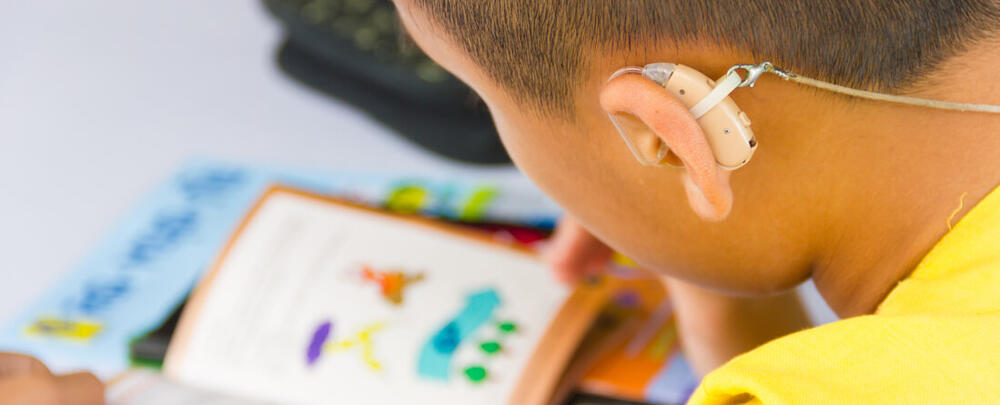
Support for special educational needs in Phoenix is fairly good. Through its Exceptional Student Services division, the Arizona Department of Education supports pupils with learning difficulties and disabilities and outlines the different ways schools can provide that support.
Under the federal Individuals with Disabilities Education Act (IDEA), an Individualised Education Programme (IEP) team assesses each child and sets the level of support they need. Where possible, schools accommodate pupils within mainstream classes. For more severe disabilities, specialist facilities are on hand.
Phoenix also has many specialised schools for pupils with learning difficulties or developmental, emotional, physical, and behavioural needs. Some are publicly funded charter schools; others are tuition-based private schools. Families who cannot cover private special-needs fees can apply through the ESA programme. Children with an IEP or a documented disability qualify for larger ESA awards than the standard amount.
Useful links
Tutors in Phoenix
Whether your child needs to catch up in a particular subject or wants to get ahead with some support for their college entrance exams, there are lots of private tutors on hand to help in Phoenix. To find a good private tutor for your child, start by asking for recommendations at your child's school or from other parents in the neighbourhood. Otherwise, an established tutoring service is a reliable route.
A private tutor can help a student close gaps in their knowledge, push ahead in a subject, prepare for college entrance exams, or simply build confidence. Arizona's ESA programme can also be used for private tutoring, so families with an account can put those funds towards it.