Print
  • Hold down Ctrl key and select the sections you want to print. If using a Mac, hold down the Cmd key.
  • Use Ctrl + A or on Mac, Cmd + A to select all sections (if you are using the Chrome browser).
  • Click "Apply" and the site will customise your print guide in the preview below.
  • Click the "Print" button and a print pop up should appear to print to your printer of choice.

Moving to Phoenix

Living in Phoenix as an expat

Most people are moving to Phoenix for the sunshine and the desert scenery, or for the low state taxes and the jobs in semiconductors, healthcare, finance, and data centres. On weekends, they hike, cycle, play golf, and camp out in the desert.

The trade-off is the summer, which lasts from May to September and is hotter than almost anywhere else in the country. The cost of living is above the US average these days, too. People keep moving to Phoenix all the same.

Around 1.7 million people live in Phoenix, the fifth-most-populous city in the USA and the largest in Arizona’s Valley of the Sun. Very few of them are Arizona natives. Californians, Texans, Midwesterners, and East Coasters have poured in for decades, and international arrivals have now overtaken domestic transplants as the metro’s biggest source of growth. Roughly one in five Phoenix residents was born abroad.

Working in Phoenix

People working in Phoenix are clustered around a handful of sectors, primarily healthcare, semiconductors, technology, finance, logistics, and education. Banner Health, Mayo Clinic, HonorHealth, American Express, Charles Schwab, and Arizona State University are among the largest employers in the Valley of the Sun.

Chipmaking is the story of the decade in Phoenix. TSMC is building a cluster of fabs on a campus in north Phoenix, and Intel has run large operations in nearby Chandler for years. The Greater Phoenix Economic Council already counts more than 140,000 jobs in semiconductor-related occupations across the metro. Data centre and advanced manufacturing firms are following the chips in. Hiring has its ups and downs though, so line up an offer before you move if you can.

Working in Phoenix

Lifestyle in Phoenix

Roller Coaster and Palm Trees Against a Sunset Sky in Phoenix by iStrfry, Marcus on Unsplash

Residents plan their lifestyle in Phoenix around the thermometer. From October to April, they are outdoors constantly; from June to September, they retreat into air conditioning. The museums do well out of that second half of the year. The Heard Museum covers American Indian art and history, and the Phoenix Art Museum is the largest in the Southwest. The Musical Instrument Museum has exhibits of instruments from nearly every country in the world, and a visit to the Arizona Science Center will absorb a child for an afternoon.

Sport is a large part of the social calendar. The Cardinals (NFL), Diamondbacks (MLB), Suns (NBA), and Mercury (WNBA) all play in the metro area, and every February and March, 15 Major League Baseball teams hold their preseason training here in the Cactus League.

Eating out is one of the city’s genuine pleasures, and the Mexican and Southwestern cooking here is the real thing. When the weather turns, everyone moves outside: hiking in the mountain preserves, the Desert Botanical Garden, patio dining, and golf that carries on all winter.

Lifestyle in Phoenix

Cost of living in Phoenix

The cost of living in Phoenix is no longer the bargain it was. Prices here are a few percent above the US average, and housing is more than 10 percent above it. It is still cheap next to California, New York, Boston, or Seattle, and those are the places most new residents are leaving.

The tax side is kinder. Arizona charges a flat state income tax of 2.5 percent, which is the lowest rate of any state that taxes income at all, and property taxes are among the lowest in the country too. For a high earner coming from California, that alone is a substantial saving. Pay has kept up better than it used to, as well: wages in the Phoenix metro have grown faster than in most large American metros over the past few years.

The biggest downside is the electricity bill. The air conditioning is on for months on end, and a summer bill can be several times the winter one.

Cost of Living in Phoenix

Finding accommodation in Phoenix

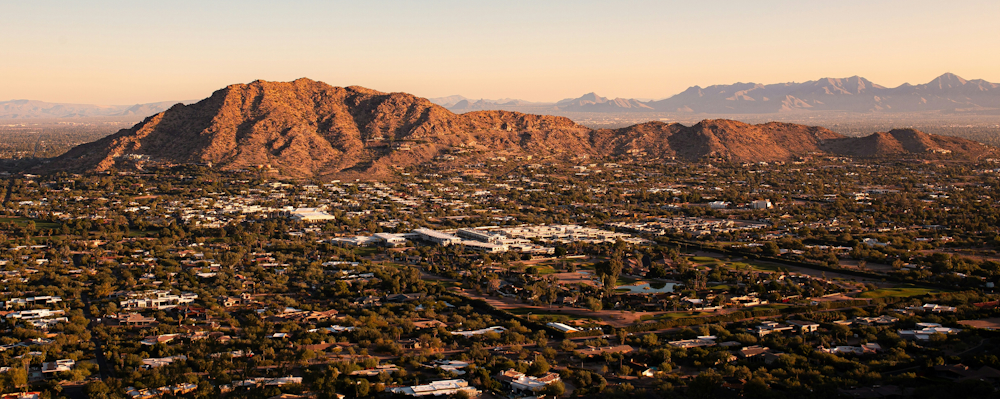
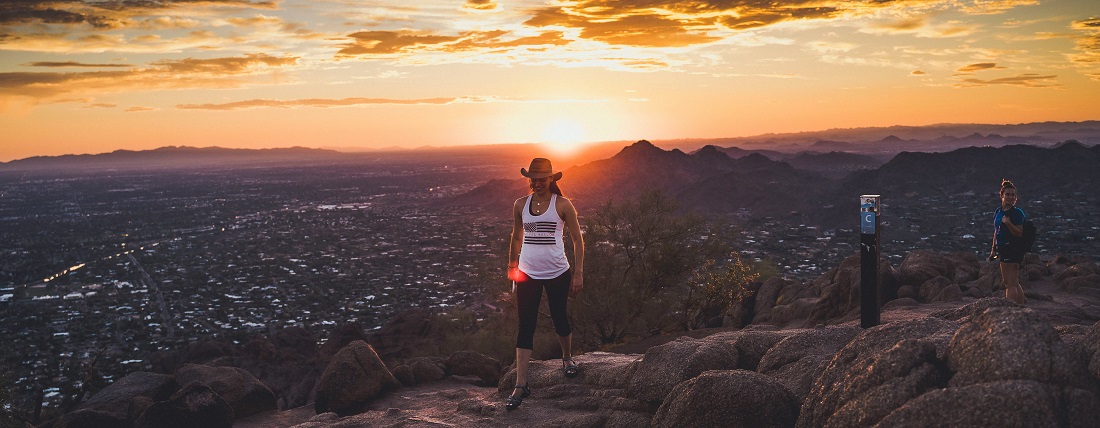
Camelback Mountain Above Residential Neighborhoods at Golden Hour in Phoenix by Rylan Hill on Unsplash

Finding accommodation in Phoenix is easier than in most big American cities. There’s plenty of housing in Phoenix, even if the price is less than ideal. Housing costs more than 10 percent above the US average, although they are still well below what you would pay in California.

Almost every errand here is a drive, so choose your neighbourhood with care. Downtown and Midtown Phoenix are the choices for people who want pavements and light rail. Arcadia, North Central Phoenix, Ahwatukee, and the historic Willo district are the long-standing family favourites. Newcomers who want a new-build home and a garden head to Gilbert, Chandler, Peoria, and Surprise. Scottsdale and Paradise Valley are at the top of the market.

Renting Accommodation in Phoenix 
Best Places to Live in Phoenix

Living in Phoenix with children

Families living in Phoenix with children have it easy for much of the year and plan hard for the rest of it. Phoenix is the healthcare hub of the Southwest, and Phoenix Children’s Hospital, Mayo Clinic, Banner Health, and HonorHealth all run major facilities here.

Summer is the part nobody warns you about. Families rearrange their lives around it. Residents start the day early and keep the children indoors through the afternoon, and a pool is not a luxury in Phoenix. Schools move break inside when the heat is dangerous, and the city and the county run free cooling centres through the summer. Visit in August before you commit to anything.

Healthcare in Phoenix

Finding a school in Phoenix

School districts here assign children by catchment, which means that finding a school in Phoenix and finding a home are mostly the same job. But Arizona also runs open enrolment, so you can apply to any public school in the state that has space, and a great many families do. The state grades every public school from A to F and publishes the results, so you can check a school before you sign a lease.

Charter schools are free and publicly funded, although they are run independently of the districts. Some of the highest-ranked charters in the country are in the Valley, including the BASIS and Great Hearts networks, and places can go quickly. There are also some magnet schools that specialise in subjects such as science, technology, languages, and the performing arts. There are hundreds of private schools across the metro, and a handful teach the International Baccalaureate, which could save international arrivals trouble if they expect to move country again.

Education and Schools in Phoenix

Getting around in Phoenix
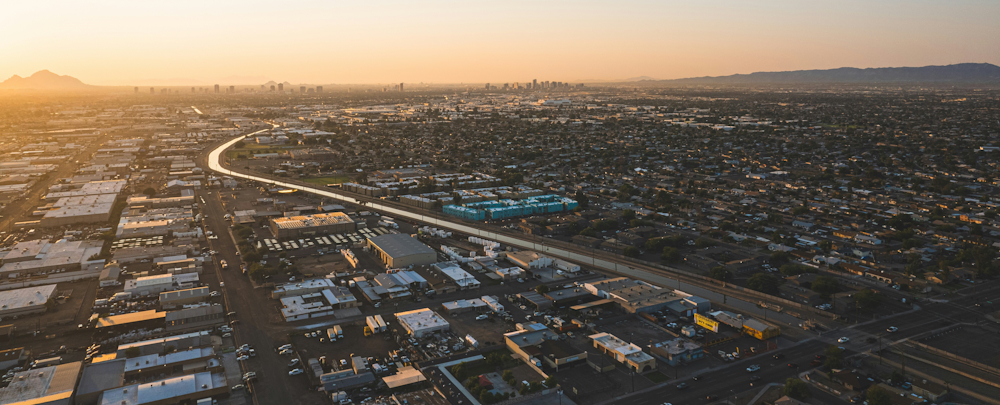
Road Winding Through Phoenix Neighborhoods at Sunset in Phoenix by Matthew Hamilton on Unsplash

Getting around in Phoenix means driving, and anyone arriving from San Francisco, New York, Boston, or Chicago should brace for it. Valley Metro runs a two-line light rail system between downtown Phoenix, Tempe, Mesa, and South Phoenix, but it only covers a thin slice of a city that is more than 500 square miles (1,300km²) in size. Valley Metro also runs the buses, although the service is sparse in the suburbs. Downtown and Midtown are properly walkable, but almost nowhere else is.

Waymo has operated driverless taxis here for longer than anywhere else in the world, and they now cover a large part of the metro alongside Uber and Lyft. Cyclists have plenty of bike lanes and paths to work with, although almost nobody rides far between June and September.

Phoenix Sky Harbor International Airport is three miles (5km) from downtown, which makes it one of the best-placed big airports in the country. You can fly nonstop to London, Paris, Taipei, and most large North American cities, and the free PHX Sky Train links the terminals to the light rail.

Public Transport, Driver’s Licences and Driving in Phoenix

Climate and weather in Phoenix

The climate and weather in Phoenix are the reason most people come, and occasionally the reason they leave. The sun shines on around 300 days a year, and more than 200 of those are cloudless. Winter has perfect weather, with warm days, cool nights, dry air, and pool weather in February.

Summer is a different proposition. Phoenix has around 111 days a year at or above 100°F (38°C), and routinely exceeds 110°F (43°C) in July. The past few years have been the hottest on record. People move indoors or get up at dawn, and air conditioning is not considered optional.

The monsoon season is from mid-June to the end of September, and about half the year’s rain falls in it. You can expect violent thunderstorms, flash floods, power cuts, and haboobs, the walls of dust that can blot out the skyline in minutes. The relief is short, an afternoon at a time.

Climate Charts for Phoenix

Whatever brings you to the Valley of the Sun, whether it is the winter sunshine, the low state taxes, the job market, or housing that costs a fraction of California’s, you will settle in fastest if you plan around the heat and buy a decent car. Give the city a summer before you judge it. The other eight months are the ones people stay for.
Weather in Phoenix

As a result of its location in the Sonoran Desert, Phoenix has a hot, dry climate and is pretty much sunny all year round. In fact, Phoenix receives the most sunshine of any major city in the world. Despite being dubbed the ‘Valley of the Sun’, Phoenix actually has four seasons, even though the transition between them is rather subtle. Most importantly, though, new arrivals moving to Phoenix must prepare for a climate of extremely hot and humid summers and mild winters.

The weather in Phoenix is hot and dry, and the sun is out for much of the year thanks to the city’s Sonoran Desert location. It is often ranked the sunniest major city in the world. Despite being dubbed the ‘Valley of the Sun’, Phoenix actually has four seasons, even though the transition between them is rather subtle. New arrivals should prepare for extremely hot summers and mild winters.

In summer, temperatures can reach up to 110°F (43°C). Averages are around 100°F (38°C). Unlike most desert locations, which experience drastic temperature fluctuations between day and night, evening temperatures do not drop that noticeably in Phoenix because of the urban heat island effect.

Although rainfall is minimal throughout the year, humidity is higher during the summer months, when the North American monsoon arrives. The extra moisture can also contribute to flash floods, destructive winds, dust storms, and lightning. In a strong monsoon, a haboob (a towering wall of dust) can sweep across the valley, and visibility drops to almost nothing.

Phoenix is in Maricopa County, which has some of the highest ozone pollution levels in the US. Ozone forms in sunny climates, and Phoenix is particularly prone to it. As Phoenix grows and more people drive, vehicle emissions add to the problem. People with respiratory conditions may find the city’s air quality hard going, especially in the summer ozone season.

There is a different issue in winter. Temperature inversions are common: warm air is above the cooler air near the ground, so wood smoke and other particulates cannot disperse. To keep the air clearer, Maricopa County issues ‘no burn day’ advisories.

Although the surrounding mountain tops may receive a dusting of snow, winters in Phoenix are largely pleasant. The winter average is around 54°F (12°C). Many newcomers come to relish the cooler months: the weather is milder, and the summer ozone haze has cleared, so the skies are often a bright blue.


Pros and Cons of Moving to Phoenix

The pros and cons of living in Phoenix deserve careful weighing before you commit to a city built in the middle of the Sonoran Desert. Newcomers who arrive with their eyes open settle in far faster than those sold on the sunshine alone.

Below are the main pros and cons of moving to the Valley of the Sun, drawn from the numbers and from what residents themselves say about the place.


Accommodation in Phoenix

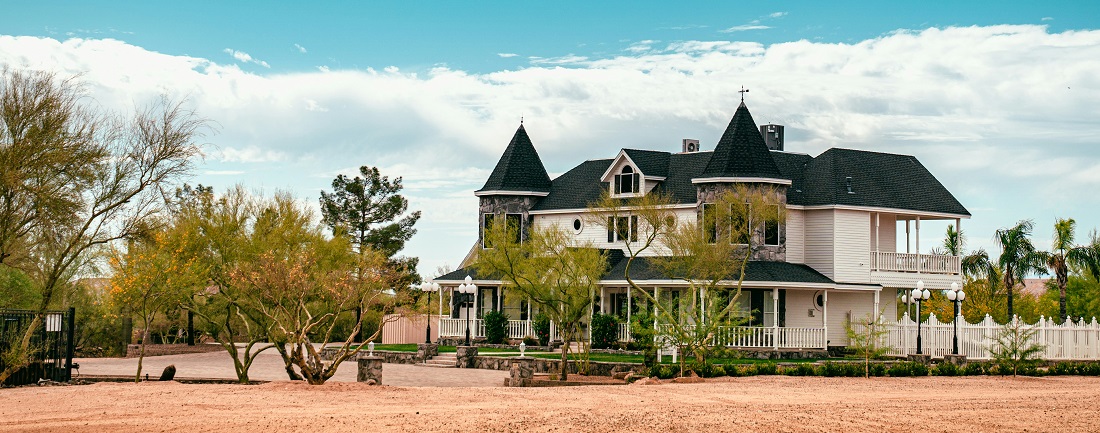
Victorian house in Phoenix by iStrfry, Marcus

+ PRO: Diverse range of options

House hunting here covers a lot of ground: a high-rise apartment downtown, a craftsman bungalow in a historic district such as Willo or Coronado, a family home with a pool in the suburbs, or a new build in a master-planned community out on the fringe of the Valley. Arcadia, Paradise Valley, Scottsdale, and the Biltmore area are the priciest addresses, and you get the most for your money on the west side.

Sellers pushed prices hard through the pandemic years, but the market has since cooled off. Buyers can negotiate again, and Phoenix is still cheaper than Los Angeles, Seattle, Boston, or the Bay Area, although it is no longer the bargain it was a decade ago.

- CON: HOAs run most of the new-builds

Developers put a homeowners’ association on most newer housing in the Valley, and the restrictions are stricter than transplants may expect. Read the association’s documents before you sign. Owners are regularly caught out by the rules on solar panels, casitas, short lets, and even the colour of the front door. Fees are modest by US standards, but the enforcement is not.


Cost of living in Phoenix

+ PRO: Reasonable cost of living

Living costs here are a shade above the US average, although this is still one of the cheaper big cities to land in, especially compared to the coastal cities. Housing is the main reason for the gap, and you get more square footage for your money than you would in California or the Northeast.

Groceries, petrol, utilities, and eating out are all close to the national average. Utilities are the one to watch, because air conditioning through a Phoenix summer is not cheap.

+ PRO: The lowest flat income tax in the country

Arizona charges a flat state income tax of 2.5 percent, the lowest flat rate in the US, and high earners keep noticeably more of their pay than they would in California or New York. There is no state estate tax and no inheritance tax, and property tax rates are among the lowest in the country. For anyone moving on a senior salary, this is one pro can offset several of the cons.

Cost of Living in Phoenix


Working in Phoenix

+ PRO: A strong local economy

Job hunting is a far better proposition here than it was a decade ago. Employers are hiring across semiconductors, healthcare, aerospace, and financial services, and the metro has been adding jobs faster than the country as a whole.

The big change is silicon. TSMC has built out its fabs in north Phoenix, and its suppliers have followed into the West Valley, while Intel and Microchip employ thousands of engineers over in Chandler. Data centres, aerospace and defence, the big hospital networks such as Mayo Clinic and Banner Health, and a growing financial services back office make up much of the rest of the professional job market. Tourism and hospitality still employ large numbers of people, although the pay is nearer the bottom of the scale.

- CON: Salaries are lower than on the coasts

Pay in Phoenix is lower than you would earn for the same job in San Francisco, Seattle, Boston, or New York. The gap is narrowest in semiconductors, engineering, healthcare, and finance, where salaries are competitive with most of the country, and widest in hospitality and retail, where wages are genuinely modest. You do get more for your money here, and most transplants find that the shorter commute and the cheaper mortgage make up the difference.


Lifestyle in Phoenix

Camelback Mountain hiking peak by Diego Lozano

+ PRO: A dream for outdoor enthusiasts

The outdoors is the best of it. You can be hand-over-hand up the boulders of Camelback Mountain before work and out on the Sonoran Preserve trails on the weekend. Kayakers and tubers head for the Salt River, and Phoenix’s world-famous golf courses need no introduction. One caveat: the city closes Camelback and Piestewa Peak when an excessive heat warning is in force, so summer hiking happens at dawn or not at all.

+ PRO: Arts and culture are flourishing

The arts scene is better than the city’s strip mall reputation suggests. The Phoenix Art Museum is the largest in the southwest, and you can see photography from the University of Arizona’s Center for Creative Photography in its Norton gallery, although the centre itself is down in Tucson. The Heard Museum has one of the world’s finest collections of Native American art. The S’edav Va’aki Museum, until recently the Pueblo Grande Museum, is built on a Hohokam platform mound and canal system that predates the city by well over a thousand years.

For the performing arts, the Phoenix Symphony, Arizona Opera, and Ballet Arizona are the three resident companies at Symphony Hall downtown. The Herberger Theater Center next door is home to the Arizona Theatre Company and Childsplay, touring productions come through the Orpheum Theatre, and you can catch the big arena tours at the downtown venue where the Suns and Mercury play.

- CON: State politics may take some adjusting to

Arizona politics can come as a jolt if you arrive from a deep blue city. State lawmakers are conservative on taxes, immigration, policing, and school funding, and gun ownership is common and openly accepted. Phoenix itself is a different animal. The city has elected Democratic mayors for years, voters in Maricopa County have switched between the parties in recent presidential elections, and downtown is as liberal as anywhere in the southwest. What you will not find, in either direction, is a political monoculture.

+ PRO: Sports all year

Few US cities have a team in every major league, and this is one of them: the Suns in men’s basketball and the Mercury as one of the most successful franchises in the WNBA, the Cardinals in football, and the Diamondbacks in baseball. Then there is spring training. Fifteen Major League Baseball teams decamp to the Valley every March for the Cactus League, and the ballparks here are small enough that you get to sit right next to the action.

+ PRO: The weekend escape hatch

When Phoenix gets too much, Sedona’s red rocks are about a two-hour drive north, Flagstaff and its pine forests about two and a half, and the South Rim of the Grand Canyon a bit over three. Tucson is 90 minutes down I-10. A bit farther away, Las Vegas is around five hours away, and San Diego is closer to six.


Weather in Phoenix

+ PRO: 300 days of sunshine a year

Plenty of people move here for the climate and nothing else. Around 300 days a year are sunny or partly sunny, and roughly 210 of those are cloudless from dawn to dusk. From October through April, the weather is close to faultless, and newcomers will love spending those months on the trails, on the golf course, at a spring training game, or beside the pool. Winter here is what other cities call a good summer.

- CON: The summer is brutal

No amount of dry heat talk prepares you for a Phoenix summer. Highs above 110°F (43°C) are routine from June to September, and nighttime lows often don’t drop below 90°F (32°C) because of all the concrete, so the city never really cools off. For about four months of the year, you live indoors and go out after dark, and the city opens cooling centres for people who cannot escape it.

Allergies are another complaint. Olive, mulberry, ash, and juniper pollen are in the air as early as February, not to mention the Bermuda grass in the summer, and ragweed in the autumn. Phoenix does not have an allergy season so much as an allergy year.

- CON: Monsoon dust storms

The Valley gets a handful of true haboobs (mile-high walls of dust) in a typical year, mostly between June and September, and each blows through in well under an hour. Ordinary blowing dust is more frequent, and visibility on the highway can drop to nothing in seconds.

- CON: The water question is not going away

Much of the city’s water comes from the Colorado River, which has been in long-term decline. Phoenix has already refused to certify groundwater for some proposed developments on the far fringes of the Valley, and residents are paying for the squeeze. The city manages its water better than most desert cities, and the central neighbourhoods are well covered, so this is a question of cost and constraint rather than taps running dry.

Weather and Climate in Phoenix


Education in Phoenix

- CON: Public school funding is thin

Arizona spends less per student than almost any other state, and it shows in class sizes and teacher pay. Families in the Valley choose the school district first and the house second, and the difference between neighbouring districts is stark. Schools in Scottsdale, Chandler, Gilbert, and the northeast Valley outperform the state average by a wide margin, while parts of central and west Phoenix struggle.

+ PRO: School choice is unusually wide

Arizona runs one of the largest charter school sectors in the country, and under open enrollment, your child is not tied to the school at the end of the road. The state also funds Empowerment Scholarship Accounts, which parents can put towards private tuition or homeschooling. Phoenix has a long-established set of private and international schools, and several of them offer the International Baccalaureate.


Getting around in Phoenix

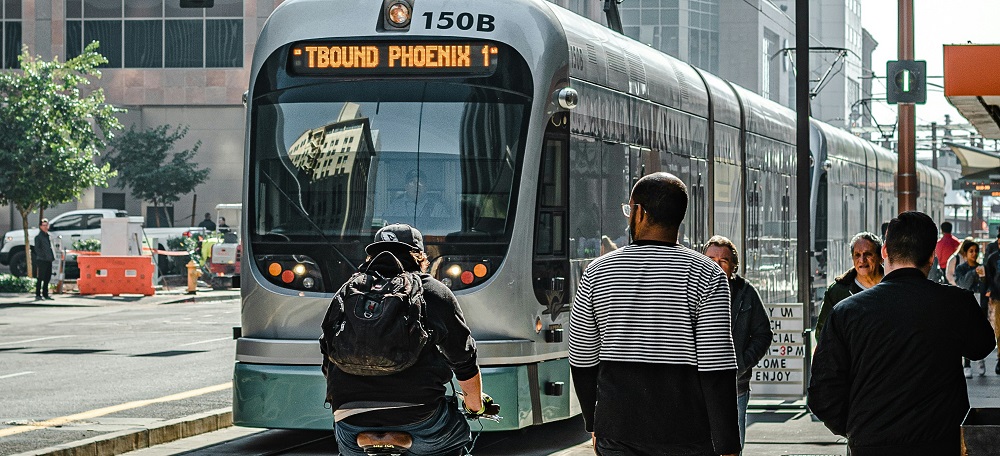
Light rail in Phoenix by Jared Murray

- CON: Public transport is limited

Life without a car is hard work here. Valley Metro runs a two-line light rail network of about 35 miles (56km), but only a thin slice of a metro this size is within walking distance of a station, and the buses are slow.

+ PRO: Phoenix is easy to navigate

Once you have a car, this is one of the easiest cities in America to find your way around. The street plan is a grid with numbered avenues to the west of Central Avenue, numbered streets to the east, and everything counted outwards from Washington Street. Just based on an address’s streets, you can place it on a map before you type it into anything. The Valley has a ring of freeways to move you between the suburbs, and traffic is mild for a metro of this size.

+ PRO: Sky Harbor is on your doorstep

Sky Harbor International Airport is about 10 minutes from downtown and 20 minutes from most central neighbourhoods, which is close to unheard of for a hub of its size. American Airlines and Southwest both operate large bases there, so you can fly nonstop to nearly every sizeable US city, and there are direct flights to Europe. For anyone who flies for a living, this alone offsets a good deal of the heat.

Getting Around in Phoenix

Working in Phoenix

It may come as a surprise to those thinking about working in Phoenix that, despite the city’s arid desert climate, its economy was primarily built on agriculture and natural resources. Since the mid-20th century, though, industry in Phoenix has diversified rather dramatically.

Today, the biggest drivers behind Phoenix’s economy are healthcare and technology, along with financial services, aerospace, and a fast-growing semiconductor manufacturing sector. The chipmaker Intel runs a large campus in nearby Chandler, and Taiwan’s TSMC has built a major semiconductor complex in north Phoenix. Together, they have drawn thousands of manufacturing and engineering jobs to the area.

Several big names are headquartered in the city, including the moving and self-storage company U-Haul International and the healthcare system Banner Health, Arizona’s largest private employer. American Express employs thousands of people at its Desert Ridge campus, one of the largest private workplaces in the Valley.

The city is also home to several Fortune 500 companies, among them the electronics distributor Avnet, mining group Freeport-McMoRan, waste management firm Republic Services, and grocery chain Sprouts Farmers Market.


Job market in Phoenix

Job market in Phoenix

The job market in Phoenix is at its best for newcomers who arrive with in-demand skills, and the metro has been one of the fastest-growing in the country in both jobs and population. Work is not guaranteed, though, and some new arrivals experience longer job searches than they expected, particularly outside healthcare and technology. It pays to line up prospects before you move.

Arizona’s state government has worked hard to make the state attractive to employers, and as the state capital, Phoenix has been the biggest beneficiary. It has cut red tape, kept taxes low, recognised out-of-state occupational licences so that newcomers can start working sooner, and courted large manufacturers and chipmakers. Employers have responded by adding jobs across the city.

New arrivals with strong qualifications and experience in healthcare, technology, education, or finance do particularly well. There is also steady demand in sales, office support, transport, and warehousing, as Phoenix has become a major logistics hub for the Southwest. Tourism is another reliable source of work. Visitors come for the resorts, the golf, the spring training games, and the mild desert winters, so hospitality jobs can generally be found for much of the year.


Finding a job in Phoenix

Most people who are intent on finding a job in Phoenix begin their search online. Jobseekers can browse job portals, use professional networks such as LinkedIn, apply directly through company career pages, or enlist a recruitment agency. It still helps to know people though, so ask around your neighbourhood and network once you arrive. You’ll often hear about openings this way before they are ever advertised.

Applying for a Visa for the USA 
Getting a Work Permit for the USA

Useful links


Work culture in Phoenix

Work culture in Phoenix

The general work culture in Phoenix is known for being less cutthroat and competitive than in other prominent economic hubs, and employees in Phoenix report experiencing relatively high levels of job satisfaction and security. Many employers offer perks that help staff strike a healthier work-life balance and stay productive. Flexible hours, remote and hybrid work, job sharing, and compressed workweeks are all fairly common.

Many companies across industries such as healthcare, education, technology, and finance also offer their workers educational support and opportunities for career progression, which are important factors for staff retention. While salaries in Phoenix may be slightly lower than the national average, this seems to be a fairly minor trade-off considering the other lifestyle benefits available to workers.

Phoenix is a good fit for people starting out in their careers, as well as those looking to ease off and win back some family time through a better work-life balance. Entrepreneurs are drawn here too, thanks to Arizona’s business incentives.

Business Culture in the USA

Cost of Living in Phoenix

If you’re considering a move to Phoenix, you’ll need to calculate your projected monthly expenses to establish whether the cost of living in Phoenix makes financial sense for you and your family. The cost of living in Phoenix is roughly 5 to 10 percent higher than the US national average, and it is far lower than in coastal cities such as Los Angeles or San Francisco. Phoenix isn’t necessarily considered an expensive city, and its quality of life is a major draw for newcomers.

The one expense that catches newcomers off guard is summer cooling: you’ll need to pay far more for electricity from roughly June to September, when the air conditioning runs almost nonstop. On the plus side, Arizona has one of the lowest flat state income tax rates in the country, and property taxes are low too, so higher earners in particular keep more of their pay.

Most people in Phoenix can afford to live fairly well on an average salary. Weigh the cost of living against your likely income and your household’s needs before you commit.


Cost of accommodation in Phoenix

The cost of accommodation in Phoenix is around 15 percent higher than the national average and will usually take up the largest portion of your monthly budget. You’ll find that homes here tend to be good value on size and quality, although some residents feel the city is no longer the bargain it once was.

Investors see strong potential in Phoenix, and developers have kept building across the city as a result. Phoenix’s population is still growing, and a wave of new apartments has helped keep rents in check.

Renting Accommodation in Phoenix


Cost of transport in Phoenix

Although public transport fares in Phoenix are lower than in US cities with more developed networks, you’ll find the system useful only along certain corridors. Valley Metro has extended the light rail and added service, but many residents still find the public transport infrastructure inadequate.

Taxi fares in Phoenix have become more competitive since ride-hailing services took hold in the city. Still, it’s not practical to rely on taxis every day, given the long distances you’ll likely have to cover in Phoenix.

Most Phoenix residents own a car, and one is close to essential for getting around here. The average Phoenix commute is around 30 minutes each way, and petrol, insurance, maintenance, and registration soon add up.

Public Transport and Driving in Phoenix


Cost of groceries in Phoenix

If you’re looking to reduce the cost of groceries in Phoenix, buy seasonal produce and avoid brand names and imported products, as these tend to be pricier. Buying in bulk at national wholesale retailers like Costco is another way to save on groceries. WinCo Foods and Aldi are widely regarded as the most affordable supermarket options in Phoenix. Fry’s, the largest grocery chain in the area, also has competitive prices. For more premium speciality products, shops such as AJ’s Fine Foods are popular among Phoenix residents.

For the freshest produce at reasonable prices, visit one of the farmers’ markets run by Arizona Community Farmers Markets.


Cost of entertainment and eating out in Phoenix

The cost of entertainment and eating out in Phoenix largely depends on your lifestyle. Even on a tight budget, you’ll find plenty to enjoy, whether you’re into the arts, live music, nightlife, or the local food scene.

Your family can enjoy many of the city’s attractions at little to no cost. Phoenix’s famously sunny weather is made for the outdoors, and you can spend days exploring the city’s gardens, parks, reserves, and hiking trails. Desert hikes are among the most popular free activities for locals and visitors alike. The Phoenix Art Museum has free admission on First Fridays and lets you pay what you wish on Wednesdays. The Heard Museum has its own free days on First Fridays and at other points through the year.

Although Phoenix’s culinary scene has grown steadily, it is remarkably unpretentious. The number of fine-dining restaurants is relatively small compared to cities with stronger gastronomic traditions, such as New York or Los Angeles, but you can eat well for a reasonable price.

Lifestyle in Phoenix


Cost of education in Phoenix

Parents may need to factor in the cost of their children’s education in Phoenix. Many of these costs will depend on which schooling option they choose.

Phoenix has some excellent public schools, and its charter and magnet schools are free to attend too. BASIS charter schools in Phoenix regularly top the national rankings. Great Hearts Academies is another highly ranked charter network, so you have solid alternatives to traditional public schools.

The city also has several private schools that offer smaller class sizes and a different teaching approach, along with a greater scope in areas like sports, art, drama, and music. Private school fees can be high, especially once you add in extras like uniforms, textbooks, extracurriculars, and field trips.

Arizona has well-established systems to support students with special needs and disabilities at no extra cost to their families. Arizona’s Exceptional Student Services ensures that public education agencies comply with federal requirements and maintain quality standards across schools. If you choose to add private tutoring outside the public system, you’ll foot the bill yourself.

Education and Schools in Phoenix


Cost of healthcare in Phoenix

The cost of healthcare in Phoenix is a bit below the national average, one of the few categories where you’ll pay less here than elsewhere in the US. As the state capital, Phoenix has become a major healthcare hub and has some of the state’s leading cancer and cardiac centres.

While you’ll have access to excellent healthcare as a Phoenix resident, quality care doesn’t come cheap, despite that lower-than-average index. Before relocating, you should investigate the different health insurance plans available. If you’re moving to Phoenix for a lucrative job offer, try to negotiate a medical insurance contribution into your employment contract to save on this cost.

Healthcare and Health Insurance in Phoenix


Cost of living in Phoenix chart

Prices are listed in US dollars (USD) and may vary depending on the product and service provider. The list below shows average prices for Phoenix in July 2026.

Accommodation (monthly rent)
One-bedroom apartment in the city centreUSD 1,800
One-bedroom apartment outside the city centreUSD 1,400
Three-bedroom apartment in the city centreUSD 3,000
Three-bedroom apartment outside the city centreUSD 2,200
Shopping
Eggs (dozen)USD 5
Milk (1 litre)USD 0.85
Rice (1kg)USD 5.70
Loaf of white breadUSD 4
Chicken breasts (1kg)USD 13.50
Cheese (500g)USD 7
Eating out
Three-course meal for two at a mid-range restaurantUSD 90
Big Mac MealUSD 12.50
Coca-Cola (330ml)USD 3
CappuccinoUSD 6.50
Local draft beer (500ml)USD 2.50
Utilities
Mobile phone monthly plan with calls and dataUSD 70
Internet (uncapped ADSL or cable, average per month)USD 80
Basic utilities (average per month for a standard household)USD 265
Transport
Taxi rate (per kilometre)USD 1.50
Bus/train fare in the city centreUSD 2
Gasoline/petrol (per litre)USD 1

Accommodation in Phoenix

People hunting for accommodation in Phoenix have the upper hand at the moment. Builders put up tens of thousands of new apartments across the Valley in a short space of time, and developers and landlords are still working through that wave of supply. 

Vacancy is well above the historical norm, and rents are lower than they were a year ago in Phoenix, let alone what you would pay in Los Angeles, Miami, New York, or San Francisco. Long-standing residents are quick to push back on the ‘cheap Phoenix’ label, and they have a point. Rents are far higher than they were a decade ago, and local wages have not kept up, so you are only getting a bargain by coastal standards.


Areas and suburbs in Phoenix

Victorian house in Phoenix by iStrfry, Marcus

Think about the commute first when you compare the neighbourhoods in areas and suburbs in Phoenix, because the city is enormous and most people drive. Wherever you end up, the outdoors will be close. The city has over 180 parks and eight municipal golf courses. It also conserves more than 41,000 acres (16,600ha) of desert park and mountain preserve, plus over 200 miles (320km) of trails.

Those who want to cut the commute should consider Downtown Phoenix and Alhambra. Both are well served by light rail and the freeway network, and both are close to the city’s biggest employers. Young professionals, students, small families, and remote workers who want a walkable base all gravitate here, and its restaurant scene is the best in the city.

Families with deeper pockets look to Paradise Valley. Note that it is a separate incorporated town with its own council, so you will deal with a different authority for services and permits. The public schools are among the best in the state, and the homes are large. The Phoenix Mountains are on the doorstep.

Encanto Village is small and a favourite with families who want green space within walking distance. Encanto Park and the neighbouring amusement park are the draw. Valley Metro runs the B Line light rail straight down Central Avenue here, so you can reach downtown without a car. Valley Metro split the network into two lines in 2025. The A Line is the east-west route, and the B Line is the north-south one. Valley Metro extended the B Line as far south as Baseline Road.

Read more about the Best (and Worst) Neighbourhoods in Phoenix.


Types of accommodation in Phoenix

Newcomers who have never set foot in the city picture the types of accommodation in Phoenix as rows of cookie-cutter houses and little else. Spend an afternoon on the property portals, and you will drop that idea fast. The Valley of the Sun has Spanish Colonial Revival, mid-century modern, ranch, and adobe-inspired stock, and developers have piled glassy downtown towers on top of all that.

Apartments

Apartments in Phoenix are what you will find near downtown, and developers have concentrated nearly all the new supply there. Most are recent and sleek. Developers built them for the rental market. You will pay more for a central apartment than for comparable space further out, although landlords have softened that difference to fill the new blocks. Ask about concessions before you sign, because this is the corner of the market where landlords are working hardest to fill units. Single professionals and couples new to Phoenix tend to start here.

Condos

Condos are the other common option, mostly near the city centre, although you will find pockets further out. They are much like apartments and are available in a range of sizes. The difference is the shared facilities: a condo complex will usually have a laundry, a fitness centre, a pool, and gardens. Newcomers often like the setup because it’s easy to meet neighbours. Check the homeowners’ association rules before you commit, though. HOAs are near universal in the Valley. They charge monthly dues, and they can dictate everything from pets to what you park on the drive.

Historic bungalows

Historic bungalows are concentrated in the older, arty districts of Phoenix: Roosevelt, Willo, Coronado, and Encanto Palmcroft. Locals also call them Craftsman homes. Expect wood and stone, deep porches, built-in cabinetry, and proper fireplaces. These houses suit people who want the character of the Arts District and can live with the quirks of a century-old building. One of those quirks is insulation – it’s possible to spend a small fortune cooling a poorly insulated period bungalow in July, so ask to see a summer electricity bill before you sign anything.

Family homes

You’ll get far more choice of family homes in Phoenix once you leave the centre. Buyers come for the space and because prices are still well below California and the Northeast, even after a decade of steep rises. You can find Colonial Revival, Tuscan-style villas, ranch houses, and mid-century modern within a few streets of one another. Most family homes have a pool, which is a godsend on a scorching summer afternoon.

Lifestyle in Phoenix


Finding accommodation in Phoenix

It’s best to start finding accommodation in Phoenix before you have even booked a flight. Spend a few evenings on the property portals, and you will learn what your budget can actually buy, which suburbs fit the way you want to live, how long landlords are waiting to fill a listing, and what incentives they are dangling to shift them.

Once you have a shortlist of neighbourhoods, you can approach real estate agents who work those specific patches. They know the local stock and what is about to come up. They will often be able to show you properties before the listings go public. In Phoenix, the landlord normally pays the leasing commission, so an agent generally costs a tenant nothing. Confirm that with anyone you engage, because a renter who hires their own agent may be asked to cover the fee.

A relocation company will act on your behalf if your employer provides one. They assess your preferences and shortlist properties for you to view. Newcomer groups on social media are also worth joining for listings that never make it to an agent.

Useful links


Renting accommodation in Phoenix

Signing a lease

Renting accommodation in Phoenix is a tenant’s game at the moment, and you should use that. Landlords built ahead of demand and are now competing to fill units, so negotiate on the rent, the free weeks, the pet fee, and the length of the term. Tenants still snap up property in the sought-after pockets, usually the ones with strong public schools or a short hop to downtown, so be ready to act there. Everywhere else, take your time.

One local regulation is important to know. The city requires landlords to keep habitable rooms at or below 82°F (28°C) when air conditioning is installed, or 86°F (30°C) when an evaporative cooler is installed. It's a habitability breach to have a broken air conditioner in July, so get the landlord’s out-of-hours repair number in writing before you sign, and ask how old the unit is.

Making an application

You will find making an application in Phoenix much like making one anywhere else in the US. You submit through the agent or straight to the landlord, and the landlord then runs reference and credit checks.

Landlords generally want to see a strong credit score and a household income of at least three times the rent. Expats may hit a wall here – no US credit file means no credit score. Get a Social Security number and a US bank account started early. In lieu of a long-standing credit score, you could offer an employment contract, a letter from your employer, several months of bank statements, and a larger deposit if the landlord will take one.

Leases

A standard lease in Phoenix is 12 months long, and it’s either renewed at the end of the term or you move on. It may be possible to negotiate a shorter term or a month-to-month arrangement, although you usually pay a premium for the flexibility. Renewal used to mean an automatic rent increase, but you can push back in a soft market, and most landlords will do a deal to keep a good tenant.

As of 2025, Arizona cities can no longer charge the rental tax (a transaction privilege tax) on long-term residential leases. If you see a rental tax line on a lease or a rent statement for a stay of 30 days or more, query it.

Deposits and fees

Under Arizona law, a landlord cannot ask for a refundable security deposit of more than one-and-a-half times the monthly rent. Your landlord does not have to hold it in an interest-bearing account or pay you interest on it. The landlord has to state the purpose of any non-refundable fee in writing, and anything not labelled non-refundable is refundable by default.

At move-in, the landlord should give you a signed copy of the lease, a form for logging existing damage, and a written notice that you may attend the move-out inspection. Photograph every room on the day you get the keys, date the images, and send the landlord a copy.

Once you hand back the keys, the landlord has 14 business days to return the deposit along with an itemised list of any deductions. If the landlord misses that deadline, you can sue for twice the amount wrongfully withheld. Landlords can deduct for damage, but ordinary wear and tear is excluded.

Terminating the lease

Terminating the lease is straightforward if you see the term out. A fixed-term lease ends on the date printed on it, and Arizona does not require you to give statutory notice, although plenty of leases add their own non-renewal clause, so read yours carefully. On a month-to-month arrangement, either side gives 30 days’ written notice before the next rent day.

Leaving early is the expensive route. You are liable for the rent until the property can be relet, although your landlord has to make reasonable efforts to find a new tenant and cannot simply leave it empty at your expense. Some leases include a buy-out clause, and that is usually the cleanest exit if you can negotiate one.

There are two exceptions for ending the lease. Active duty military personnel with deployment or change of station orders can terminate under federal law, and victims of domestic violence or sexual assault can terminate under Arizona law with the required documentation.

Renting Accommodation in the USA

Useful links


Utilities in Phoenix

lightbulb and calculator

Utilities in Phoenix are mostly the tenant’s responsibility, and your lease should specify which ones you cover. Electricity is nearly always the tenant’s, and it will likely be higher than new arrivals could have estimated. You will need to run air conditioning from roughly May to October, and a summer bill can be several times that of a winter one.

The city bills water, sewerage, and rubbish collection together on one City services account. That account sometimes belongs to the landlord and sometimes to the tenant. The internet and TV are always yours to arrange as the tenant.

Electricity

Two companies supply electricity in Phoenix, and you won’t get a choice between them. Arizona Public Service (APS) covers most of the city, including downtown and the northern and western suburbs. Salt River Project (SRP) covers south Phoenix and much of the East Valley. Look up your address on both service area maps before you assume.

You can set up or transfer service on your supplier’s website. You will need your address, ID, billing details, the date you want service to start, and a deposit if you have no payment history with them. Submit the request at least three days before your move-in date, and photograph the meter on the day you take the keys so you are not billed for someone else’s air conditioning.

Gas

Southwest Gas is the gas supplier in Phoenix, although plenty of homes here have no gas at all. It’s common for accommodation in Phoenix to be all-electric, so check what your property actually uses. If it does have gas, you can set up service online or by phone. You will need ID, your address, billing details, and your move-in date, much as with electricity.

Water

The city supplies water in Phoenix, and bills for water, sewerage, and rubbish collection are all combined on a single City services account. You can set it up through the Phoenix Water Services customer portal. Tenants have to attach a completed lease of at least six months that gives the landlord’s name and address. The city will not accept a month-to-month agreement, in which case either the landlord will fold the water into the rent, or they’ll bill their tenant separately.

Bins and recycling

Bins and recycling in Phoenix are handled by the Public Works Department, which collects rubbish and recycling weekly, on the same day, in separate lorries. Some addresses are collected at the kerb, others from the alley behind the house. Put both the black bin and the blue bin out before 5.30am on collection day.

A tan Green Organics bin is available on subscription in eligible areas, and it takes garden waste only: grass, branches, cactus, and untreated wood. Food scraps do not go in it, which surprises people who arrive from cities with full food waste collection. The city also runs eco stations. These are large roll-off skips in parks and near apartment blocks, where you can drop off recycling outside your collection day. Household hazardous waste (paint, chemicals, electronics, and batteries) is collected from your door by appointment, and you get four bulk collections a year for furniture and white goods.

Useful links

Areas and Suburbs of Phoenix

The best places to live in Phoenix

Choosing where to live in Phoenix comes down to how far you are willing to drive. New arrivals come from other parts of the US as often as from abroad, and the first job is the same for everyone: finding a home where you and your family will be happy.

Phoenix is the centre of the Valley of the Sun, a low-rise sprawl of more than 20 cities and towns between Buckeye in the west and Apache Junction in the east. Most people drive, and they do it on the loop freeways (101, 202, and 303) and on I-10 and I-17. Valley Metro runs two light rail lines along a narrow central spine through Phoenix, Tempe, and Mesa, and that is about it for rail. The address you choose is the commute you get.

To help newcomers, we’ve drawn up a list of some of the most popular areas and suburbs in Phoenix:


City living in Phoenix

City living in Phoenix suits anyone who would rather not spend an hour a day on a freeway. Public transport is thin once you leave the central corridor, so a downtown address is the surest route to a short commute. Valley Metro added a second rail line in 2025, and the A and B lines both stop at the Downtown Hub between Central and First avenues. Rents are higher in the centre, but the trade-off is that concerts, ball games, museums, and late-night food are all a few blocks away.

Tempe is the other pocket where you can live without a car. It is 10 miles (16km) east on the same rail line, and Arizona State University’s main campus, the bars on Mill Avenue, the offices around Tempe Town Lake, and a streetcar line keep it busy all year.

Downtown Phoenix skyline, one of the best areas to live in Phoenix

Downtown Phoenix

Downtown Phoenix is filled with mixed-use towers, and the ground floors belong to restaurants, bars, shops, and the odd grocery shop. Arizona State University’s downtown campus, the law school, the convention centre, and the Diamondbacks’ ballpark are all within a few blocks, and the Suns play a short walk away.

Suburban residents will burn the better part of an hour getting to any of this. Downtown is the one corner of the metro where you can realistically walk or take the light rail to work, a gallery, a game, or dinner.

Roosevelt Row

Roosevelt Row, or RoRo to locals, is the arts district on the northern edge of the downtown core, and it links the centre to the residential streets around it. There are murals on most of the walls, and thousands of people still turn out for the First Friday art walk each month.

The old craftsman bungalows are still there, although there are now mid-rise apartment blocks scattered between them, and rents are higher than they were. Longtime residents will tell you the district has lost some of its scruff. The galleries have thinned out, and the bars and upmarket restaurants have moved in.

Public Transport in Phoenix


Family-friendly areas in Phoenix

Family-friendly areas in Phoenix come down to a trade between drive time and garden space. Plots are bigger in the suburbs, the houses are newer, garages come as standard, and your money can go further than it does near the centre. Several of these ‘suburbs’ are cities in their own right: Mesa is the third-largest city in Arizona, and Chandler, Gilbert, Glendale, and Scottsdale each have their own police departments and school districts.

The bill comes due on the drive. The further out you go, the newer and cheaper the housing and the longer the run into the centre, and a second car stops being optional. Two of the best bets never leave the city limits.

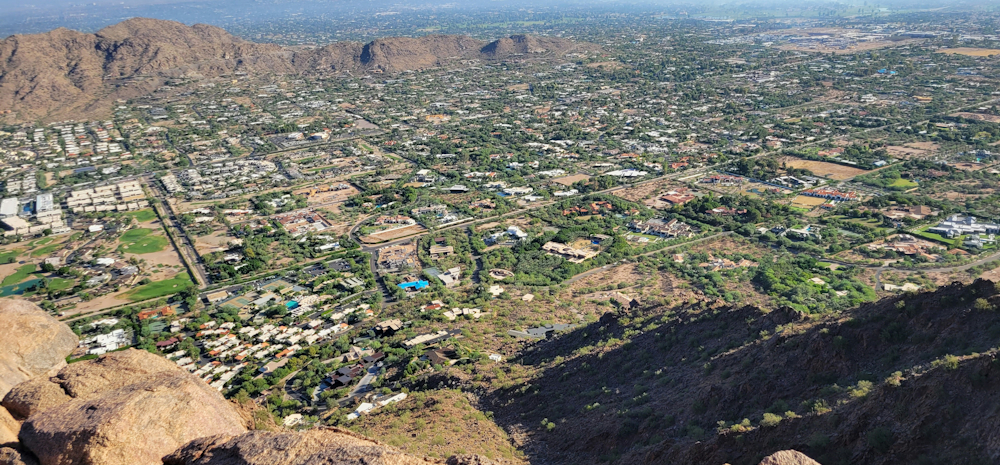
Aerial view of Camelback Mountain's rocky summit overlooking Arcadia and Paradise Valley neighborhoods in Phoenix by Christopher Hagens on Unsplash

Arcadia

Arcadia is the old citrus-grove neighbourhood between Phoenix and Scottsdale, and families will compete hard for this central address. It has ranch houses on big irrigated lots, trees that are mature enough to cast real shade, and trailheads to Camelback Mountain at the end of the road. Prices are well above the city average.

Children here go to Scottsdale Unified schools, and Phoenix Country Day School has been the private option since the 1960s. Sky Harbor is just 15 minutes away, which counts for a lot if you’re a regular flier.

Ahwatukee Foothills

South Mountain Park cuts Ahwatukee Foothills off from the rest of Phoenix, but a lot of residents count that as the main attraction. Locals call it ‘The Tuke’, and it feels like a small town that happens to be inside the city limits.

The Kyrene and Tempe Union schools are among the best rated in the state, and there are trailheads into South Mountain Park at the ends of the residential streets. Commuters here work in the Chandler tech corridor, at Sky Harbor, or in Tempe, all of which are a short drive away. The catch is the mountain: a run to Scottsdale or the West Valley will take a while, even with the Loop 202 South Mountain Freeway on the doorstep.

Gilbert

Gilbert is a family-friendly suburb about 25 miles (40km) southeast of Downtown Phoenix, which is a 30- to 40-minute drive outside rush hour. It is still officially a town, although more than a quarter of a million people live there. Families choose Gilbert for its large homes, neighbourhood parks, low crime rate, and, above all, its public schools, which rank among the best in Arizona.

Cyclists love it here. Gilbert is a designated Bicycle-Friendly Community, and you can ride roughly 60 miles (97km) of multi-use paths between the parks, the canals, the schools, and the town centre. That centre is the Heritage District, an old farm town main street that has turned into the East Valley’s best known restaurant strip, so a night out need not mean a drive into Phoenix.

Surprise

Surprise is a 45-minute drive northwest of Downtown Phoenix, roughly 25 miles (40km) out, and that distance is the price of the space. Young families buy here because the homes cost less than in the East Valley, the crime rate is one of the lowest in Arizona, and nearly all the amenities are new. The public schools include charter and magnet options.

Surprise is one of the fastest-growing cities in Arizona, and there’s been continuous development of subdivisions, retail parks, schools, and the Surprise City Center into the surrounding desert. The Texas Rangers and Kansas City Royals hold spring training at Surprise Stadium every February and March, which brings a month of crowds to the north of the city.

Education and Schools in Phoenix


Upmarket areas in Phoenix

The upmarket areas in Phoenix are, strictly speaking, outside it. Paradise Valley and Scottsdale are separate municipalities on the eastern edge of the city, and both have worked hard to stay that way.

Scottsdale, a popular suburb in Phoenix

Paradise Valley

Paradise Valley is the Beverly Hills of the Southwest, and it is not a Phoenix suburb in the ordinary sense. It is a separate town. Residents incorporated it in 1961 to stop Phoenix and Scottsdale from annexing the land, and the zoning has hardly moved since. Homes are on plots of an acre or more, and no apartments or condominiums are permitted anywhere inside the town limits. Renting here is close to impossible.

Nor is there much commerce. Resorts, country clubs, schools, and religious institutions need to hold special use permits, although the restaurants and the shopping at Scottsdale Fashion Square are a short drive away over the border. Families pay for the address, the acre of privacy, the views of Camelback and Mummy mountains, and the Scottsdale Unified schools, which are among the strongest in the state.

Scottsdale

Scottsdale is a city in its own right, and a substantial one. Old Town is its walkable heart. In it, Fashion Square is the largest shopping mall in Arizona, and the surrounding streets are full of galleries, coffee shops, restaurants, and bars. Young professionals take the luxury apartments at the Scottsdale Waterfront and, in exchange, put up with the thumping Entertainment District, which is zoned mixed-use and therefore falls outside the city’s residential noise rules.

North Scottsdale is quieter and tends to have older residents. The boutiques, wine bars, golf clubs, and spas up here are pricier, and it has the McDowell Sonoran Preserve on its doorstep: 30,000 acres (12,000ha) of Sonoran Desert, more than 200 miles (320km) of trails, free to enter and open sunrise to sunset. Employers cluster around the Scottsdale Airpark, one of the largest employment centres in the state, so plenty of residents here never commute into Phoenix at all.

Weather in Phoenix

Healthcare in Phoenix

Healthcare in Phoenix is rarely a worry for people moving to the city. The metro area has a deep bench of respected hospitals, from large teaching hospitals to specialist centres. Phoenix is well known for its cardiac care, and it also has strong options for cancer treatment.

Good healthcare in Phoenix is not cheap, though. New arrivals should take out a solid health insurance policy that covers them well. Anyone moving to Phoenix for a well-paid job should try to negotiate a healthcare contribution as part of their employment package. It can take a real bite out of monthly costs.

Healthcare in the USA

Below is a list of recommended hospitals in Phoenix.


Hospitals in Phoenix

Hospitals in Phoenix

Mayo Clinic Hospital

Website: www.mayoclinic.org 
Address: 5777 E Mayo Blvd, Phoenix, AZ 85054

Banner-University Medical Center

Website: www.bannerhealth.com 
Address: 1111 E McDowell Rd, Phoenix, AZ 85006

St Joseph’s Hospital and Medical Center

Website: www.dignityhealth.org 
Address: 350 W Thomas Rd, Phoenix, AZ 85013

Phoenix Children’s Hospital

Website: www.phoenixchildrens.org 
Address: 1919 E Thomas Rd, Phoenix, AZ 85016

HonorHealth Deer Valley Medical Center

Website: www.honorhealth.com 
Address: 19829 N 27th Ave, Phoenix, AZ 85027

Valleywise Health Medical Center

Website: www.valleywisehealth.org 
Address: 2601 E Roosevelt St, Phoenix, AZ 85008

Abrazo Arizona Heart Hospital

Website: www.abrazohealth.com 
Address: 1930 E Thomas Rd, Phoenix, AZ 85016

Education and Schools in Phoenix

Families weighing up education and schools in the Phoenix metro can choose from over 300 public schools across 30 school districts. Beyond the district system, there are more than 200 charter and private schools, as well as subject-specialist magnet programmes. As a parent, you will want to research your options and think through several factors before you decide.

You will need to weigh up the standard of teaching, the type of school, how close it is to home and work, and the cost, especially for private schooling. As in the rest of the US, schools in Phoenix are divided into three levels: elementary school (kindergarten to Grade 5), middle school (Grades 6 to 8), and high school (Grades 9 to 12).


Public schools in Phoenix

School children with globe

Some of the public schools in Phoenix are excellent, but many others are failing due to underfunding and safety concerns. The state of Arizona has a long way to go: its public schools are still well below the national US and international averages. The state is consistently near the bottom of national tables for per-pupil funding, and its pupil-to-teacher ratio is among the highest in the country.

The quality of public schools is highly uneven across the metro's districts, so where you settle makes a real difference. Parents and locals tend to rate the suburban districts most highly, among them Scottsdale, Chandler, Gilbert, and Cave Creek. Arizona also has statewide open enrolment, which means you can apply to any public school in the state that has space, rather than being tied to the one your home address is zoned for. You should still factor in transport and commuting distance, though, so many families weigh up proximity when they pick a neighbourhood.

Public schooling is free for all resident children, so it is well worth a look. Check each school's track record carefully, since a free place is only a good one if the school itself is strong.

Charter schools

These semi-autonomous public schools are still publicly funded, but in Arizona, most are authorised and overseen by the Arizona State Board for Charter Schools rather than run by a local district. Charter governing bodies have some freedom over management and assessment, although the schools are still bound by the state's academic standards. Charter schools have no attendance boundaries, so you can apply from anywhere in the metro. Large charter networks such as BASIS and Great Hearts have campuses throughout the Phoenix metro area.

Magnet schools

Like charter schools, magnet schools are public and state-funded, and they are open to pupils from across district boundaries. Each one is built around a particular specialism, and its lessons are organised around that theme.

Common magnet specialisms in Phoenix are STEM (science, technology, engineering, and maths), the performing arts, world languages, and career and technical training. Magnet teachers are usually specialists in their subject, so the standard of teaching is often high.

Useful links


Private schools in Phoenix

Private schools in Phoenix are another option for families, and the broader metro has more than 200. Standards at private schools are generally higher than at public schools. Class sizes are usually smaller, so pupils get more individual attention, and most schools have good-quality facilities plus extracurriculars such as sports, music, drama, and clubs.

Cost is the main drawback. Beyond tuition, you will need to budget for textbooks, extracurricular activities, uniforms, and field trips. Families can also tap Arizona's Empowerment Scholarship Account (ESA) programme to help with these fees. The state has opened the programme to every Arizona pupil, so you can direct a share of public education funding towards private school tuition and other approved costs.

Useful links


International schools in Phoenix

There are few international schools in Phoenix, and most are International Baccalaureate (IB) programmes. The IB is a good fit for families who move here from overseas, especially if their children have already studied it abroad. It is also a sensible choice for families likely to move on to another country, since the IB is one of the most widely recognised qualifications worldwide.

Some IB schools are public and are often oversubscribed, so you should apply well ahead of time to improve your chances of a place. Several private IB schools are fee-paying, so budget for those costs before you apply.

Useful links


Special educational needs in Phoenix

Hearing aid

Support for special educational needs in Phoenix is fairly good. Through its Exceptional Student Services division, the Arizona Department of Education supports pupils with learning difficulties and disabilities and outlines the different ways schools can provide that support.

Under the federal Individuals with Disabilities Education Act (IDEA), an Individualised Education Programme (IEP) team assesses each child and sets the level of support they need. Where possible, schools accommodate pupils within mainstream classes. For more severe disabilities, specialist facilities are on hand.

Phoenix also has many specialised schools for pupils with learning difficulties or developmental, emotional, physical, and behavioural needs. Some are publicly funded charter schools; others are tuition-based private schools. Families who cannot cover private special-needs fees can apply through the ESA programme, which Arizona first set up in 2011 for pupils with disabilities. Children with an IEP or a documented disability qualify for larger ESA awards than the standard amount.

Useful links


Tutors in Phoenix

Whether your child needs to catch up in a particular subject or wants to get ahead with some support for their college entrance exams, there are lots of private tutors on hand to help in Phoenix. To find a good private tutor for your child, start by asking for recommendations at your child's school or from other parents in the neighbourhood. Otherwise, an established tutoring service is a reliable route.

A private tutor can help a student close gaps in their knowledge, push ahead in a subject, prepare for college entrance exams, or simply build confidence. Arizona's ESA programme can also be used for private tutoring, so families with an account can put those funds towards it.

Useful links

Lifestyle in Phoenix

Everything about the lifestyle in Phoenix is arranged around the heat. From October to April, you can be outside most weekends. A dawn hike, a patio lunch, a farmers market, an afternoon at the ballpark. In high summer, when afternoons are above 100°F (38°C) for weeks on end, people move indoors to air-conditioned galleries, cinemas, malls, and pools, and everyone emerges again in October. Art buffs, foodies, golfers, and desert hikers all get a look in across the Valley of the Sun.


Shopping in Phoenix

Six months of the year, you’ll want to do your shopping in Phoenix under a roof and an air conditioner. Scottsdale Fashion Square is the largest centre in Arizona at close to 2 million square feet (186,000sqm), and it has the state’s only outlets for several luxury labels, along with Neiman Marcus, Nordstrom, Dillard’s, and Macy’s.

Biltmore Fashion Park is the open-air alternative in central Phoenix and is home to Arizona’s only Saks Fifth Avenue. For everyday brands, most people default to Desert Ridge Marketplace, Kierland Commons, Scottsdale Quarter, or Tempe Marketplace, and Arizona Mills in Tempe is the big indoor outlet mall.

Away from the malls, the Melrose District on 7th Avenue is a strip of vintage furniture and antique shops. Farmers’ markets are a Saturday morning fixture, and regulars turn out for the downtown Phoenix, Uptown, Gilbert, and Old Town Scottsdale markets. Traders shorten their hours or start earlier once summer arrives.


Arts and culture in Phoenix

Art gallery by Zalfa Imani

Most newcomers underestimate the options for arts and culture in Phoenix. The scene is concentrated in a few walkable pockets, and the major museums are all within a couple of miles of one another on Central Avenue. The light rail line is on Central Avenue too, so you can leave the car at home for once.

Roosevelt Row (RoRo), the arts district on the northern edge of downtown, is where the street art is. The murals are repainted often enough to reward another walk every now and then. First Friday is one of the largest self-guided art walks in the country. On the first Friday evening of every month, the galleries and studios stay open late, vendors and buskers fill the streets, and it is all free. Artlink, which runs it, also puts on a quieter Third Friday for people who would rather look at the art than the crowd.

Over in Scottsdale, the galleries along Main Street and Marshall Way have run a Thursday evening ArtWalk since the 1970s. The work there is mostly Western and Native American, along with contemporary fine art and bronze sculpture, and the crowd is a world away from RoRo.


Eating out in Phoenix

For all the assumptions about a desert town and access to food, you’ll pay less to eat out in Phoenix than you would in Los Angeles or New York, and the standard is higher than you might think. The city’s pizza, in particular, has a national following.

Mexican food is the main event. The Sonoran tradition here is its own thing, and its staples are flour tortillas, mesquite grills, carne asada, and green corn tamales. The Sonoran hot dog is the local emblem. It is a bacon-wrapped frankfurter under pinto beans, onions, mayonnaise, and salsa. It was brought up from Hermosillo, and the locals have adopted it wholesale.

You can find Korean bao buns, Mexican tacos, slow-cooked BBQ ribs, and wood-fired pizza in the same week without leaving the city. Patio season is October to April, and every self-respecting restaurant runs misters through the shoulder months.

The districts to know for a table are Roosevelt Row and the Garfield blocks downtown, Grand Avenue, 7th Street north of Camelback, Arcadia, Old Town Scottsdale, and the Asian District along Dobson Road in Mesa.


Nightlife and entertainment in Phoenix

Nobody pretends the nightlife in Phoenix is a match for Las Vegas, although there is plenty of entertainment after dark. Ale houses, dive bars, rooftop cocktail bars, and full-blown nightclubs are all in the mix. Last call across Arizona is 2am, which is worth knowing before you plan a long evening.

Downtown Phoenix is busiest around games and concerts, and the bars near the arena and Chase Field do most of their trade on event nights. Roosevelt Row is the laid-back option and has the best live music. Old Town Scottsdale has the highest concentration of clubs in the Valley, and the crowd there is dressier and louder for it. Mill Avenue in downtown Tempe is student territory, since Arizona State University’s main campus is a block away.

For an evening that does not involve a bar, the Herberger Theater Center is the main downtown theatre, and Symphony Hall and the Orpheum Theatre are within a few blocks of it. The Phoenix Symphony, Arizona Opera, Ballet Arizona, and the Phoenix Theatre Company all perform in them.


Outdoor activities and sports in Phoenix

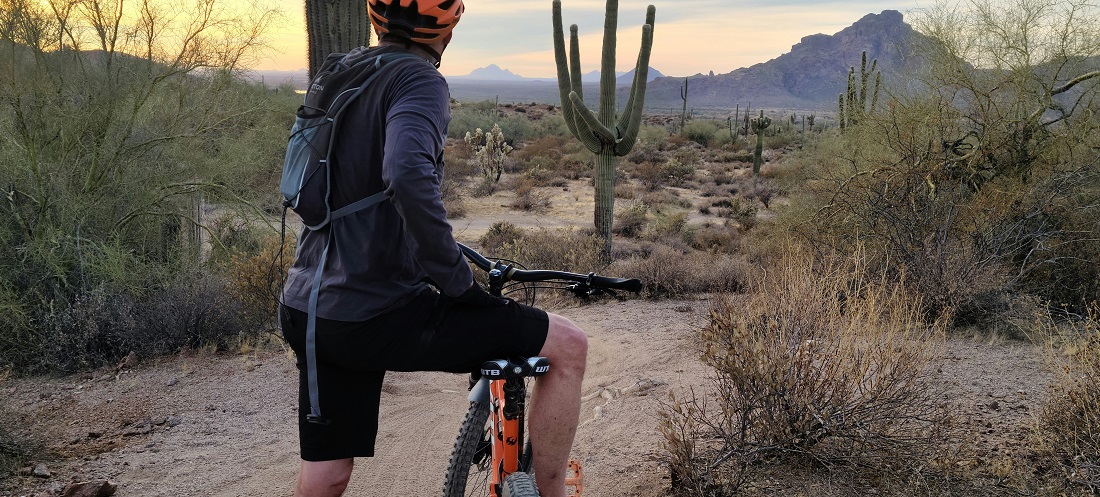
Mountain biking in Phoenix by Matthew Osborn

The residents take outdoor activities and sports in Phoenix seriously, and the roughly 300 days of sunshine a year are the reason. There are dozens of parks and preserves inside the metro area, and hundreds of miles of trail between them. Papago Park is quite gentle. Its paths are flat, and the Hole in the Rock viewpoint is a short walk from the car park through red sandstone buttes. Camelback Mountain is on the harder end, and the Echo Canyon route is a challenging scramble. South Mountain Park is one of the largest municipal parks in the country, and Piestewa Peak, in the Phoenix Mountains Preserve, is a 15-minute drive from central Phoenix.

In summer, the parks department closes the busiest trails from 8am to 5pm whenever the National Weather Service issues an extreme heat warning. Locals get around it by starting early, and a 5am trailhead is entirely normal from May to September.

There is more water than you would expect in a desert. Tempe Town Lake is set up for kayaks and paddleboards, Lake Pleasant is the boating and sailing spot an hour north, the Salt River is where everyone goes tubing in summer, and the Verde River is the quieter option for a paddle.

Golf is the other reason people move here. There are more than 200 courses across the Valley, and Scottsdale has more of them than anywhere else. Tee times are cheapest in July and August, when everyone else has gone indoors.

To watch rather than take part, the Arizona Cardinals (NFL) play at State Farm Stadium out in Glendale, and the Arizona Diamondbacks (MLB) play downtown at Chase Field, which has a retractable roof for exactly this climate. The Phoenix Suns (NBA) and Phoenix Mercury (WNBA) share the downtown arena. The Valley has had no NHL team since the Coyotes moved to Utah in 2024.

There are two annual fixtures that locals plan around. Fifteen Major League Baseball teams come to Greater Phoenix for Cactus League spring training every February and March, and they play across 10 ballparks that are all within about 45 minutes of one another. The WM Phoenix Open at TPC Scottsdale in February is the best-attended golf tournament in the world, and it is as much a corporate week as a sporting one.

Weather in Phoenix


See and do in Phoenix

Most of what there is to see and do in Phoenix can be covered over a couple of weekends. The Grand Canyon is the exception, and most people spend a weekend there.

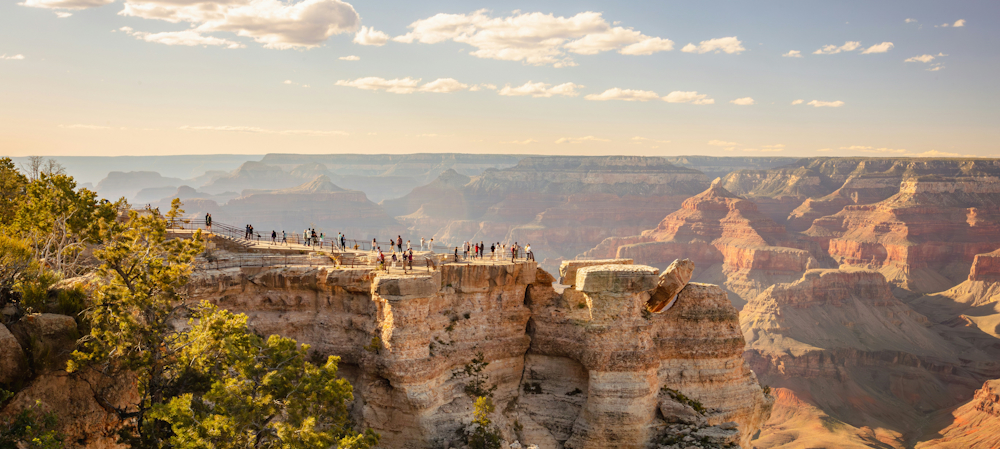
Grand Canyon in Arizona by Stig-Ove Petterson on Unsplash

The Grand Canyon

Everyone knows the Grand Canyon. The South Rim is about 230 miles (370km) from downtown Phoenix, which is a three-and-a-half to four-hour drive, so most residents make a weekend of it rather than a day trip. Sedona and Flagstaff are both on the route, and either one is a good stop on the way back.

Phoenix Art Museum

The Phoenix Art Museum is the largest art museum in the Southwest. Its permanent collection has more than 20,000 works, and the curators also bring in national and international touring shows. They also give photography serious billing, through a long-standing partnership with the University of Arizona’s Center for Creative Photography. Admission is pay-what-you-wish on Wednesday evenings and free on First Fridays.

Heard Museum

The Heard is the museum most Phoenix residents send visitors to first. It has been showing Native American art since 1929, and its collection of Southwestern work is deep rather than token. The Heard Museum Guild Indian Fair and Market, which is held each spring, is one of the biggest events of its kind in the country.

Arizona Science Center

The Arizona Science Center is in Heritage and Science Park downtown, in a concrete building designed by Antoine Predock. Inside, there are four levels of hands-on galleries. The Dorrance Planetarium and a five-storey giant-screen cinema are both on site, and the whole place is a standard escape on a blistering afternoon.

Musical Instrument Museum

The Musical Instrument Museum, up in north Phoenix near the Loop 101, is the largest of its kind in the world. The collection has more than 15,000 instruments and objects from nearly 200 countries, and several thousand are on display at any one time. Everyone wears a wireless headset, and you hear each instrument played in its own setting as you walk into the gallery. Allow half a day, because most people underestimate the sheer scope of it.

Phoenix Zoo

The Phoenix Zoo is the largest privately owned non-profit zoo in the country. It has 125 acres (51ha) of Papago Park and 2.5 miles (4km) of trails, and it is home to more than 3,000 animals across nearly 400 species. The conservation record is the real story. The zoo ran Operation Oryx in the 1960s, and the Arabian oryx bred here were used to help restore the species to the wild after hunters had wiped it out across the region.


Meeting people and making friends in Phoenix

Nobody bumps into anybody in a car city, so meeting people in Phoenix takes deliberate effort. The best advice is to pick something that repeats, such as a running club, a climbing gym, a pottery class, or a Sunday league. One-off events rarely turn into friendships, but a Tuesday night fixture that meets forty times a year usually does.

Meetup is the usual starting point for hobby groups, and Phoenix has an unusually large number of them. Volunteering is the route that people underrate, and charities across the Valley are short handed in summer. Weekend farmers markets, neighbourhood associations, running groups, and co-working spaces are the other low-key options. If you have children, the school gate will do much of the work for you.

Useful links

Getting Around in Phoenix

Getting around in Phoenix generally means driving. Newcomers from New York, Boston, Chicago, or San Francisco will be in for a shock. Valley Metro has extended the light rail into a two-line network, and Tempe has had a streetcar since 2022, but public transport is thin outside those corridors, and basically everyone drives.

Valley Metro is expanding its service, and it’s carrying more passengers each year, but progress has been patchy. Valley Metro opened the South Central line to Baseline Road well ahead of schedule, but the Phoenix City Council has since dropped the planned Capitol extension in favour of a future line into West Phoenix. For now, you need a car to get the run of the Valley.

Air quality is another sore point. Regulators classify the Valley as failing federal ozone standards, and traffic is a major contributor to the poor air quality.


Public transport in Phoenix

Public transport in Phoenix is run by Valley Metro, the regional authority behind the buses, the light rail, the Tempe streetcar, and paratransit. You can plan a journey and check for disruptions on its website or in its app. Paper passes are gone, and under the Smart Fare system, you pay through the app or with a reloadable Copper card, and Valley Metro caps your fares automatically once your daily, weekly, or monthly total hits the ceiling.

Light rail in Phoenix by Jared Murray

Light rail

The light rail is the cheapest and most dependable way of crossing central Phoenix, and it has two lines that meet at the Downtown Phoenix Hub. The A line is the east-west route between Gilbert Road in Mesa and downtown; the B line is the north-south route between Metro Parkway in northwest Phoenix and Baseline Road in south Phoenix. The network is 35 miles (56km) of track and has close to 50 stations. Riders can take the trains to Sky Harbor airport, the ASU campus in Tempe, the downtown sports venues, and the bars on Mill Avenue.

Trains run every 12 minutes at peak times and every 15 to 20 minutes the rest of the day. The first trains are out before 5am, and the last ones finish around midnight from Monday to Thursday. Friday and Saturday’s trains run until about 2am, and on Sunday, the last train is at 11pm.

Streetcar

The Tempe streetcar, known as the S line, runs along a three-mile (5km) route. from Marina Heights and Tempe Town Lake, down Mill Avenue past the ASU campus to Apache Boulevard, where it meets the A line. Streetcars come every 15 to 20 minutes, and the fare is lower than a standard Valley Metro ride.

Buses

The bus network in Phoenix is far bigger than the light rail, but there are a few issues with it. Regulars complain that buses turn up late or not at all, especially in West Valley. Bus stops with no shade are a summer misery.

Most buses start at 5am and are off the road by around midnight. The busy arterial routes run longer and more often than the suburban feeders, so check the timetable in the app before you set out.

Useful links


Taxis in Phoenix

Taxis in Phoenix are a shrinking trade, and most people now reach for a ride-hailing app instead of a metered cab. Nevertheless, you will find cabs waiting downtown near the big attractions and the light rail stations. Out in the suburbs, ring ahead and book. Fares are metered and fair enough for a short hop, but distances here are punishing, and you will feel it if you take cabs every day.

Uber and Lyft are the default for most people, and both are cheaper and easier than a conventional cab. Phoenix is also Waymo country. Waymo has been carrying paying passengers here since 2020, and its driverless cars are now available across much of Phoenix, Scottsdale, Tempe, Chandler, and Mesa.

Useful links


Driving in Phoenix

Aerial Street in North Valley, Phoenix by Star on Unsplash

Driving in Phoenix is how nearly everyone gets around, and the Valley was laid out with that in mind. Arterial roads are set on a one-mile grid, and parking is plentiful. The freeway network is extensive: I-10 and I-17 are the through routes, and the Loop 101, Loop 202, and Loop 303 are ring roads around the suburbs.

New arrivals will find their bearings quickly because the street plan is simple. There are numbered avenues west of Central Avenue, and numbered streets east of it. Nearly every road name includes a compass direction to pin the address down. Cities beyond the Phoenix limits, like Tempe and Avondale, have their own grids.

The freeways in Phoenix are permanently under construction, and it’s quite routine for there to be closures on weekends. Peak-hour congestion on I-10 and I-17 is the worst of it, and commutes from the far suburbs, such as Buckeye and Queen Creek, can be brutal. Check AZ511 before you set off.

Arizona has some of the strictest drink-driving laws in the country. For a first conviction, the courts impose a mandatory jail term, heavy fines and fees, a licence suspension, and an ignition interlock device on your car. Police checkpoints are common, and the courts will show little mercy. If you are out for the night, you can organise a designated driver, book a ride or a taxi, take a Waymo, or plan your way home on the light rail, which runs until about 2am on Friday and Saturday.

Driver’s licences

You need an Arizona driver’s licence as soon as you take a job in the state, and the Motor Vehicle Division (MVD) handles it. Arizona has reciprocity deals with four countries. Licence holders from Germany, South Korea, and Taiwan skip both the written and the road test. Canadians skip the road test but sit the written exam. Everyone else takes both, plus a vision screening.

Book through the AZ MVD Now portal, and ask for the Arizona Travel ID while you are there, because airport security will not accept a standard Arizona licence for a domestic flight.

Useful links


Cycling in Phoenix

Cycling in Phoenix by Eduardo Enrietti

Cycling in Phoenix is easier than the city’s reputation suggests, at least for eight months of the year. The terrain is flat, and the winter weather is made for it. The city has laid protected bike lanes downtown, off-street paths along the canals, bridges over the busiest arterials, and bike racks on the front of every bus. It is also planting trees along designated cool corridors to shade the routes people walk and cycle most. From May to September, midday riding is dangerous and regular riders go out at dawn.

HOPR runs Grid Bikes, the official bike-share scheme in Phoenix and neighbouring cities such as Tempe and Mesa. Unlock a bike through the app, then lock it to any public bike rack at the end of the ride. There are cheaper monthly and annual passes for regular riders. Leisure riders have the canal towpaths, the Rio Salado Pathway, the desert trails around South Mountain Park, and the long climbs out towards Cave Creek.

Weather and Climate Chart for Phoenix

Useful links


Walking in Phoenix

Walking in Phoenix is a pleasure for eight months of the year and a trial for the other four. The metro area is far too spread out to walk to work unless you live in the central corridor, but the older neighbourhoods are worth exploring on foot. Garfield, Eastlake Park, Booker T. Washington, and the galleries along Roosevelt Row are all walkable, and downtown is compact enough to cross in twenty minutes.

Summer is another matter. Daytime highs are above 100°F (38°C) for months at a stretch, and the pavements are still hot after dark. The city has established an Office of Heat Response and Mitigation, the first of its kind in the country, and is planting trees and installing shade structures over pavements and bus stops. Locals do their walking at dawn, and they carry water even for short trips.

Areas and Suburbs in Phoenix