
- Download our Moving to Bangkok Guide (PDF)
Expat accommodation in Bangkok is highly varied. No matter how big an expat’s family is or what type of home they prefer, price and proximity will be the most important considerations when finding housing to rent in the Thai capital.
Frustrating commutes are common, and the city’s regular traffic jams inspire many expats working in Bangkok’s centre to live close to their workplace. The same line of reasoning applies to families who have children attending international schools.
The BTS Skytrain, which runs across the city, has helped to reduce commute times and relieve traffic congestion. The network continues to expand with new lines and extensions, although some areas of Bangkok still require other transport options. Living within walking distance of a BTS or MRT station can save you from the city’s notorious traffic jams.
Areas and suburbs in Bangkok
Expats looking for accommodation to rent in Bangkok will have plenty of options when it comes to areas and suburbs in the city. The city is home to 50 administrative districts, which are divided into 12 clusters, so expats can easily find a suitable home close to their workplace or children’s schools.
Most expats moving to Bangkok initially rent an apartment or house in an area such as Sukhumvit thanks to its central location and excellent transport links. Sukhumvit is home to a variety of accommodation options, ranging from luxury condos to reasonably priced apartments in lower Sukhumvit.
Along Sukhumvit Road itself, popular neighbourhoods include Phrom Phong, Thong Lo and Ekkamai. Most of these areas have lively restaurants, cafés and bars, while others even feature the occasional green space.
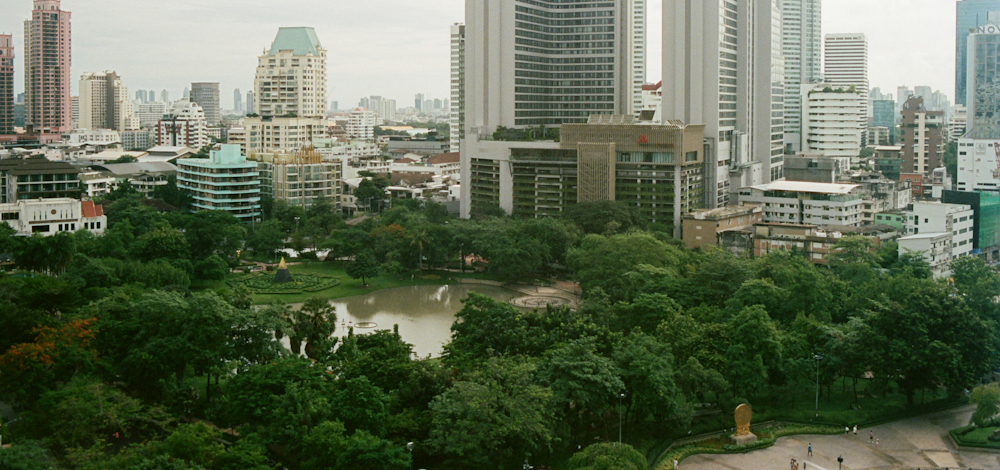
While Bangkok may largely be a concrete jungle, the city has pockets of green spaces that cater well to families looking to escape the hustle and bustle of the city centre.
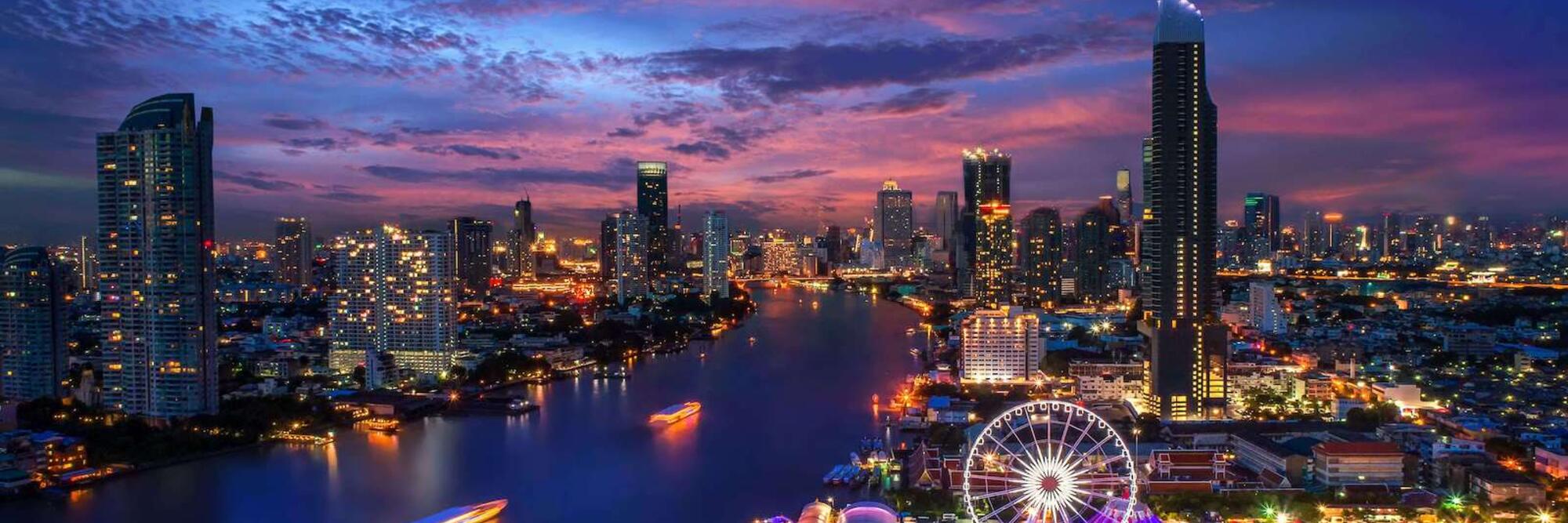
Expat families who prefer the premium side of life will feel right at home in Riverside. This neighbourhood boasts spectacular views of the Chao Phraya River and has luxury condos and apartments. Nonthaburi, Chatuchak and Samut Prakan are some of the other family-friendly suburbs in Bangkok that offer freestanding homes, access to parks, and child-friendly attractions.
Areas and Suburbs in Bangkok
Schools in Bangkok
Types of accommodation in Bangkok
Housing in Bangkok is as varied as the city itself. Many expats prefer fully serviced apartments that resemble hotels. These usually come furnished and offer services such as cleaning, as well as amenities such as small gyms or swimming pools. Non-serviced apartments are typically a less expensive option, but often require a longer-term commitment. These tend to resemble Western apartments but come in a variety of styles.
The quality of accommodation in Bangkok varies, and you'll generally get what you pay for. In higher-end serviced apartments, most expats report that the standard of housing is similar to what they would find in their home country.
On the outer edges of the city, expat families can find Western-style houses in gated communities similar to suburban housing communities in the USA. These get progressively pricier closer to downtown areas, peaking in the city centre.
Finding accommodation in Bangkok

The most popular options for finding accommodation in Bangkok are online property portals, the property sections of newspapers, and rental agencies. Another way of finding a place to live in Bangkok is to shortlist a few desirable neighbourhoods and explore the area in person, looking for properties available to rent.
Apartment buildings in Bangkok often have an information office or a building manager who can let prospective tenants know about any available rentals. Many of these may not speak English, however, especially outside major tourist areas. It would be worthwhile for expats who decide on this approach to bring a Thai friend with them.
Some expats moving to Bangkok will have a relocation company working on their behalf, assessing preferences and shortlisting properties to view. For those handling the search independently, Facebook expat groups can be valuable resources for current insights and recommendations from other foreigners living in the city.
Useful links
Renting accommodation in Bangkok
Making an application
Foreigners looking to rent accommodation in Bangkok will have to submit certain documents when applying for a lease. This typically includes their passport, work permit (if they have one), proof of income, and proof of employment. If their application is accepted, they will then need to negotiate their rental agreement with their landlord.
As is the case anywhere, expats occasionally have landlord issues in Thailand. A few basic precautions can be taken to avoid this, such as doing a thorough inspection of the property, taking photos of any existing damage, keeping any correspondence with the landlord and keeping rental receipts.
Leases, costs and fees
After settling on an apartment, expats usually have to sign a fixed-term contract. It often happens that the longer a person commits to staying in an apartment, the better the monthly rental rate will be. Tenants are usually expected to pay a deposit of two months’ rent along with their initial payment of the first month’s rent in advance. Assuming that the property is in good condition, the deposit will be returned at the end of the lease period.
Terminating the lease
Lease agreements in Bangkok typically run for a fixed term of one year. Under recent regulations, tenants renting from business landlords can terminate their lease early after occupying the property for at least half of the lease term by giving 30 days’ written notice. Landlords are also required to provide at least 30 days’ notice to terminate a lease. It’s worth noting that contracts may include specific early termination clauses or penalties, so expats should review their lease carefully before signing.
Useful links
Utilities in Bangkok
Although this may not always be the case with some apartment rentals, it is generally the responsibility of the tenant to pay the cost of utilities in Bangkok.
Electricity
Some expats will have their electricity and water bills included as part of their rent.The Metropolitan Electricity Authority (MEA) is the main electricity distributor in Bangkok.
Expats who need to transfer an account into their name or set up a new one must provide the MEA with their proof of identification, lease agreement and proof of ownership document, which is supplied by the landlord. Tenants can set up a direct debit from their bank account or visit a 7-Eleven to pay their monthly electricity bills.
Gas
Residents who have a gas stove in their homes will need to buy a refillable propane gas cylinder, as there is currently no mains gas in Thailand. Propane gas is used for cooking in homes, while natural gas is largely used for electricity generation processes.
Water
While the tap water in Bangkok is considered safe to drink, most locals and expats choose to drink bottled or filtered water. The drinking water in Bangkok is sourced from the Chao Phraya and Mae Klong Rivers, and its purification and distribution are managed by the Metropolitan Waterworks Authority of Thailand (MWA).
Most landlords will arrange for water connections before tenants move in. Expats can call or visit a local MWA branch office to set up a water connection. Typically, you'll need to submit proof of identification, the lease agreement and proof of ownership from the landlord. It's best to arrange service connection at least a week in advance.
Bins and recycling
Although there is no formal recycling programme in Bangkok, the city’s government is taking active steps to encourage recycling, reusing and reducing waste. Bangkok’s government has set ambitious recycling targets as part of its waste management roadmap. The Metropolitan Administration of Bangkok is responsible for waste collection and management in the city.
Residents in Bangkok are encouraged to separate their waste into compostable, recyclable, general and hazardous waste. Waste collection runs on regular schedules, with garbage trucks making routine rounds through neighbourhoods. The sorted waste is usually put into separate compartments from unsorted waste for separation at the next point.
Recyclable materials in Bangkok are usually collected by waste collectors who make a living by selling these to private recycling companies. Expats looking to contribute to Bangkok’s recycling efforts can separate their recyclable materials for these waste collectors or sell them to private recycling companies themselves.
In recent years, Bangkok has introduced a fee structure that rewards households who properly separate their waste into the four designated categories. Residents who register and demonstrate waste separation can benefit from reduced collection fees.
Keeping in Touch in Thailand has more about phone and internet connections.