Print
  • Hold down Ctrl key and select the sections you want to print. If using a Mac, hold down the Cmd key.
  • Use Ctrl + A or on Mac, Cmd + A to select all sections (if you are using the Chrome browser).
  • Click "Apply" and the site will customise your print guide in the preview below.
  • Click the "Print" button and a print pop up should appear to print to your printer of choice.

Moving to Bangkok

Moving to Bangkok means stepping into a city unlike any other – one that presents expats with a wholly different cultural environment within the familiar framework of a cosmopolitan metropolis. New arrivals are usually mesmerised by its cityscape, carved by canals that branch out from the Chao Phraya River.

Snaking through the heart of the city, this natural feature not only shapes the city’s layout but also daily life. The influence of the river and its canals can be seen in its many floating markets and the cultural customs of its residents.

Living in Bangkok as an expat

Bangkok is the capital of Thailand, its largest city and the centre of business, culture and politics. The majority of Bangkok’s expat population moves to the city for the cultural attractions and work opportunities. While skilled expats can be found in industries such as finance and logistics, many foreigners find that teaching English is still the easiest way to make a living in the Thai capital, as jobs in this field are plentiful.

Bangkok has a multicultural population and friendly locals, so expats are unlikely to feel very severe culture shock in the Land of Smiles. However, air pollution is a significant concern, particularly during the dry season from December to April, when PM2.5 levels spike. Many expats monitor air quality via apps and run air filters at home.

Pros and Cons of Moving to Bangkok

Working in Bangkok
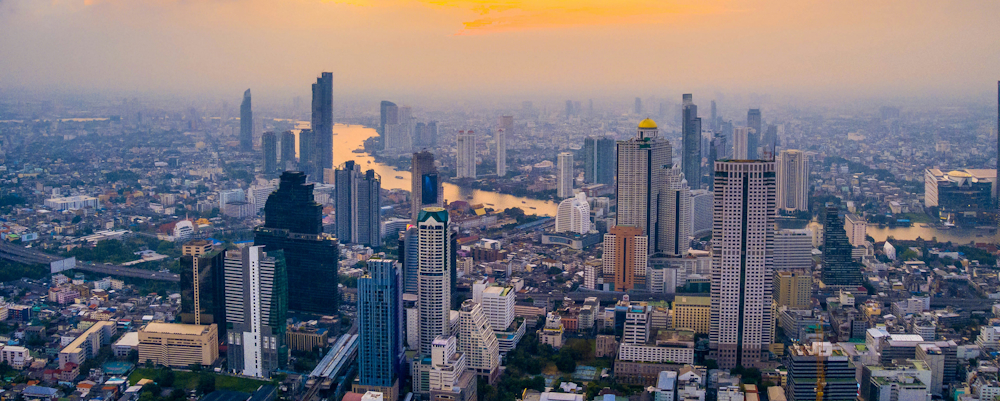
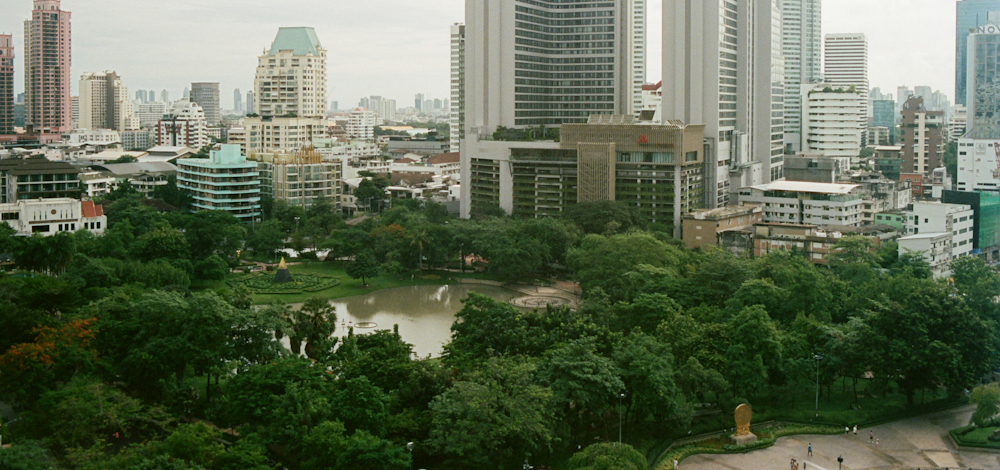
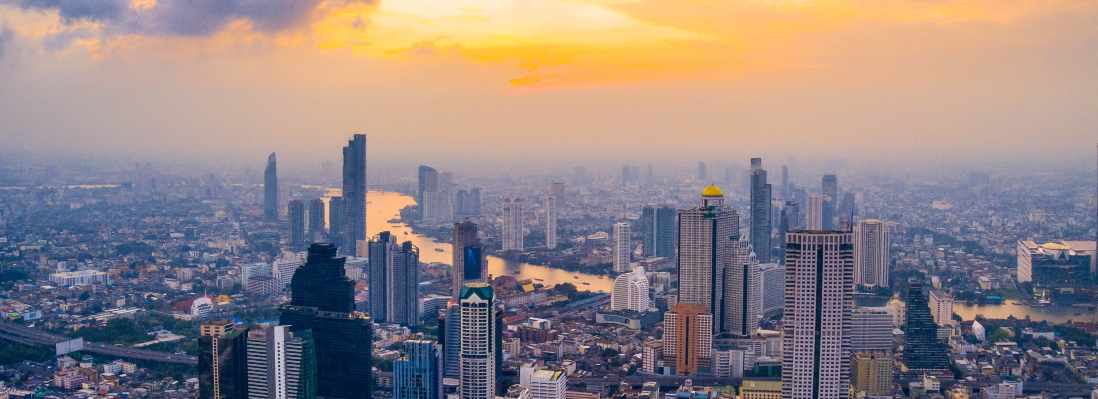
Downtown Bangkok by Waranont (Joe) on Unsplash

Expats working in Bangkok are spread across finance, tech, logistics, hospitality and international education. Teaching English is the most accessible route into the job market for native speakers, although a bachelor’s degree and TEFL qualification are required for a legal work permit.

The introduction of the Destination Thailand Visa (DTV) in 2024 has opened doors for remote workers and digital nomads. This five-year, multiple-entry visa allows stays of up to 180 days per entry, with the option to extend. Those employed by Thai companies still require a standard Non-Immigrant B visa and work permit. Professional networking is active through organisations such as AMCHAM and the British Chamber of Commerce Thailand.

Working in Bangkok 

Lifestyle in Bangkok

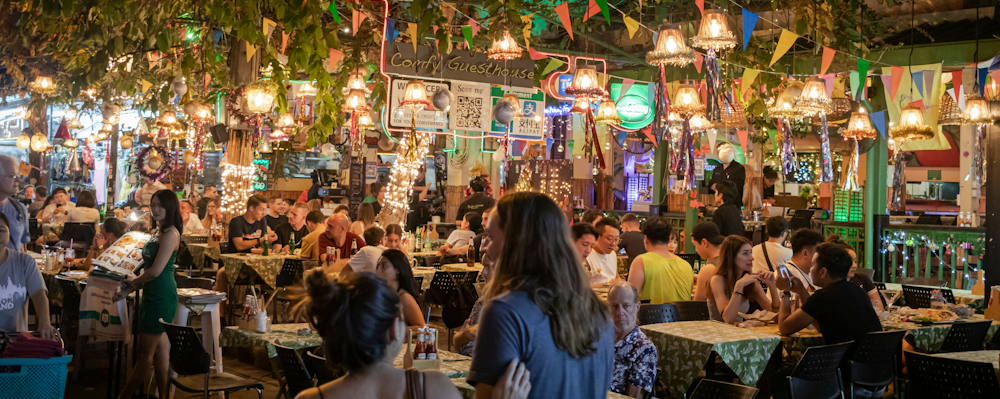
Open-Air Restaurant in Bangkok by Syed Ahmad on Unsplash

The lifestyle options in Bangkok cater to all budgets and tastes, from rooftop cocktail bars in Thong Lo to the night markets of Jodd Fairs. The city has a world-class café culture, particularly in neighbourhoods like Ari and the historic lanes of Talat Noi.

Things to See and Do in Bangkok
Lifestyle in Bangkok

Finding accommodation in Bangkok

A condo oversupply has made it so that Bangkok’s rental market currently favours tenants, and new arrivals to the city can easily find suitable accommodation in any of the city’s areas and suburbs. The key factor in securing a home in Bangkok is proximity to your workplace or children’s schools to avoid long, frustrating commutes.

Accommodation in Bangkok 
Areas and Suburbs in Bangkok

Cost of living in Bangkok

Overall, the cost of living in Thailand is low, but as is typical of a large capital city, Bangkok can be an expensive place to live, although it remains significantly cheaper than Singapore, Hong Kong or Tokyo. Having all the conveniences and amenities that big-city living offers comes at a cost, especially if expats choose to indulge in luxuries such as serviced apartments, fine dining, and imported goods. The good news is that, with some planning, it’s possible to live in Bangkok on a budget, especially if expats are willing to adopt a simpler lifestyle more in line with the Thai way of life.

Cost of Living in Bangkok

Living in Bangkok with children

Bangkok is renowned for its entertainment scene and the warmth of its residents. It provides opportunities for everyone, from young, single expats to families, who can enjoy a laid-back lifestyle without sacrificing the quality of healthcare facilities. The city has even become a popular medical tourism destination thanks to the high-quality healthcare available at affordable rates.

Parents will also have plenty to see and do with their children at the weekend, as Bangkok offers many family-friendly attractions. Despite its reputation as a concrete jungle, Bangkok also boasts a fair few green spaces and water parks for families to enjoy throughout the city.

Family and Children in Bangkok 
Healthcare in Bangkok

Finding a school in Bangkok

Finding a school in Bangkok can be straightforward or fiercely competitive, depending on ambition. The city hosts over 100 international schools following the British, American, Australian and International Baccalaureate curricula. Many expat families choose their neighbourhood based on proximity to their children’s school, as cross-city commutes during rush hour can be gruelling.

International Schools in Bangkok

Getting around in Bangkok
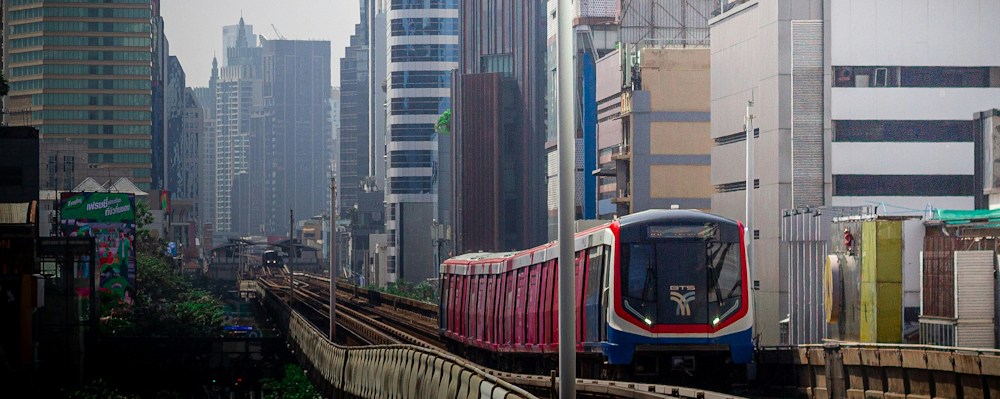
Monorail in Bangkok by Umpholphat Dangam on Unsplash

Bangkok contends with notorious traffic jams, but the rail network has expanded rapidly. As of 2023, the BTS Skytrain and MRT’s Pink and Yellow monorail lines now serve a few more suburbs. Most expats rely on a mix of rail, ride-hailing apps such as Grab, and motorbike taxis for the last stretch home.

Getting Around in Bangkok

Climate and weather in Bangkok

Heat and humidity are the prevailing weather conditions in this tropical city. During the hot season from March to May, the mercury frequently reaches and exceeds 95°F (35°C). The wet season arrives just as temperatures start to wind down around the end of May. Downpours are frequent, so it’s best to get into the habit of carrying an umbrella. In November, the rain abates with the arrival of the cool season, when overnight lows can dip to around 68°F (20°C), although daytime highs remain in the high 80s°F (low 30s°C).

Weather in Bangkok

Sun-loving expats will find the cooler months ideal for weekend escapes to the coast, with beaches such as Hua Hin and Koh Samet reachable in two to three hours. Whatever the weather, Bangkok’s energy is hard to beat, and the city has a lot to offer new arrivals, should they come with an open mind and a sense of adventure.
Weather in Bangkok

The weather in Bangkok is relentlessly hot. Daytime temperatures hover above 86°F (30°C) throughout the year. The hot, humid monsoon sweeps through from May to October, and the November to February period heralds drier, slightly cooler conditions that make this the prime time for expats to explore. March through May bring the city’s most punishing heat, with April temperatures reaching as high as 99°F (37°C) amid stifling humidity.

During the wet season, downpours hit in intense afternoon downpours rather than drizzling all day. When a cloud bursts, you’ll want a sturdy umbrella. Bangkok’s drainage is designed to handle up to 3.15 inches (80mm) in three hours, but flooding is a real challenge. The low-lying districts outside the main flood barriers – Bang Phlat, Bangkok Noi, and riverside zones – are especially vulnerable to flooding when the heavy rain meets high tide. Check official warnings during monsoon months and steer clear of vulnerable areas when the alerts go out.

Air quality depends heavily on the seasons. The haze season from December to February is accompanied by PM2.5 pollution that can spike Bangkok into the rankings of the world’s most polluted cities. The stagnant non-monsoon weather means that smoke from agricultural burning in nearby provinces, combined with Bangkok’s vehicle emissions, has nowhere to go. Expats with respiratory conditions should monitor daily air quality and consider running home air purifiers when pollution levels are high.


Pros and cons of moving to Bangkok

The pros and cons of moving to Bangkok reflect a city that pulses with life. From the fascinating culture to the friendly people, living in the Thai capital is an enriching experience. As with any city, there are trade-offs – from the legendary traffic to seasonal air pollution – and we expand on them below.


Accommodation in Bangkok

+ PRO: Lots of variety

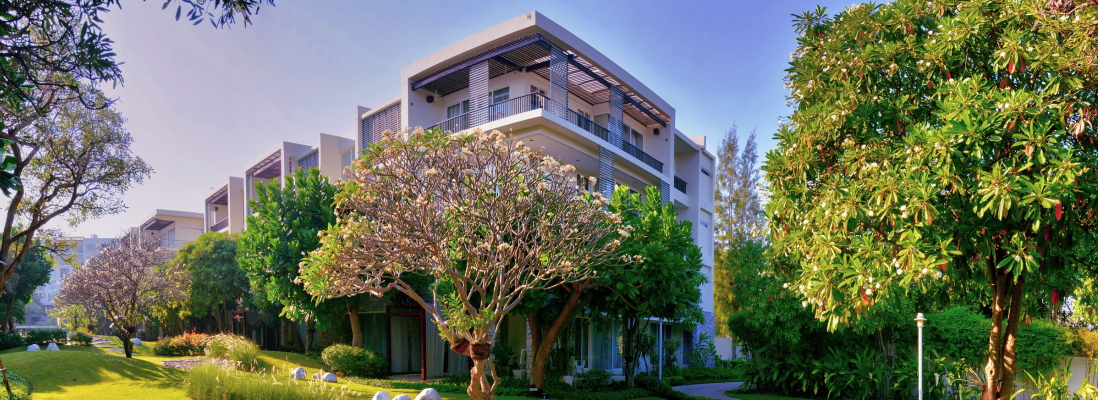
The options for accommodation in Bangkok run the gamut – studios in high-rises, townhouses tucked down quiet roads, and even detached homes with actual gardens. The rental market is flush with options. Pet owners have slimmer pickings: most condo buildings ban animals outright, and the handful that welcome dogs or cats will happily charge you for the privilege.

Accommodation in Bangkok


Local culture in Bangkok

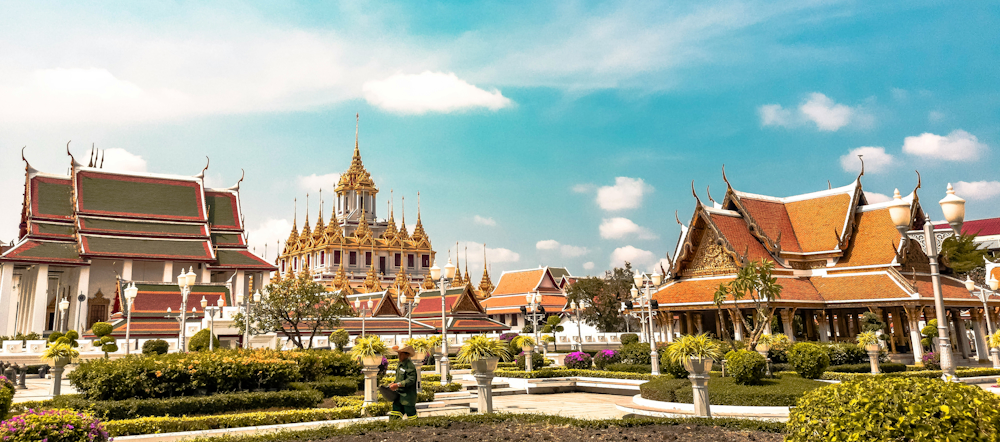
Loha Prasat Temple in Bangkok by Alejandro Cartagena on Unsplash

+ PRO: A feast for the senses

Local culture in Bangkok is a feast for the senses. Among the rising steel-and-glass structures of shopping malls, hotels and offices, expats will find temples, revered Buddha images and spirit houses with offerings piled high, jasmine garlands aplenty, and incense burning day and night.

Thai people are generally welcoming of foreigners, and respect for local customs goes a long way. A few basics: never point your feet at people or Buddha images, and avoid touching anyone’s head – even a child’s.

- CON: The importance of saving face

If someone acts angry, demanding, contradictory or rude in public towards a Thai person, locals will go to great lengths to ‘save face’. No matter what emotions may be felt, they are not displayed or demonstrated negatively towards another person. This is an important part of Thai culture that greatly affects how expats are treated. Keeping calm and remaining polite are better ways to deal with conflict.

Local Culture in Bangkok


Cost of living in Bangkok

+ PRO: Possible to live extremely cheaply

The cost of living in Bangkok surprises many newcomers – entertainment, dining and day-to-day expenses run far lower than back home. There are restaurants to suit every budget, and the many street stalls make it possible to enjoy authentic Thai food at an exceptionally low price.

Electricity bills can sting, though. Air-conditioning is non-negotiable in Bangkok’s heat, and if you leave it running day and night, you’ll feel it in your wallet.

- CON: High price of imported goods

Recent tax cuts have made imported wine more accessible than before, although it still costs more than in Europe. Currency conversions and remaining excise duties mean a decent bottle won’t come cheap, but eye-watering markups are no longer commonplace. Buying other imported goods, such as Western food or ‘home comforts’, can also become pricey.

Cost of Living in Bangkok


Transport in Bangkok

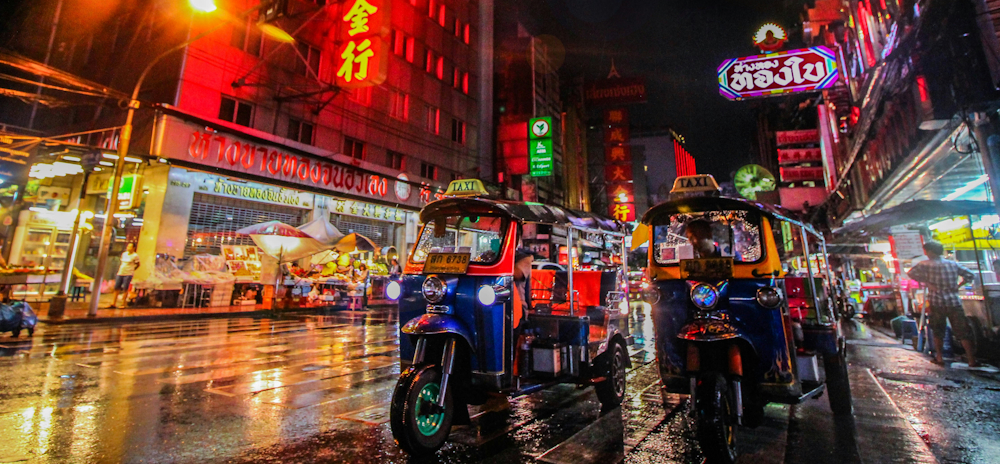
Tuk-tuks in Bangkok’s Chinatown by Florian Wehde on Unsplash

+ PRO: Affordable and ever-expanding options

Transport in Bangkok is cheap and plentiful, with the network expanding year on year. The BTS Skytrain glides above the gridlock as the MRT rumbles underground. Recent extensions – including the Yellow and Pink monorail lines – have opened up suburban neighbourhoods. Buses, tuk-tuks, motorbike taxis, and ride-hailing apps fill in the gaps. Grab is the go-to, but Bolt tends to be cheaper. The BTS and MRT are mercifully air-conditioned and connect at several interchange stations. Getting around Bangkok is both affordable and, in many instances, efficient and clean.

- CON: Traffic jams

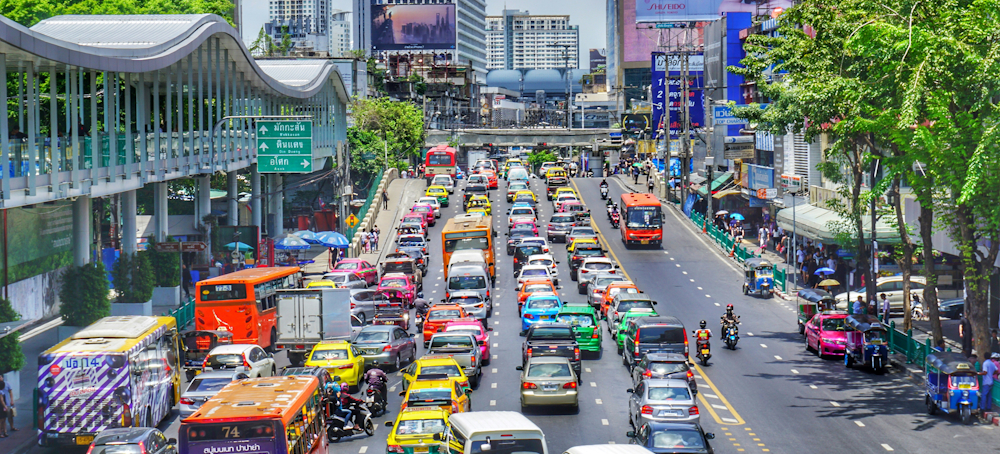
Bangkok’s traffic is the stuff of legend – the city regularly ranks among the world’s most congested. That doesn’t mean travelling around is as difficult and laborious as expats may be led to believe. There are many options for avoiding traffic – they just require some planning. That said, expats who choose to drive are likely to find rush hour traffic a headache.

Transport in Bangkok


Healthcare in Bangkok

+ PRO: World-class care at competitive prices

Healthcare in Bangkok has earned the city a reputation as a medical tourism hub. Visiting a private hospital is like walking into a five-star hotel, replete with plush lobbies and attentive staff. For expats accustomed to US healthcare costs, the bills often come as a pleasant surprise, although uninsured visitors should budget carefully.

After registering, the patient will be quickly seen, with the relevant tests undertaken in a timely and efficient manner. Securing a consultation with a specialist doctor is also relatively easy.

- CON: Unnecessary tests

Whilst a visit to the hospital or dentist may not be expensive, it’s common to hear about patients being sent for unnecessary tests, only to end up with a simple diagnosis such as the flu or a virus. This can result in high costs. While a person’s health shouldn’t be put at risk for fear of being taken advantage of, it is something to be aware of.

International health insurance is a wise investment. Private hospital care is world class, but costs can escalate quickly for the uninsured.

Healthcare and Hospitals in Bangkok


Education in Bangkok

+ PRO: Outstanding international schools

The education system in Bangkok draws expat families for good reason. The city has over 100 international schools – British, American, International Baccalaureate, and bilingual programmes among them – and the top-tier institutions boast campuses that put many Western universities to shame.

- CON: High tuition fees

Quality comes at a price. International school fees can take a significant bite out of even generous expat packages, and waiting lists at the most sought-after institutions are common.

Education and Schools in Bangkok
Best International Schools in Bangkok


Working in Bangkok

+ PRO: Regional business hub

Working in Bangkok puts you at the heart of Southeast Asia’s business corridor. Many multinationals base their regional headquarters here, and expat packages for senior roles can be generous.

+ PRO: Digital nomad-friendly visa options

Thailand rolled out the Destination Thailand Visa (DTV) in 2024, and remote workers took notice. It’s valid for five years, allows stays of up to 180 days per entry (extendable to 360), and doesn’t require a local work permit.

- CON: Strict labour regulations

There are strict legal restrictions on which jobs foreigners can hold, and the work permit process involves miles of red tape. Certain professions are reserved for Thai nationals.

Working in Bangkok


Safety in Bangkok

- CON: Dangerous roads

Thailand has one of the world’s highest road fatality rates, and motorbike accidents pose the greatest risk to expats. If you ride, wear a helmet – always.

+ PRO: Low rates of violent crime

Safety in Bangkok compares favourably to many Western cities. Muggings and violent assaults are rare, and most expats report feeling secure walking around at night.

- CON: Seasonal air pollution

Between January and March, a grey haze blankets the city. PM2.5 readings smash through the thresholds for safety, and locals stock up on N95 masks and air purifiers and head indoors. Expats with respiratory sensitivities should plan accordingly.


Lifestyle in Bangkok

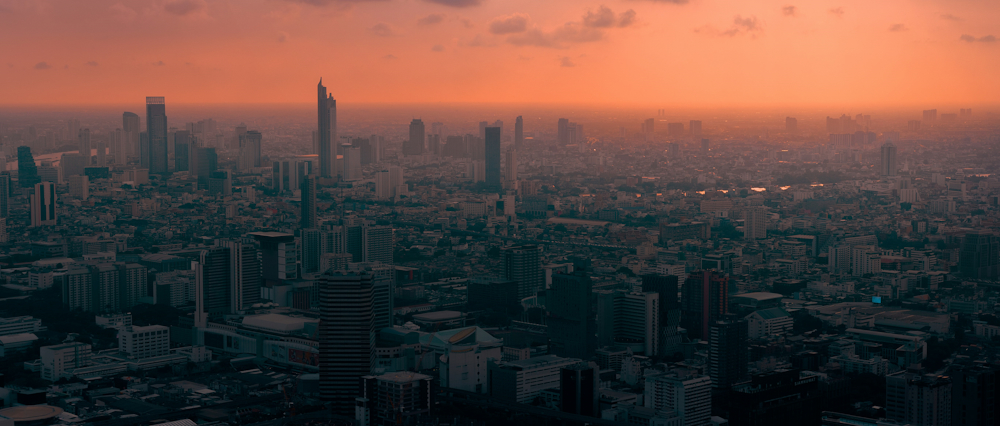
Aerial View of Hazy Bangkok by Pang Yuhao on Unsplash

+ PRO: Variety of experiences

Lifestyle in Bangkok means an endless variety of shopping experiences all over the city that cater to all sorts of budgets. The city’s many markets are perfect for those looking for a bargain and who like to barter, whilst in the high-end shopping malls, just about anything can be bought.

+ PRO: Lively nightlife

Expats who enjoy a night out on the town will love the nightlife scene in Bangkok. The city boasts everything from sophisticated rooftop bars and disco clubs to hidden dive bars, where drinks will cost a tad less.

+ PRO: Thriving expat community

Bangkok’s expat scene is well established. Facebook groups and Meetup events cater to every niche – book clubs, badminton leagues, startup founders, and new parents. If you’re willing to show up, making friends here isn’t hard.

Lifestyle and Entertainment in Bangkok

Working in Bangkok

Expats looking to advance their careers may find that working in Bangkok is a good option, particularly in fields where international expertise attracts a salary premium.

Those arriving in Bangkok after securing a job usually make more money than expats who look for a job while already in the country.

Thailand's unemployment rate tends to be below one percent, so expats with the right skills can usually find a job. Traditional employment requires a work permit, although the Destination Thailand Visa now allows remote workers to stay legally for up to five years without one.


Job market in Bangkok

The Bangkok economy is largely built on its retail, real estate, business, finance, and automotive industries. It also hosts the Stock Exchange of Thailand and houses the headquarters of most major banks in Thailand, as well as a number of multinational companies.

Popular job opportunities in Bangkok often involve teaching English, while highly skilled expats are often found in financial services, logistics, and technology. Demand is particularly high for data analysts, software engineers, and ESG consulting specialists.


Finding a job in Bangkok

laptop on a table

Finding a job in Bangkok works best through online resources, preferably before you’ve arrived in the country. LinkedIn is the primary platform for professional roles, and job portals and expat social media groups are also super useful for finding work.

Relocation packages have evolved from the ‘gold-plated’ era. Most of them are now lump-sum allowances for setup costs, with visa processing support and health insurance thrown in as standard inclusions. Car and driver arrangements have largely disappeared, except for C-suite positions.

Work Permits in Thailand
Visas for Thailand

Useful links


Work culture in Bangkok

Work culture in Bangkok will be familiar to most expats in its broader strokes. The traditional wai greeting, where a person bows slightly with their palms pressed together, coexists with Western handshakes. The same business meeting might see handshakes with foreign colleagues and wai exchanges with Thai partners.

Appearance is important in the Thai workplace, so expats should always endeavour to dress neatly and smartly. Being soft-spoken, polite and helpful is key to making a good impression, while being confrontational or pointing out the flaws of others publicly will cause both parties to ‘lose face’. In practice, Thai offices tend toward indirect feedback – your boss might say ‘perhaps we could adjust this’ rather than ‘this needs fixing’. The workplace silence some expats encounter, where colleagues stop responding to emails rather than replying with a refusal, stems from the same face-saving tendency.

Business Culture in Thailand

Cost of Living in Bangkok

Famous for its energetic street life, cultural landmarks, and red-light districts, Bangkok is Thailand’s premier metropolis. The cost of living in Bangkok can vary significantly depending on your lifestyle choices, and it doesn’t always reflect the national average.

Compared to other major cities in the region, Bangkok offers a good balance between affordability and quality of life. While certain areas and luxury living options can be costly, many expats working in Bangkok earn high salaries and can enjoy an excellent standard of living while still managing to save.


Cost of accommodation in Bangkok

As is the case in most major cities, the closer to the centre you live, the more expensive the accommodation in Bangkok will be. Bangkok is well known for its traffic jams, so commuting may not be an attractive option for many. As a result, most expats live in serviced apartments in the city centre and the areas close to public transport hubs, particularly around Sukhumvit, Silom, and Sathorn. These typically come with cleaning services and sought-after amenities, such as gyms and swimming pools.

Non-serviced apartments are also available at lower rates. Families generally live in Western-style suburban gated communities on the outskirts of Bangkok, particularly near international schools in areas like Bang Na and Nonthaburi, though these areas are significantly pricier. 

You’ll also need to account for utilities, which can add up quickly due to Bangkok’s hot weather and the need for air-conditioning.

Accommodation in Bangkok 
Areas and Suburbs in Bangkok


Cost of transport in Bangkok

Bangkok boasts an efficient and extensive public transport infrastructure. You’ll have access to the BTS Skytrain and MRT at fairly reasonable prices. The reloadable Rabbit card works for the BTS, while newer MRT lines now accept contactless credit card payments directly at the gate. Taxis are abundant and are a cost-effective way to get around Bangkok. Ride-hailing apps like Grab and Bolt offer convenient alternatives with upfront pricing.

If you can brave Bangkok’s congestion and erratic driving, you can save by hiring or purchasing a motorbike. Those looking for a more adventurous mode of transport should look no further than the tuk-tuks and songthaews. That said, tuk-tuks can be quite steeply priced as they are mainly geared towards tourists.

Public Transport in Bangkok


Cost of groceries in Bangkok

The cost of groceries in Bangkok will largely depend on your individual preferences. If you opt to buy imported Western brands, you’ll have to shell out quite handsomely for them, while those who go for local products will have a fairly low grocery bill. It can also be quite cheap for single expats to buy street food rather than buy groceries monthly.

If you have some money to spare, you can visit shops such as Gourmet Market and Villa Market, which sell high-quality and speciality fresh produce, cheeses and wines. Lotus’s and Tops Market offer a wide range of groceries at more reasonable prices. Apps like GrabMart and PandaMart have become popular for grocery delivery services.


Cost of entertainment and eating out in Bangkok

Bangkok is a foodie’s paradise. The Thai capital is most famous for its incredibly cheap and tasty street fare. Still, if you’re yearning for a taste of home, you’ll be catered for with more than 40 Michelin-starred restaurants serving cuisine from around the world at a slightly higher but still largely affordable cost.

Bangkok’s nightlife spans the entertainment districts of Nana Plaza, Soi Cowboy, and Patpong alongside the rooftop bars and clubs of Thong Lor and Ekkamai. You can find everything from budget bars to high-end clubs offering pricier drinks and entrance fees.

Lifestyle in Bangkok


Cost of education in Bangkok

Thailand has an established public education system throughout Bangkok. The main considerations for expat families are that public schooling is not free for children of foreign nationals and the language of instruction is Thai. There are also some concerns about the general quality of education and the education style in the country.

For that reason, most parents send their children to international schools. Some people may be lucky enough to have this cost included as part of their relocation package, though full education allowances are becoming rarer. Those who don’t will need to budget carefully as fees can be high.

Education in Bangkok 
International Schools in Bangkok


Cost of healthcare in Bangkok

Bangkok and Thailand as a whole have modern and relatively affordable healthcare services. As such, medical tourism has become one of the country's largest industries. 

Expats working in Bangkok may be eligible for the Social Security healthcare scheme, which is funded through payroll contributions and provides access to free care at a registered hospital. The quality of care at public healthcare facilities is generally adequate, but it can vary throughout the city. Most expats use the scheme for minor issues while maintaining private insurance for major conditions.

Those who can afford it typically purchase private health insurance to access private hospitals and specialists while avoiding long waiting times. This option is still relatively cheap in Bangkok but can vary depending on coverage level, age, and health status.

Healthcare in Bangkok


Cost of living in Bangkok chart

Prices are listed in Thai baht (THB) and may vary depending on the product and service provider. The list below shows average prices for Bangkok in January 2026.

Accommodation (monthly rent)
One-bedroom apartment in the city centreTHB 22,500
One-bedroom apartment outside the city centreTHB 10,800
Three-bedroom apartment in the city centreTHB 72,500
Three-bedroom apartment outside the city centreTHB 25,000
Shopping
Eggs (dozen)THB 85
Milk (1 litre)THB 75
Rice (1kg)THB 50
Loaf of white breadTHB 55
Chicken breasts (1kg)THB 120
Cheese (500g)THB 535
Eating out
Three-course meal for two at a mid-range restaurantTHB 1,100
Big Mac MealTHB 205
Coca-Cola (330ml)THB 15.30
CappuccinoTHB 100
Local draft beer (500ml)THB 65
Utilities
Mobile phone monthly plan with calls and dataTHB 415
Internet (uncapped ADSL or cable – average per month)THB 630
Basic utilities (average per month for a standard household)THB 5,200
Transport
Taxi rate (per kilometre)THB 6.50
Bus/train fare in the city centreTHB 40
Gasoline/petrol (per litre)THB 31

Accommodation in Bangkok

Expat accommodation in Bangkok is highly varied. No matter how big an expat’s family is or what type of home they prefer, price and proximity will be the most important considerations when finding housing to rent in the Thai capital.

Frustrating commutes are common, and the city’s regular traffic jams inspire many expats working in Bangkok’s centre to live close to their workplace. The same line of reasoning applies to families who have children attending international schools.

The BTS Skytrain, which runs across the city, has helped to reduce commute times and relieve traffic congestion. The network continues to expand with new lines and extensions, although some areas of Bangkok still require other transport options. Living within walking distance of a BTS or MRT station can save you from the city’s notorious traffic jams.


Areas and suburbs in Bangkok

Green Space in Phrom Phong and Sukhumvit Area by Rach Teo on Unsplash

Expats looking for accommodation to rent in Bangkok will have plenty of options when it comes to areas and suburbs in the city. The city is home to 50 administrative districts, which are divided into 12 clusters, so expats can easily find a suitable home close to their workplace or children’s schools.

Most expats moving to Bangkok initially rent an apartment or house in an area such as Sukhumvit thanks to its central location and excellent transport links. Sukhumvit is home to a variety of accommodation options, ranging from luxury condos to reasonably priced apartments in lower Sukhumvit.

Along Sukhumvit Road itself, popular neighbourhoods include Phrom Phong, Thong Lo and Ekkamai. Most of these areas have lively restaurants, cafés and bars, while others even feature the occasional green space.

While Bangkok may largely be a concrete jungle, the city has pockets of green spaces that cater well to families looking to escape the hustle and bustle of the city centre. 

Expat families who prefer the premium side of life will feel right at home in Riverside. This neighbourhood boasts spectacular views of the Chao Phraya River and has luxury condos and apartments. Nonthaburi, Chatuchak and Samut Prakan are some of the other family-friendly suburbs in Bangkok that offer freestanding homes, access to parks, and child-friendly attractions.

Areas and Suburbs in Bangkok 
Schools in Bangkok


Types of accommodation in Bangkok

Housing in Bangkok is as varied as the city itself. Many expats prefer fully serviced apartments that resemble hotels. These usually come furnished and offer services such as cleaning, as well as amenities such as small gyms or swimming pools. Non-serviced apartments are typically a less expensive option, but often require a longer-term commitment. These tend to resemble Western apartments but come in a variety of styles.

The quality of accommodation in Bangkok varies, and you'll generally get what you pay for. In higher-end serviced apartments, most expats report that the standard of housing is similar to what they would find in their home country.

On the outer edges of the city, expat families can find Western-style houses in gated communities similar to suburban housing communities in the USA. These get progressively pricier closer to downtown areas, peaking in the city centre.


Finding accommodation in Bangkok

finding a house in Bangkok online

The most popular options for finding accommodation in Bangkok are online property portals, the property sections of newspapers, and rental agencies. Another way of finding a place to live in Bangkok is to shortlist a few desirable neighbourhoods and explore the area in person, looking for properties available to rent.

Apartment buildings in Bangkok often have an information office or a building manager who can let prospective tenants know about any available rentals. Many of these may not speak English, however, especially outside major tourist areas. It would be worthwhile for expats who decide on this approach to bring a Thai friend with them.

Some expats moving to Bangkok will have a relocation company working on their behalf, assessing preferences and shortlisting properties to view. For those handling the search independently, Facebook expat groups can be valuable resources for current insights and recommendations from other foreigners living in the city.

Useful links


Renting accommodation in Bangkok

Making an application

Foreigners looking to rent accommodation in Bangkok will have to submit certain documents when applying for a lease. This typically includes their passport, work permit (if they have one), proof of income, and proof of employment. If their application is accepted, they will then need to negotiate their rental agreement with their landlord.

As is the case anywhere, expats occasionally have landlord issues in Thailand. A few basic precautions can be taken to avoid this, such as doing a thorough inspection of the property, taking photos of any existing damage, keeping any correspondence with the landlord and keeping rental receipts.

Leases, costs and fees

After settling on an apartment, expats usually have to sign a fixed-term contract. It often happens that the longer a person commits to staying in an apartment, the better the monthly rental rate will be. Tenants are usually expected to pay a deposit of two months’ rent along with their initial payment of the first month’s rent in advance. Assuming that the property is in good condition, the deposit will be returned at the end of the lease period.

Terminating the lease

Lease agreements in Bangkok typically run for a fixed term of one year. Under recent regulations, tenants renting from business landlords can terminate their lease early after occupying the property for at least half of the lease term by giving 30 days’ written notice. Landlords are also required to provide at least 30 days’ notice to terminate a lease. It’s worth noting that contracts may include specific early termination clauses or penalties, so expats should review their lease carefully before signing.

Accommodation in Thailand

Useful links


Utilities in Bangkok

Although this may not always be the case with some apartment rentals, it is generally the responsibility of the tenant to pay the cost of utilities in Bangkok.

checking a utility bill

Electricity

Some expats will have their electricity and water bills included as part of their rent.The Metropolitan Electricity Authority (MEA) is the main electricity distributor in Bangkok.

Expats who need to transfer an account into their name or set up a new one must provide the MEA with their proof of identification, lease agreement and proof of ownership document, which is supplied by the landlord. Tenants can set up a direct debit from their bank account or visit a 7-Eleven to pay their monthly electricity bills.

Gas

Residents who have a gas stove in their homes will need to buy a refillable propane gas cylinder, as there is currently no mains gas in Thailand. Propane gas is used for cooking in homes, while natural gas is largely used for electricity generation processes.

Water

While the tap water in Bangkok is considered safe to drink, most locals and expats choose to drink bottled or filtered water. The drinking water in Bangkok is sourced from the Chao Phraya and Mae Klong Rivers, and its purification and distribution are managed by the Metropolitan Waterworks Authority of Thailand (MWA).

Most landlords will arrange for water connections before tenants move in. Expats can call or visit a local MWA branch office to set up a water connection. Typically, you'll need to submit proof of identification, the lease agreement and proof of ownership from the landlord. It's best to arrange service connection at least a week in advance.

Bins and recycling

Although there is no formal recycling programme in Bangkok, the city’s government is taking active steps to encourage recycling, reusing and reducing waste. Bangkok’s government has set ambitious recycling targets as part of its waste management roadmap. The Metropolitan Administration of Bangkok is responsible for waste collection and management in the city.

Residents in Bangkok are encouraged to separate their waste into compostable, recyclable, general and hazardous waste. Waste collection runs on regular schedules, with garbage trucks making routine rounds through neighbourhoods. The sorted waste is usually put into separate compartments from unsorted waste for separation at the next point.

Recyclable materials in Bangkok are usually collected by waste collectors who make a living by selling these to private recycling companies. Expats looking to contribute to Bangkok’s recycling efforts can separate their recyclable materials for these waste collectors or sell them to private recycling companies themselves.

In recent years, Bangkok has introduced a fee structure that rewards households who properly separate their waste into the four designated categories. Residents who register and demonstrate waste separation can benefit from reduced collection fees.

Keeping in Touch in Thailand has more about phone and internet connections.

Useful links

Areas and suburbs in Bangkok

The best places to live in Bangkok

Over the years, the city has experienced something of a facelift, and the best places to live in Bangkok have changed. Where there were once humble wooden homes, there are now luxury high-rise apartment buildings, promoting themselves as must-haves for those who want a cosmopolitan life with all the mod cons.

For many expats, these luxury residences come at a far more affordable price than similar accommodation in their home country. There's a wide range of areas and suburbs in Bangkok for expats to choose from.


City living in Bangkok

City living

Many expats favour living right in the heart of Bangkok. The centre of the city is close to the sleek and stylish Bangkok Sky Train, as well as shopping malls, hospitals, museums, good schools, nightclubs, bars, and international restaurants, not to mention plenty of green areas. This area is also the primary place of business – for many expats, being near work and having access to the amenities here is an attractive option.

The trade-offs are real, though. Air quality is worst from December through March during the burning season. Red-light districts are concentrated in specific pockets, such as Nana, Soi Cowboy, Patpong, and RCA, rather than throughout the centre. These aspects are more obvious in some neighbourhoods and may bother some expats more than others. While expat families may prefer not to have to constantly dodge curious questions from their children, the adventurous singleton may be able to brush the risqué elements of these areas aside.

Sukhumvit

Sukhumvit is a widely sprawling district of Bangkok, and within it, Ekkamai is one of the best neighbourhoods in the city, with excellent public transport links and easy access to wonderful leisure options and restaurants. Phrom Pong is another popular area among young professionals and single expats looking to be within Bangkok’s centre. People from all walks of life – expat retirees, engineers, journalists, teachers and UN workers – are found living in these areas, either with family or by themselves.

Sathorn

Expats who have a few bucks to spare will feel right at home in Sathorn. This area offers plenty of luxury accommodation options with Western-style conveniences, such as gyms and swimming pools. Moreover, Sathorn is centrally located, and its residents will have access to nightlife, gorgeous green spaces like Lumpini Park, which borders the area, and public transport.

Being able to enjoy the privileges of city living will add to an expat’s monthly rent. Those able to do so should visit on foot and see first-hand what kind of value there is in each area, because many places that offer great value for money do not advertise.

Silom

Dubbed the Wall Street of Bangkok, Silom is the city’s business hub and is the perfect base for professionals who want to be close to work without sacrificing amenities. While Silom may be home to a sea of skyscrapers, it is also chock-full of nightlife and dining establishments to keep its residents entertained. The main form of accommodation here are pricey condominiums and some apartments. Silom also boasts proximity to other major hubs such as Charoen Kung and Siam.


Suburban living in Bangkok

Suburban living

The heavy urban sprawl of Bangkok unfurls from the central downtown areas into many exclusive private housing estates. The Yellow Line and Pink Line have extended rail coverage to the eastern and northern suburbs, respectively. The Bangkok Sky Train, extending towards the east and south of the city, has presented an opportunity for expats to escape the city centre, set up base in the fresher air of the suburbs, and still commute using public transport.

Naturally, these estates favour families moving to Bangkok rather than single expats. They are generally quiet and safe to live in, and some of these areas also play host to some excellent schools. The downside is having to contend with a daily commute to and from work.

There are, however, some neighbourhoods offering freestanding houses that are closer to the city. Demand for real estate in these areas is high, though, meaning that properties are pricier and are a bit closer together than houses in areas further from the city centre. There is typically easy access to public transport as well as amenities such as shopping centres, schools, hospitals, parks and tourist attractions.

Nonthaburi

Built on two sides of the Chao Phraya River, Nonthaburi is home to a range of gated neighbourhoods and shopping malls, making it the perfect home for expat families. The suburb is also home to many government offices as well as floating and traditional markets. Well-to-do expat families who can afford to live here can access the area’s green spaces and the exceptional international schools.

Chatuchak

With plenty of green spaces and a distinctly residential feel, Chatuchak is an excellent base for families. The area is located in northern Bangkok and close to a BTS station. Chatuchak is well known for the famous Chatuchak Weekend Market and is also home to a renowned hospital, as well as public and international schools.

Samut Prakan

Samut Prakan is home to a fair few international schools and child-friendly attractions. There are also plenty of malls, bars and restaurants to suit the entire family. The Yellow Line monorail, which fully opened in 2023, now connects Samrong to Lat Phrao. Parents working in Bangkok’s centre will have to brace themselves for a long commute as Samut Prakan is located southeast of the city.

Healthcare in Bangkok

Healthcare in Bangkok meets international standards, with English-speaking doctors and specialists across the city’s private hospitals.

These institutions also tend to be first-rate and often employ staff members who have been educated in the West.

Treatment costs substantially less than in Western countries, although private healthcare prices have been rising. The value remains strong, but expats should approach budgeting thoughtfully.

Thailand has become one of Asia’s leading medical tourism destinations – particularly for cosmetic surgery and dental care. The country receives over three million international patients each year.

Premium hospitals in Bangkok blur the line between medical facility and five-star hotel, with spacious suites that have separate living areas. Multilingual concierge staff handle everything from visa extensions to restaurant bookings.

Even with Thailand’s lower costs, health insurance is essential. A straightforward procedure at a premium hospital might run a few hundred dollars. Major surgery or an emergency admission can reach five or six figures.

Read more about Healthcare in Thailand to learn more about the healthcare system in the country.

Some of the most popular hospitals in Bangkok are listed below.


Hospitals in Bangkok

healthcare professionals in a hospital

Bangkok Hospital

Website: www.bangkokhospital.com 
Address: 2 Soi Phetchaburi 47 Yaek 10, Bang Kapi, Huai Khwang, Bangkok 10310

Bumrungrad International

Website: www.bumrungrad.com 
Address: 33 Soi Sukhumvit 3, Khlong Toei Nuea, Watthana, Bangkok 10110

Samitivej Sukhumvit Hospital

Website: www.samitivejhospitals.com 
Address: 133 Sukhumvit 49, Khlong Tan Nuea, Watthana, Bangkok 10110

BNH Hospital

Website: www.bnhhospital.com 
Address: 9/1 Convent Rd, Silom, Bang Rak, Bangkok 10500

Phyathai 2 International Hospital

Website: www.phyathai.com 
Address: 943 Phahonyothin Rd, Samsen Nai, Phaya Thai, Bangkok 10400

Vibhavadi Hospital

Website: www.vibhavadi.com 
Address: 51/3 Ngamwongwan Rd, Lat Yao, Chatuchak, Bangkok 10900

Education and Schools in Bangkok

Education in Bangkok is a high priority for expats with children. While some public schools in Bangkok are excellent, due to varying quality, others are overcrowded and internationally uncompetitive. There is also a host of good private schools in Bangkok for expat parents to consider enrolling their children in.

International schools in Bangkok offer expat parents everything they would expect of a good school, including top-notch amenities, a wide selection of extracurricular activities, and highly qualified teachers. Fees at these schools can be high, however.


Public schools in Bangkok

education supplies in a classroom

Bangkok is home to most of the country’s best public schools, many of which are associated with top universities that use the schools to train student teachers. Admission to these schools can be competitive, so it’s best to apply well ahead of time. Teaching in most public schools is entirely in Thai, which can be a dealbreaker for some parents.

Public education in Bangkok is free for Thai nationals for 15 years – from pre-primary through upper secondary. Compulsory schooling ends at age 15, but tuition remains free beyond this point. Foreign nationals can enrol in public schools but do not qualify for free tuition. There are fees, although they are well below private and international school rates. All families must cover books, stationery, and uniforms.

International Demonstration Schools

Expat families seeking global schooling in the public system should consider International Demonstration Schools, such as MUIDS (Mahidol University) and KMIDS (King Mongkut’s). These schools teach American curricula and have separate admissions tracks for international students. Fees are similar to what you'd pay at a low- or mid-cost private international school.

Education and Schools in Thailand

Useful links


Private schools in Bangkok

Private schools in Bangkok follow the Thai national curriculum but charge fees. This translates into smaller class sizes and better facilities than most public schools can offer. The majority teach primarily in Thai, so these schools suit expat families who are either bilingual or committed to long-term life in Thailand.

Many of Bangkok's private schools were founded by Christian missionaries and carry a faith-based ethos, while others are university-affiliated demonstration schools, known locally as satit schools, which tend to carry a strong academic reputation and competitive admissions.

Private bilingual schools, which teach core subjects in both Thai and English, are worth a closer look for families who want something between the local and international systems.


English Programme schools in Bangkok

The English Programme (EP) is a government initiative offered by several public and private schools. In an EP class, roughly half to two-thirds of subjects are taught in English by teachers hired from abroad. Thai language, history, civics, and scouts are taught in Thai to preserve Thai cultural heritage. Some schools have more comprehensive EPs than others – classes may be held in a small section of a Thai-speaking school or larger programmes may be set in entirely separate buildings.

Both public and private schools with EPs charge Thai nationals and expats alike for these classes. The quality of EPs varies, so parents are encouraged to do thorough research and contact the university associated with a particular school to verify its cooperation with the school. Bear in mind that even English-medium classes often retain Thai pedagogical methods, with more of an emphasis on rote memorisation over critical inquiry than Western expats may be used to.

For families who plan to live in Thailand long term, EP schools may be the best option. Your kids can develop closer links to Thai culture and society while still having access to a bilingual education.

Useful links


International schools in Bangkok

teens using a laptop together

International schools in Bangkok follow the curriculum of other countries, the most popular being the British and American systems. The vast majority of Bangkok’s international schools require prospective students to write entrance tests and undergo a rigorous application process due to the limited number of places they offer.

The International Schools Association of Thailand (ISAT) lists member schools, although ‘Candidate Members’ may still be working toward full accreditation. Parents often prioritise schools accredited by CIS (Council of International Schools) or WASC (Western Association of Schools and Colleges).

The best international schools in Bangkok can be extremely costly, depending on the age of the child, and waiting lists for early years often stretch one to two years. Top-tier schools may also ask for a debenture (a refundable deposit that can reach into the hundreds of thousands of baht) to secure priority placement.

Best International Schools in Bangkok

Useful links


Special educational needs in Bangkok

By law, learners with special educational needs in Bangkok qualify for state assistance, but this is rarely enforced in practice. This is largely due to the fact that inclusive education was only legislated in 2008. In the public system, special-education teachers are scarce despite there being a demand for them, and resources are limited, if available at all.

Many international schools offer support for special needs, but this often comes at an additional price – ‘shadow teacher’ fees on top of standard tuition can significantly increase costs. The level of support varies considerably.

Expat parents often recommend St. Andrews (with its STARS and Embracing Differences programmes for primary and secondary learners respectively) and International Pioneers School for their inclusive approach. The Village, a specialist centre, works to reintegrate students into mainstream schools and is well suited to children who require more intensive support.

Useful links


Tutors in Bangkok

finding a tutor in Bangkok

The staggering private tuition industry in Thailand emerged from the necessity to prepare students for the fiercely competitive university admissions exams. The industry has seen considerable growth in response to the high demand for private tuition.

Local tutors can be a helpful resource for local and expat families. They can assist with problem subjects and can support students in developing sound study strategies and essay-writing skills. For expat families, tutors are most commonly sought for Thai language lessons, exam preparation (IB, IGCSE, SAT) and help with adapting to a new curriculum.

Useful links

International Schools in Bangkok

There are over 100 international schools in Bangkok, all of which cater to different nationalities and follow various curricula, including American, British, Australian and the International Baccalaureate. These schools draw both expat families and wealthy Thai nationals who want English-language education.

At top-tier institutions, the demand for spots exceeds the supply and waitlists can stretch for months. Tuition costs dwarf the nominal fees of public schooling. Some of the most popular international schools in Bangkok are listed below.


International schools in Bangkok

young learners colouring in pictures

Verso International School

Verso International School is on a mission to develop Citizen Designers. The school offers an American curriculum that focuses on cultivating future-ready skills in its students. Moreover, learning at Verso International School is individualised, interdisciplinary and project-based.

Gender: Co-educational 
Curriculum: American (including Advanced Placement) 
Ages: 2 to 18 
Website: www.verso.ac.th

XCL American School of Bangkok

XCL American School of Bangkok has modern facilities and is easily accessible via BTS Skytrain. With students of over 40 nationalities, the school creates a multicultural environment that enables students to develop into lifelong leaders.

Gender: Co-educational 
Curriculum: American (including Advanced Placement) 
Ages: 3 to 18 
Website: www.asbsk.ac.th

Australian International School Bangkok

Established in 2002, the Australian International School Bangkok now serves around 800 students of over 40 nationalities across multiple campuses in Sukhumvit. The school prides itself on fostering a tight-knit school community that drives academic excellence.

Gender: Co-educational 
Curriculum: Australian and British (Cambridge IGCSE and A-Levels) 
Ages: 1.5 to 18 
Website: www.australianisb.ac.th

International School Bangkok

International School Bangkok (ISB) is a non-profit school that provides a personalised and rigorous education. With students of over 60 nationalities, ISB offers a truly multicultural school community, where learners can grow into caring and prepared global citizens.

Gender: Co-educational 
Curriculum: American (including Advanced Placement) and International Baccalaureate 
Ages: 3 to 18 
Website: www.isb.ac.th

Lifestyle in Bangkok

The lifestyle in Bangkok is a feast of sights and sounds. A weekend in Bangkok can fly by in a blur, and whether you take the tourist route through the city’s countless side streets or prefer to settle in and rub shoulders with the locals, there’s never a dull moment.

Restaurants, bars, nightclubs, shopping malls, open markets, golf courses, temples, parks, and an array of exotic scents all combine to create an exciting urban experience. New and established expats will find plenty to see and do.


Shopping in Bangkok

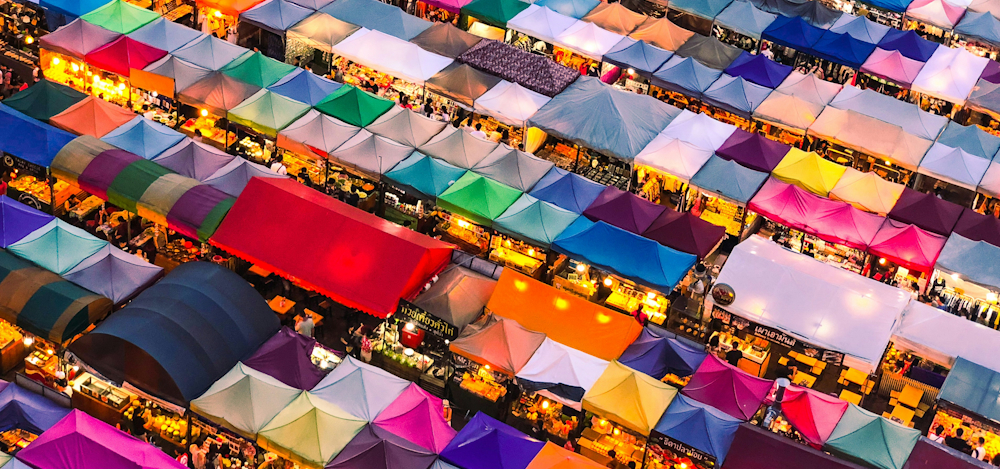
Ratchada Rot Fai Night Market in Bangkok by Lisheng Chang on Unsplash

Shopping in Bangkok ranges from searching for trinkets at the city’s famous floating markets to browsing high-end fashion in sprawling mega malls. Expats can trawl street stalls for the perfect bargain or head to sprawling complexes that house everything from cinemas to bowling alleys and even the odd aquarium.

For fans of shopping malls, an entire weekend can be spent at Siam Paragon, easily accessible by the BTS Sky Train. Other major malls include Iconsiam, CentralWorld and CentralPlaza WestGate.

Those after a more authentic shopping experience can explore Bangkok’s ever-popular open markets. Chatuchak Weekend Market, one of the world’s largest flea markets with over 15,000 stalls, provides excellent value for everything unusual and unique that the country has to offer. Floating markets like Amphawa and Taling Chan offer a glimpse into traditional Thai commerce, though they are increasingly catering to tourists.


Nightlife in Bangkok

Bangkok comes alive after dark, and new arrivals will have no trouble finding vibrant entertainment venues. Whether you want to let your hair down and dance the night away or prefer to sip on cocktails at sophisticated rooftop bars with skyline views, there’s something for everyone in Bangkok. Sukhumvit is popular with expats and tourists alike, while Royal City Avenue tends to attract a younger, more local crowd.


Eating out in Bangkok

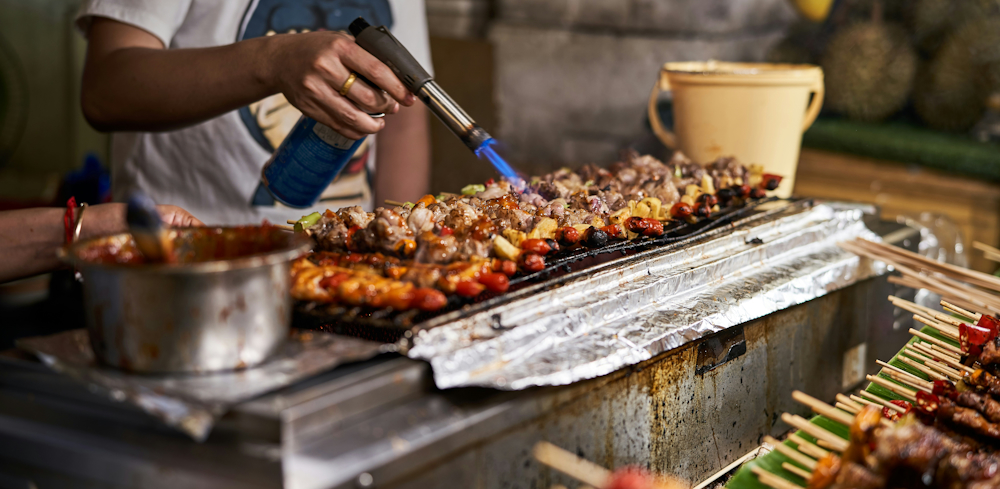
Barbecue Food Stall in Bangkok by Norbert Braun on Unsplash

Locals in Bangkok are passionate about food. It won’t be long before expats begin to understand what food means to the locals and to appreciate the amazing variety in Bangkok. Whether a streetside noodle dish with homemade broth or a local vendor concocting spicy somtam, the options are both tasty and reasonably priced.

Naturally, every expat experiences a yearning for something that tastes like home, and Bangkok obliges with international dining options in areas like Thong Lo and Phrom Phong, although at much higher prices.


Sports and outdoor activities in Bangkok

Benjakitti Park in Bangkok by Rutpratheep Nilpechr on Unsplash

Sports and outdoor activities in Bangkok take place at a handful of green parks where residents can enjoy a picnic, paddle around the pond, walk the dog, play with their children, or simply take a break from the rushed pace of city living. Benjakitti Forest Park and Lumpini Park are the city’s main green spaces.

Outdoor activities are seasonal in Bangkok. Between December and March, PM2.5 pollution often reaches unhealthy levels, and health authorities advise checking air-quality apps before outdoor exercise.

Bangkok is the perfect place to try Muay Thai, a form of Thai boxing. Those wanting to escape the soaring outdoor temperatures will find several reputable gyms and yoga studios throughout Bangkok. There are also plenty of cycling and running routes in and around the city, particularly around Benjakitti Forest Park.

Alternatively, those looking for something a bit different always have the option of heading out to a golf course. There are plenty of quality courses situated around Bangkok which offer excellent value for money.


Meeting people and making friends in Bangkok

One of the most daunting parts of moving to a new city is making connections and building relationships with new people. Some of the best ways to meet people and make friends in Bangkok include shared interests like sports or hobbies, volunteering, expat clubs, and online platforms like Meetup. Below are a few suggestions for expats looking to meet new people in Bangkok.

Useful links

Kids and Family in Bangkok

Expat families and kids in Bangkok have no shortage of ways to stay entertained, even in a city known for its frenetic energy. Expats considering moving to the Thai capital will find plenty of child-friendly activities and attractions scattered throughout the metropolis.

The weather shapes how families spend their time throughout the year. During the sweltering summer months, everyone flocks to water parks, and then sudden tropical downpours send everyone indoors. Air quality has become an equally important factor, particularly between January and March, when PM2.5 dust levels spike, and many families opt for indoor play centres over outdoor adventures.


Outdoor activities for kids in Bangkok

Wachirabenchathat Park (Suan Rot Fai) in Bangkok by Nopparuj Lamaikul on Unsplash

Outdoor activities for kids in Bangkok centre around water parks when summer temperatures soar. Siam Amazing Park (still widely known as Siam Park City) is the largest in the city, featuring the world’s largest wave pool, along with countless slides and a full amusement park. Children of all ages can easily spend an entire day here. 

Harbor Island at The Mall Bangkae offers a modern rooftop water park experience. Flow House Bangkok on Sukhumvit 26, the city’s only urban surf spot, offers older children the chance to learn to surf with its FlowRider wave machine. 

The Chao Phraya River and its labyrinth of canals offer boat trips for those who prefer to stay dry. Benjakitti Forest Park draws families to its elevated walkways and cycling tracks, which provide respite even on hotter days.

Weather in Bangkok


Indoor activities for kids in Bangkok

Indoor activities for kids in Bangkok peak during the rainy season and on days with poor air quality. 

KidZania offers a scaled-down city where children play at being grown-ups within a functioning ‘economy’. Children can work as dentists, mechanics, or dozens of other professions, earning KidZo currency in a controlled environment that pairs education with entertainment. Located on the fifth floor of Siam Paragon, it stays busy with expat families.

Museums in Bangkok cater to diverse interests, from the Human Body Museum at Chulalongkorn University to the Batcat Museum & Toys in Bang Kapi, although many museums suit older children and teens better. The Museum of Siam offers the most family-friendly entry point for learning about Thai history and culture. Its interactive ‘Decoding Thainess’ exhibition is housed in a striking neoclassical building near Wat Pho. The THAINOSAUR Museum at Asiatique has immersive dinosaur experiences.

See and Do in Bangkok

The Thai capital's attractions span Buddhist temples, rooftop bars and everything in between. Expats will have plenty to see and do in Bangkok. The whole city is filled with a variety of attractions to suit almost anyone’s tastes.

Bangkok welcomes millions of visitors annually. The city pairs glitz with grit. Expats can explore ancient royal palaces alongside quirky museums, although figuring out the difference between genuine local experiences and tourist traps takes some savvy.


Attractions in Bangkok

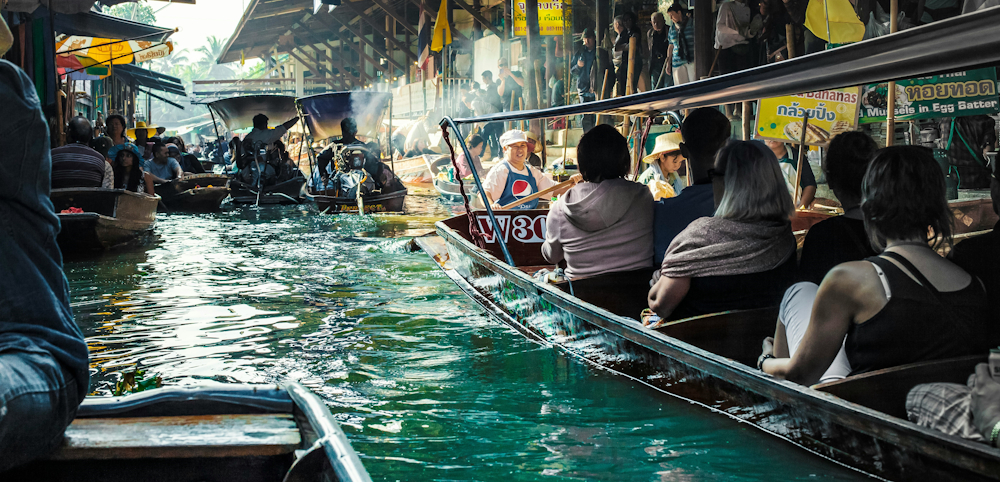
Damnoen Saduak Floating Market in Bangkok by Marek Okon on Unsplash

Damnoen Saduak Floating Market

Dating back to when water transport was essential to daily life in Thailand, floating markets evoke a bygone era. Damnoen Saduak Floating Market, roughly an hour outside central Bangkok, is the most famous floating market. It’s heavily geared towards tourists now, with crowded boat channels and aggressive vendors. Arrive before 8am to beat the tour bus crowds. For a more authentic feel, expats often head to Khlong Lat Mayom or Taling Chan – both closer to the city with better food and fewer hawkers, although they operate mainly on weekends.

Bangkok National Museum

One of Southeast Asia’s largest museums, the Bangkok National Museum makes for an impressive sweep through Thai history and culture. Founded in 1887 by King Rama V and housed in the former Wang Na palace, the museum showcases everything from prehistoric artefacts to ornate royal funeral chariots. The Thai History Gallery is particularly worthwhile for expats who want to visit the city’s temples with their rich contexts in mind.

The Grand Palace

The official royal residence since the 18th century, the Grand Palace now serves primarily for state functions and royal ceremonies. Located on the banks of the Chao Phraya River, it is Bangkok’s most iconic landmark and houses the Temple of the Emerald Buddha. There will be crowds of tourists to contend with, and dress codes are strict – it’s mandatory to wear trousers or skirts that cover your ankles, along with closed-toe shoes or sandals with straps (no flip-flops). You can buy tickets online to skip the ticket booth queue, although you’ll still face security lines.

Tilleke & Gibbins Museum of Counterfeit Goods

Bangkok has long been known for its counterfeit goods market, where knock-offs of almost anything are sold at rock bottom rates. The Tilleke & Gibbins Museum of Counterfeit Goods challenges the notion that buying fakes is a victimless crime. 

Run by an intellectual property law firm, this niche museum on the 26th floor of Supalai Grand Tower displays thousands of confiscated counterfeits – from fake pharmaceuticals to luxury handbags and car parts. It’s fascinating for anyone interested in legal issues or global trade, although visits typically require booking an appointment in advance, usually on weekdays. The collection offers a thought-provoking snapshot of an industry that’s increasingly moving into the digital and crypto domains.

Wat Arun (Temple of Dawn)

Wat Arun, the Temple of Dawn, ranks among Southeast Asia’s most recognisable landmarks with its distinctive riverside silhouette and colourful prangs. You can climb the steep, narrow steps of the central spire up to the second terrace – the upper levels are closed for safety, although the ascent isn’t for the faint-hearted. Those who make it up are rewarded with sweeping river views. 

Dress codes are strictly enforced these days, although rental sarongs are available if needed. Many expats find the best vantage point is actually from across the river, where rooftop bars and restaurants offer postcard-perfect sunset views without the crowds.

Wat Pho (Temple of the Reclining Buddha)

Home to one of Thailand’s first massage schools, Wat Pho dates to the 18th century and offers a calmer atmosphere than the nearby Grand Palace. The centrepiece reclining Buddha stretches 151ft (43m) long, sheathed in gold leaf, with its feet intricately decorated with inlaid mother-of-pearl. 

The broader complex houses everything from royal ashes to a Bodhi tree supposedly descended from the one under which the Buddha attained enlightenment. The massage school still operates, with traditional services available on site – expect wait times of 30 to 60 minutes during busy periods.

Getting Around in Bangkok

Expats won’t have any trouble getting around in Bangkok, as transport options are endless. Most expats tend to favour public transport, particularly the city’s BTS Skytrain, and taxis are also popular. Travelling by foot is not ideal in Bangkok, while travelling by car tends to be equal parts dangerous and frustrating. That said, driving may be essential for those living in areas not accessible by public transport.


Public transport in Bangkok

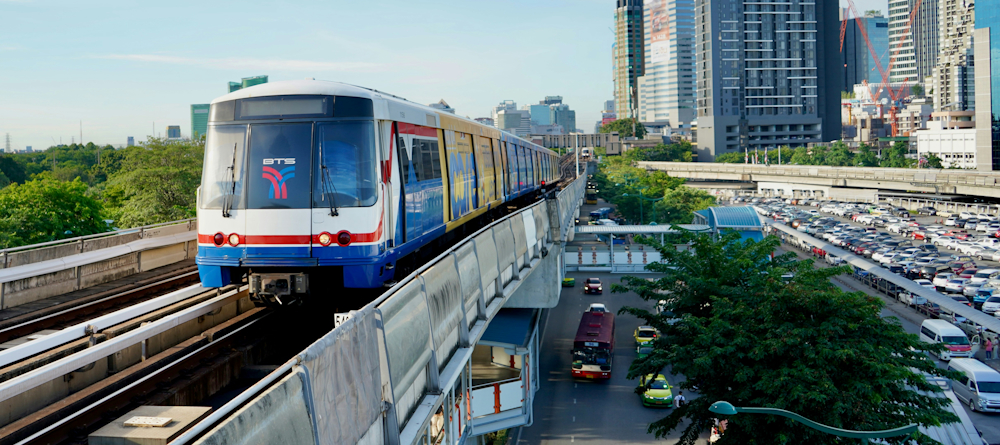
BTS Skytrain in Bangkok by ThaimaaOpas on Unsplash

Metro

Getting around in Bangkok via the Metropolitan Rapid Transit (MRT), known as the metro, offers expats a reliable option. 

The network now has four operational lines: the Blue Line (a mostly underground loop around central Bangkok), the Purple Line (serving the northwest), and the Yellow and Pink monorail lines (serving eastern and northern suburbs respectively). The Orange Line is under construction. All lines operate from 6am to midnight daily.

Trains

A popular mode of transport among expats in Bangkok is the BTS Skytrain. This elevated train system threads the main business, entertainment and hospitality districts of Silom and Sukhumvit. It is a reliable, clean and safe way to travel in Bangkok. Expect long waiting times and overcrowding during peak morning and afternoon hours.

Buses

There is an extensive bus system in Bangkok. Although this is a cheap way to travel, it is often uncomfortable and can be slow due to heavy traffic. For this reason, it is not generally a popular option with expats, though buses can be useful for long-distance, rural, and intercity travel. A wide variety of private services operate routes to different parts of Thailand.

Dark blue electric buses, operated by Thai Smile Bus, have been rolled out across many routes since 2022 and are all air-conditioned. 

If your bus isn’t dark blue, there are a few things to look out for under the legacy colour-coding system. Traditional red buses are more spacious; green buses lack air-conditioning but are more affordable; and cream, blue, and white buses provide spacious air-conditioned travel. Buses typically run from 5am to 11pm, although some routes now offer 24-hour service.

Useful links


Taxis in Bangkok

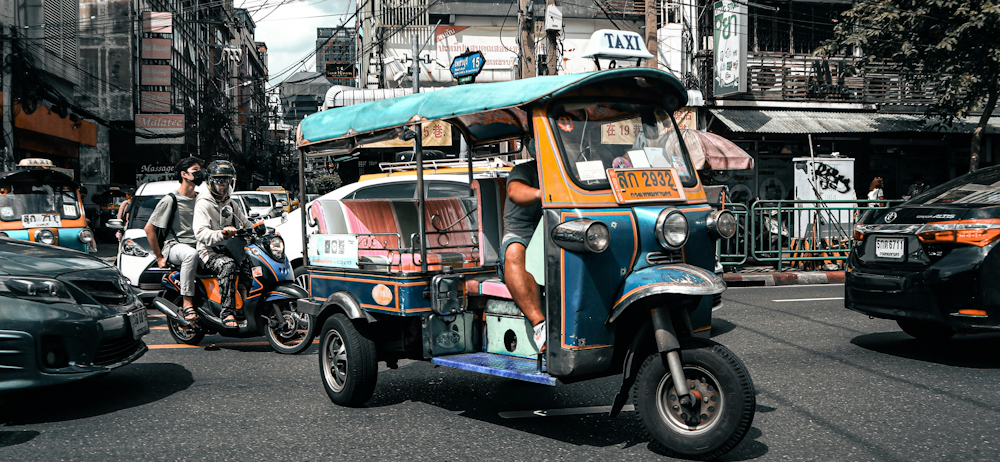
Tuk-tuk in Bangkok by Lucas T. on Unsplash

Taxis provide the most reliable, convenient, cost-effective and efficient way of getting around in Bangkok. These vehicles are never in short supply and are available around the clock. Expats can simply flag one down, hop in and prepare to pay the fare.

Taxis are usually fitted with a meter that charges a set rate per kilometre – by law, the meter should be turned on, but some drivers deliberately leave them off to charge the passenger a higher price. If the driver refuses to use the meter even after you request it, the best response is to promptly exit the taxi and find another one.

Most taxi drivers have limited English skills. Expats living in Bangkok will quickly learn that it is best to have the address of their destination written down in Thai, or they may experience an unsolicited tour of the city.

The language barrier, paired with the possibility of being overcharged, is best circumvented by using ride-hailing apps. Grab is still the most widely used platform, although Bolt often offers lower fares, and inDrive lets passengers negotiate prices directly with drivers. All three apps provide English interfaces and transparent pricing.

Tuk-tuks

Expats in Thailand will quickly become familiar with tuk-tuks, open-air three-wheeled carriages attached to motorbikes. The city is served by thousands of them, and while they are popular with tourists, they are also useful for expats and locals. Tuk-tuks are a speedy way to get around, as their size allows them to weave in and out of traffic.

Songthaews

Also known as ‘red buses’ or ‘red trucks’, songthaews are another popular choice of transport in Thailand. These passenger vehicles are adapted from pickup trucks and serve as shared taxis. Songthaews are used both within towns and cities, as well as for longer routes between towns and villages.

Useful links


Driving in Bangkok

Heavy Traffic in Bangkok by Robert Eklund on Unsplash

Many expats avoid driving in Bangkok due to the city's heavy traffic and dangerous roads. Expats who do intend to drive can buy a new car in Thailand or import theirs from home, but both options are expensive.

It’s not uncommon for expats to hire experienced Thai drivers rather than braving the roads themselves. This is an ideal solution, and some employers may agree to include it as part of the relocation package.

Driver’s licences

Foreign driving licences paired with an International Driving Permit (IDP) are acceptable for tourists, typically for up to 90 days depending on visa status. Expats living in Thailand on long-term visas are expected to get a Thai driver’s licence within 90 days of arrival, and most insurance companies require a Thai licence for residents.

Read Transport and Driving in Thailand for more on securing a driver’s licence in the country.

Useful links


Cycling in Bangkok

When cycling in Bangkok, you’ll find a mixed bag of ideal and perilous conditions. Infrastructure is slowly being built out, but significant challenges remain. There are several cycle lanes scattered around the city, although getting from one to the other may prove troublesome. Furthermore, these lanes are usually shared with pedestrians and street-side markets, making them tricky to navigate safely. Cycling on the road itself is hazardous and should be avoided.

The city is developing a 29.5-mile (47.5km) walkway and cycle path along the Saen Saeb Canal that will connect Phra Nakhon with Nong Chok. This project includes lighting, safety railings, CCTV cameras, and links to major public transport systems. The canal path is a far safer bet for cyclists wanting to avoid road traffic, but getting between dedicated cycle lanes can still be awkward.

Useful links


Walking in Bangkok

If you’re walking in Bangkok, you need to stay vigilant all the time. Thai locals tend to walk less than expats, which may explain why pavements often double as market spaces. The city has one of the highest pedestrian fatality rates in the region, something worth taking seriously. 

Use footbridges whenever possible. Crossing with groups makes you more visible to drivers, and it’s never wise to assume vehicles will stop – even at marked crossings with traffic signals. Walking is safest over short distances and in areas well served by elevated walkways.