
- Download our Moving to Bangkok Guide (PDF)
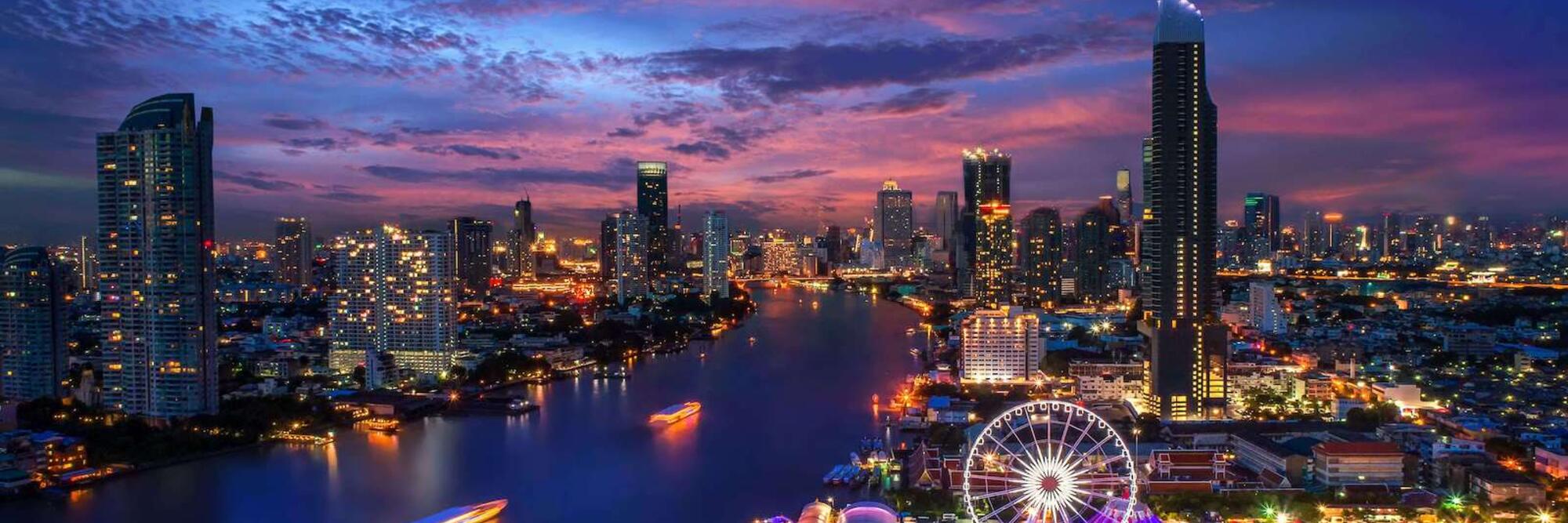
Moving to Bangkok means stepping into a city unlike any other – one that presents expats with a wholly different cultural environment within the familiar framework of a cosmopolitan metropolis. New arrivals are usually mesmerised by its cityscape, carved by canals that branch out from the Chao Phraya River.
Snaking through the heart of the city, this natural feature not only shapes the city’s layout but also daily life. The influence of the river and its canals can be seen in its many floating markets and the cultural customs of its residents.
Living in Bangkok as an expat
Bangkok is the capital of Thailand, its largest city and the centre of business, culture and politics. The majority of Bangkok’s expat population moves to the city for the cultural attractions and work opportunities. While skilled expats can be found in industries such as finance and logistics, many foreigners find that teaching English is still the easiest way to make a living in the Thai capital, as jobs in this field are plentiful.
Bangkok has a multicultural population and friendly locals, so expats are unlikely to feel very severe culture shock in the Land of Smiles. However, air pollution is a significant concern, particularly during the dry season from December to April, when PM2.5 levels spike. Many expats monitor air quality via apps and run air filters at home.
Pros and Cons of Moving to Bangkok
Working in Bangkok
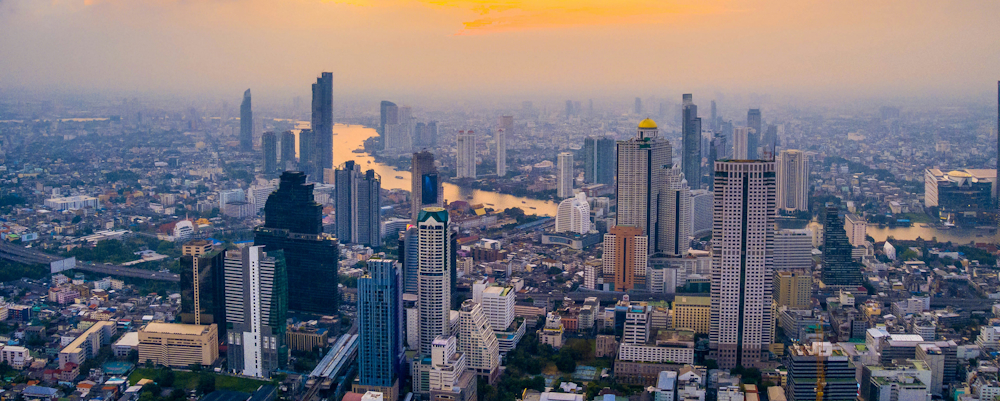
Expats working in Bangkok are spread across finance, tech, logistics, hospitality and international education. Teaching English is the most accessible route into the job market for native speakers, although a bachelor’s degree and TEFL qualification are required for a legal work permit.
The introduction of the Destination Thailand Visa (DTV) in 2024 has opened doors for remote workers and digital nomads. This five-year, multiple-entry visa allows stays of up to 180 days per entry, with the option to extend. Those employed by Thai companies still require a standard Non-Immigrant B visa and work permit. Professional networking is active through organisations such as AMCHAM and the British Chamber of Commerce Thailand.
Lifestyle in Bangkok
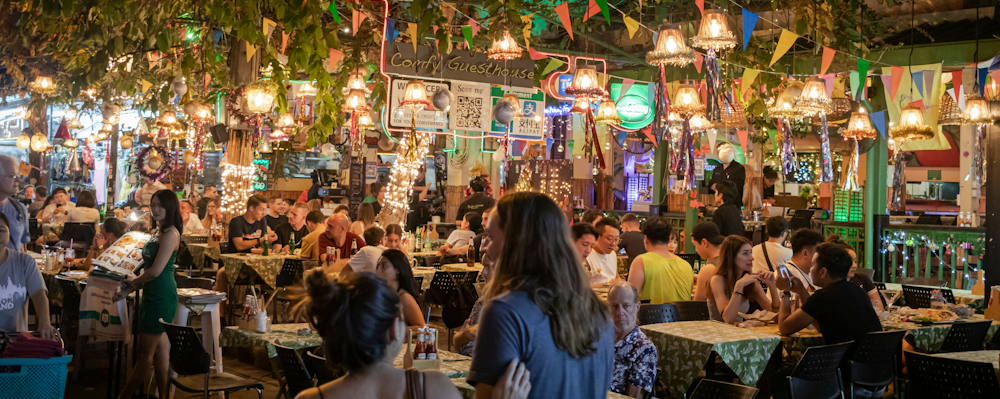
The lifestyle options in Bangkok cater to all budgets and tastes, from rooftop cocktail bars in Thong Lo to the night markets of Jodd Fairs. The city has a world-class café culture, particularly in neighbourhoods like Ari and the historic lanes of Talat Noi.
Things to See and Do in Bangkok
Lifestyle in Bangkok
Finding accommodation in Bangkok
A condo oversupply has made it so that Bangkok’s rental market currently favours tenants, and new arrivals to the city can easily find suitable accommodation in any of the city’s areas and suburbs. The key factor in securing a home in Bangkok is proximity to your workplace or children’s schools to avoid long, frustrating commutes.
Accommodation in Bangkok
Areas and Suburbs in Bangkok
Cost of living in Bangkok
Overall, the cost of living in Thailand is low, but as is typical of a large capital city, Bangkok can be an expensive place to live, although it remains significantly cheaper than Singapore, Hong Kong or Tokyo. Having all the conveniences and amenities that big-city living offers comes at a cost, especially if expats choose to indulge in luxuries such as serviced apartments, fine dining, and imported goods. The good news is that, with some planning, it’s possible to live in Bangkok on a budget, especially if expats are willing to adopt a simpler lifestyle more in line with the Thai way of life.
Living in Bangkok with children
Bangkok is renowned for its entertainment scene and the warmth of its residents. It provides opportunities for everyone, from young, single expats to families, who can enjoy a laid-back lifestyle without sacrificing the quality of healthcare facilities. The city has even become a popular medical tourism destination thanks to the high-quality healthcare available at affordable rates.
Parents will also have plenty to see and do with their children at the weekend, as Bangkok offers many family-friendly attractions. Despite its reputation as a concrete jungle, Bangkok also boasts a fair few green spaces and water parks for families to enjoy throughout the city.
Family and Children in Bangkok
Healthcare in Bangkok
Finding a school in Bangkok
Finding a school in Bangkok can be straightforward or fiercely competitive, depending on ambition. The city hosts over 100 international schools following the British, American, Australian and International Baccalaureate curricula. Many expat families choose their neighbourhood based on proximity to their children’s school, as cross-city commutes during rush hour can be gruelling.
International Schools in Bangkok
Getting around in Bangkok
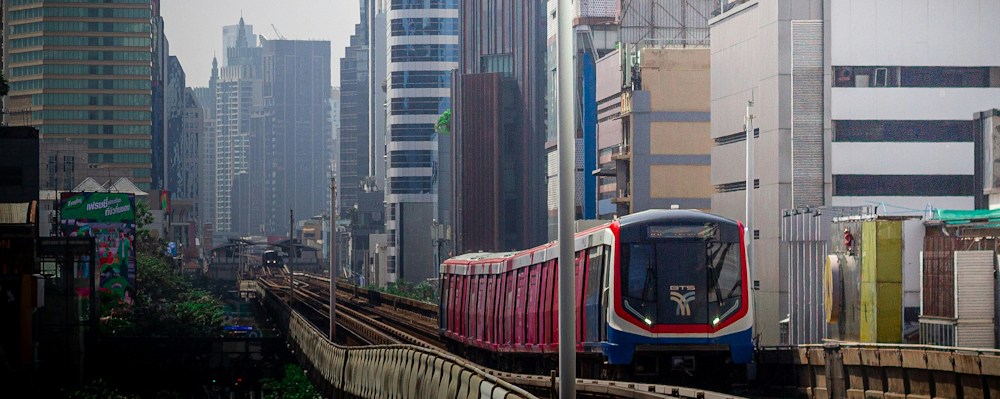
Bangkok contends with notorious traffic jams, but the rail network has expanded rapidly. As of 2023, the BTS Skytrain and MRT’s Pink and Yellow monorail lines now serve a few more suburbs. Most expats rely on a mix of rail, ride-hailing apps such as Grab, and motorbike taxis for the last stretch home.
Climate and weather in Bangkok
Heat and humidity are the prevailing weather conditions in this tropical city. During the hot season from March to May, the mercury frequently reaches and exceeds 95°F (35°C). The wet season arrives just as temperatures start to wind down around the end of May. Downpours are frequent, so it’s best to get into the habit of carrying an umbrella. In November, the rain abates with the arrival of the cool season, when overnight lows can dip to around 68°F (20°C), although daytime highs remain in the high 80s°F (low 30s°C).
Sun-loving expats will find the cooler months ideal for weekend escapes to the coast, with beaches such as Hua Hin and Koh Samet reachable in two to three hours. Whatever the weather, Bangkok’s energy is hard to beat, and the city has a lot to offer new arrivals, should they come with an open mind and a sense of adventure.