

- Download our Moving to Thailand Guide (PDF)
Diversity and inclusion in Thailand shape daily life for expats in ways both visible and subtle. The remote work boom has drawn digital nomads to Thailand’s scenery and affordable lifestyle, and expats from dozens of countries now call Thailand home.
Below, we look into issues of diversity and inclusion that newcomers may encounter in Thailand.
Accessibility in Thailand
Accessibility in Thailand has improved, although wheelchair users and those with mobility impairments still have significant obstacles to overcome. Uneven pavements and high kerbs are a problem, and accessible toilet facilities are scarce.
Taxis (or ride-hailing services like Grab) are generally the best option for getting around. Grab’s GrabAssist feature now provides vehicles designed for passengers with mobility aids throughout Bangkok without booking.
There has been an effort to improve the facilities on public transport in Thailand. Both international airports in Bangkok offer comprehensive accessibility features, including lifts to all floors and electric wheelchair charging stations. The Bangkok MRT provides lift access at all stations. The BTS Skytrain now has lifts at nearly every station, except Saphan Taksin, which is an exception due to its unique single-track structure.
Most public buildings, large hotels and offices have some accessible facilities, but few have the full range of facilities that global expats might expect.
Useful links
LGBTQ+ in Thailand
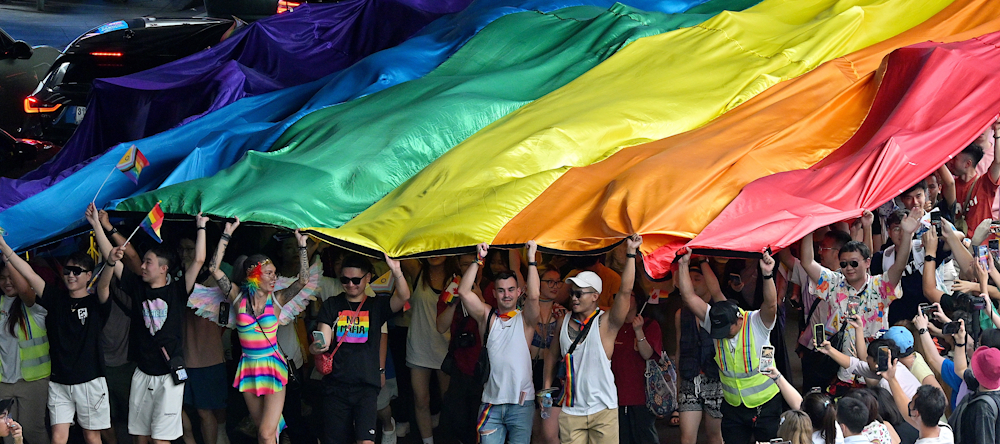
LGBTQ+ rights in Thailand changed dramatically in January 2025, when the country became the first in Southeast Asia to legalise same-sex marriage. The Marriage Equality Act grants couples equal rights in inheritance, taxation, and adopting children.
Same-sex relationships have been legal since 1956, and Bangkok ranks among Asia’s most welcoming cities for LGBTQ+ individuals. The Gender Equality Act of 2015 prohibits discrimination based on gender identity and sexual orientation.
It is common to see transgender people on television and within the entertainment industry in Thailand, but they still lack fundamental legal rights compared to the rest of the population and can face barriers to employment and promotion.
Legal gender recognition is restricted. Transgender individuals cannot change their legal gender or title markers on official identification documents, although a Gender Recognition Bill is under parliamentary review. Thailand does not offer a non-binary gender option on national IDs or passports.
Most major cities have active LGBTQ+ social scenes, with Bangkok and Pattaya hosting annual pride celebrations and year-round gay-friendly venues.
Gender equality in Thailand
Thailand’s Constitution states that men and women have equal rights. However, women still face lingering challenges in the workplace due to established patriarchal values.
According to the World Bank, Thailand’s female labour force participation rate stands at approximately 59 percent, compared to 75 percent for men. This gap stems from social expectations that women serve as primary caregivers for children and elderly family members. The gender pay gap between male and female employees continues to decrease and now stands at just 8 percent.
Thailand offers 120 days of maternity leave following the December 2025 amendments to the Labor Protection Act. Employers pay full salary for the first 60 days. Spousal support leave of 15 days at full pay is now available in both the private and public sectors.
Expectant mothers are entitled to ask their employer to adjust their work responsibilities to be more suitable during pregnancy and after childbirth. It’s recommended that employees speak with their HR Manager to learn more about the specific benefits offered by their company.
Women in leadership in Thailand

Women in leadership in Thailand hold positions at rates that exceed regional averages. According to the Grant Thornton Women in Business 2025 report, women hold 43 percent of senior management roles in Thailand, compared to an average of 34 percent worldwide and 33 percent in the Asia-Pacific region. Deloitte’s 2024 Women in the Boardroom report found that 19 percent of directors in listed companies were women.
Women’s parliamentary representation has climbed in recent years. Female MPs now hold nearly 20 percent of Thailand’s parliamentary seats, the highest proportion in the country’s history.
Useful links
Mental health awareness in Thailand
The stress associated with moving home, job and school means that expats are often at greater risk of developing conditions such as depression and anxiety. Substance use disorders also affect some expats, particularly where business culture incorporates regular drinking.
International companies are becoming more aware of mental health issues, and many have adjusted their policies to provide better support. This includes ensuring that mental illness is well covered by the company’s chosen employee healthcare schemes.
The level of medical expertise in Thailand is high, and doctors working in government hospitals generally also work within private practice. Most government hospitals have mental health departments, but due to waiting times and language limitations, most foreigners choose to make an appointment with a psychologist or a psychiatrist in a private practice.
Useful links
Unconscious bias training in Thailand
Unconscious bias is an implicit set of often stereotyped ideas an individual carries about groups of people different to themselves. These ideas are not purposefully adopted but rather develop subtly over time. People tend to hold unconscious biases about groups they never or rarely encounter.
Unconscious bias can profoundly affect both personal and work conditions. In the workplace, unchecked bias undermines vital aspects of the company, negatively impacting employee performance, retention, and recruitment. In a bid to create a better work environment, many companies are beginning to institute unconscious bias training. There are also several online resources that can be used to improve self-awareness regarding bias.
Most Thais regard racism as a Western issue, but there is also racial prejudice in Thailand, as in most countries. In colourism, dark skin is associated with lower social status and with outdoor work. This bias is exacerbated because many wealthier Thais are of Chinese descent and have a lighter skin tone, and those with darker skin hail from the country’s poorer rural regions. Southern Thais, Malays and Muslims can face discrimination in the workplace and scrutiny from the police.
Western expats of African descent experience different dynamics than Thai citizens facing colourism, although incidents of police harassment in Bangkok have been documented. The Protection and Promotion of the Way of Life of Ethnic Groups Bill, passed in 2025, created Thailand’s first explicit legal prohibitions against racial and ethnic discrimination.
Useful links
Diversification of the workforce in Thailand
Diversification of the workforce in Thailand has accelerated sharply. Over 5 million non-Thai nationals now reside in the country, primarily from neighbouring Cambodia, Vietnam, and Myanmar. There are also a vast number of Western retirees and expats in the country.
The Destination Thailand Visa, launched in 2024, permits remote workers to stay for up to five years. This policy has made Bangkok and Chiang Mai top destinations for digital nomads.
Most companies now recognise the benefits of a workplace that champions diversity, equity, and inclusion. Studies have shown that organisations with a diverse and inclusive workforce are happier and more productive, as diversity breeds creativity and innovation.
Safety in Thailand
Safety in Thailand compares favourably to many countries, with violent crime against foreigners uncommon. It is essential to take sensible precautions to avoid petty theft, particularly on crowded public transport and in touristy areas, and to be aware of scams.
Road safety poses the most serious daily risk. Reckless driving and poor road conditions contribute to Thailand’s high traffic fatality rate. Motorcycle accidents account for most deaths.
Digital scams targeting expats have surged and now pose a greater threat than traditional theft. Fraudsters use messaging apps and fake utility or government notifications to steal personal information and money.
Calendar initiatives in Thailand
4 February – World Cancer Day
28 February – Rare Disease Day
March – TB Awareness Month
8 March – International Women’s Day
17 May – International Day Against Homophobia
19 May – Global Accessibility Awareness Day
June – Bangkok Gay Pride
10 September – World Suicide Prevention Day
October – Breast Cancer Awareness Month
10 October – World Mental Health Day
14 November – World Diabetes Day
1 December – World AIDS Day