

- Download our Moving to Thailand Guide (PDF)
Transport and driving in Thailand can be chaotic, but as long as expats can handle the fast pace, they have plenty of options for getting around. Thailand ranks among the world’s most dangerous countries for road accidents, with motorcyclists accounting for the lion’s share of fatalities.
Bangkok’s gridlock is legendary, among the worst in the world. Anyone behind the wheel needs defensive driving skills and bucketloads of patience.
The public transport network spans buses, trains, metro lines, taxis, motorcycle taxis and the iconic tuk-tuks. Digital payment systems have become standard across most services, with contactless cards and PromptPay QR codes now the norm.
Public transport in Thailand
Public transport in Thailand includes an expanding network of trains, buses, and metro lines. Digital payments and new infrastructure have made getting around cities easier than ever before.
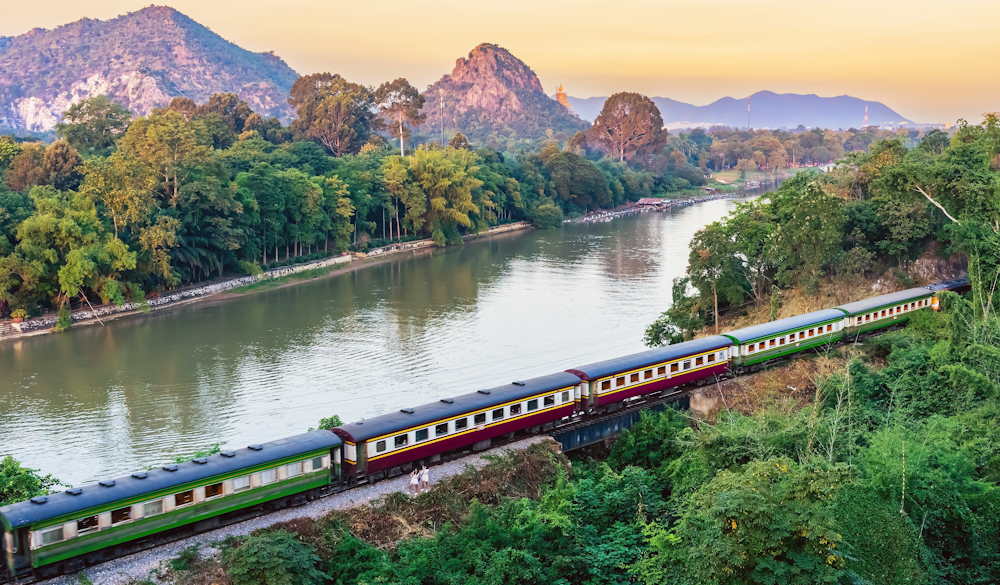
Trains
The train network in Thailand is run by the State Railway of Thailand. The network consists of four main routes that travel to the north, northeast, east, and south. These railway lines intersect in Bangkok, so when travelling long distances, it is usually necessary to change lines.
Krung Thep Aphiwat Central Terminal is Bangkok’s main railway hub for long-distance travel, and the historic Hualamphong Station, also in Bangkok, handles local commuter routes and select tourist services. Always double-check which station your train departs from – this distinction has caught many travellers off guard.
Tickets can be purchased in advance. There are three types of trains available – ordinary, rapid, and express – as well as three classes of travel, from private first-class booths to third-class seats.
Trains are slower than buses but are often more comfortable, particularly for long journeys such as those between Bangkok and Chiang Mai.
Rapid rail transit
Bangkok’s rapid transit network has expanded significantly in recent years. The BTS Skytrain, Metropolitan Rapid Transit (MRT), Airport Rail Link (ARL), Gold Line, Pink and Yellow Monorails, and SRT Red Lines now serve the capital. Over 10 operational lines reach far more of the metropolitan area than was possible just a few years ago.
The Thai Chinese high-speed rail project, originally slated for completion in 2026, was delayed following a construction accident in early 2026. Phase 1 linking Bangkok to Nakhon Ratchasima is now expected no earlier than late 2027.
Most transit systems now accept contactless EMV credit and debit cards. Tap through gates without purchasing separate tickets. PromptPay QR codes work for smaller operators, alongside various digital wallet options.
Buses
Buses are a common form of long-distance travel, especially for reaching remote areas that aren’t well served by rail or air. Luxury long-distance buses, known as VIP buses, have air conditioning and reclining seats to make long-distance travel more comfortable. VIP bus tickets should be bought in advance due to limited seating.
Buses are used less within cities than between them, although Bangkok does have a well-developed local bus service with around 100 routes. Flag down buses with a downward-facing palm wave as they approach your stop. The fare is paid aboard the bus.
Useful links
Taxis in Thailand
There are taxis in most Thai cities, although many of them have malfunctioning meters or taxi drivers who refuse to use them, so fares must be negotiated before getting into the vehicle. Most taxi and tuk-tuk drivers now prefer PromptPay QR code payments over cash. This avoids the perennial shortage of change.
Ride-hailing apps, including Grab, Bolt and inDrive, have become expat favourites. They sidestep language barriers and fare disputes alike. People really like inDrive's transparent pricing model.
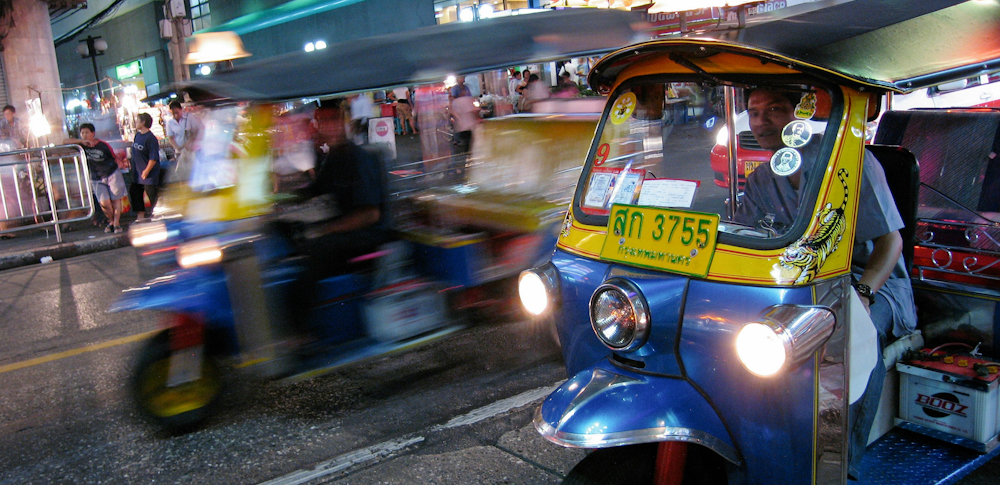
Tuk-tuks
The most popular taxis for tourists in Thailand are samlaws, better known as tuk-tuks. These are three-wheeled vehicles that are either motorised or non-motorised and can carry up to two or three passengers.
Taxi cabs
Official taxi cabs sport bright colours – pink, blue, yellow, green, or orange – and are easy to spot in major cities like Bangkok. It’s advised that expats book a taxi via phone or online before their trip.
Motorcycle taxis
Motorcycle taxis are also popular and are often the fastest way of getting around cities. They are known to weave in and out of traffic, however, and might be a frightening experience for inexperienced passengers.
Songthaews
Also known as ‘red buses’ or ‘red trucks’, songthaews are another popular choice of transport in Thailand. These passenger vehicles are adapted from pickup trucks and are used as shared taxis or buses. Songthaews are used both within towns and cities, as well as for longer routes between towns and villages.
Useful links
Driving in Thailand
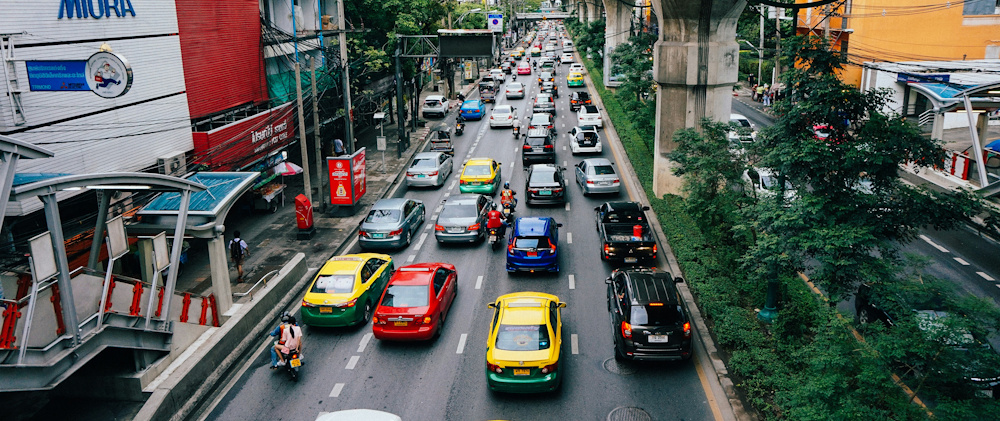
Although driving in Thailand can be frustrating, it is essential to remain calm and patient. Massive traffic volumes mean that it is usually better to use public transport within the cities. Some expats who regularly commute in urban areas hire a private driver, but traffic jams will make getting to work a slow process, no matter who is driving.
Driving between cities is far more manageable, and having a personal vehicle is often the best way to travel through the Thai countryside. The Thai highway system is of a relatively high standard and links every part of the country, and most roads are in acceptable condition.
That said, the roads on Koh Samui and Ko Pha Ngan are infamously dangerous. Thailand’s roads claim more foreign lives than almost any other cause in the country. The country consistently ranks among the world’s deadliest for traffic accidents.
Expats should drive defensively and be prepared for erratic drivers, as well as children and animals on the road. Driving in rural areas at night is not recommended. Drunk driving is a problem in Thailand, and many cars do not have working headlights. Buses driving recklessly on country roads can also be a hazard at night.
Driver’s licences
Expats will need to apply for a Thai driver’s licence after three months of living in the country, and some insurers require the driver to have a Thai driver’s licence to be fully covered. Licences can be applied for at local transport offices or the Department of Land Transport in Bangkok. International Driving Permits are valid for 90 days. After that, insurance companies typically refuse claims from drivers without a Thai licence. Get yours converted promptly – it’s not optional.
Since 2025, driver’s licences in Thailand require all applicants – even those converting valid foreign licences – to pass the theory test. The written exam requires a 90 percent pass rate: 45 out of 50 questions. Those without a convertible licence must also attend a Department of Land Transport-approved driving school and complete a practical test.
Prospective drivers need medical clearance from a Thai doctor. New drivers receive a two-year temporary licence, which they can renew into a five-year permanent licence.
Domestic flights in Thailand
Domestic flights in Thailand are a swift and affordable alternative to marathon bus journeys. They’re particularly helpful for getting away to island destinations or the far north. Thai AirAsia is the king of the low-cost carrier market. Thai VietJet and Thai Lion Air are also strong competitors on popular routes.
Thailand’s largest airport is Suvarnabhumi Airport in Bangkok, and the national carrier is Thai Airways. Beyond Suvarnabhumi, Thailand operates over 10 international airports. These include Chiang Mai, Chiang Rai, Phuket, Hat Yai, Krabi, Samui and U Tapao near Pattaya.