

Securing accommodation in Florence is a priority for new expats. The city, steeped in history and brimming with Renaissance charm, offers a range of living experiences that blend the old with the new.
In the heart of Florence, apartments nestle in ancient buildings, where every stone whispers tales of the past. These residences, often part of grand palazzos, exude a sense of timelessness, with their high ceilings, frescoed walls, and windows that open to bustling streets and serene courtyards. Here, living is about embracing the city's rich cultural heritage, where modern amenities meet historic elegance.
Towards the outskirts, the landscape transforms. The suburbs of Florence paint a different picture – one of sprawling family homes, modern apartments with panoramic views of the Tuscan hills, and tranquil gardens where the hustle of city life gives way to birdsong and rustling leaves.
City-centre apartments are usually small, so expats looking for more spacious family homes should explore the suburbs. While foreigners can buy property in Italy, most expats rent, at least initially.
Areas and suburbs in Florence

The key to finding suitable housing in Florence is to base your search on the lifestyle you prefer. If you like the hustle and bustle of city life, then the city centre is for you, though quieter and less touristy pockets can also be found. Remember that it’s a relatively compact city, especially in the Centro Storico within the old city walls. The central areas are also pricier than the outlying suburbs.
One popular choice for expats is the Oltrarno area, known for its artisan shops and local charm. This district offers a more authentic Florentine experience, with fewer tourists and a vibrant community atmosphere. On the other hand, for those seeking tranquillity, the hillside suburb of Fiesole offers stunning views and a serene environment, though it’s a bit removed from the city’s central amenities.
For families, suburbs like Scandicci or Sesto Fiorentino might be appealing. These areas are known for their green spaces, good schools and family-friendly environments. They provide a peaceful retreat from the bustling city centre while still being accessible via public transport. Young professionals might prefer areas like Campo di Marte or Novoli, which are closer to the city centre and offer a mix of residential and commercial spaces.
Best (and Worst) Areas and Suburbs in Florence
Types of accommodation in Florence
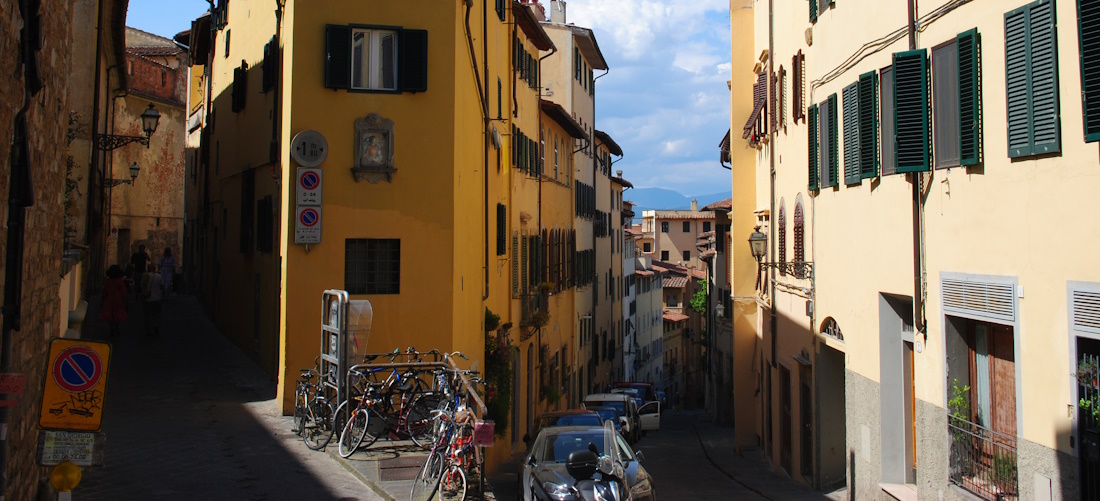 Nearly all of Florence’s housing options are in apartment buildings. These palazzi vary in size, and some come with balconies, small terraces, cellar storage units or garage space, which will likely cost extra.
Few buildings have elevators, but the air and light are generally better on higher floors. Housing ranges from old buildings to newer structures, and expats are likely to get more space for their money the further they are from the historic centre.
For those seeking something more unique, Florence also offers a range of historic homes and villas, particularly on the outskirts and in the Tuscan countryside surrounding the city. These properties often feature traditional Italian architecture and may come with gardens or courtyards. However, they are typically more expensive and may require a car for commuting into the city.
Finding accommodation in Florence
The best place to start a property search is online. Before moving to Florence, expats should browse web listings or even search social media. We do advise against committing to a lease or putting down a deposit before physically viewing a property and getting a feel for the area it’s in.
Once in Italy, expats can work through a local real estate agent or make use of the house-hunting services of their relocation company.
Networking with fellow expats can also be a fruitful way of finding accommodation. Local expat groups and forums often have insider tips or even listings of available properties. This can be especially helpful for those looking for shared housing or seeking advice on the best areas to live based on personal experiences.
Useful links
Renting accommodation in Florence
Making an application
To apply for rental accommodation in Florence, expats typically need to provide several documents. These usually include proof of income or employment, a valid passport or ID, and sometimes a reference from a previous landlord. Landlords also commonly request a codice fiscale, an Italian tax code, which can be obtained from the local tax office.
The process of finding accommodation involves viewing properties either directly or through an estate agent. Once a suitable property is found, the next step is to negotiate the terms and sign a preliminary agreement, known as a contratto preliminare, which outlines the terms of the lease and any conditions agreed upon.
It’s crucial to ensure that all terms and conditions, including the duration of the lease, rental amount, and any other agreements, are clearly specified in the contract to avoid any misunderstandings in the future.
Leases
Standard rental leases in Italy tend to be for long periods, usually for a minimum of three to four years, depending on the type of contract. They can be renewed if you wish to stay longer.
Shorter leases are common for foreigners in Florence for a brief stint of work or study (one to two years), but are more expensive. Expats staying for a shorter period may prefer to sign a transitional-use contract with a fixed period of between one and 18 months.
To enter into this kind of contract, the tenant must prove they have a legitimate need for temporary housing. Expats working in Florence for a limited time can do this with a copy of their employment contract.
Deposits and fees
To secure a lease, expats typically pay a deposit of up to three months’ rent. They should always visit their prospective flat with the landlord or leasing agent before signing a lease to take note of any repairs to be made before moving in.
Other costs to consider include agency fees if using an estate agent, which can be up to one month’s rent plus VAT, and utility bills, usually not included in the rent.
Terminating the lease
Ending a lease in Florence requires careful attention to Italy’s rental laws. Tenants must generally give six months’ written notice, unless otherwise stipulated in the contract. Early termination is only allowed for gravi motivi (serious reasons), such as job relocation or health issues, and must be supported by documentation. Tenants remain liable for rent during the notice period even if they vacate earlier.
Before leaving, conduct a joint inspection with the landlord to avoid disputes over potential damages. Landlords are required to return the security deposit, minus deductions, within 30 days of termination.
Renting Accommodation in Italy
Utilities in Florence

Whether tenants must set up utility connections themselves depends on their lease. Landlords may include electricity and water in the rent, or may bill the tenant separately. In most cases, these costs are for the tenant and must be considered when planning finances. Utilities in Florence, as is typically the case in Italy, can be pricey.
In Florence, the utility market is open, allowing residents to choose their provider for electricity, gas, and internet. It’s advisable to compare different providers to find the most suitable plan. Several online comparison tools are available.
Electricity
When setting up electricity, new tenants should ensure the previous occupant’s account is closed and open a new one to avoid being charged for previous usage. Setting up an electricity account is straightforward, usually requiring just an ID and codice fiscale. Rates vary by provider and usage.
Electricity in Italy is 220V, and the socket types are F, C, and L. Expats from countries with different voltages or sockets will need adapters or transformers for their appliances.
Gas
Gas is primarily used for heating and cooking in Florence. Like electricity, gas accounts need to be set up in the tenant’s name. Safety inspections are typically required for gas connections, especially in older buildings.
The cost of gas depends on the size of the property and the efficiency of the heating system. It’s generally billed every two months based on estimated usage, with an annual adjustment.
Water
The water supply in Florence is managed by local municipalities. The water bill includes charges for water consumption, sewerage, and a fixed service charge. Bills are usually issued every two months.
Water quality in Florence tends to be good, and tap water is safe to drink. However, some residents prefer to use filters or buy bottled water due to the hardness of the water.
Bins and recycling
Florence has a well-organised waste collection system. Residents must sort their waste into different categories: organic, recyclable, non-recyclable, and special waste. Collection schedules and guidelines are provided by the municipality.
Recycling is taken seriously, and failure to comply with waste sorting regulations can result in fines. Compostable waste is collected separately for ecological processing.