
Finding the right education and schooling in Italy is a priority for many new arrivals in the country. The education system in Italy comprises a large state sector and a smaller, more specialised private sector. Take some time to evaluate your priorities and those of your children before choosing an institution.
Italians tend to place a high value on education – the quality of both the public and private systems reflects this cultural trend.
Public schools in Italy
Schooling in Italy is compulsory from the age of six to 16.
There are four levels of education in Italy:
- Scuola dell’infanzia (three to six years old)
- Scuola primaria (6 to 11 years old)
- Scuola secondaria di primo grado (11 to 14 years old)
- Scuola secondaria di secondo grado (14 to 19 years old)
Public schools in Italy are free to attend, even for foreigners living in Italy who aren’t formal permanent residents. This applies to primary and secondary schools, although enrolment taxes apply after students reach the age of 16.
Most Italians send their children to state schools, and those who send their children elsewhere often do so because they prefer their child’s education to be rooted in alternative teaching methods or a religion, most commonly Catholicism.
Italian state schools operate under a centralised system that controls school curricula and final examinations. Despite attempts at uniformity, it is widely acknowledged that education in northern Italy is of a higher standard than in the south. Options and standards also vary in rural areas. Expats planning to live outside urban centres should consider this when choosing a school.
State-sponsored schools teach in Italian, and English is usually taught as a second language. Expat families who only plan to stay in Italy for a set amount of time usually find that state schools aren't suited to their needs.
On the other hand, if you're planning to live in Italy for the long term, don't overlook state schools, especially if your children are still fairly young. A lot of effort is made to integrate expat children using intensive Italian language classes, cultural activities, and remedial classes. Language can also be a valuable asset, and learning Italian can open doors for future educational opportunities and career development. Younger children will generally pick up Italian easily.
Useful links
Private schools in Italy
Private schools in Italy are mostly either run by religious organisations or mandated by alternative teaching methods, such as Montessori or Waldorf education. The religious schools are primarily Catholic, but many also encourage non-Catholic students to enrol.
For the most part, the standard of education does not vary much between state and private schools in Italy. Both systems follow the state curriculum, with private schools adding more elective subjects and extracurricular activities. Some Italians even consider private schools to be inferior to public schools, but your experience may vary.
Useful links
International schools in Italy
International schools in Italy are the obvious option if you're planning to live in the country for a short time or if you would prefer your children to continue with the curriculum of their home country. It is also a good way to ease the transition into life in Italy, as children attending these schools will be around others with similar backgrounds.
On the other hand, this can create a bit of a cultural bubble, with children not assimilating into Italian culture as a result. An ideal middle-ground solution for expats may be to enrol children in a school that combines the Italian curriculum with their home country’s curriculum, or a bilingual international school teaching in both the child’s native tongue and Italian.
High tuition fees are the norm for international schools, so if possible, you should try to negotiate an educational allowance as part of your employment contract when relocating to Italy.
A wide array of international schools can be found in Rome, Naples, and Milan, but many more are scattered all over Italy, with the highest concentration in urban centres. Curricula offered include American, British, French, Swiss, Japanese, and German, among others.
There is stiff competition for the limited places available in prestigious international schools, so it’s always best to start applications as early as possible. Admission requirements typically include previous school records and a personal interview, but vary from institution to institution, so you'll need to contact the schools you're interested in directly to find out more.
Best International Schools in Rome
Special educational needs in Italy
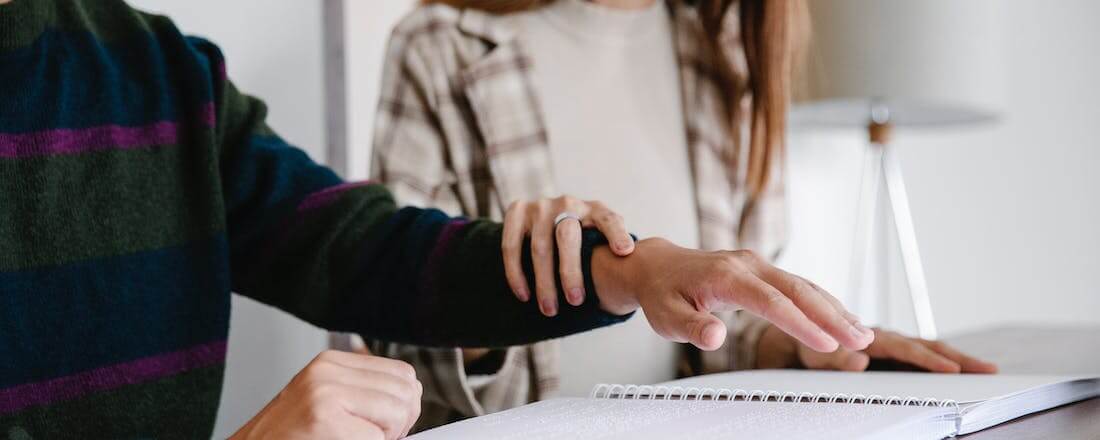
Those with disabilities have the right to receive a full education in Italy. Inclusive education is implemented in Italy to avoid segregating children with special needs. This requires a comprehensive range of interventions to diagnose children’s needs and provide support in the form of specialised teachers, transport, and adaptation of learning materials. Collaboration between the school, teachers, and families is critical.
Although few children with disabilities are in segregated settings, some kids may still face micro-exclusions. One reason for this is that, although the level of care is required to be uniform, it varies across regions. Language barriers can also further complicate inclusive education and special needs learning.
Useful links
- European Agency for Special Needs and Inclusive Education
- LEDHA (League for the Rights of Persons with Disabilities)
Tutors in Italy
Tutoring is common in Italy, especially among expat families. To help children integrate, parents can enlist the help of private tutors or arrange additional Italian lessons. This can still prove more cost-effective than paying the high tuition typical of international schools and, therefore, provide an alternative for families. Tutors can readily be found online.